

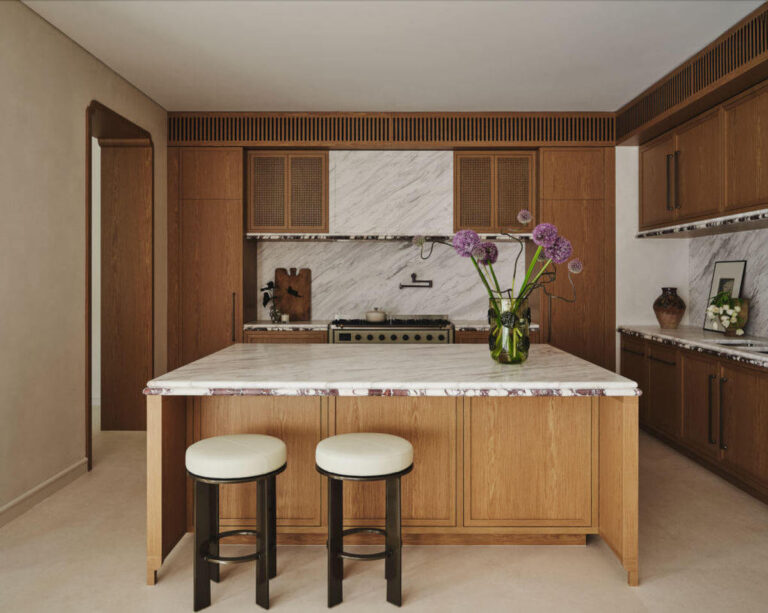

Wood kitchens are not returning. They are advancing. In 2026, designers are moving beyond painted finishes and short-term trends in favor of material depth, architectural cabinetry, and layouts that prioritize permanence. From full-height walnut storage walls to oak islands wrapped in marble, these kitchens treat wood as structure, not surface.

Across heritage lofts, modern residences, and transitional homes, the focus remains consistent: integrated storage, disciplined geometry, and natural materials that age with dignity. The following kitchens show how wood cabinetry can anchor a space with authority while adapting to contemporary living.
The Refined Classic Wood Kitchen

A symmetrical wall of oak cabinetry frames a marble cooking niche, creating a composition rooted in proportion and order. Cane-front upper panels introduce texture above the range, while the marble backsplash rises as a continuous slab, reinforcing structure. The island, clad in light oak and topped with veined stone, centers the room with quiet authority.
This kitchen blends traditional detailing with architectural restraint. Linear ventilation grilles at ceiling level echo the rhythm of the joinery, while dark hardware defines each panel with precision. The result carries permanence without heaviness, where material integrity and measured geometry shape a space that feels composed and enduring.
The Heritage Loft Kitchen Reimagined

A wall of vertical walnut cabinetry anchors the space beneath the original timber ceiling. Opposite, a tiled island wrapped in warm checkerboard stone introduces pattern without breaking the earthy palette. The marble backsplash stretches across the rear wall, tying stone and wood into one continuous surface.
The design respects the warehouse shell while inserting precision joinery and concealed storage. Tall pantry doors conceal daily clutter, while the open span of the island restores flow across the loft. It reads as a dialogue between structure and craft, where heritage materials frame a kitchen built for present use.
The Alpine Timber Kitchen

Heavy timber beams, plank cabinetry, and a deep charcoal island set the tone in this alpine-inspired space. The wood grain runs across ceiling, walls, and base cabinets, creating a unified envelope that reads as architecture rather than decoration. The matte black hood and pendant lights introduce contrast without breaking the warmth of the room.
This kitchen proves that wood can carry an entire space when scale and proportion are handled with control. The island becomes the anchor, while open shelving and integrated appliances keep the composition grounded. It feels built into the mountain landscape outside the window, not placed inside it.
The Ribbed Tile Contrast Wall

Flat-front oak cabinetry meets a vertical, burgundy ribbed tile backsplash that adds rhythm behind the sink wall. The warm brass faucet and simple open shelf sharpen the palette without overwhelming it. The result is controlled contrast between texture and restraint.
This approach works because the wood stays calm and linear while the tile introduces depth. Upper shelving replaces bulky cabinets, allowing the grain to read as continuous surface. It is a precise way to modernize wood cabinetry without relying on paint or trend color.
The Classic Shaker Revival

Medium-tone shaker cabinets and light countertops create a familiar layout, but updated hardware and clean lines bring it forward. Glass-front uppers break the repetition and introduce display without clutter. Stainless appliances ground the space in function.
This kitchen shows why traditional wood cabinetry never leaves. The framing details provide structure, while the warm stain softens the grid. It balances utility and comfort without excess ornament.
The Perimeter Storage Command Center

Full-height wood cabinetry wraps the perimeter and meets a large island at the center. Slim brass pulls and pale countertops prevent the space from feeling heavy. The layout emphasizes storage, prep space, and clear circulation paths.
Wood becomes the organizing force here. Instead of contrast, repetition carries the design. The result feels durable and built for daily use, with the island serving as the primary gathering point.
The Scandinavian Ribbed Minimalist

Flat oak fronts with subtle vertical ribbing introduce quiet texture across the base cabinets. Pale stone counters and exposed ceiling beams frame the space with softness and structure. The cooktop integrates into the island, keeping the sightline clean.
This design relies on proportion and material honesty. There is no decorative hardware competing with the grain. The wood reads as furniture within architecture, not as cabinetry layered onto it.
The Transitional Arch Frame Kitchen

A framed opening around the cooktop creates a focal point within light oak cabinetry. Brass fixtures and a marble backsplash elevate the tone without breaking the natural palette. The island stools reinforce the wood theme while adding metal structure.
This kitchen blends traditional framing with modern restraint. The wood carries warmth, while the stone introduces contrast and movement. The composition feels intentional and measured.
The Seamless Dark Wood Wall

A tall, dark wood cabinet wall conceals storage and integrated appliances behind flush panels. The grain remains visible, but hardware is minimal and aligned. Adjacent marble adds visual depth without pulling focus.
This concept treats cabinetry as architectural cladding. By reducing visual breaks, the wood surface becomes a backdrop rather than a feature. It creates a composed, high-end look rooted in material consistency.
The Backlit Glass Display Island

Dark wood cabinetry meets fluted glass inserts on both the upper cabinets and the island base. Interior lighting turns everyday objects into part of the design language. The stone countertop rests on a strong, framed wood base.
Lighting becomes part of the material palette in this kitchen. The warm glow behind ribbed glass softens the density of the wood and adds depth to the island. It transforms storage into display without losing function.
The Mediterranean Arched Pantry Wall

Tall arched niches and dark wood cabinets shape this kitchen with architectural rhythm. A patterned backsplash and stone island top add contrast while keeping the palette grounded in earth tones. Integrated lighting highlights the shelving recesses.
This space shows how wood pairs with strong geometry. The arches add movement, while the cabinetry anchors the composition. It feels permanent and built into the structure of the home.
The Matte Black and Natural Oak Pairing

Light oak cabinets meet a matte black island surface and matching pendants. The contrast sharpens the wood grain and prevents the palette from drifting into monotone. Slim black hardware reinforces the connection between island and perimeter.
This pairing works because it respects balance. The oak provides warmth and texture, while the black elements add precision and definition. Together, they create a kitchen that feels grounded, current, and ready for long-term use.
The Concealed Coffee Cabinet Wall

A tall wood wall opens to reveal a full prep station with shelves, drawers, and a marble work surface. When closed, the panels read as seamless cladding. The island echoes the same tone, keeping the palette unified from floor to ceiling.
This layout treats storage as architecture. Utility hides behind flush doors, while the open niche creates depth and purpose. It delivers function without visual noise.
The Textured Stone and Shaker Pairing

Warm oak shaker cabinets sit against a stacked stone backsplash that runs from counter to hood. Dark counters frame the base units and sharpen the grain pattern. Bronze hardware introduces a layer of detail without excess.
The balance between texture and structure defines this kitchen. The cabinetry provides order, while the stone adds variation and scale. It feels grounded and built for daily use.
The Two-Tone Heritage Kitchen

Upper cabinets in light oak with glass fronts contrast with deep black base cabinets and a bold black hood. A professional range anchors the center, framed by white tile and brass accents.
This composition plays with contrast while respecting tradition. Wood softens the darker elements and keeps the space from feeling heavy. The result carries presence without excess ornament.
The Walnut Butler’s Pantry Corridor

Rich walnut cabinetry lines a narrow passage, creating a dedicated beverage and prep zone. Brass pulls and a dark counter add weight and polish. Natural light from the window highlights the depth of the grain.
This kitchen extension functions as a transition space between rooms. It adds storage and character while reinforcing the material palette of the main kitchen. The cabinetry reads as furniture built into the wall.
The Integrated Espresso Niche

A recessed coffee station sits within a wall of dark wood cabinets. Upper compartments hide less-used items, while open shelves keep daily essentials within reach. Slim hardware maintains a clean front.
The niche creates a focal point without breaking the continuity of the cabinetry. It turns a routine task into a dedicated zone. The wood envelope keeps the space cohesive and controlled.
The Curved Island and Slab Wood Wall

A rounded island clad in vertical wood slats introduces movement into a space defined by slab-front cabinets. A marble backsplash and deep blue base units add contrast and dimension. Amber pendants provide warmth above the curve.
This kitchen blends geometry with material depth. The curve softens the layout, while the wood wall anchors the background. It feels modern yet rooted in natural finishes.
The Minimalist Slab Pantry Wall

Full-height dark wood panels conceal storage and integrated appliances. An open shelving cutout breaks the surface with a framed display zone. Pale concrete counters keep the look restrained.
The design relies on proportion rather than ornament. Each panel aligns with precision, allowing the grain to carry the visual interest. It reads as architecture rather than cabinetry.
The Stone Backdrop Oak Kitchen

Light oak cabinets stand against a rugged stone wall that adds texture and weight. Black counters define the perimeter and sharpen the lines of the base units. Glass-front uppers provide subtle display without clutter.
The pairing of stone and wood creates depth without relying on trend colors. The materials speak for themselves, forming a kitchen that feels established and enduring.
The Transitional Wood and White Balance

A central island in deep wood contrasts with surrounding white upper cabinets and a white hood surround. Clear glass pendants hang above, reinforcing vertical lines. The wood flooring ties the composition together.
This approach balances warmth and brightness. Wood anchors the lower half, while white surfaces lift the space. It achieves clarity without sacrificing richness.