


What we’ll cover in this guide…
In this guide, we’ll break down the key differences between electric showers and mixer showers, explaining how each type works, how they compare for water pressure, energy efficiency, installation complexity and running costs. Ultimately, we’ll offer the insights you need to decide which option suits different homes and lifestyles best. We’ll also explore how your boiler type, plumbing setup and daily hot water usage should play a part in your decision, so you can confidently select the right shower style for your bathroom without costly mistakes.

Should I choose an electric or mixer shower?
An electric shower or mixer shower? This is a common question a lot of UK homeowners ask themselves when it comes to choosing a new shower. Even though both types of showers are popular, they operate in very different ways. Electric showers heat water on demand, while a mixer shower blends pre-heated water from your boiler or water tank. Neither type is better than the other, and the best choice mainly comes down to your home’s plumbing, specifically the type of boiler and water pressure, and how your household uses hot water each day.
In this which is better – electric or mixer shower comparison guide we’ll explain all you need to know about electric showers and mixer showers, so you can make the best decision for you and your home.
What is an electric shower?
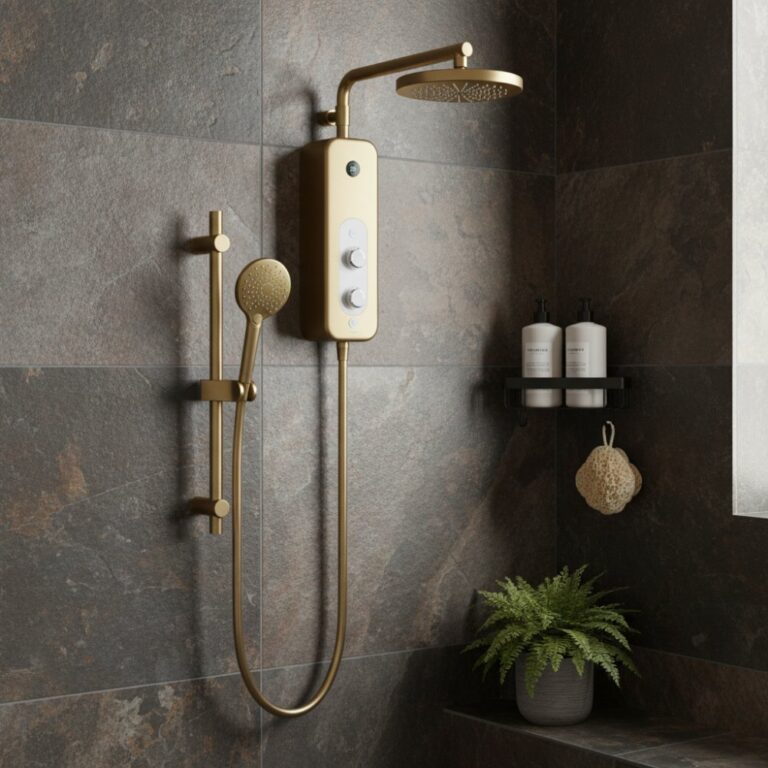
An electric shower takes in cold mains water only and heats it instantly as it flows through the unit, rather than relying on a boiler or hot water tank. Providing hot water in a flash, electric showers are reliable, independent and energy efficient, making them an appealing choice.
What is a mixer shower?
A mixer shower is designed to connect to both the hot and cold water supplies. The water is mixed inside a valve before being delivered through the shower head. This type of shower is a popular choice for family bathrooms and is dependent on your home’s boiler or hot water cylinder for a supply of hot water.
Mixer Shower

Electric shower

Key differences between electric and mixer showers
The main difference between electric and mixer showers all comes down to where the water supply comes from and how it’s heated. An electric shower is an independent unit that heats the water on demand, while a mixer shower uses a plumbed-in valve that blends water pre-heated by your boiler.
Water source:
The water source for an electric shower connects to the cold water mains only and is heated by an internal heating element on demand. Mixer showers, on the other hand, connect to both the hot and cold water supplies. They rely on your boiler or hot water cylinder to deliver the heated water.
Performance and pressure:
The performance and water pressure is another key difference between electric and mixer showers. Electric showers tend to have lower pressure, which is due to the unit having to heat the water as it flows over the element, this also limits the flow rate. During the winter months, the flow can slow even more, as it takes longer for the water to get hot enough. When it comes to mixer showers, the pressure is much higher. So, if you have a combi boiler, the water flow will feel more spa-like and powerful.
Temperature stability:
There’s a significant difference as to how an electric shower and a mixer shower ensure a stable temperature. Unless there’s a sudden drop in water pressure, electric showers have great temperature stability. This is due to the stabiliser valves, so if someone turns a tap on elsewhere in the house, the shower senses a drop in pressure and will automatically adjust the power or flow, helping to keep a consistent temperature.
With a mixer shower, it’s constantly trying to balance the hot and cold water supplies. Manual mixer showers are prone to wild temperature fluctuations. If someone flushes the toilet then the cold water pressure will drop, meaning the shower gets more hot water than cold, resulting in a scalding hot shock. Thermostatic mixer showers incorporate a cartridge that reacts in an instant to temperature changes, so if the cold water pressure drops, it will automatically restrict the hot water, maintaining the exact temperature you have set.
Boiler dependency:
An electric shower is completely independent of your boiler. If your boiler is switched off or not working, but you have electricity and a cold water supply, then you can still enjoy a hot shower. Many homeowners fit an electric shower in a second bathroom, which means you still have a backup if your gas boiler breaks down.
Mixer showers are totally dependent on your boiler to deliver the hot water for your shower. Without a working boiler, you have no hot water. Also, if you have a conventional boiler with a tank, you are restricted by the capacity of the water tank. So, once it’s empty, it means you have to wait 30-60 minutes for the boiler to reheat the water before you can take a shower.
Installation complexity:
Electric showers are the easiest to install in a new bathroom as they only require one pipe, but are the most complex when it comes to safely wiring one in. The fact you don’t need to connect one to a boiler means they are a great option for en-suites and guest bathrooms. The wiring however is the complex part. An electric shower draws a large amount of power and so requires a dedicated heavy-duty cable that runs straight from the fuse box. A qualified electrician is required to carry out the installation work.
Mixer showers require no electrical work, but they do need significant pipework. Hot and cold water pipes must be run to the shower unit, and this means lifting floorboards and chasing channels into the wall to conceal the pipework. It’s recommended that a qualified plumber carry out the installation work to ensure a professional result.

Which shower is better for water pressure?
When it comes to power, it’s commonly misunderstood that the shower unit itself creates the pressure, but actually, it all comes down to your home’s plumbing system. A mixer shower does deliver an overall more powerful shower experience, but only if your home’s system can support it.
Mixer showers can move a large volume of water quickly, delivering 12-15 litres per minute. An electric shower is flow restricted and as the unit must heat cold water on demand, it has to slow the water down to ensure it gets hot enough; this results in this type of shower delivering around 6-9 litres per minute.
Here’s some common myths debunked when it comes to a mixer shower vs electric shower pressure:
A 10.5kW electric shower is considered high pressure: although this is powerful, it will still feel weak when compared to a mixer shower connected to a combi boiler. The higher kilowatts just mean a slightly faster flow during winter.
A mixer shower will fix low water pressure: if your home has low water pressure, then it will result in a poor flow of mixed water and not a great shower experience. Mixer showers do not create pressure; they only use what already exists.
Electric showers are always weak: although they do have a lower flow, many electric showers use shower heads with smaller nozzles to create a spray that feels more powerful than it really is.
Which shower is more energy efficient?
When comparing an electric vs thermostatic shower, the electric models are the clear winners in terms of pure energy efficiency. While electric is more expensive than gas per unit, the way this type of shower uses energy is more precise. Basically, it all comes down to point-of-use heating vs stored-system heating when comparing energy efficiency between an electric shower and a mixer shower.
As an electric shower only heats what you use, it’s almost 99% efficient at the point of use.
- You don’t have to heat a tank of water hours before you need it. If you take a 5 minute shower, you’ll only pay for those 5 minutes of heating.
- In a traditional system, heat is lost as the water travels through the pipes from the boiler.
- As electric showers have a lower flow rate, it means they use 40-50% less water than a high-pressure mixer shower and therefore heat significantly less volume.
Mixer showers are only as efficient as the boiler and tank system they depend on. And even with a modern boiler, there are hidden energy costs.
- When you turn on a mixer shower, you usually have to wait around 30 seconds for the water to run hot. You have already paid to heat the water that currently sits in the pipes, which simply goes down the drain cold.
- When you turn the shower off, the pipes between the boiler and shower are filled with hot water, and this heat eventually radiates into floorboards or the walls and is wasted.
- If you have a conventional hot water cylinder, it means you are heating 150+ litres of water, even if you only need around 40 litres for a quick shower. And even with a well-insulated tank, the heat slowly escapes over time, referred to as standing loss.

Which shower is easier to install or replace?
Which type of shower is easier to install, depends on whether you are doing a straight replacement or a brand-new installation.
Electric showers:
If you’re simply swapping out an old unit for a new one, installation can often be done in around an hour or two, as the electrical cabling and the cold water plumbing are already in place.
Mixer showers:
Installing or replacing a mixer shower is a more complex process as it involves two water sources rather than one. Fitting a new mixer shower from scratch means the plumber needs to locate the hot water supply and run a new pipe to the shower location, which involves lifting floorboards or chasing into wall. With a mixer shower, the plumber also needs to balance the hot and cold water pressures.
Important electrical work disclaimer:
In the UK, bathroom electrical work is strictly regulated under Part P Building Regulations. All electrical connections must be tested and certified by a qualified professional to ensure the circuit, cable size, and RCD protection are safe. Always hire a registered electrician to handle the wiring and a qualified plumber for the water connections.
Which shower is right for your home?
Choosing the right shower basically comes down to which best fits your plumbing system. The layout and existing boiler system usually dictates the most practical choice.
Flats and en-suites:
In a smaller living space or second bathroom, space and simplicity are the main concerns, which makes an electric shower an ideal choice. With an electric shower, you can take a long shower without draining the rest of the hot water for the rest of the home. And since only a cold water feed is needed, installation is easier in a small space where running new hot water pipes would be difficult.
Family bathrooms:
For a large family with back-to-back usage, you’ll likely want a high-pressure shower that can handle heavy use. A thermostatic mixer shower blends the hot and cold water to a safe temperature and provides a more powerful flow than an electric shower.
Homes with combi boilers:
Combi boilers provide high pressure hot water on demand. As there is no tank to empty, a mixer shower delivers unlimited hot water at a much higher pressure than an electric shower.
Renovation vs replacement:
For an old electric shower, replacing it with a newer model is fast and cost-effective. Making the switch from electric to mixer is more expensive because of the required plumbing changes. If you are stripping the bathroom back to the wall and have a blank canvas, this is the time to install a mixer shower if you’re after a spa-like shower experience.

Is an electric or mixer shower right for your home?
When it comes to choosing between an electric shower or a mixer shower, it’s not about finding a winner, it’s all about selecting the right tool for the job. Each home has different plumbing, and the best choice is the one that works in harmony with your existing system. Explore our full range of shower systems, with electric showers and all sorts of alternative modern shower options, energy efficient models designed for easy installation and total reliability. And don’t forget to show off your shower uplifts by reaching out to us on Instagram, Facebook or X.
Frequently Asked Questions
What’s the difference between an electric shower and a mixer shower?
The main difference between an electric shower and a mixer shower is how they heat the water. An electric shower creates its own hot water instantly, while a mixer shower blends the water that’s been pre-heated by a boiler.
Is an electric shower better than a mixer shower?
This is all depends on the problem you are trying to solve, and neither shower is better than the other. Instead, these types of showers are essentially different tools designed for different plumbing setups.
Which shower gives better water pressure?
The pressure actually comes from your home’s plumbing system rather than the shower itself. However, a mixer shower has the potential for much higher pressure, while an electric shower is limited to a lower flow.
Which shower is cheaper to run?
When comparing running costs, there’s a difference between energy efficiency and cost per use. An electric shower is more efficient as it doesn’t waste heat, but a mixer shower can sometimes be cheaper to run because gas costs less than electricity per unit.
Can I replace a mixer shower with an electric shower?
Yes, you can replace a mixer shower with an electric shower, but it’s a big project rather than a straightforward swap due to the introduction of high-voltage power and a dedicated cold water feed.
Do mixer showers need a boiler?
Yes, mixer showers do require a boiler or a hot water storage system to operate.

Hi, I’m Liz, an interiors blogger. My main focus area is the bathroom, where I aim to inspire anyone who’s planning and designing a new bathroom – you’ll find plenty of tips, how-to guides and a wealth of ideas!