



Moving to a new home is a lot of work, and when you add kids to the mix, it can feel like an even bigger challenge. A successful, stress-free move with children involves knowing how to talk to your family, how to keep everyone calm on moving day, and what you can do to help them settle into your new home.
HireAHelper has over a decade of moving experience, and we’ve helped thousands of families relocate successfully. To help you manage the chaos and acclimation, we put together 15 practical tips for moving with kids.
Table of Contents
1. Understanding Why Moving is Hard for Kids
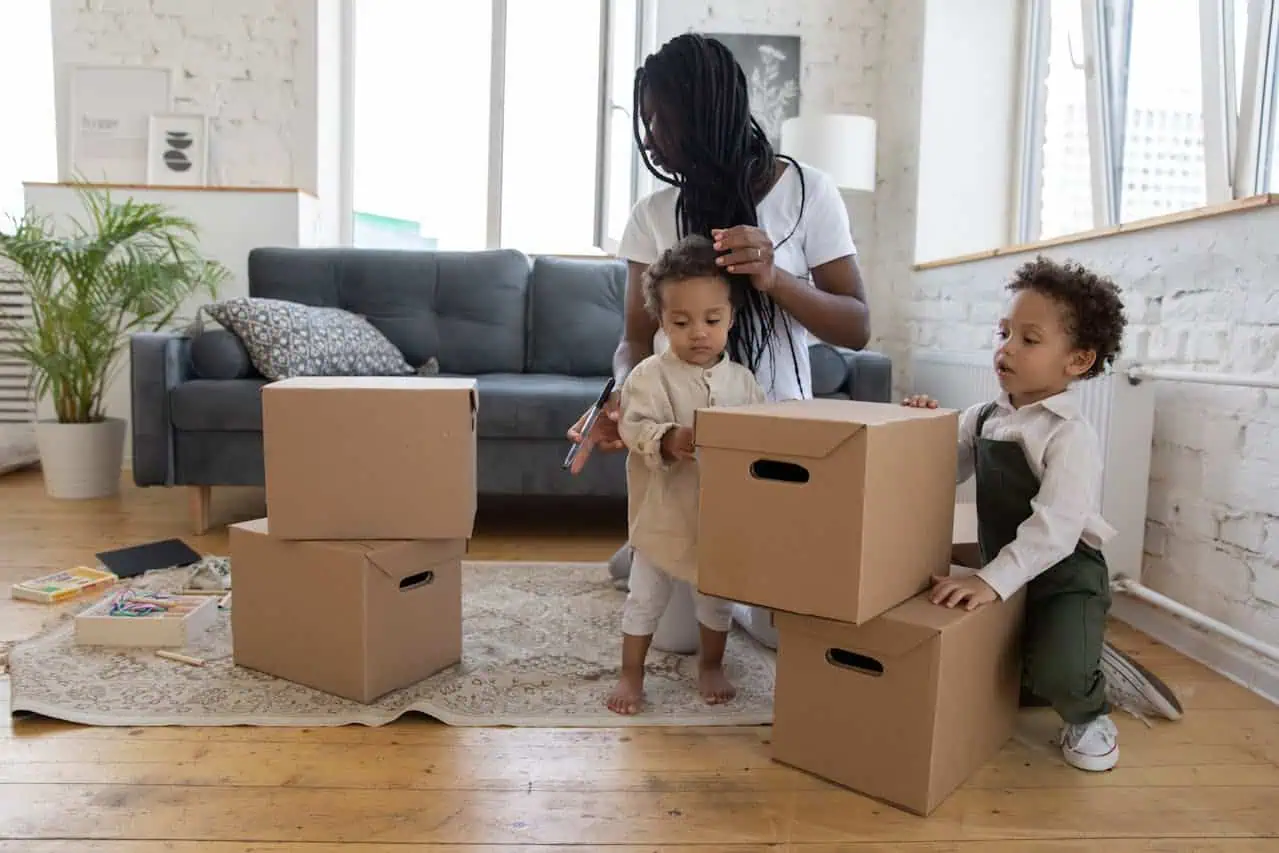
Kids thrive on routine, and moving is one of the biggest disruptors of their sense of predictability, which can feel scary and stressful. They may worry about losing their friends or their favorite park, or not being able to do the fun things they usually do.
Children also pick up on and mirror your own stress. If you act anxious or worried about packing, your kids will feel that way too. That’s why it’s important to try to stay calm when you talk about the move. This helps them feel safe during the big change.
2. Consider the Logistics of the Change
Before deciding to move, families should consider how this change will affect their children. Understanding what will change in advance can help prepare you to speak to your kids about it and let you plan for any adjustments.
- School quality and curriculum: Take the time to investigate the schools in your potential new neighborhood. Look into their academic performance, available extracurricular activities, and overall reputation. The new school must align with your child’s unique needs and interests.
- Cost of living: Look at the financial implications of relocating. This includes housing, utilities, groceries, and health care costs. Understanding the cost of living in the new area will help you gauge how it might impact your family’s budget and overall quality of life.
- Job market: If your move is job-related, it’s wise to research the local job market. Look for stability and growth opportunities that will benefit your family in the long run.
- Support system: Consider how far you’ll be from extended family and friends. Leaving behind a strong support network can be challenging for kids, so it’s important to devise strategies for maintaining those vital connections.
- Climate and culture: Consider the differences in climate and culture between your current home and the new location. These factors can significantly influence your family’s lifestyle and how easily everyone adjusts to the new surroundings.
3. Tell Your Kids About the Move Early (and Honestly)
Waiting until the last minute to share the news usually backfires. Kids need time to process big changes and say their goodbyes. When you keep them in the loop, they feel like a valued part of the team rather than just a passenger.
If they say they don’t want to go, don’t ignore it. Acknowledge their feelings, but stay firm and positive about the plan. Use these age-based guidelines to help you decide when to start the conversation:
- Toddlers and preschoolers: Tell them a few weeks before the move. Their sense of time is short, so waiting just a bit keeps them from getting too anxious.
- School-aged kids: Give them at least a month of notice. This gives them enough time to process the news and tell their friends.
- Teenagers: Tell them as soon as the plans are certain. They need the most time to handle social changes and school transitions.
4. Use the Right Words When Talking About the Move
When you talk about the move, keep your language simple and direct. Validate their feelings without making promises you can’t keep. For example, avoid saying “you’ll love your new school.” Instead, focus on the facts and provide comfort.
Try using these phrases to help your children feel more at ease:
- Focus on the house: “We’re moving to a new house, but we’re taking all our favorite things and our family with us.”
- Validate feelings: “It’s okay to feel sad about leaving your room. I’m going to miss this kitchen, too.”
- Explain the “why”: “This move helps our family have more space to play and be together.”
Also, avoid saying phrases like “don’t be sad” or “it’s no big deal.” These words can make kids feel like their emotions are wrong. Stick to honest, supportive language instead.
5. Tailor Your Approach To Your Child’s Age
Every child reacts differently depending on how old they are. A toddler might only care about their toys, while a teenager might be angry about leaving their best friends. You need to adjust your plans to fit their specific needs. Here’s how to handle the hardest parts of each stage.
Tips for Moving With Babies and Toddlers
Moving with toddlers and babies is mostly about managing their environment. Since they can’t fully understand the move yet, they rely on you for a sense of safety.
A common mistake is packing their favorite items too early, which can cause extra tantrums. Try to keep their world as normal as possible until the very last day.
- Protect routines: Keep nap times and meal times the same as always.
- Pack the nursery last: Leave their bed and toys out until moving day.
- Visit the new home: If it’s local, take them to see the new house and yard.
Tips for Moving With Elementary-Age Kids
School-age kids understand what’s happening, and they may be excited about the newness and adventure. But they also worry about fitting in. They fear losing friends and starting over at a new school. You can help by giving them small jobs so they feel included in the process. This also makes them feel like they have a say in the change.
- Involve them in packing: Let them pack up their toys (with supervision), choose which room they want in the new home, or decorate their own boxes with stickers.
- Address school worries: Research the new school together to see photos of the playground, classrooms, or surrounding area.
- Host a goodbye party: Give them a chance to say a proper farewell to friends.
Tips for Moving With Teens
Teenagers often feel like a move is being forced upon them. They value their independence and their social circles above all else. One of our top moving tips for families with teenagers is to give them real control over their own space. And don’t make the mistake of brushing off their drama and upset. To them, it’s a very big deal.
- Respect their emotions: Let them be upset for a while without trying to “fix” it right away.
- Give meaningful choices: Allow them to choose the layout and paint color for their new room, or even get new furniture if they’ve outgrown their older stuff.
- Plan a return visit: Even with the internet and social media keeping everyone connected, in-person meetups are also important. Promise a trip back to see old friends in a few months.
6. Give Kids Control Where It Makes Sense
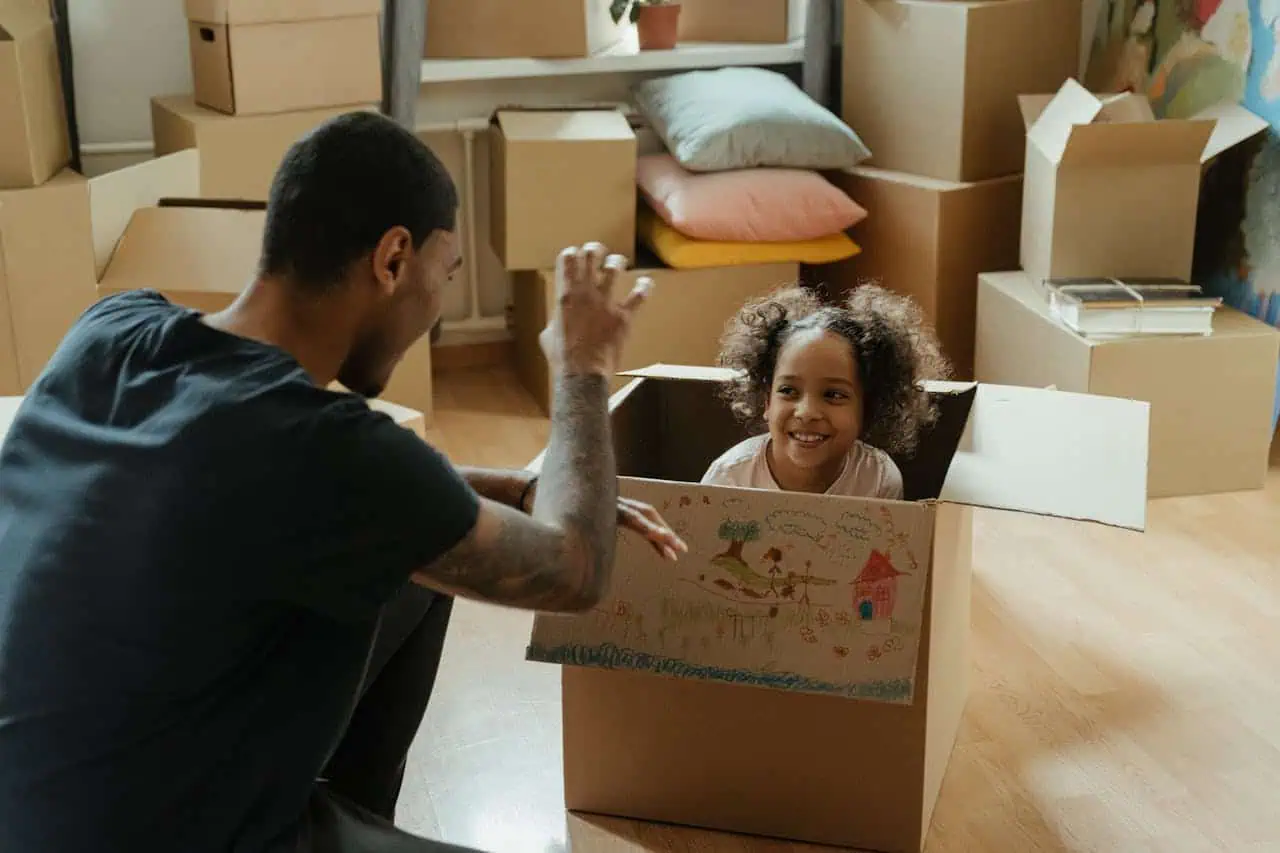
Moving can make kids feel like they have no say in their own lives, so giving them small choices helps reduce their anxiety. Let them join the “planning committee” by choosing which toys to pack first or how to arrange their new room, for example.
One great idea is to let each child pack a personal box. They can decorate the outside with stickers or markers to make it special. When kids have a job to do, they feel like helpful partners instead of just bystanders.
7. Keep Routines as Normal as Possible
Stability is a huge part of staying comfortable when moving with kids. Try to keep bedtimes and meal times exactly the same, even if there are boxes everywhere. If you have a family game night or a pizza tradition, keep doing it. Familiar habits help them relax even when their environment looks different.
Choosing when to move affects their schedule, too. Summer moves are great because they don’t miss class, but leaving friends during the break can be lonely. Moving during the school year can be harder on grades, but it helps them meet new friends right away. If you have the flexibility for it, ask your kids which option they might prefer.
8. Plan Ahead for Moving Day With Kids
Safety is the top priority on moving day. There will be heavy boxes, open doors, and big trucks everywhere. It’s usually best to have a friend or babysitter watch the kids away from the house. This keeps them safe and lets you focus on working with the movers.
“Keep an eye out for red flags like changes in sleep, frequent meltdowns, or losing interest in play. These are signs that the stress is becoming too much for [your kids] to handle alone.”
If they must stay home, pick one adult to be in charge of them. Set up a safe room with snacks, tablets, and toys where they can stay out of the way. Make sure they know never to run near the moving truck or the loading ramp.
As the day ends, try to have a final walkthrough together. Let the kids say goodbye to each room before you lock the door.
9. Pack a First-Night Box for Each Child
By the time you reach the new house, everyone will be tired. You don’t want to dig through fifty boxes just to find a toothbrush or a nightlight. Give each child a special box or backpack that stays with them in the car. This ensures they have everything they need to feel safe and comfy on their first night. Include these essentials in their kit:
- Pajamas and a change of clothes
- A favorite blanket or stuffed animal
- Bathroom items like a toothbrush and soap
- A few favorite books or a handheld game
10. Expect an Adjustment Period After the Move
Settling in takes time, so don’t expect your kids to feel completely at home the very first night. It’s normal for them to be extra clingy, moody, or tired for a few weeks. Most children need about 3–6 months to fully adjust to their new surroundings and routines. You can help them by setting up their room first, so they have a safe place to retreat.
To ease the transition, stick to your old routines as much as you can. Family dinners and game nights show them that family life hasn’t changed, even if the house has. Use this timeline to track your family’s progress:
- First week: Unpack all bedrooms and establish a regular bedtime. Take a walk around the block to meet a few neighbors.
- First month: Help them sign up for a local club or sport to make new friends. Check in with teachers to see how school is going.
- First 90 days: Hold a family meeting to discuss what everyone likes about the new house. Start a local social routine, like a weekly trip to the library.
11. Start Decorating Plans

Make plans to decorate your child’s new room as soon as possible. Even when you feel like you have countless other things to do, it’s important to make your child’s new room a top priority on your to-do list. It’s a personal space, and making it feel like it’s completely their own really helps them acclimate to a new home.
Involve your kids in planning their new room layout. You can give them some graph paper or an online room design tool to let them visualize how they want their space to look. Making them feel comfortable in their new room will ease some of the anxiety during this transition.
Shortly after the move, take some time to explore the new neighborhood together. Visit local parks, libraries, schools, and community centers. This helps children become familiar with their new surroundings and creates excitement about where they live now.
Engaging in community activities, such as local events or sports, can also provide opportunities for your children to meet new friends and feel more connected to their new home.
13. Watch for Signs Your Child is Struggling
Keep an eye out for red flags like changes in sleep, frequent meltdowns, or losing interest in play. These are signs that the stress is becoming too much for them to handle alone. For autistic children, moving can be even more taxing due to the sensory changes and broken routines. They may need extra time and specialized support to feel secure again.
If these behaviors last for more than a few weeks, don’t hesitate to ask for help. Reach out to your new pediatrician or school counselor. They can offer advice or resources to help your child process the transition.
14. Avoid These Common Moving-With-Kids Mistakes
Parents often try so hard to remain positive that they ignore their kids’ real feelings. Plus, it’s easy to make mistakes when you’re tired and stressed. Kids are very perceptive, and they pick up on tension quickly. Try to avoid these common pitfalls:
- Ignoring sad feelings: Don’t tell them “don’t be sad.” It’s hard to watch your kids be unhappy, but it’s ultimately best to let them miss their old home so they can process the loss and move on.
- Doing too much at once: Don’t expect to unpack the whole house in one day. Focus on the kids’ rooms first, so they feel settled.
- Letting your stress show: If your children are upset, it’s good to validate their feelings by expressing your own. Saying you’ll miss walking the dog at a certain park or that moving is tiring is fine and even helpful to do. But if you’re in a panic, your kids will be too. Take a break if you feel overwhelmed.
Managing a relocation is challenging enough, but moving with children makes it twice as hard. Not only do you have to pack boxes, but you also have to deal with everyone’s moods and schedules. This mental load can wear you out quickly. Sometimes, a total DIY move is just too much stress for one family to handle alone.
“Waiting until the last minute to share the news [of a move] usually backfires…When you keep [your kids] in the loop, they feel like a valued part of the team rather than just a passenger.”
Using a platform like HireAHelper to find labor-only moving services can change everything. These pros handle the heavy lifting while you focus on your children’s needs. If you want even more tips for moving with kids, check out our Comprehensive Guide to Moving With a Child.
Frequently Asked Questions About Moving With Kids
How long does it take kids to adjust after moving?
Most kids need about 3–6 months to feel at home after moving. However, every child is different. Some adjust in a few weeks, while others take a year. Sticking to routines helps them settle in much faster.
Is moving traumatic for kids?
Moving is a big change, but it doesn’t have to be traumatic. Most kids are very resilient. If you provide plenty of support and listen to their feelings, they can handle the transition well and even grow from it.
Should kids stay with relatives on moving day?
If possible, yes. Moving day is busy and full of potentially dangerous situations. Having younger children stay with relatives keeps them safe and out of the way. It also allows you to focus on the movers and the logistics.
Is it harder to move with toddlers or teens?
Both have unique challenges. Toddlers struggle with changes to their daily routine and physical space. Teens face more social loss and emotional stress. They often miss their friends and might push back against the move more.
How do you help kids make friends after a move?
Encourage them to join local clubs, sports teams, or library groups. You can also introduce yourself to neighbors who also have kids. Setting up playdates early helps them build a new group of friends very quickly.