


Want a small kitchen to feel larger without touching the walls? This remodel from Reddit user sparklebarks shows how a tight 9×9 layout can shift completely just by reworking placement, materials, and flow.

Nothing was expanded. The difference comes from how the space connects, how surfaces continue, and how fewer visual breaks make the whole kitchen read as one system instead of separate parts.
Before: Tight Layout With Visual Breaks Everywhere

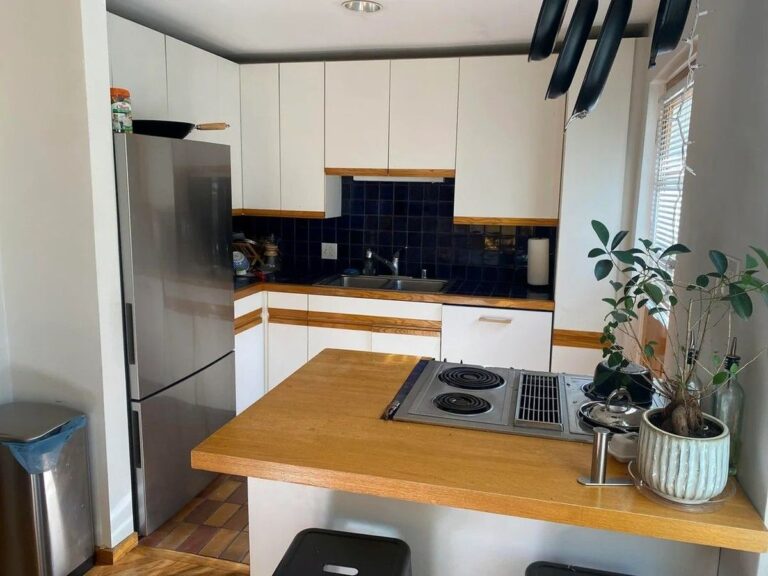
The original setup feels closed even though the layout is similar. The fridge stands out as a separate block, upper cabinets run heavy across the wall, and the dark backsplash compresses the space.

The peninsula exists, but it reads more like an obstacle than a connector. There is no clear flow between cooking and seating, and each surface feels like its own piece instead of part of a system.
After: Integrated Surfaces That Open the Space

The new version removes those breaks. The panel-ready fridge blends into the cabinetry, so the wall reads as one continuous surface. White cabinets reflect light, while wood sections add contrast without taking over.
The peninsula now works as a transition into the dining area. It adds seating without closing the kitchen, which makes the whole space feel more connected.

The corner sink frees up counter space, keeping the working zone compact and efficient. The new range hood replaces the old downdraft setup, solving a functional issue while also anchoring the layout vertically.
What Actually Changed
The layout stayed almost identical, but the way it functions and reads is completely different.
The fridge placement and treatment fix one of the biggest issues in the original setup. Before, it sat as a separate block near the edge of the kitchen, interrupting movement and visually cutting the space. Now it’s panel-ready and integrated into the cabinet wall. That removes a major visual break and makes the entire back wall read as one continuous surface.
The kitchen also shifts from separate zones into a connected working system. The peninsula becomes the main prep and social area, linking directly to the dining space. Instead of working around it, everything now flows through it.

Storage improves without becoming visible. Pull-outs, integrated trash, and better corner use reduce clutter on the counters. This is where most of the “it feels bigger” effect actually comes from. Less friction in daily use makes the space feel more open.
Material contrast is handled with control. White cabinets reflect light across the room, while wood sections add depth in specific areas instead of covering everything. This avoids both extremes: the flat look of all-white kitchens and the heaviness of full wood setups.
The quartzite countertop adds subtle movement without competing with the rest of the kitchen. It introduces variation while keeping the palette calm, which helps the space stay readable.
Ventilation is no longer limiting the layout. Replacing the old downdraft system with a proper range hood improves airflow and allows for a better appliance setup. It also adds a vertical element that gives structure to the peninsula.
Lighting works differently because of all these changes. With fewer visual breaks, light travels further across the surfaces. That’s why the kitchen reads brighter and more open without any structural expansion.
Nothing here adds square footage. The difference comes from removing interruptions, improving flow, and making every element work together instead of competing for space.