

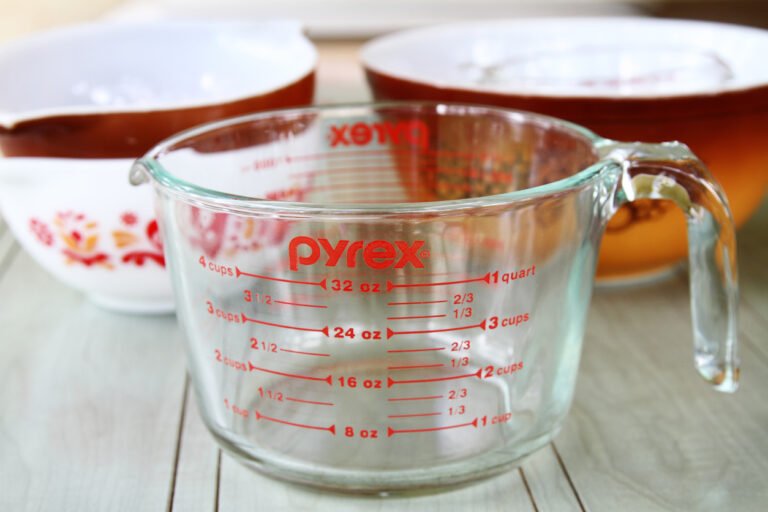


You’re clearing the kitchen cabinet before the holidays, and the old glass measuring cup goes in the donation box. The red lines are faded, the handle feels a little odd, and there’s a newer one in the drawer anyway.
Take it back out for a minute. That worn cup may be decades older than you think, and vintage Pyrex has a loyal collector following. You don’t need a guidebook to get a first idea of its age: three details on the cup itself tell you most of the story.
Why the logo alone won’t date your cup
Pyrex has been around for more than a century. According to the Corning Museum of Glass, the brand was established in 1915 by Corning Glass Works, and more than 150 glass compositions have been used for Pyrex products since then. Corning later switched almost all of its tableware to tempered soda-lime glass.
That’s why the popular shortcut, all-caps “PYREX” means old and lowercase “pyrex” means new, isn’t reliable. The museum explains that the move from upper to lower case was a rebranding of the trademark and is not a conclusive way to tell what glass a piece is made of. Sources don’t even agree on when the lowercase logo arrived. Collectors who have compared many cups say the same thing: the capitals are a clue, not proof.
The 3 details that tell you how old it is
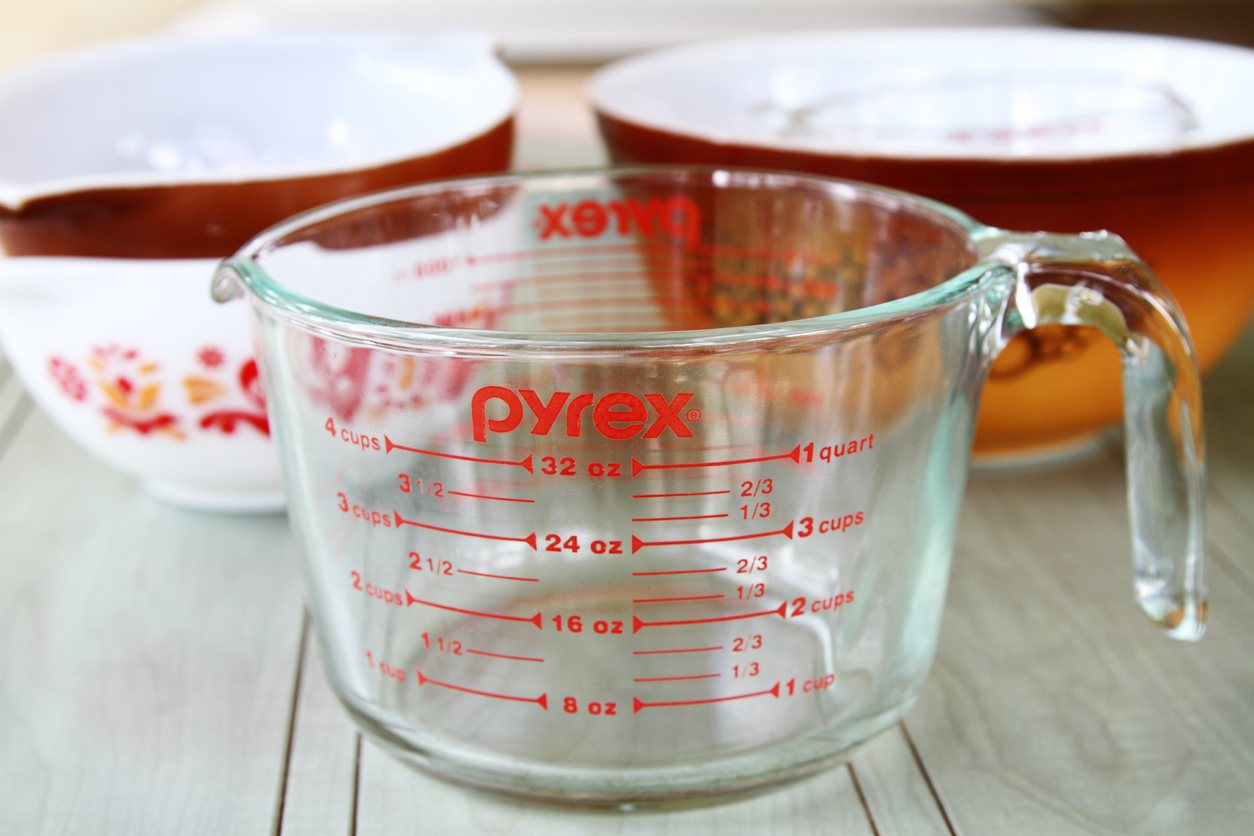
- The measurement lines. Metric markings were added around 1975. A cup with only cups and ounces, no milliliters, is likely older than that.
- The handle. Pyrex handles were redesigned in the early 1980s into the open-bottom style many kitchens use today. A handle that’s closed at the bottom and joins the cup in a full loop points to an earlier cup.
- Where the logo sits. By the 1940s, cups had red markings, with the logo near the spout or running vertically beside the measurements. In the early 1980s, the logo moved up to the top rim. Cups from the 1920s had raised or etched markings and no red ink at all.
Put the three together. A cup with no metric lines, a closed handle and a logo beside the measurements is a strong candidate for an older piece. The museum also notes that Corning stamped many pieces with small dots and dashes, manufacturing date codes, so look closely at the glass for them too.
Older cups are worth keeping for more than nostalgia. They often turn up at thrift stores, garage sales and in grandparents’ cabinets, and if your cup has an unusual color or pattern, it’s worth comparing it with sold listings before you let it go. If you’d rather give an old thrift piece a new life, it doesn’t take much: a plain blue thrift store pitcher became a designer-looking vase with white spray paint and hand-painted stripes.
Before you bake with an old measuring cup
None of these details is a guarantee of the glass type, and age alone doesn’t make a cup valuable. Chips, cracks and deep scratches lower both value and safety: retire a cup with any crack, even a small one.
Whatever its age, a glass cup can break with a sudden temperature change. Don’t take it straight from the freezer to a hot oven or stovetop, don’t pour boiling liquid into a cold cup, and never set hot glass on a wet or cold surface. Faded red markings are cosmetic, but if the paint is flaking, keep the cup for display and measure with a newer one.
Before it goes in the donation box, look at the lines, the handle and the logo. That’s the trick.