

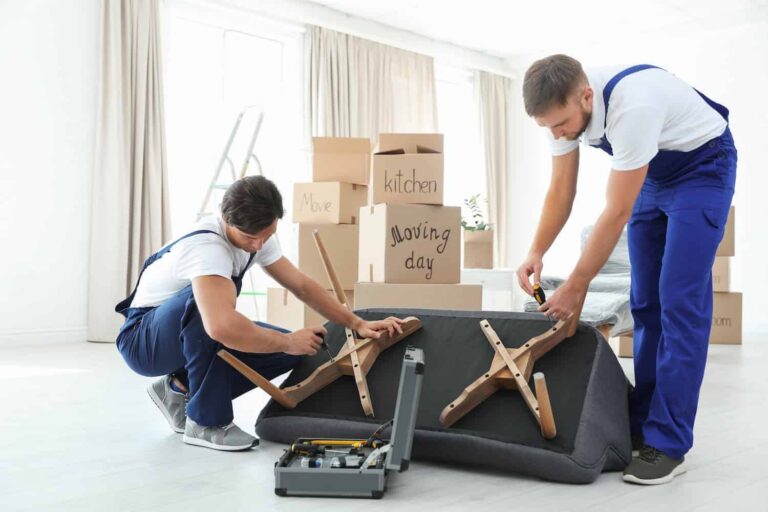

Yes, many professional movers will provide furniture assembly services. They’ll disassemble furniture before a move and reassemble it at your new home. However, certain items might not qualify. Movers handle standard household pieces like beds, tables, dressers, and freestanding bookshelves, but they typically won’t touch items that pose safety, fragility, or hygiene risks.
If you’re thinking about having your movers handle furniture assembly and disassembly for you, this guide covers which furniture movers will and won’t disassemble, when it makes sense to handle it yourself, and how to prep it all before moving day.
Table of Contents
What Furniture Do Movers Assemble and Disassemble?
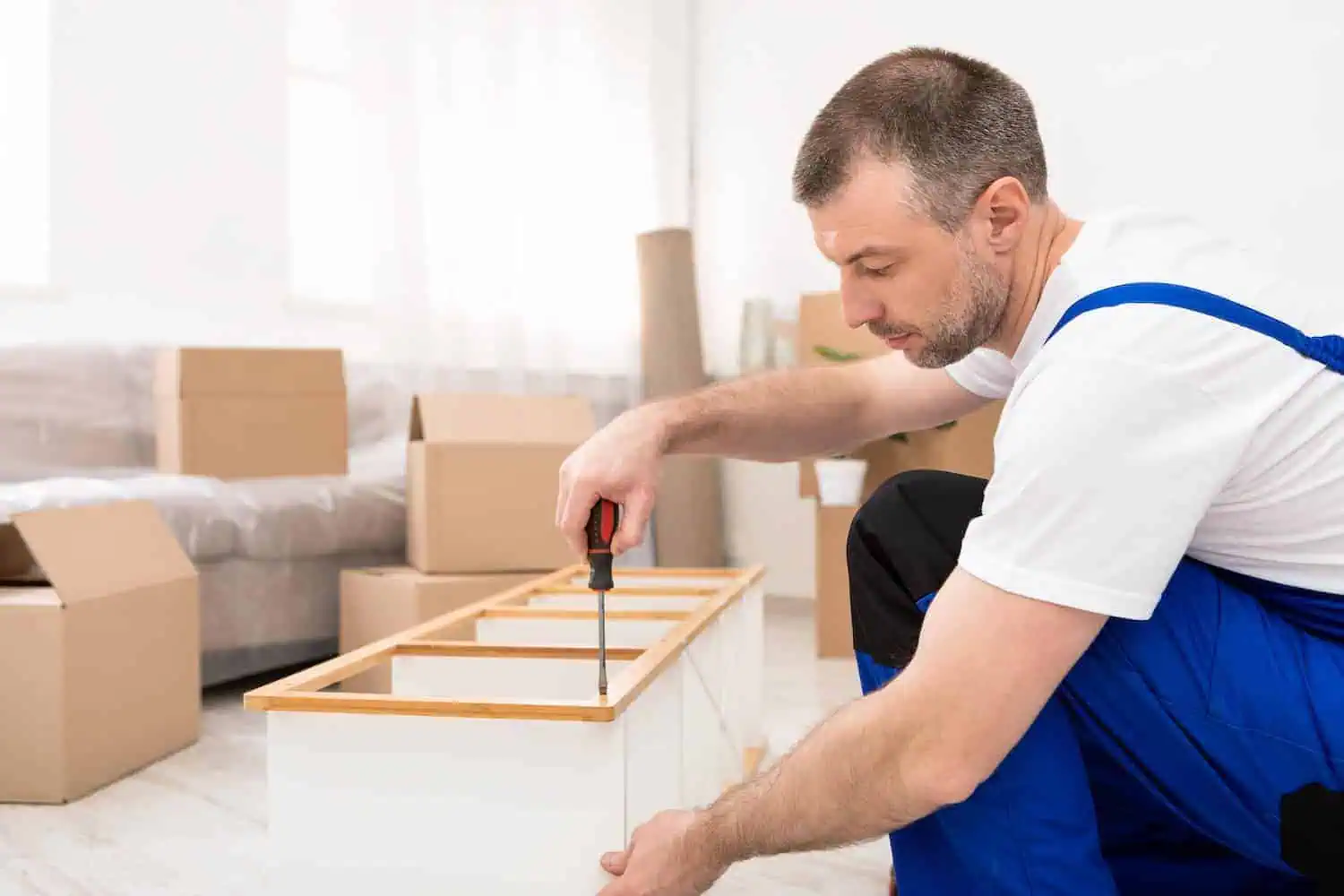
Most movers will handle most bulky furniture items, like couches, bedframes, dressers, and desks. Disassembling furniture before a move makes it easier to navigate tight spaces like doorways, stairwells, and hallways. This extra step also helps pieces fit more efficiently in the moving truck and reduces the risk of injury to both movers and your belongings.
Below, we list common pieces of furniture that movers will take apart and put together, along with items they won’t disassemble and why. However, this ultimately depends on the type, weight, and style of the furniture you have, so when in doubt, ask your moving company in advance.
Items Movers Typically Will Disassemble
These are the standard household items most professional movers are trained and equipped to take apart. Disassembly is recommended for these pieces to protect doorways, prevent damage, and make loading and unloading safer for everyone:
- Beds and bed frames: Movers can disassemble standard beds and bed frames of all sizes. Separating the frame, headboard, and footboard makes it far easier to move through tight spaces and protects the pieces from scratches and stress during transport.
- Tables and nightstands: The process usually involves removing drawers, legs, and any other parts that are loose or stick out. Taking off table legs dramatically reduces the space the furniture takes up and protects them from snapping under pressure.
- Dressers: They’re one of the bulkier items to move, but disassembling them makes it much easier and lighter. Similar to nightstands, drawers, legs, and other removable parts will be taken off. Keep in mind that built-in dressers usually can’t be disassembled.
- Cabinets: Movers can take apart and transport most freestanding cabinets. However, wall-mounted and built-in cabinets often can’t be disassembled or moved.
- Bookshelves and bookcases: Freestanding bookshelves and bookcases are good to go, but built-ins and wall-mounted pieces usually stay behind. Disassembly involves removing legs, drawers, or other loose pieces.
Items Movers Typically Won’t Disassemble
Some items are off-limits for furniture disassembly due to safety regulations, structural complexity, fragility, or hygiene concerns. Attempting to move or dismantle these without the right expertise can damage the item, and improper handling might also void warranties or create liability issues for the moving company.
- Cribs and baby furniture: There are many safety regulations involving children’s furniture. Because of this, movers usually leave assembly and disassembly up to the homeowners to ensure proper reassembly and compliance with safety standards.
- Pool tables: Most need specialized disassembly due to their massively heavy parts, including the slate bed, which can crack if handled incorrectly.
- Adjustable beds and massage chairs: Both are heavy and have many electrical and moving parts. They’re difficult and risky to disassemble and move, and usually require a specialist.
- Waterbeds and aquariums: Transporting these items poses serious risks of leaking and damage. Movers will likely move aquarium cases just fine, provided you follow the steps to pack an aquarium properly.
- Murphy beds: They’re attached to the floor or wall, so moving one requires specialized tools and knowledge to safely remove and transport.
- Particle board furniture: Movers usually won’t handle it, as it can easily come apart, snap, or get damaged even with proper handling.
- Damaged, unstable, or infested items: A cracked antique table or a bedbug-infested bedframe is typically a no-go. Moving companies carry liability for damage that occurs during a move, and items that are already compromised create too much risk.
Should You Disassemble Furniture or Ask a Mover to Do It?
Generally, if you’re handy and have the time, you can save money disassembling and reassembling your own furniture. Otherwise, getting the pros to help can make moving day less stressful and take less time. Here are the best-case scenarios for each option:
When DIY Disassembly Makes Sense
- You have the right tools already on hand.
- The furniture is simple to take apart (basic flat-pack pieces, IKEA-style assembly).
- You want to reduce total move time and keep costs down.
- You’re moving items that movers typically won’t handle, like cribs or specialty furniture.
When Letting Movers Handle It Makes Sense
- You don’t have experience with furniture disassembly or the right tools.
- The furniture is complex, heavy, or has parts that are difficult to track and reinstall.
- You want experienced hands reducing the risk of damage to your belongings.
- Time is limited, and you want to shorten your to-do list on moving day.
Most moving companies don’t charge a separate fee for furniture disassembly, and instead include the service in the estimate for the job. If movers are paid hourly, more time means a higher bill, so requesting disassembly and reassembly services will likely increase your overall moving costs.
The trade-off is that movers bring the materials and high-quality tools you might not have. Experienced movers are also far less likely to damage your belongings. When deciding, you should weigh whether that expertise and efficiency are worth the extra cost for your move.
If you do decide to have your movers help with assembly and disassembly, you can rely on HireAHelper’s marketplace to get the right team for the job. You can compare quotes, read reviews, and book instantly, all in one place on our platform.
Do Movers Reassemble Furniture Too?
Yes, movers will also reassemble your furniture for you at your new home. However, it will typically cost you more if the movers are paid hourly.
This cost can be worth it, since having the movers reassemble your furniture helps you settle in faster. For example, if you want to sleep in a comfy bed on the first night in your new place, opting for reassembly services, your movers can make that happen.
“Disassembling furniture before a move makes it easier to navigate tight spaces like doorways, stairwells, and hallways….[and] helps pieces fit more efficiently in the moving truck, [reducing] the risk of injury to both movers and your belongings.”
Just make sure to confirm reassembly services when you book your move, not on moving day. Unlike disassembly, not all moving companies include reassembly as a standard part of their service, and some may charge an additional fee. Getting it in writing ahead of time ensures there are no surprises.
Frequently Asked Questions About Furniture Disassembly
Do movers assemble furniture after moving?
Most do, but it’s not always included by default. Confirm reassembly services when you book, not on moving day. Some companies include it, others charge extra, and a few don’t offer it at all.
What furniture do movers take apart?
Standard items include beds and bed frames, tables, dressers, nightstands, freestanding cabinets, and bookshelves. Anything built-in, wall-mounted, or requiring specialty tools is typically excluded.
Should I disassemble furniture before movers arrive?
It’s not required, but it can save time and money, especially for simple flat-pack pieces you’re comfortable handling. For complex or heavy furniture, let the movers assess and handle it to avoid damage.
Can movers disassemble IKEA furniture?
Most standard IKEA furniture can be disassembled by movers. However, particle board construction means pieces are prone to damage with repeated assembly and disassembly. Ask your mover to assess specific items before committing.
What happens if furniture can’t be reassembled?
Most reputable moving companies carry liability coverage in case something breaks during disassembly or reassembly. Check what your mover’s coverage includes and consider purchasing additional valuation protection for high-value items.
Is it cheaper to disassemble furniture myself?
It can be, since movers paid by the hour will spend less time on the job if they don’t have to make time for assembly. But factor in the cost of tools, your own time, and the risk of damage if you’re not experienced with furniture disassembly. For complex pieces, professional handling often pays for itself.
What should never be disassembled before a move?
Avoid disassembling cribs and baby furniture (safety regulations require proper reinstallation), adjustable beds and massage chairs (electrical components), and anything already cracked, unstable, or damaged. When in doubt, leave it intact and let your mover advise.