

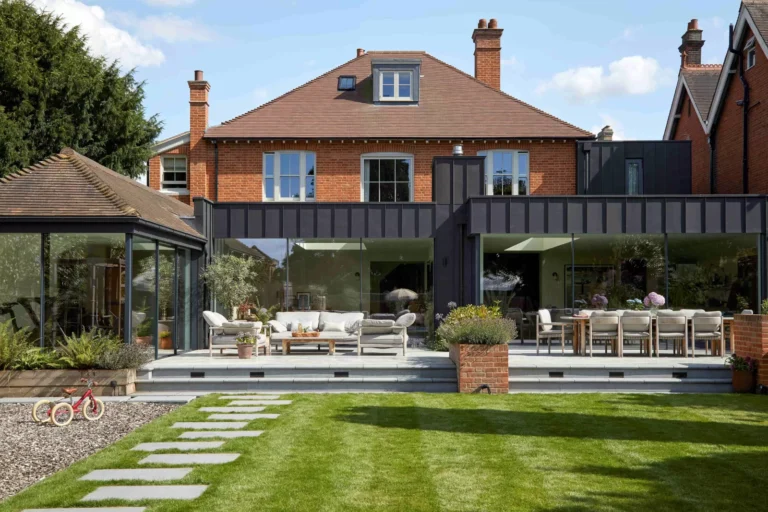

Period homes continue to hold a particular appeal for homeowners who value craftsmanship, proportion and a sense of permanence. Whether Georgian, Victorian, Edwardian or early twentieth-century, these properties often offer generous ceiling heights, robust material palettes and details that are difficult to replicate convincingly in new-build housing. Yet living in an older home also brings practical challenges. Rooms can feel enclosed, circulation may be inefficient, energy performance is often poor, and layouts rarely reflect the way modern households now live.
This is where a considered design approach becomes essential. Rather than stripping away the character that gives a period property its value, a well-qualified architecture practice can help reinterpret the home for contemporary life while retaining its architectural integrity. The most successful projects are not driven by fashion or short-term trends. They are guided by a careful understanding of the building’s original form, its constraints, and the opportunities for meaningful improvement.
Understanding the Existing Building First
Before any design work begins, it is important to understand what kind of building is being altered. Many older homes have evolved over time, often through piecemeal extensions, internal partitions, replacement windows or poorly considered refurbishments carried out by previous owners. What appears to be a simple renovation can quickly reveal structural, spatial or conservation-related issues.
An architecture-led process typically begins with a detailed appraisal of the existing property. This includes measured surveys, an assessment of natural light, circulation patterns, structural logic and material condition. In listed buildings or homes within conservation areas, planning policy and heritage sensitivity also become central to the brief.
This early stage is often the difference between an ordinary refurbishment and a genuinely coherent transformation. Rather than making isolated changes room by room, the home is considered as a complete architectural composition. That allows new interventions to feel intentional and properly integrated.
Respecting Character While Improving Function
Many homeowners worry that improving a period home means compromising its original charm. In practice, the opposite is often true. Sensitive architectural intervention can reveal and strengthen character by removing poor-quality additions and restoring clarity to the plan.
For example, many Victorian and Edwardian houses were designed with a formal sequence of front rooms and a more utilitarian rear arrangement. While this made sense historically, it can feel restrictive today, particularly for families who want a connected kitchen, dining and living space. An architect can assess which walls or later additions are limiting the home’s functionality and explore ways to create better spatial flow without losing the building’s essential identity.
That might involve opening selected areas at ground floor level while preserving cornices, joinery, chimney breasts or original staircases. It may mean designing a rear extension that reads clearly as a contemporary intervention, rather than an imitation of the original house. Done well, this contrast can be highly effective. The historic fabric remains legible, while the new work supports a more practical and generous way of living.
Bringing in More Light Without Losing Warmth
One of the most common limitations in period homes is access to natural light, particularly in terraced or closely arranged urban properties. Rear rooms can feel dark, and the centre of the plan may rely heavily on artificial lighting throughout the day.
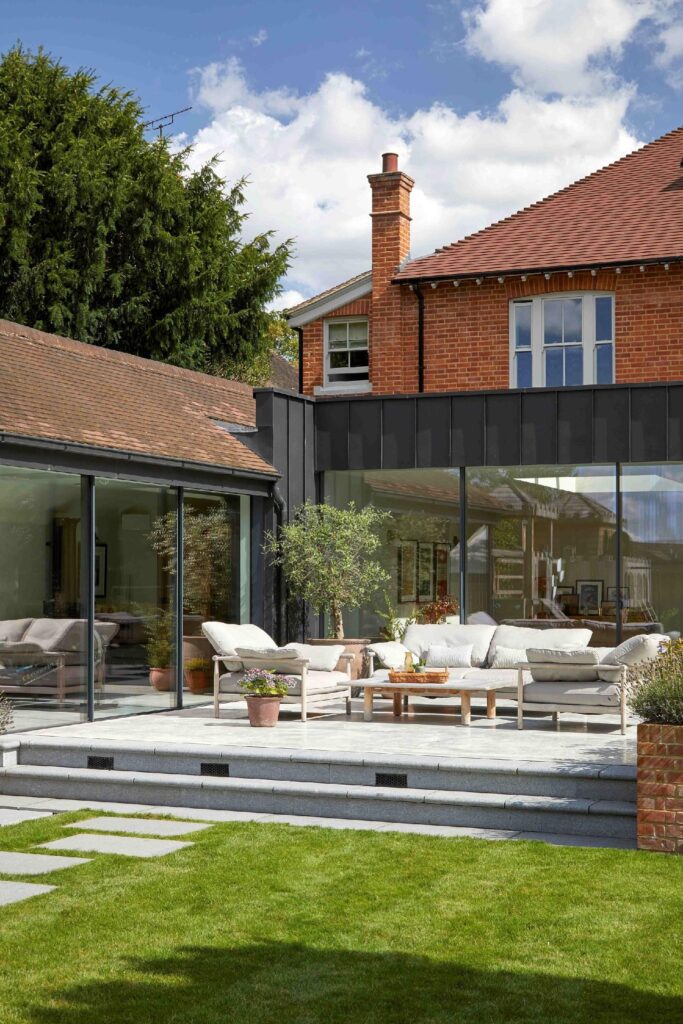
Full-height glazed doors connect the original brick villa to a new patio and garden at New London Road. Photography © Anna Stathaki.
Architectural design can address this through a combination of spatial planning, glazing strategy and material selection. Rooflights, internal glazed screens, carefully positioned openings and reconfigured layouts can all improve daylight penetration. The aim is not simply to make a home brighter, but to ensure light is distributed in a way that enhances volume, texture and everyday comfort.
At the same time, it is important to avoid creating spaces that feel overexposed or disconnected from the character of the original building. Period homes benefit from a certain visual depth and solidity. A successful design balances openness with enclosure, allowing light to enter without making the architecture feel generic or insubstantial.
Solving Structural Challenges Early
Older properties often conceal structural issues that only become apparent once works begin. Timber decay, undersized spans, differential settlement, previous alterations and ageing roof structures are all common. This is why architectural input is especially valuable at the earliest stage.
An experienced design team will coordinate with structural engineers and specialist consultants where required, ensuring that proposals are realistic and buildable from the outset. This is particularly important when creating larger openings, lowering floors, extending at the rear or altering roof structures for loft conversions.
Early structural coordination does more than reduce construction risk. It also allows design decisions to be made with greater confidence. Instead of retrofitting technical solutions after planning approval, the project can develop with spatial ambition and technical rigour in parallel. That tends to result in cleaner detailing, more efficient construction and a better final outcome.
Improving Energy Performance in a Sensitive Way
Comfort and energy efficiency are major concerns in older homes, but upgrading performance requires care. Inappropriate insulation, ventilation or window replacement can damage both the fabric and the appearance of a period property.
A thoughtful architectural approach looks at performance as part of the whole-building strategy. This may include improving airtightness, introducing breathable insulation systems, upgrading heating distribution, considering underfloor heating where suitable, and repairing rather than automatically replacing original features. Secondary glazing, draught-proofing and carefully selected new doors or windows can also make a significant difference when designed properly.
The goal is not to erase the age of the building, but to make it more comfortable and resilient for modern occupation. In many cases, modest but well-judged upgrades can produce substantial improvements without compromising heritage value.
Creating Better Everyday Living
The best home improvements are often the ones that support ordinary routines. Storage, utility spaces, acoustic separation, family bathrooms, study areas and stronger links to the garden all have a major influence on how a house feels day to day.
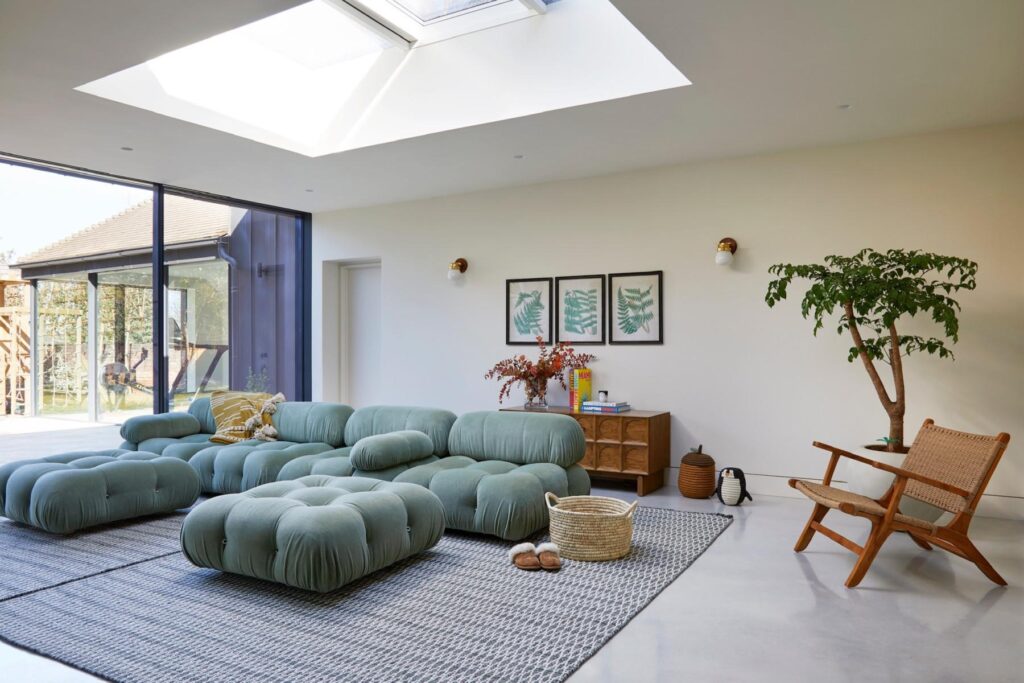
A new family living space at New London Road, with a skylight and full-height sliding doors drawing light and garden views deep into the plan. Photography © Anna Stathaki.
Period homes were not designed for contemporary expectations around appliances, hybrid working, open-plan family life or integrated storage. An architect can help resolve these needs in a way that feels calm and considered rather than crowded. Bespoke joinery, carefully framed views, layered material palettes and a disciplined spatial hierarchy can all help older homes function more effectively.
This is especially important where floor area is limited. Good design is not just about adding square metres. It is about using the available volume more intelligently and making each space work harder without feeling over-designed.
Adding Long-Term Value Through Good Design
While many homeowners begin with a practical problem to solve, well-designed alterations also contribute to the long-term value of the property. Buyers tend to respond positively to homes where the relationship between original features and modern interventions feels resolved. A coherent scheme with good proportions, durable materials and clear architectural logic usually performs better than a series of cosmetic updates.
This does not mean every project needs to be extensive or expensive. In many cases, the most effective changes are measured and strategic. Reworking the ground floor plan, improving connection to the garden, refining material transitions and restoring lost architectural detail can transform the experience of the home without unnecessary complexity.
The key is to approach change with discipline. Older houses reward careful thinking. They rarely benefit from applying standard solutions without reference to context, structure or proportion.
A More Considered Way to Transform a Home
Reimagining a period property for modern living is rarely straightforward, but that is precisely why it benefits from professional architectural guidance. A good design process helps homeowners look beyond surface-level improvements and think more carefully about how the building can evolve. It addresses light, function, structure, energy performance and heritage value together, rather than as separate concerns.
Most importantly, it allows the home to retain what makes it distinctive. The aim is not to turn a period house into something new, but to help it perform better for contemporary life while preserving the qualities that made it worth choosing in the first place. When handled with care, these projects can achieve a rare balance: architectural character, modern comfort and a sense of continuity between past and present.
— — —
Author bio
EPA Design is a luxury architectural studio with expertise in heritage-sensitive residential design, spatial transformation and technically resolved home improvements. The practice works across period and contemporary properties, creating refined homes that balance character, performance and modern living.
All project imagery: New London Road, Chelmsford. Photography © Anna Stathaki. Interior design by Fiona Duke Interiors.