

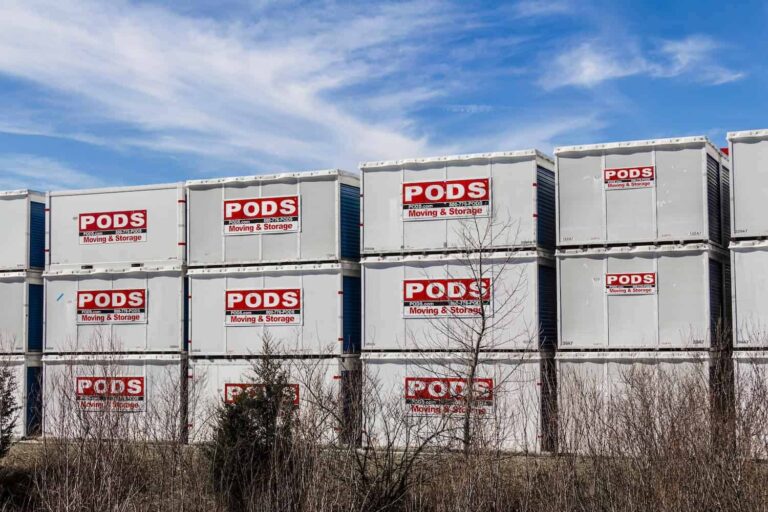

Most people moving a standard 2-bedroom home or larger will need a 16-foot PODS container. For a studio or small apartment (under 500 sq. ft.), the 8-foot container is the best choice, while the 12-foot option typically fits 1- to 2-bedroom apartments.
Portable, on-demand storage (PODS) makes moving easy: they drop off a clean container, you fill it (or hire movers to help), and they move it to your new home. But picking the right size is one of the most important steps. If you’re unsure which size fits your needs, this guide breaks down exactly what each container holds so you don’t overpay or leave items behind because they don’t fit.
Table of Contents
Overview of PODS Container Sizes
PODS offers three main container sizes to handle everything from dorm room cleanouts to full-scale family moves: the 8-foot, 12-foot, and 16-foot containers.
Choosing the right size is the most important step in your rental process. If you go too small, you might have to leave furniture behind. If you go too big, you are paying for empty air.
Here is the quick overview to help you decide which size matches your move:
- 8-foot container: Best for studio apartments, dorms, or moving a single room (approx. 500 sq. ft.).
- 12-foot container: Ideal for 1-bedroom apartments or smaller 2-bedroom homes (approx. 500–800 sq. ft.).
- 16-foot container: The go-to choice for 2-bedroom homes or larger (approx. 1,200 sq. ft.).
Keep in mind that while the 12-foot and 16-foot containers are both roughly the size of a parking spot, they hold drastically different amounts of furniture. If you are on the fence, we usually recommend sizing up or consulting a professional to ensure your move goes smoothly.
Dimensions and Size Comparison for PODS Containers
PODS moving container sizes range in length from 8 to 16 feet. You can fit most common household items inside a PODS unit, including couches, beds, dressers, and home decor.
However, you need to be sure you select the right container rental size for your specific needs. Smaller container rentals are typically fine for people who live alone or don’t have much furniture, while the large containers are best for a large home or rooms filled with furniture.
Here is a quick breakdown to help you compare your options.
Details on PODS Container Sizes
| Dimensions | Cubic Footage | Weight Limits | What It Can Hold |
| 8′ x 7′ x 8′ | Fits up to 500 sq. ft. | 4,200 lbs. | Bed, dresser, bookshelf, TV, several boxes |
| 12′ x 8′ x 8′ | Fits 500-800 sq. ft. | 4,700 lbs. | Furniture, decor, and appliances from a 1- or 2-bedroom apartment, including beds, dressers, couches, and electronics |
| 16′ x 8′ x 8′ | Fits 1,200 sq. ft. | 5,200 lbs. | Large furniture, such as sectional couches, and appliances from a 3- or 4-bedroom home |
Important Note on Weight: Weight doesn’t affect pricing for PODS temporary storage options. However, you should still consider getting multiple PODS units if you’re near the weight limit, as excess weight can make transportation harder or incur fees.
What Fits in PODS Containers?
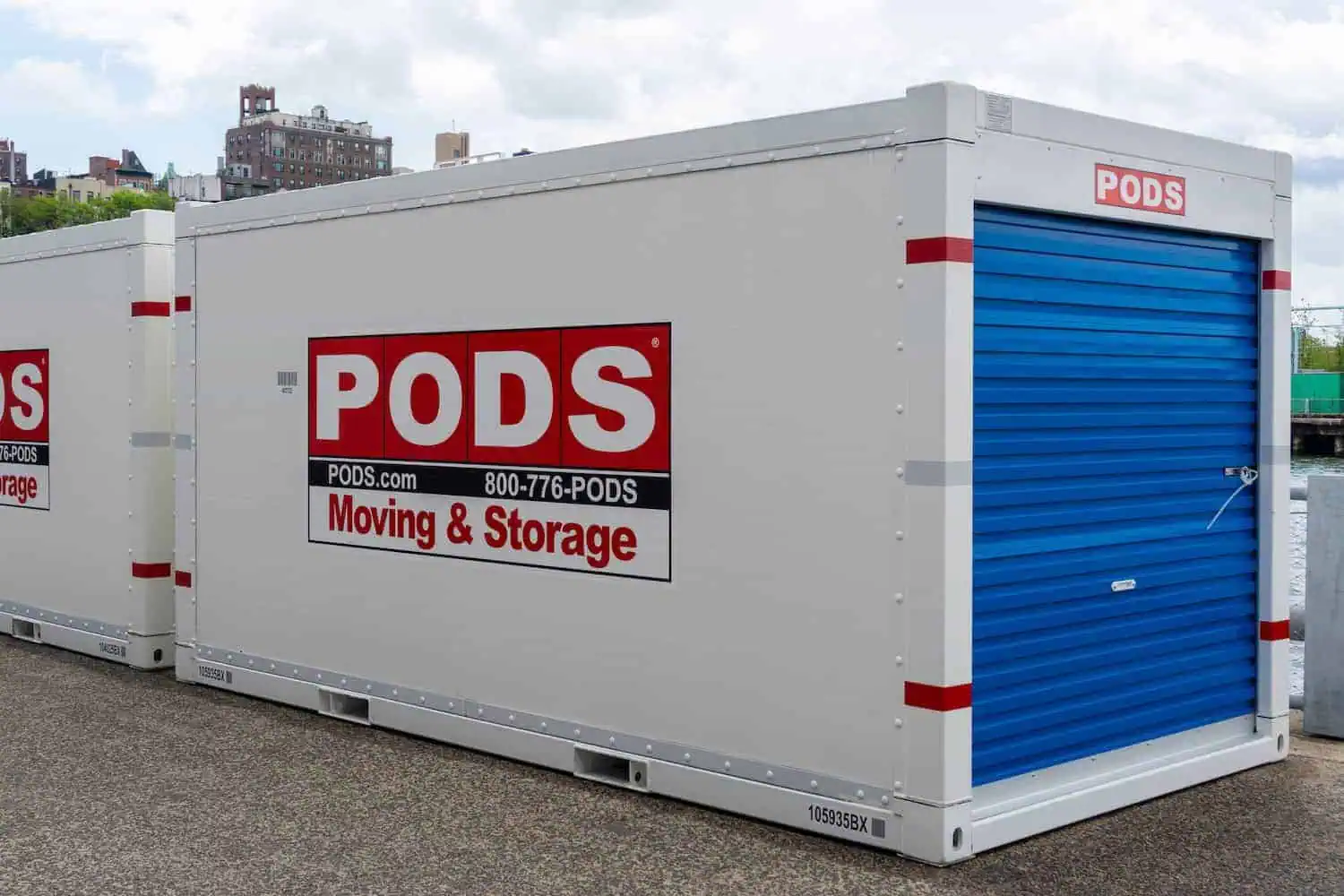
While the charts give you the raw numbers, it is often hard to visualize exactly how much furniture fits inside a steel box. To help you plan, here is a realistic look at the inventory you can fit into each size option.
Think of this unit as roughly comparable to a 10-foot rental truck. It is the perfect size for a college student moving out of a dorm or a single person leaving a studio apartment. It is also ideal if you are remodeling a single room and just need to temporarily clear out the furniture.
- Best for: Studio apartments, dorms, or partial moves.
- What actually fits: A mattress set (up to Queen), a loveseat, a dresser, a small dining set, and approximately 80 boxes.
- When to size up: Don’t underestimate bulky furniture. While a studio apartment fits easily, an overstuffed sofa or an oversized entertainment center might eat up too much floor space for this small unit.
The 12-foot container is the “middle child” of the lineup — bigger than a studio hauler but smaller than a full-family mover. It is generally the right choice for a spacious 1-bedroom apartment or a minimalist 2-bedroom home.
- Best for: 1-bedroom apartments or small 2-bedroom homes.
- What actually fits: A King or Queen bed, a standard sofa, a dining room set, a TV console, and boxes for kitchen and wardrobe items.
- When to size up: If you have a 2-bedroom home with large appliances (washer/dryer) or a sectional couch, you will likely need to upgrade to the 16-footer.
This is the largest and most flexible option PODS offers. If you are moving a standard 3-bedroom home or long-distance, this is the container you will likely need. It is roughly the size of a standard parking spot.
- Best for: 3- to 4-bedroom homes or long-distance moves requiring maximum space.
- What actually fits: A King bed, a large sectional sofa, a dining table with chairs, a washer and dryer, bookcases, and roughly 150+ boxes.
- When to size up: If you have a 4-bedroom home or a garage full of tools, one 16-foot container might not be enough. Many homeowners in this bracket rent one 16-foot unit and add a second 8-foot unit to handle the overflow.
How to Choose the Right PODS Container Size
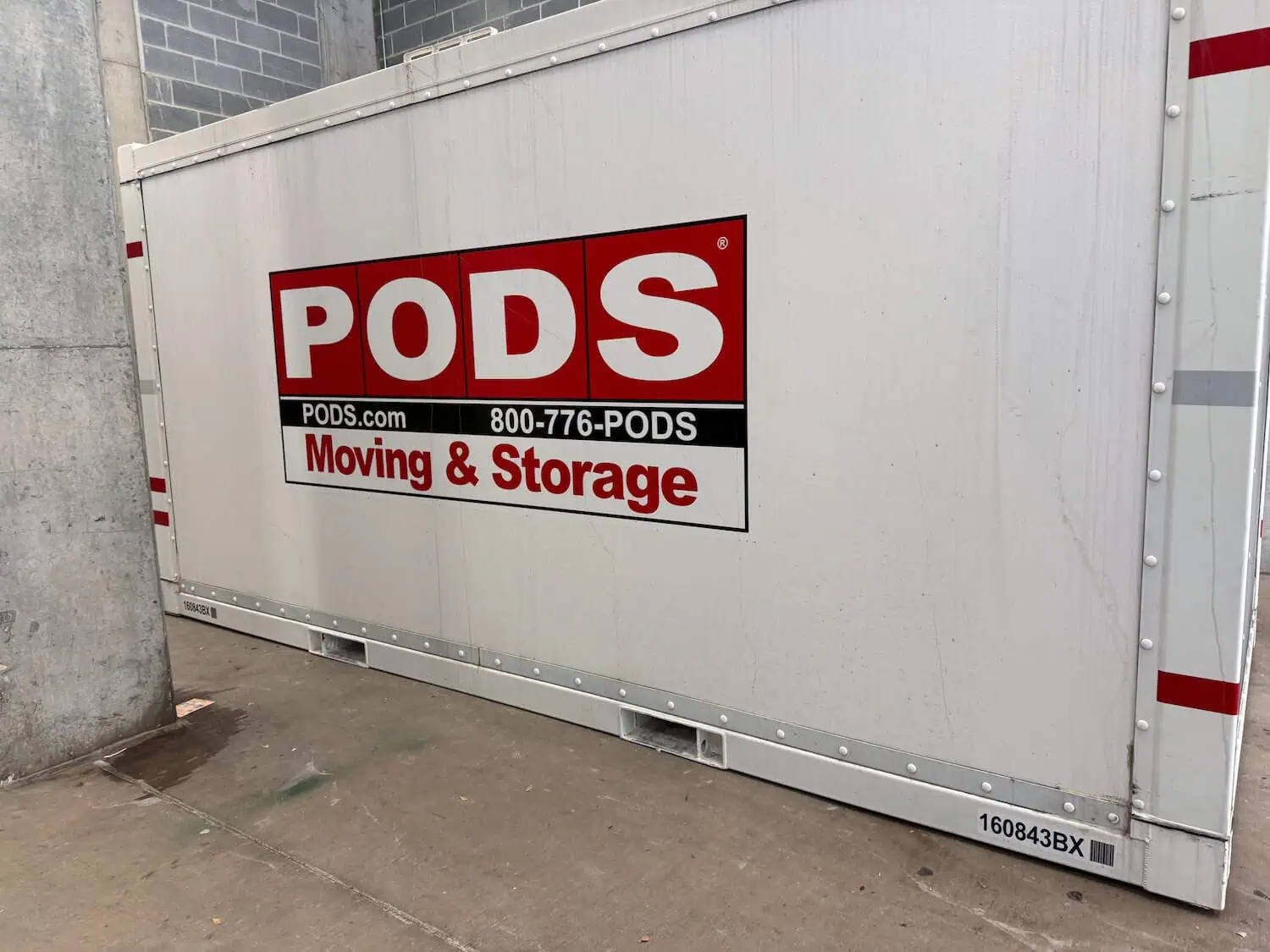
While your home size is a big factor, it’s not the only one. When comparing container size options, it’s also important to consider your home’s type and how many items you have.
Assess Your Home Size and Type
Are you a minimalist or a maximalist? Consider a large PODS rental if you have a lot of stuff or live in a 3- or 4-bedroom home. College students, people with few belongings, or folks who live alone can often get by with a smaller container rental.
“Be mindful of fragile or lightweight items when you load your PODS container. Don’t place heavier items on top of them. Otherwise, delicate belongings may get crushed under the weight.”
A medium-sized PODS container can be perfect for people with 1- or 2-bedroom homes, but keep in mind that if you have a basement or attic, the actual amount of stuff you have might be closer to a 3-bedroom home in the end.
Create a Detailed Inventory
Determine what you’re taking during the move, then create a detailed inventory of your possessions. Consider breaking your inventory list into categories, such as by room, or keeping similar items together. Not only does this help with determining what type of PODS rental you need, but it also makes it easy to ensure everything you want to keep makes it inside the PODS container.
When in Doubt, Go Slightly Larger
If you’re on the fence about PODS container sizes, go with the larger option, so you have plenty of space. It’s much better to have a little too much space than realize you can’t fit your favorite recliner inside the container.
Factor in Your Storage Needs
Think about your storage needs when you request a PODS container rental. Do you only have items in your house, or are there outdoor toys or tools in your shed that require storage? Consider a large unit if you want to store outdoor furniture, kids’ play equipment, and gardening tools along with your indoor essentials.
General Size Guidelines
To help you make the final call, here is a quick summary of when to choose each size.
- Choose the 8 ft container if you live in a studio apartment (under 500 sq. ft.), are moving out of a dorm room, or only need to move a specific room or partial load.
- Choose the 12 ft container if you are moving a 1-bedroom apartment or a smaller 2-bedroom home (500–800 sq. ft.). This is also a smart pick if you are a minimalist who has already decluttered heavily.
- Choose the 16 ft container if you have a standard 2- or 3-bedroom home (up to 1,200 sq. ft.). This is your safest bet for long-distance moves or homes with bulky furniture like sectional sofas.
Common PODS Sizing Mistakes to Avoid
Even if your inventory list looks right on paper, real-world variables can throw off your math. Watch out for these common pitfalls that often force people to order a second container at the last minute.
- Counting rooms instead of stuff: Saying you have a “2-bedroom home” is really just a starting point! The actual amount of belongings you need to move depends heavily on your lifestyle and how many people share your space. For instance, a single person who loves the minimalist look will have a lot less to pack up than a family of three who loves collecting things.
- Packing flat instead of tall: The biggest waste of space comes from packing like you are loading a car trunk. If you don’t stack boxes floor-to-ceiling, you could waste up to 25% of your container’s volume. You are paying for the height, so make good use of it!
- Ignoring dead air from odd shapes: Cubic-footage calculators assume everything fits together perfectly, like blocks. In reality, round tables, bicycles, and curved sofas create “dead air” gaps that boxes can’t fill. Always buffer your estimate for these awkward shapes.
- Overlooking weight limits: While rare, it is possible to hit the weight limit before the container is full if you are moving dense items like a massive book collection, tools, or gym weights.
Pro tip: Professional packing creates space. If you are on the borderline between sizes, the difference often comes down to how you pack. Consider hiring Labor-only movers to load your container. Experienced movers can maximize vertical space and fill tight gaps, often fitting a 3-bedroom home into a container that an amateur packer would overflow.
How to Effectively Pack a PODS Container
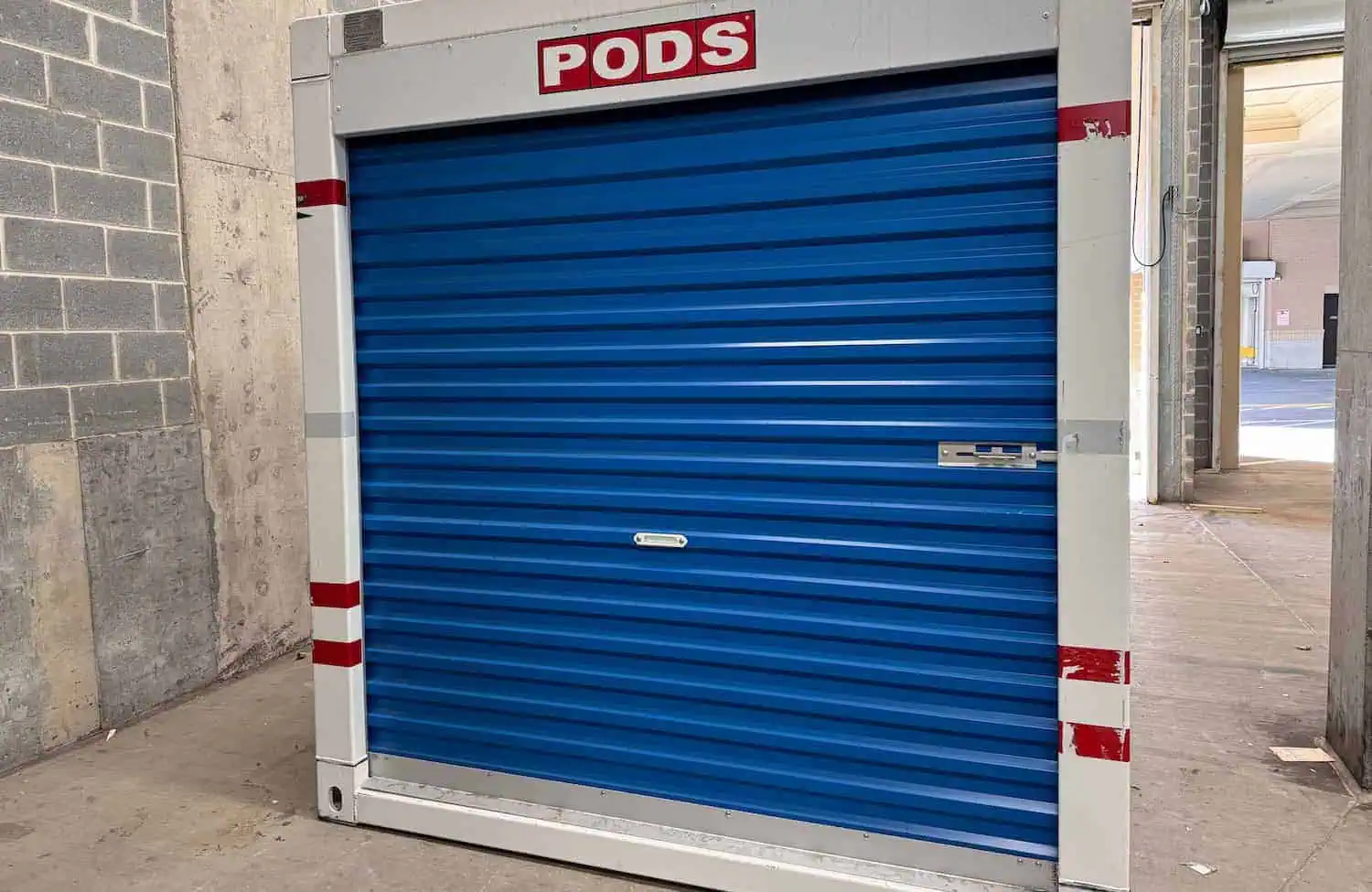
Loading your PODS unit correctly can maximize space and prevent items from getting damaged during transit. Whether you’re cutting it close on space or just want a smooth move, follow these helpful packing tips.
- Choose uniform boxes. As much as possible, ensure your packing boxes are all the same size before you load them into your portable storage containers. This helps prevent boxes from sliding or falling and saves space because you can more easily stack boxes on top of each other.
- Pack vertically. Maximize space by packing items vertically rather than horizontally as you load your PODS unit. Stacking boxes or furniture vertically helps prevent items from sliding around and utilizes the greatest amount of space from the floor to the ceiling.
- Utilize wall space with tie-downs. Using tie-downs helps prevent items from falling while in transit. Tie-downs are also important because they help distribute weight evenly in your PODS rental and improve stability.
- Keep essentials easily accessible. You should keep important documents and other essential items you might need during your move on your person. But if you have to put them in your container, put them near the front of your PODS container so you can grab them quickly.
- Disassemble large furniture. Make the most of every square foot in your PODS unit by taking apart large pieces of furniture. Disassembly also helps reduce the risk of damage during transit.
- Put heavy boxes on the bottom. Be mindful of fragile or lightweight items when you load your PODS container. Don’t place heavier items on top of them. Otherwise, delicate belongings may get crushed under the weight. In other words, don’t put that box full of books on top of your framed family photos!
- Avoid packing prohibited or unsafe items. Your PODS unit shouldn’t contain flammable items, including paint, nail polish, aerosol hair spray, or gasoline. You should also avoid packing live animals, fertilizer, very sentimental items like family heirlooms, plants, and perishable food.
PODS Sizing vs Other Moving Containers
PODS is often used as a catch-all term for portable storage, but size options vary significantly between companies. The biggest differentiator is the 16-foot container, which is a massive size unique to PODS. Most other major competitors rely on smaller, modular containers that you rent in multiples.
Here is how PODS sizes generally stack up against the competition:
- PODS vs. U-Pack ReloCube: A U-Pack ReloCube is roughly 6’ x 7’ x 8’. In terms of volume, it is slightly smaller than the 8-foot PODS container. If you need the capacity of a 16-foot PODS unit, you would likely need about three ReloCubes to match it.
- PODS vs. U-Haul U-Box: U-Boxes are smaller plywood containers (approx. 8’ x 5’ x 7’). Because they are more compact, you will typically need four to five U-Boxes to equal the space of a single 16-foot PODS container.
- PODS vs. rental trucks: A 16-foot PODS container is roughly comparable to a 15-foot rental truck. While a 20-foot or 26-foot truck definitely holds more, the PODS container offers the advantage of ground-level loading, meaning you don’t have to navigate a steep loading ramp.
Frequently Asked Questions
Is PODS a good way to move across the country?
Renting a PODS container helps make your cross-country move hassle-free. You can load the container at your own pace — no need to rush! You may find this is also a safer option, as you’re the only one handling your belongings. Traditional moving services may shuffle your prized possessions between trucks, but PODS storage conveniently keeps everything in one container. Plus, PODS rentals are often more cost-effective than hiring a traditional van line for a long-distance haul.
What can’t I load into a PODS moving container?
Live animals should not be loaded into your PODS moving container. You should also avoid packing flammable materials, cleaning supplies, radioactive materials, very sentimental items like family heirlooms, items that can’t be replaced easily, and perishable food into your temporary storage container. You can’t put a car, motorcycle, or riding lawnmower in your PODS, either.
How much time do I need to move with a PODS moving container?
PODS offers 30-day rentals, so you can take your time planning your move. If you need more time when your 30 days are up, you’re able to continue renewing your rental in 30-day increments.
Are PODS containers weatherproof and secure?
PODS containers are weatherproof and made from resilient materials, such as steel and wood. These storage containers have steel-locking mechanisms, and you provide your own lock for extra security.
What areas does PODS service, and are there any limitations?
PODS rentals are available in 46 states. The PODZILLA level-lift system service requires a flat, level surface for dropping off and picking up PODS. Some rental communities and HOAs have guidelines that limit or prohibit on-site PODS for residents. You should also check local laws regarding on-site temporary storage.
How do I know what PODS size I need?
Assess your home size and inventory. Use an 8 ft container for studios (under 500 sq. ft.), a 12 ft container for 1-bedroom apartments, and a 16 ft container for homes with 2–3 bedrooms or up to 1,200 sq. ft.
What fits in a 16 ft PODS container?
A 16 ft container fits the contents of a 1,200 sq. ft. home. This typically includes a King bed, sectional sofa, appliances, dining set, and roughly 150 boxes.
Is one PODS container enough for a 2-bedroom apartment?
Usually, yes. A 12 ft container fits a modest 2-bedroom apartment (500–800 sq. ft.). However, if you have large furniture, appliances, or a basement full of items, you should size up to a 16 ft unit.
Can movers help load a PODS container?
Yes. You can hire labor-only movers to load your container. They maximize space, potentially saving you money by fitting your belongings into a smaller container size.
Is it better to get one large PODS or two small ones?
One large 16 ft container is generally more convenient and cost-effective than two smaller ones. However, two containers offer flexibility if you need to separate storage loads or stagger your delivery dates.
What happens if my PODS container is too small?
If your container is too small, you will need to rent an additional container or leave items behind. It is always safer and more cost-effective to size up if you are on the fence.
Are PODS containers bigger than moving trucks?
Not usually. A 16 ft PODS container is roughly comparable to a 15 ft rental truck. A 26 ft moving truck holds significantly more volume than the largest PODS container.
How efficiently do PODS containers need to be packed?
Very efficiently. Poor packing reduces usable space and increases the risk of damage. Stack vertically, disassemble furniture, and fill gaps to get the most out of your rental.