


Want a kitchen that feels more connected without adding a separate dining room? In 2026, kitchen islands are extending beyond prep surfaces and turning into full dining, seating, and social zones. Instead of placing a small overhang with stools, designers are building integrated extensions that reshape the entire layout.

The shift is changing how the kitchen works. Wood slabs stretch past stone counters, floating tables attach directly to islands, and sculptural supports replace standard legs. Some layouts create full dining tables connected to the island, while others use cantilevered surfaces or curved extensions that soften the room.
These showroom kitchens show how island extensions are becoming part of the architecture itself. Each one turns the island into something larger than a work surface.
Floating black island with integrated illuminated dining extension

The dining surface extends directly from the island using a sculptural angled support with integrated lighting. Instead of separating the table from the kitchen, the entire structure reads as one continuous piece. The dark matte cabinetry and concealed lighting sharpen the futuristic look.
What makes this stand out is the contrast between the thin floating surface and the heavy dark base. The extension feels almost suspended inside the room, turning the island into the visual centerpiece rather than just a prep zone.
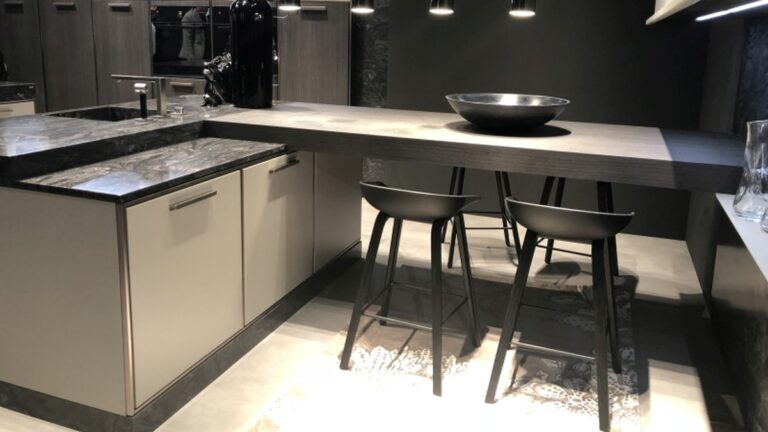
Marble island with raised walnut dining platform

This layout combines a black marble waterfall island with a raised walnut extension that works as a casual dining bar. The layered heights separate cooking from seating without breaking the island into multiple pieces.
The darker stone adds weight while the walnut surface softens the composition. Instead of using a standard overhang, the extension becomes its own architectural platform attached to the island.
Stone prep island connected to suspended wood dining table

The dining table projects outward from the stone island with a thick wood slab that creates a warmer seating zone. Pendant lighting frames the extension while darker cabinetry keeps the background structured.
The design works because the extension changes material completely instead of repeating the countertop. The transition from stone to wood makes the dining section feel intentional instead of secondary.
Rounded wood peninsula extension with asymmetrical support legs

This kitchen replaces the typical rectangular overhang with a rounded wood extension that softens the entire island shape. Thin black metal legs support the outer edge while the curved form creates a more social seating layout.
The rounded profile changes the circulation around the island. Instead of sharp corners blocking movement, the shape opens the kitchen visually and physically.
Black marble island with oversized geometric countertop shape

The island uses an angular stone extension that projects outward beyond the cabinetry footprint. Brass detailing and layered shelving add contrast against the dark surfaces and matte cabinetry.
What makes this layout different is the way the extension exaggerates the geometry of the island itself. The countertop becomes a sculptural object inside the room rather than a flat rectangle.
Rustic wood dining slab integrated into modern cooking island

A thick reclaimed wood extension stretches from the island to create a large dining surface with enough space for multiple chairs. The warmer wood texture contrasts with the darker matte kitchen behind it.
The extension changes the atmosphere of the entire kitchen. Instead of feeling minimal and cold, the wood slab introduces texture and makes the island feel more communal.
Full dining-height walnut table attached to island base

This kitchen removes the visual separation between island and dining table completely. The walnut extension sits at dining height and creates enough surface for full meals, work, or entertaining.
The long proportions make the island feel more like furniture than cabinetry. Open shelving and dark framing reinforce the showroom-style composition.
Rounded matte dining extension paired with minimalist island

The extension uses a muted terracotta surface with rounded edges that contrasts against the sharper kitchen geometry behind it. Thin black legs keep the table visually light.
Instead of extending the same countertop material, the design introduces a completely different color and finish. That contrast makes the extension feel like a separate sculptural piece connected to the island.
Thick wood counter extension suspended over concrete-look island

The dining section projects outward using a thick oak slab attached to a concrete-look island base. The warmer wood surface softens the industrial materials underneath.
The layered thickness gives the extension more visual weight. Rather than looking like an afterthought, the slab becomes one of the dominant design features in the kitchen.
Slim floating breakfast counter with transparent glass support

This extension creates a floating effect by using a glass panel instead of a traditional support leg. The thin countertop projects outward while remaining visually open underneath.
The transparent support changes how the island reads inside the room. The extension feels lighter and less bulky, which works especially well in smaller layouts.
Oversized oak island extension with waterfall stone transition

The wood dining surface extends seamlessly from a lighter stone prep area, creating two zones within the same island structure. Black stools and darker cabinetry ground the composition.
The contrast between oak and concrete-look finishes keeps the island from feeling flat. The extension works more like a built-in table than a standard countertop overhang.
Ornate marble island with built-in dining table extension

This kitchen turns the island into a formal dining setup by extending the marble countertop into a rounded seating surface with classic carved supports. The detailing continues across the cabinetry, chairs, and decorative trim, creating a full furniture-style composition instead of a standard kitchen layout.
The extension works because it feels integrated into the island structure rather than attached afterward. The rounded corners soften the heavy marble while the seating placement transforms the island into the center of the room.
Minimal black island with slim dining table projection

The island extends into a thin wood dining surface supported by narrow black legs that almost disappear into the floor. Matte cabinetry, oversized pendant lighting, and concealed storage keep the layout clean and architectural.
What makes this design stand out is proportion. The thin extension contrasts against the heavier island base, creating a lighter dining zone without breaking the minimal aesthetic.
Monolithic dark island with oversized dining slab

This layout uses a thick dark extension that projects from the island as one uninterrupted surface. The dining section feels grounded and heavy, matching the sharp geometry of the kitchen itself.
The design avoids decorative transitions or layered materials. Everything stays flush and continuous, which gives the island a stronger sculptural presence inside the room.
Island connected directly to full-size dining table

Instead of adding a small seating ledge, this kitchen attaches a complete dining table directly to the island. The extension creates enough space for multiple chairs while maintaining a clean connection between prep and dining zones.
The lighter oak finish keeps the layout open and casual. The dining section reads like part of the architecture instead of separate furniture pushed beside the island.
Rustic island extension with elevated prep platform

This kitchen combines an elevated prep island with a lower extension that functions as both seating area and serving surface. Open shelving, layered cabinetry, and mixed finishes create a more lived-in showroom layout.
The split-height structure changes how the island functions. The raised section separates cooking tasks while the extension creates a more relaxed social zone around the kitchen.