

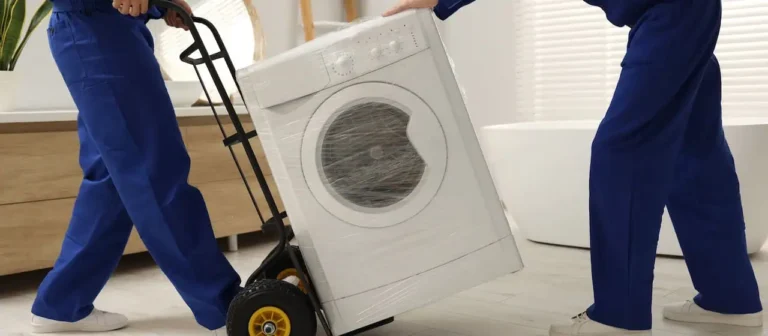

If you’ve ever tried to move a washing machine, even just pulling it out a little from the wall, you know it’s not exactly easy. Most weigh somewhere between 150 and 230 pounds, and that’s before you try to fit one through a hallway or down a flight of stairs. Moving it safely takes more than muscle — it’s about protecting your back, your floors, and the washer itself.
In general, plan on it being a two-person job and use an appliance dolly with a set of ratchet straps to keep it upright. Load it into the truck right after your fridge, then strap it to the side wall so it stays steady during the drive.
In this guide, we’ll walk you through the entire process, from draining hoses and adding transit bolts to loading it without damage. At HireAHelper, we’ve helped thousands of people move big appliances safely, so we know the tricks that make it easier. Whether you’re heading across town or settling into a new home, this walkthrough will help you move your washer safely from start to finish.
Before You Move the Washing Machine
Washing machines are big and heavy, so having a plan is important to keep you safe, protect your washer, and help avoid costly mistakes like broken hoses or scratched floors. Before you start unplugging anything, take a moment to see what you’re working with and gather the right help and tools.
Here are a few quick facts to keep in mind:
- Average washer weight: 150–230 lbs
- Typical dimensions: 27″ W × 30″ D × 39″ H
- Recommended setup: 2 people, 1 appliance dolly, 2 straps
- Transit bolts: 4 per front-loading machine
Because washing machines are heavy and bulky, most people don’t move them often or bring them when they relocate. If you decide to take your washer with you, the order you load things into the truck matters. Keep the heavier appliances near the front, starting with your fridge. Your washing machine should go next, so it stays upright and supported, followed by large furniture like your couch or dressers.
Average Washing Machine Weights
| Type | Average Weight | Notes |
| Compact | 100–130 lbs | Best for small apartments or RVs |
| Top-Load | 150–180 lbs | Easier to move, but top-heavy |
| Front-Load | 200–230 lbs | Heavier, and you must install transit bolts |
| Large-Capacity Front-Load | 220–250 lbs | Extra weight requires a strong dolly and two helpers |
Tools and Supplies You’ll Need to Move a Washer
Moving a washing machine is much easier when you have the right tools ready. You don’t need to buy anything fancy, just a few basics to protect the washer, your floors, and yourself.
Here’s what you’ll want to have for your move:
- Appliance dolly: This helps you move the washer upright without straining your back
- Moving blankets: These are used to keep the finish from getting scratched (see why they matter)
- Dolly straps or ratchet straps: Straps are used to hold the washer steady while you roll or load it, so they’re important for safety
- Furniture sliders or cardboard sheets: Avoid scratches on your floors and make it easier to scoot the washer by using these
- Wrench or pliers: Necessary for loosening the water lines
- Bucket and towels: Used to catch whatever water’s left in the hoses
- Transit bolts: These are needed for front-loaders to keep the drum locked in place
- Zip ties or tape: For bundling cords and hoses so they don’t drag or snag
Step-by-Step Guide: How to Move a Washing Machine
Moving a washer might be more awkward than some furniture or appliances, but it’s definitely not impossible.. The key is to take your time and keep it upright the whole way. While every move is a bit different, these steps work for most homes.
1. Prepare the washing machine for moving
First, unplug the washer and turn off the water supply, making sure both the hot and cold valves are closed. Disconnect the hoses and drain any leftover water into a bucket, and make sure you wipe the area dry so it isn’t slippery.
“Sometimes the best choice is not to do the heavy lifting yourself…If you have stairs, small elevators, narrow hallways, or a long walk to the truck, it’s worth calling professionals [to move your washer].”
If your washer has a drain pump filter, empty it before moving. Coil up the power cord and hoses, and use zip ties or tape to keep them neat and out of the way.
While prepping a washer is a little different from packing a box, the same safety basics apply, so follow the tips in our guide on how to take care of your back while you pack to stay injury-free.
2. Protect Your Floors
A washing machine is heavy enough to scuff hardwood or crack tile, so you need to do something to protect your floors. Put furniture sliders under each corner of your machine if you need to move it a short distance, or lay down cardboard sheets to make a path to your dolly. If you’re using an appliance dolly, bring it close to the washer so you don’t have to drag it far.
A shoulder harness can help on stairs or uneven floors, but it’s best for experienced movers. For most people, using a moving dolly and having a helper is the safest choice.
3. Secure the drum and transit bolts

Inside every washer is a large drum that’s held by shock absorbers. When you move the machine, those parts can shift and break if they aren’t locked down. That’s why you need transit bolts to secure the drum for transport.
Most front-loaders need four bolts that screw into the back of the machine. You can find them in your original manual or order replacements online. Skipping this step can cause bearing damage, which often means an expensive repair.
4. Wrap the washer with moving blankets
Once the drum is locked, cover the washer with moving blankets to prevent scratches and dents. Wrap the sides, corners, and especially the control panel, then secure the blankets with stretch wrap or tape. Make sure you avoid touching any rubber seals.
If you’re not sure where to find quality moving blankets, here’s a quick guide on why they matter and where to find them.
5. Use an appliance dolly to lift the machine
An appliance dolly is taller than a standard dolly and comes with heavy-duty straps that hold your washer upright and stable, so it’s perfect for this kind of job. First, slide the dolly’s base plate under the washer, then gently tilt it back just enough for the weight to rest on the wheels.
For balance, you should place one strap above the drum’s centerline and another below it. Tighten both until the washer feels secure but not squeezed tightly. This keeps the weight centered and prevents shifting while you move.
Here’s a quick reference for the tools that make this step easier:
Doorway Fit Guide
Before you start rolling the washer toward the truck, make sure it can actually fit through your halls and doorways. Getting it prepped and on a dolly is one thing, but tight corners can still slow you down. Measure each doorway ahead of time so you know what kind of clearance you have. The table below gives a quick look at how common washer types handle a standard 30-inch doorway. If you’re doing a self-move, this is a good time to review how to plan a DIY move safely.
6. Tilt and roll slowly and keep the machine upright.
A good rule of thumb: always keep your washer upright. Tilting it on its side can cause water or oil to leak into parts that aren’t sealed for travel. You should always move slowly and communicate with whoever’s helping you move the appliance. On stairs, one person should guide from above while the other steadies from below. This helps make sure the dolly and washer stay stable as you move.
If you’re moving alone, use a stair ramp or a powered dolly if you can, and never try to lift it up or down by yourself.
7. Load into the truck
You should position the washer upright against the side wall of your moving truck, near the front for better balance. Strap it securely at two points, one above and one below the center of the drum. Use the E-track system (the metal rails with horizontal slots built into many truck walls) or built-in strap points to lock it down tight.
While it might be tempting to use the flat surface, it’s important not to stack boxes or heavy furniture on top of the washer to prevent those items from damaging internal components or crushing the display. If you’re moving other large appliances, load the washer after the fridge but before bulky furniture so the weight is spread out evenly.
8. Reinstall and level at your destination
When you arrive, move the washer into place before unpacking anything else. Take out the transit bolts, reconnect the water lines, and plug it in. Then, run a short rinse cycle to check for leaks and make sure it’s level.
If the machine shakes during the test cycle, adjust the feet until it sits flat on the floor. A stable washer runs quieter and lasts longer, so this is an important step to take.
How to Move a Washing Machine by Yourself

Before we begin, a quick word of caution: attempting to move a washing machine on your own is risky and inadvisable. Even a small model can weigh more than 100 pounds, and it’s easy to lose balance or damage the appliance without the right setup. If there’s any doubt, hire a mover or appliance specialist for an hour or two — it’s money well spent.
If you do decide to go solo, make sure you have an appliance dolly, moving straps, and a ramp or a smooth, flat path. Then, gently tilt the washer onto the dolly while keeping it upright. Use the straps to secure it tightly at two points: one near the top and one near the bottom. Once you start moving it, take small, careful steps.
Clear your path before you start, prop doors open, and take breaks if you need to. Never rush or try to lift the washer by hand. The goal is steady movement, not speed. Once it’s on the truck, strap it to the wall so it can’t shift during the drive.
How to Move a Washing Machine Up Stairs
Let’s be honest — stairs are where most washing machine mishaps happen. A top-heavy appliance can tip or pull you off balance quickly, so safety has to come first. If you can, get help. Even one extra person can make a huge difference.
Start by strapping the washer securely to an appliance dolly. Make sure it’s centered and locked in place before you move. One person should guide from above while the other steadies from below, communicating before each step. Move slowly, one step at a time, and if there’s a landing, rest there to reset your grip and footing.
“A good rule of thumb: always keep your washer upright. Tilting it on its side can cause water or oil to leak into parts that aren’t sealed for travel.”
If you have no help, consider using a powered stair-climbing dolly or hiring a professional for this part of the job. Avoid shoulder harnesses unless you’ve used them before, as they can make balance harder to control on stairs. Never rush, and if something doesn’t feel safe, stop and reassess your approach.
Pro Tips to Move a Washing Machine Without Damage
A washing machine can get damaged if it’s not handled properly. Here are five proven tips movers use to keep washers, homes, and their backs safe:
- Use a ramp whenever possible: It’s safer and easier than lifting, especially when loading into a truck. If you don’t have one, rent one with your dolly.
- Keep the washer upright: Never lay a washer on its side or back. Doing so can cause oil or water to leak into parts that aren’t sealed for it.
- Tape the doors closed carefully: Use painter’s tape or stretch wrap, and avoid covering the rubber seals to prevent them from tearing or losing their shape.
- Elevate the drain hose during the move: Keeping the hose upright helps prevent leftover water from spilling into the drum or truck.
- Protect the control panel: Wrap it with a towel or small blanket before covering the washer with moving blankets. It’s one of the most common spots for cracks or scratches.
Taking a few simple precautions like these can save you from repair bills or a flooded truck later on.
Common Mistakes to Avoid
Even the most careful movers can make small mistakes that can turn into big problems. Here are the ones that cause the most trouble when moving a washer:
- Skipping the transit bolts: Those four bolts keep the drum from bouncing around. Without them, the internal bearings can break, and that usually voids the warranty.
- Leaving water in the drum: Always drain it completely. Even a few ounces can grow mold or leak during transport.
- Using rope instead of ratchet straps: Rope can loosen or stretch, letting the washer shift in the truck. Straps lock tight and keep it stable.
- Forgetting to measure doorways: Standard washers are about 27 inches wide. If your doorway is close to that, remove the door from its hinges before you start.
- Stacking heavy boxes on top: It might seem stable, but that pressure can dent the lid or damage the suspension inside.
Avoiding these slip-ups keeps you safe and your washer working like new once you plug it back in.
When to Hire Professional Help
Sometimes the best choice is not to do the heavy lifting yourself. Washing machines are awkward, top-heavy, and can weigh over 200 pounds. If you have stairs, small elevators, narrow hallways, or a long walk to the truck, it’s worth calling professionals. Movers can handle the weight safely, protect your floors, and make sure the washer is strapped in correctly for transport.
If you have a stacked washer and dryer, a pedestal model, or a tight fit through doors or corners, professional help can also save time and prevent damage. You’ll spend less time worrying about logistics and more time focusing on everything else you need to do on moving day.
HireAHelper makes it easy to find local moving pros who know how to move heavy appliances without breaking a sweat. Just enter your ZIP code at HireAHelper.com to compare prices and book instantly. If you’re not sure how many people you’ll need for the job, read our guide on how many movers to hire.
Frequently Asked Questions
Can I lay a washing machine on its side to move it?
It’s best not to. Laying a washer on its side can cause water or oil to leak into parts that aren’t sealed for it. Always move and transport it upright.
Do I need transit bolts to move my washer?
Yes, if you have a front-loader. Transit bolts secure the drum in place, preventing it from shifting and damaging the internal bearings. Skipping them can lead to expensive repairs.
How do I drain a washing machine before moving it?
Turn off the water supply, disconnect the hoses, and allow any remaining water to drain into a bucket. Some washers have a small filter or drain plug near the bottom, so open it to release any remaining water before wrapping things up.
Can movers disconnect my washer?
Yes, most movers can handle that as long as the water supply is turned off. They can disconnect and reconnect the hoses, move the washer safely, and make sure it’s level and ready to use in your new home.