



There are a ton of options for moving companies, but you need the right questions to ask movers to make sure you pick the best option. After all, these are the people you’re going to trust with your furniture and valuables. It doesn’t matter if you want a full-service experience or just labor-only pros to load your rental truck; you always have to vet your moving team carefully before booking.
But what are the right questions to ask? We put together a clear guide to help you figure it out. This covers the most important things to ask moving companies and yourself. When you compare reviews and prices on our platform, these answers will help you make the best choice. Here’s what you need to know.
Questions To Ask Movers When Vetting Their Credentials and Legitimacy
Before you trust anyone with your belongings, you must confirm they’re a real, legitimate company. This means checking their local address, license numbers, and insurance status to avoid scams. Here are some more common questions to ask and things to know about any moving company.
Where Are You Located and How Can I Verify Your Address?
Always ask the company for its physical business address. A real moving company usually has an office or a yard for its trucks. Once you have the address, look it up on Google Maps. You want to see a real building with a sign. If the map shows a house or a rental apartment, take that as a red flag. Reliable movers are easy to find in person.
Are You Licensed, Insured, and Registered With the DOT?
Any company moving goods across state lines must have a USDOT number. You can check this number on the FMCSA website to see their safety record. Ask if they offer basic released value protection or full-value protection for your items. Basic coverage is free but pays very little if an item breaks. For extra peace of mind, make sure they have additional insurance that covers their team and your home.
Are You a Broker or a Carrier?
A carrier is a company that owns trucks and employs the people who actually move your stuff. A broker is a middleman who sells your move to another company and takes a fee. While it’s convenient to have someone else handle getting movers for you, brokers can be risky because you never know who’ll actually show up.
“For long trips, you want to know where your stuff is. Ask the company if they use GPS tracking or send text updates. Some modern providers have an online portal where you can watch the truck move in real time.”
It’s usually safer to hire a carrier directly so you can check their specific reviews and ratings. Check the FMCSA’s movers vs. brokers page for more on the subject.
Do You Conduct Employee Background Checks?
You should feel safe with the people entering your home, so it’s important to ask the company if they run background checks on every person they hire. You should also figure out if the crew acts as full-time staff or temporary help. Full-time staff usually get better training. Finally, verify they have workers’ compensation coverage. This protects you if a mover gets hurt on your property.
Questions About Pricing, Estimates, and Payment

Budgeting for a move is easier when you know exactly what you’re paying for. Clear pricing helps you avoid hidden fees and stay within your limit. This section explains how companies set their rates and what kind of quotes you might receive. It also covers how to pay safely and what to expect with deposits.
How Do You Calculate My Final Cost?
Local movers usually charge by the hour, and the rate depends on how many people you need and how long the job takes. For example, a two-person team might cost $100 per hour. If the move takes 5 hours, your total labor cost would be $500.
Long-distance moves work differently. These costs often depend on the weight or volume of your items and the distance to your new home. A company will estimate how much your furniture weighs or how much space it takes up to give you a price. Regardless if you’re moving locally or long-distance, always ask if fuel, stairs, or heavy items like pianos add extra fees to the bill.
Is This a Binding Estimate or a Not-to-Exceed Quote?
A binding estimate is a set price. Even if your items weigh more than expected, you pay the amount on the paper. This is great for staying on budget because the price is firm and you know exactly how much you’ll pay. However, if you end up moving fewer items, you’re essentially paying for space and labor you don’t actually need or use.
With a not-to-exceed quote, if the move is lighter or faster than planned, you pay less than the estimate. But if the job is bigger, you never pay more than the original cap. This gives you a “ceiling” price while still allowing for potential savings.
What Payment Types and Deposit Requirements Do You Accept?
Only use safe payment methods to protect your money and create a paper trail. Most legitimate companies offer several ways to pay for their services. Ask the mover which of the following options they accept before you book:
- Credit and debit cards: These are the safest ways to pay. They offer fraud protection if something goes wrong with your service. Most professional companies accept major cards for both deposits and final payments. While some movers charge a small processing fee for using a card, the peace of mind is worth the extra cost.
- ACH and bank transfers: These are direct payments from your bank account to the business. They’re also secure and often used for large, long-distance moves. Just keep in mind that these transfers can take a few days to clear.
- Digital wallets: Some companies take Apple Pay, Venmo, or Zelle. However, be careful if a mover only accepts those payment methods. While these apps are handy for friends, a lack of other options is a major red flag.
- Cash: Be wary of any company that asks for the full payment in cash before they start. It’s practically impossible to get your money back, even if something goes wrong, if you pay this way. You should only use cash for tipping your moving team to show your appreciation for their hard work.
Most companies ask for a small deposit to hold your date on their calendar and for assurance that you’re a serious customer. This is normal, especially during the busy summer season. A fair deposit is usually a small percentage of the total cost or a flat fee. If a company asks for a very large deposit up front (or even worse, the whole payment), you may want to look elsewhere.
Questions About Coverage, Claims, and Liability
Even with a professional company, accidents can sometimes happen during a move. It’s important to know how your items are protected before the truck arrives. This section explains the difference between basic and full coverage for your belongings. We’ll also show you how to file a claim if something breaks.
What Coverage Options Are Available for Loss or Damage?
Federal law requires movers to offer basic protection at no extra cost. This is called released-value coverage. It pays a set amount based on weight, not the item’s actual value. If you want better protection, you can pay for supplemental valuation coverage. This option ensures you get more money back if expensive items are lost or damaged.
Comparing Moving Coverage Options
| Released Value Protection Basic | Full Value Protection Supplemental | |
| Cost | This is included in your move for free. You don’t pay extra for this level. | You must pay an extra premium. The price depends on the total value of your goods. |
| How It Pays | Payouts are strictly based on weight. You usually get 60 cents for every pound. | The company is liable for the full replacement value. |
| Coverage for Expensive Items | You don’t need to list every item. Only the total weight of the shipment matters. | You often need to list high-value items worth more than $100 per pound. |
| Best For | People moving clothes, books, or old furniture. | People moving electronics, art, or nice furniture. |
Choosing the right plan depends on what you’re moving. Basic coverage is fine if your furniture is old, heavy, and hard to break. However, if you have a $2,000 TV that weighs 50 pounds, basic coverage will only pay about $30. In that case, paying for full-value protection is a much smarter choice.
How Do You Handle Damage Claims and Disputes?
If you find damage, stay calm and follow the process outlined in your insurance coverage and the moving company’s policies. Ask the mover for their specific claim form. You legally have 9 months to file a claim for moves between states, but sooner is always better. Local moves often have much shorter deadlines, so check your contract. To make sure your claim is successful, you need to gather proof first. Here are the steps to take:
- Take photos: Snap clear pictures of the damage right away.
- Keep the evidence: Don’t throw away broken pieces or the box they came in.
- Write it down: Note any damage on the inventory sheet before the movers leave.
Submit everything in writing, and avoid doing claims only over the phone so you have a clear record. The company will review your photos and notes to decide on a payout based on the coverage you picked.
Questions About Move Logistics and Special Services
There are also questions to ask about your actual moving day. You need to know how many people will show up and how long the job will take. You’ll also need to know about tracking your truck, who to call if plans change, and how to handle special requests like storage or moving heavy items.
How Many Movers Will Be Assigned and How Long Will My Move Take?

Much like the size of your moving truck, this depends on how much stuff you have. You can get a general idea of the number of movers you’ll need by consulting a few guides, and having this information on hand really helps your movers.
If possible, you should have your movers come over to take a look at your home. They’ve done enough moves to be able to tell with a quick walk around how many people you’ll need to have on the crew for your moving day.
Can I Track My Shipment and Who Will Be My Point of Contact?
For long trips, you want to know where your stuff is. Ask the company if they use GPS tracking or send text updates. Some modern providers have an online portal where you can watch the truck move in real time. This helps you plan your arrival at the new house.
Also, ask for the name and number of one specific person to manage your move. You don’t want to call a general hotline when you have a problem. Having a direct line to a manager or supervisor saves you time if the truck runs late. You need someone who knows your case and can get answers fast.
Do You Offer Storage Solutions and Handle Specialty Items?
If your new home isn’t ready when you arrive, ask if the mover offers overnight storage or portable containers. These services are helpful if there’s a gap between moving out and moving in, and they’ll save you from renting a separate storage unit.
You should also mention specialty items like pianos, pool tables, or antiques early on. These pieces often require custom crates or extra tools to move safely. Always confirm that the team has the right experience for these heavy or delicate tasks.
What Are Your Cancellation, Rescheduling, and Price-Matching Policies?
Most companies allow you to cancel or change your date if you give them enough notice, soask how many days in advance you need to call to avoid paying a fee.
On HireAHelper’s platform specifically, we offer a price-matching policy that can get you the best deal under certain conditions. If you find the same move (same date and service) with the same provider but for less money, we’ll match the price for you.
What Happens if My Final Move Takes Longer Than Estimated?
For hourly moves, the final bill depends on the actual time worked. If the move takes longer due to heavy traffic or long walkways, your cost might go up. Make sure you understand the hourly rate for any unexpected extra time.
If you have a not-to-exceed quote, you’re better protected. Even if the crew takes longer than they thought, they can’t charge you more than the agreed cap. Always get this price in writing before the work begins.
Can I Change My Move Date After Booking?

Most companies are flexible if you change your date at least a week before the move. However, if you wait until the last minute, you might have to pay a rescheduling fee. This fee helps cover the cost of the crew’s lost time.
If you booked through HireAHelper, first check with the moving company to see if they’re free on the new date. Then simply let our team know so we can update your booking. If the original company is busy on that date, you can cancel and find a new team on our marketplace.
Questions To Ask Yourself Before Booking Help
Before you hire anyone, look at your own situation closely. You need to decide how big a truck to rent and how much work you want to do yourself. It’s also important to set a firm budget and check your calendar for the best dates. Finally, think about where the truck will park and if the crew can reach your front door easily.
What Size Truck or Container Will I Need?
Your answer, of course, depends on how much stuff you have. For the average person without a lot of experience moving, figuring this out can seem like a confusing task. Thankfully, there are some helpful guidelines you can follow to get an idea of the truck size you need.
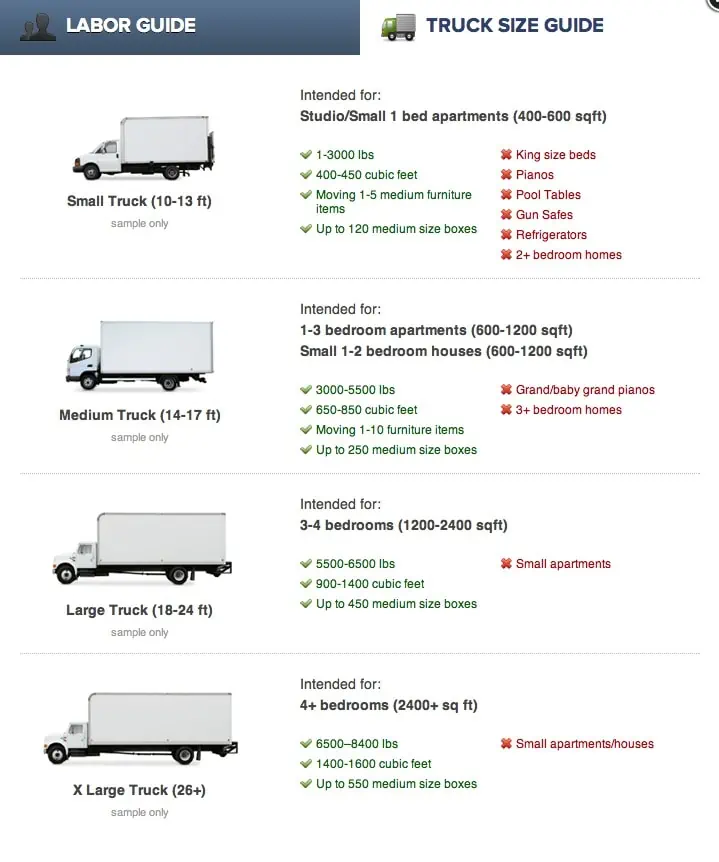
However, these are just estimates, and there are some other things to consider besides just the number of bedrooms or square footage. For example, if your home has an attic, a basement, or a large tool shed, you might want to count them as another “half” room, depending on how full they are.
What’s most important is that you now have a rough idea of what you’ll need and can give that information to the movers if they ask.
How Much Help Do I Want Versus Doing It Myself?
Deciding between a DIY move and hiring professionals is a big choice. Think about your physical strength and your schedule before you decide. Here’s how movers can help with different types of moves:
- Labor-only help: You rent a moving truck or container and handle the transportation yourself. The moving crew just loads and unloads your belongings for you. This is a great budget-friendly choice, especially if you don’t mind a container in your driveway or having to drive a big vehicle.
- Full-service move: This option is for people who want a hands-off experience. The company brings the truck, loads it, drives it, and unloads it at your new place. They handle everything from start to finish. This is the easiest way to move, but it costs much more than just hiring labor.
Labor-only services save you a lot of money because you’re not paying for a large moving truck. However, full-service moves save you the most time and effort. Pick the one that fits your budget and your energy levels best.
What Is My Budget and Timing Flexibility?
Before you start looking at companies, decide on a firm number you can afford to spend. Moving costs can add up fast with supplies, gas, and service fees. Having a clear budget helps you narrow down your choices on our marketplace. You can also get an estimate quickly with our moving cost calculator.
If you can be flexible with your dates, you might save even more. Prices rise with demand, and most people move on weekends or at the end of the month. If you can move on a weekday in the middle of the month, your costs will be lower. Also, try to avoid the summer rush to keep your expenses as low as possible.
How Close Can the Vehicle Get to My Door?
Walk your property and look at the path from your door to the street. If a large truck can’t park close by, the movers will have to carry items a long distance. This is called a “long carry”, and some companies charge a fee for this extra work. You should also check for low-hanging trees or narrow driveways that might block a big moving van.
“…[A]sk for the name and number of one specific person to manage your move…Having a direct line to a manager or supervisor saves you time if the truck runs late.”
In busy cities, you might need a parking permit to keep a spot open for the truck. Getting a permit ahead of time will prevent costly tickets. Also, if you live in an apartment, check the building rules for moving hours. Keep all these details in mind to help your movers work faster and more efficiently.
Preparing for a Smooth Moving Day
Getting the right answers early makes the actual move feel much more manageable. Planning your move with clear information about pricing, insurance, and timing means you can focus on your new home instead of worrying about hidden fees. Be sure to take the time to vet your moving team with these questions in mind to stay on track and on budget.
Our marketplace is designed to make this process simple and transparent. You can browse local movers, read real customer reviews, and see clear pricing all in one place. Whether you need a full crew or just a few hours of help with heavy lifting, we can help you find the right fit. Once you have your answers ready, you can book with confidence and look forward to a successful moving day.