


For years, we’ve treated kitchen remodels like a simple checklist: pick a cabinet color, choose a stone counter, add a tile backsplash, and call it a day. But going into 2026, that predictable formula is starting to feel incredibly basic. A truly high-end kitchen isn’t just about the finishes you choose; it’s about how the space physically operates.

What I’m seeing now is a radical shift toward hyper-customized, architectural details that hide the mess of cooking while elevating the functionality of the room. Designers are abandoning cluttered countertops and heavy upper cabinets in favor of stealth storage, integrated lighting, and multi-material surfaces. The kitchen is evolving from a standard prep zone into a piece of precision engineering.
The 10 specific accents and layouts below reflect the exact design shifts I’m paying attention to this year. They move past the safe, “resale value” choices and focus on brilliant, hard-working details that make a standard remodel feel like a massive missed opportunity.
The Pop-Up Appliance Garage That Reclaims the Island

The standard kitchen island is usually a flat, dead surface. This design completely disrupts that by integrating a motorized, pop-up appliance garage directly into the center of the stone. For years, heavy stand mixers and blenders had to either clutter the perimeter counters or be lugged out of deep base cabinets.
This stealthy, architectural solution keeps heavy appliances permanently plugged in and at arm’s reach, then completely hides them away to restore visual calm when not in use. It is a masterclass in visual discipline.
The Illuminated Backsplash Replacing Predictable Tile

We are finally exhausted by the endless variations of the subway tile backsplash. Instead of relying on grout lines and repeating patterns, this kitchen uses a continuous, frosted glass panel that is entirely backlit. It acts as a massive, diffused light source for the prep zone, eliminating the harsh shadows created by standard under-cabinet lighting. But what elevates this space from a sleek showroom to a masterclass in design is the deliberate tension created by the countertop.
Notice the aggressive, raw, chiseled edge of the stone. Instead of a perfectly polished, safe square edge that you see in every standard remodel, the designer left the stone looking unfinished and brutalist.
That tactile, rugged border crashing right into the pristine, glowing glass and the sleek metal accessory rail introduces incredible visual friction. It feels deliberate, architectural, and completely rejects the mass-produced, overly sanitized kitchen aesthetic.
The Deconstructed Chef’s Island Rejecting the Knife Block

If you genuinely cook, you know how quickly the space around the stove gets cluttered with utensils and knife blocks. This setup brilliantly utilizes the dead space right beneath the cooktop.
By integrating magnetic knife strips and dedicated utensil holders directly into the interior of the island cabinet doors, the designer completely cleared the work surface. It treats the kitchen island like a true professional workstation rather than just a massive storage box.
The Glass-Front Island Elevating the Standard Base

Kitchen islands are almost always treated as solid, heavy blocks that eat up the visual weight of the room. I love how this design lightens the footprint by turning the “stool side” of the island into illuminated, glass-front display cabinetry.
Paired with a warm, thick-slab wood countertop, it transforms the island from a utilitarian prep zone into a piece of fine, living-room-grade furniture. It is the perfect way to display everyday dishware and add incredible depth to an open-concept space.
The Overlapping Countertop Defining the Zones

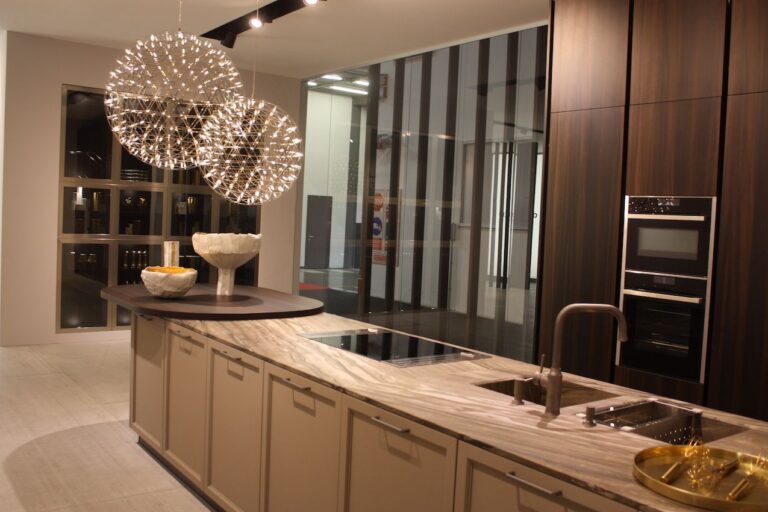
We are moving away from the massive, single-material island slab. This kitchen introduces incredible architectural friction by overlapping a raised, curved wood countertop directly over a heavily veined stone surface.
It physically separates the “working” prep zone from the “social” serving zone. But the true showstopper here is the lighting: abandoning the safe, predictable row of three mini-pendants in favor of two massive, kinetic wireframe spheres. It proves that kitchen lighting should be treated as large-scale art.
The Monolithic Stone Wrap with Integrated Burners

This is the absolute death of the “mixed materials” trend. By wrapping both the countertop and the entire backsplash in the exact same heavily textured, terrazzo-style stone, the kitchen achieves a flawless, monolithic permanence.
But what makes this space truly exceptional is the rejection of the standard slide-in range. The heavy gas burners are integrated directly into flush-mount metal plates set right into the stone. It is a seamless, custom approach that makes traditional appliances look clunky.
The Inlaid Countertop Rejecting the Single Slab

This is how you bring bespoke craftsmanship back into the kitchen. Instead of dropping one massive piece of quartz over the cabinetry, the designer created a custom inlay.
The sharp, dramatic black marble acts as the highly durable wet zone around the sink, while the warm, thick-cut wood creates a tailored border that wraps down the sides in a waterfall edge. It’s an unexpected, highly tactile detail that makes the island feel like a custom-built dining table.
The Stealth Storage Track Hiding Daily Clutter

This is the ultimate solution for the minimalist who still needs their kitchen to be highly functional. At first glance, this is a sleek, dark wood countertop. But the surface actually features a sliding panel that reveals a recessed, hidden track for spices and chef’s knives right next to the sink.
It completely eliminates the visual noise of spice racks and knife blocks while keeping every essential tool exactly where you need it. It is stealthy, deliberate, and undeniably high-end.
The Architectural Plaster Hood Replacing the Stainless Chimney

The exposed stainless steel chimney hood has been the default choice for a decade, but it often leaves a kitchen feeling cold and overly industrial. This setup completely changes the focal point by using a massive, sweeping plaster hood trimmed in a rich, dark wood base.
It intentionally softens the aggressive, mechanical look of the heavy, professional-grade Wolf range below it. Paired with a deeply tactile, whitewashed brick backsplash and warm copper accents, it brings a bespoke, historically grounded permanence to the cooking zone that a standard mass-produced metal vent simply cannot achieve.
The Stepped-Down Island Rejecting the Monolithic Block

We are officially moving away from massive, single-level kitchen islands that feel like heavy, dead landing pads in the center of the room. This layout introduces incredible functional friction by stepping down a warm, wooden dining surface directly off the thick, dark stone cooking zone.
It physically separates the active prep area from the social seating area, keeping guests close without putting them in the line of fire. Supported by flat-panel, highly textured wood cabinetry and moody, botanical-patterned wallpaper, the layout ensures the space feels like a curated living room rather than a sterile prep kitchen.