



Stainless steel spent decades confined to refrigerators, dishwashers, ovens, and commercial kitchens. New kitchen designs are pushing the material much further. Countertops, backsplashes, islands, cabinet fronts, shelving, vent hoods, and even full appliance walls now use stainless steel as a primary design element rather than a supporting finish.

Durability remains one reason behind the shift. Stainless steel resists heat, moisture, stains, and heavy use better than many traditional kitchen materials. Advances in fabrication have also expanded the range of finishes, making the material feel more at home beside wood cabinetry, stone surfaces, painted cabinets, and decorative lighting.
These kitchens show how stainless steel has evolved from a practical appliance finish into a material that shapes the entire room. From full metal workstations to subtle accents around cooking zones, the designs demonstrate why the material continues appearing in both professional-inspired and residential kitchens.
Stainless Steel Countertops Create a Continuous Cooking Zone

Cooktop, countertop, sink, and backsplash share the same surface, creating one uninterrupted work area across the entire wall. Few seams interrupt the metal, making cleanup straightforward after cooking.
Dark glass behind the counter reflects light from the under-cabinet fixtures while preventing the stainless steel from becoming visually overwhelming. Small wood accessories and plants introduce texture beside the metal work surface.
Professional Ranges Continue Driving Stainless Steel Design

Large gas range, vent hood, backsplash, and countertop establish a layout inspired by commercial kitchens. Stainless steel frames around the lower cabinets reinforce the industrial appearance without covering every visible surface.
Soft taupe cabinet fronts prevent the kitchen from feeling utilitarian. Green glass bottles and ceramic accessories introduce color against the neutral palette.
Burgundy Cabinets Bring Color to Stainless Steel Kitchens

Deep burgundy cabinet fronts stand out against stainless steel counters, backsplash panels, and range components. Decorative trim around the doors gives the kitchen a furniture-inspired appearance rather than a commercial look.
Utensils hanging beneath the hood keep frequently used tools within reach. Metal surfaces surrounding the cooktop provide protection in the area most exposed to heat and grease.
Stainless Steel Cabinet Frames Move Beyond Appliances

Metal trim wraps around cabinet doors, drawers, and appliance panels, creating a kitchen that resembles custom workshop cabinetry. Oversized handles reinforce the strong horizontal lines.
Continuous stainless steel surfaces surround the cooking zone while white cabinet panels keep the composition bright. Large drawers maximize storage beneath the professional range.
Stainless Steel Cabinets Replace Painted Cabinetry

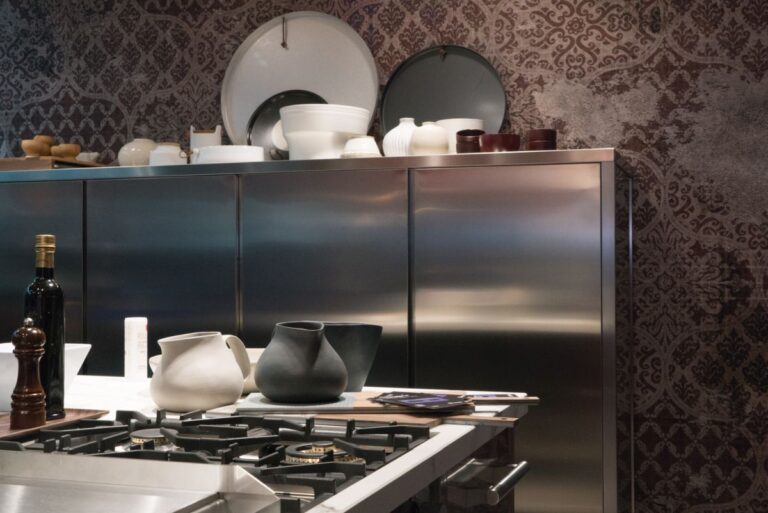
Tall stainless steel cabinet fronts extend across nearly the entire wall, creating a uniform appearance from one end of the kitchen to the other. Reflections shift across the surface as light changes throughout the room.
Decorative wallpaper introduces texture behind the cabinetry display area. Matte ceramic bowls and serving pieces stand out against the darker metallic finish.
Wood and Stainless Steel Continue Forming a Popular Combination

Natural wood cabinetry surrounds a professional range and stainless steel hood. Metal appears where heat and water occur most often, while wood dominates the storage areas.
Open shelves above the sink eliminate the need for upper cabinets and create space for lighting. Stainless steel appliances become part of the architecture instead of separate objects.
Entire Kitchen Runs Are Being Built in Stainless Steel

Countertop, sink, faucet, backsplash, shelves, and lower cabinetry share the same metallic finish. The material stretches from one end of the workspace to the other with very few interruptions.
Integrated lighting beneath the upper section illuminates the entire preparation area. Black cabinetry below increases contrast and emphasizes the reflective work surface.
Decorative Metal Backsplashes Add Texture

Patterned stainless steel replaces the flat sheet metal commonly found behind cooktops. The textured surface catches light across hundreds of small geometric facets.
Open shelving allows the backsplash to remain visible instead of hiding it behind upper cabinets. Decorative bowls become part of the display rather than stored behind doors.
Stainless Steel and Bold Wallpaper Create Unexpected Contrast

Red stainless steel cabinetry transforms a material often associated with professional kitchens into something more decorative. Large drawer fronts create long uninterrupted planes of color.
Graphic wallpaper covers the entire wall behind the kitchen and becomes the dominant visual feature. Stainless steel reflects the surrounding colors rather than competing with them.
Stainless Steel Appliance Walls Deliver a Seamless Appearance

Built-in ovens sit inside a floor-to-ceiling wall of stainless steel panels. Appliances blend into the surrounding storage rather than standing apart as separate elements.
Large metal surfaces eliminate visual clutter created by multiple finishes. Even the dining table continues the same metallic language found on the cabinet wall.
Traditional Cabinetry Benefits From Stainless Steel Accents

Raised-panel doors and decorative hardware give the kitchen a classic appearance. Stainless steel appears behind the cooktop and beneath the hood where additional durability matters most.
Floating shelves and framed artwork reinforce the traditional styling. Metal surfaces perform a practical role without changing the character of the cabinetry.
Stainless Steel Backsplashes Extend Beyond the Cooktop

Stainless steel covers nearly the entire wall behind the counter and continues beneath the glass-front cabinets. Integrated ventilation panels and storage sections become part of the backsplash itself.
Open cubbies provide space for cups and accessories. Metal surfaces protect the wall across the full length of the workspace rather than only behind the range.
Wolf Appliances Turn the Cooking Zone Into the Focal Point

Double ovens, oversized gas burners, integrated griddle, and a large vent hood create a setup closer to a chef’s kitchen than a standard residential layout. Stainless steel connects every major appliance into a single visual block.
Vertical wood panels beside the range break up the metal surfaces and frame the cooking area. Glass wall panels behind the cooktop keep the backdrop simple while reflecting light back into the space.
Compact Kitchens Benefit From Stainless Steel Durability

Cooking, cleanup, and storage occupy a narrow footprint without sacrificing functionality. Stainless steel appliances and vent hood provide a professional appearance within a smaller layout.
Open shelves prevent the cooking zone from feeling enclosed. White countertops introduce brightness against the darker cabinetry.
Built-In Stainless Steel Appliances Stand Out Against Black Cabinetry

Wall ovens and microwave units introduce stainless steel without dominating the entire kitchen. Dark cabinetry frames the appliances and turns the metal surfaces into focal points inside the storage wall.
Brass hardware adds another finish beside the stainless steel, creating contrast against the matte black cabinet fronts. Full-height pantry doors and deep drawers maximize storage while maintaining a clean, uninterrupted appearance.