

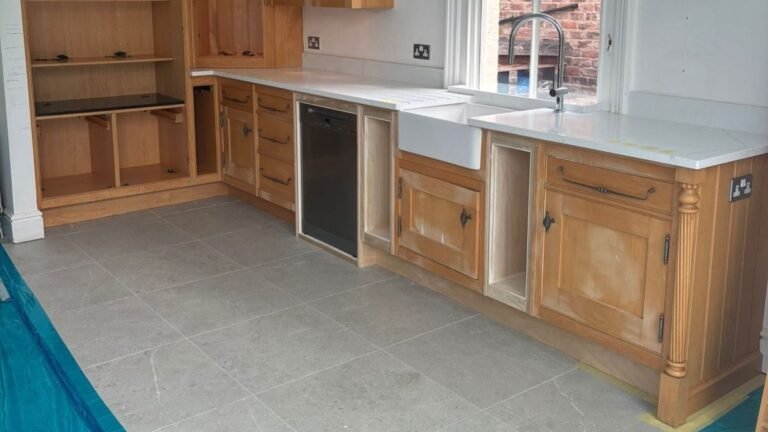


Solid wood cabinetry filled this kitchen with inset doors, exposed hinges, fluted columns, paneled sections, and trim, but much of that detail blended into the natural wood finish. Replacing cabinets built with this much detail would also mean losing the original craftsmanship that made them worth keeping.

Instagram creator @wesprayupvc was behind the transformation, spraying the existing cabinetry in a color match to Farrow & Ball’s Hague Blue. The deep blue covers the wood grain without hiding the construction, putting more emphasis on the exposed hinges, metal hardware, door profiles, columns, and molding that were already there.
Solid Wood Cabinets Filled the Main Kitchen Wall

The original kitchen wraps around a farmhouse sink set beneath the window, with solid wood cabinetry continuing into the corner and across the adjoining wall. Tall storage sits at one end, while drawers, base cabinets, narrow open sections, and upper cabinets fill the remaining space.
Decorative columns mark the ends of several cabinet runs, and trim continues across the tops of the taller units. The cabinetry already had a fitted, furniture-style construction, but the similar wood tone across every surface made the details compete with the grain.
Second Work Area Used the Same Wood Cabinetry

Another bank of cabinets surrounds a smaller sink and two-burner cooktop. Two large inset doors sit below the counter with a stack of drawers between them, while more fitted cabinetry continues above.
The metal pulls, exposed hinges, framed doors, and narrow molding around each drawer were already part of the design. The original finish gave all of those elements the same tan-brown backdrop.
Door Profiles and Hardware Were Already Built Into the Design

A close view of the lower cabinets shows how much detail was present before the respray. The doors sit within framed openings, the hinges remain exposed, and each drawer has a shaped metal pull rather than a plain bar handle.
Even the end panel carries vertical wood detailing. Painting this kitchen meant covering a large number of edges, profiles, frames, and trim pieces without losing the cabinet construction underneath.
Hague Blue Changed the Lower Cabinets First

The same lower cabinet run now wears a deep Hague Blue color match from end panel to drawer fronts. The inset doors, exposed hinges, decorative pulls, and narrow trim remain, but each part is easier to separate from the next once the wood grain disappears.
The pale countertop and light tile backsplash create a stronger break around the dark cabinetry, while the existing metal hardware stands out against the blue.
Upper Cabinetry Received the Same Dark Finish

Hague Blue also covers the taller cabinetry around the second work area, including the upper open section, bead detailing, appliance surround, and curved support below the microwave cabinet.
The dark finish draws attention to the changes in depth between each section. Paneling above the backsplash, projecting trim, and the stepped cabinet tops become more visible because the color stays consistent across them.
Same Cabinet Run Looks More Defined in Blue

A wider view shows the completed second work area with the Hague Blue finish continuing across the lower cabinets and upper built-ins. The small sink, cooktop, countertop, backsplash, and microwave remain in place.
What changes most is how the cabinetry reads. Instead of focusing on separate pieces of wood grain, the eye picks up the framed doors, drawer layout, hardware, and cabinet proportions.
Hague Blue Connects the Full Kitchen

Across the main kitchen, the blue finish continues from the tall storage cabinet through the corner, around the dishwasher, beneath the farmhouse sink, and across the cabinet run on the right.
The white counters and farmhouse sink remain strong light surfaces between the deep cabinetry and white walls. The existing layout stays recognizable, but the repeated blue finish now connects cabinet sections that once read as separate wood pieces.
Fluted Columns Became Easier to See

Close-up views show why the cabinet details matter to this transformation. Fluted columns, stepped trim, carved tops, and deep cabinet recesses now create shadow against one dark surface instead of competing with wood grain.
The paint does not remove those features. It makes the shape of each column and trim profile easier to read, which supports the craftsmanship angle behind the makeover.
Before and After Shows What Hague Blue Changed

The side-by-side comparison shows the same farmhouse sink, counters, tall storage, dishwasher, lower doors, narrow open sections, upper cabinets, and decorative columns in both versions.
The fitted cabinetry was already there. Hague Blue changed the dominant surface and brought more attention to the construction that had been hidden by the wood grain.
Did Hague Blue change the kitchen most through color, or through the way it makes every hinge, handle, and cabinet detail stand out?
Image credits go to @wesprayupvc.