

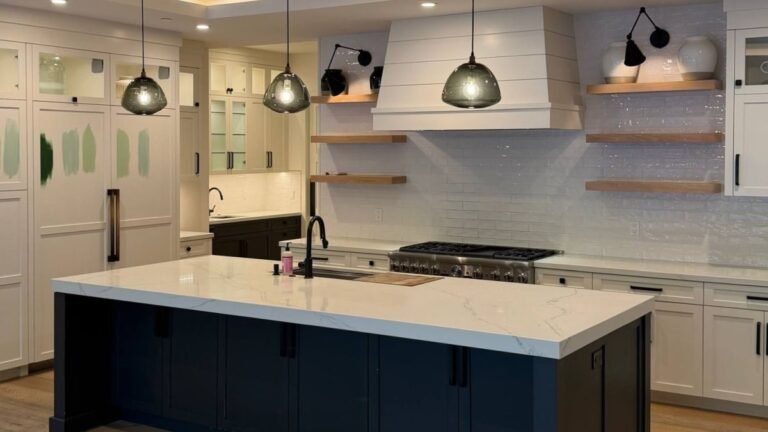


White shaker cabinets covered the walls of this kitchen, while a navy blue island provided contrast beneath a thick white quartz countertop. Glass-front display cabinets, floating wood shelves, a white range hood, and smoked-glass pendant lights were already part of the design.
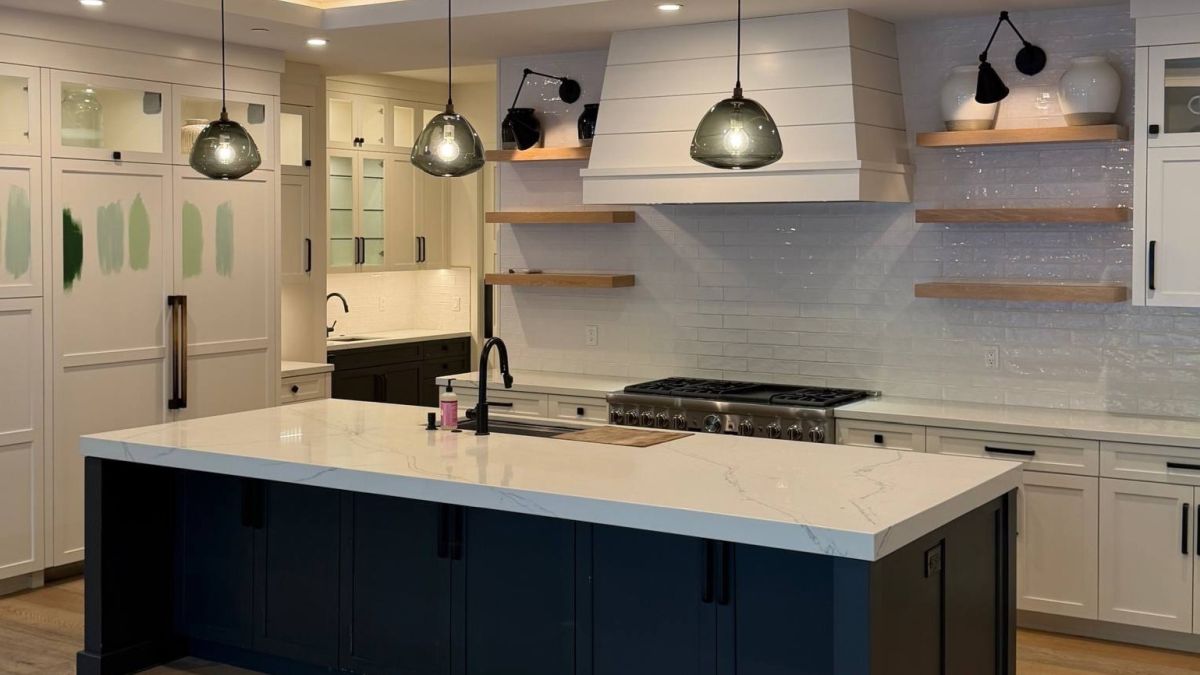
The homeowners wanted a new cabinet color without replacing the kitchen. Instead of keeping the two-tone finish, they chose sage green for every cabinet, including the island, refrigerator panels, and storage near the cooking area.
Instagram creator @fixpointman shared the repainting project, showing how the original cabinetry changed after surface preparation, repairs, primer, and fresh paint. The kitchen kept its layout, countertops, backsplash, appliances, and hardware.
White Cabinets and a Navy Island Before the Makeover
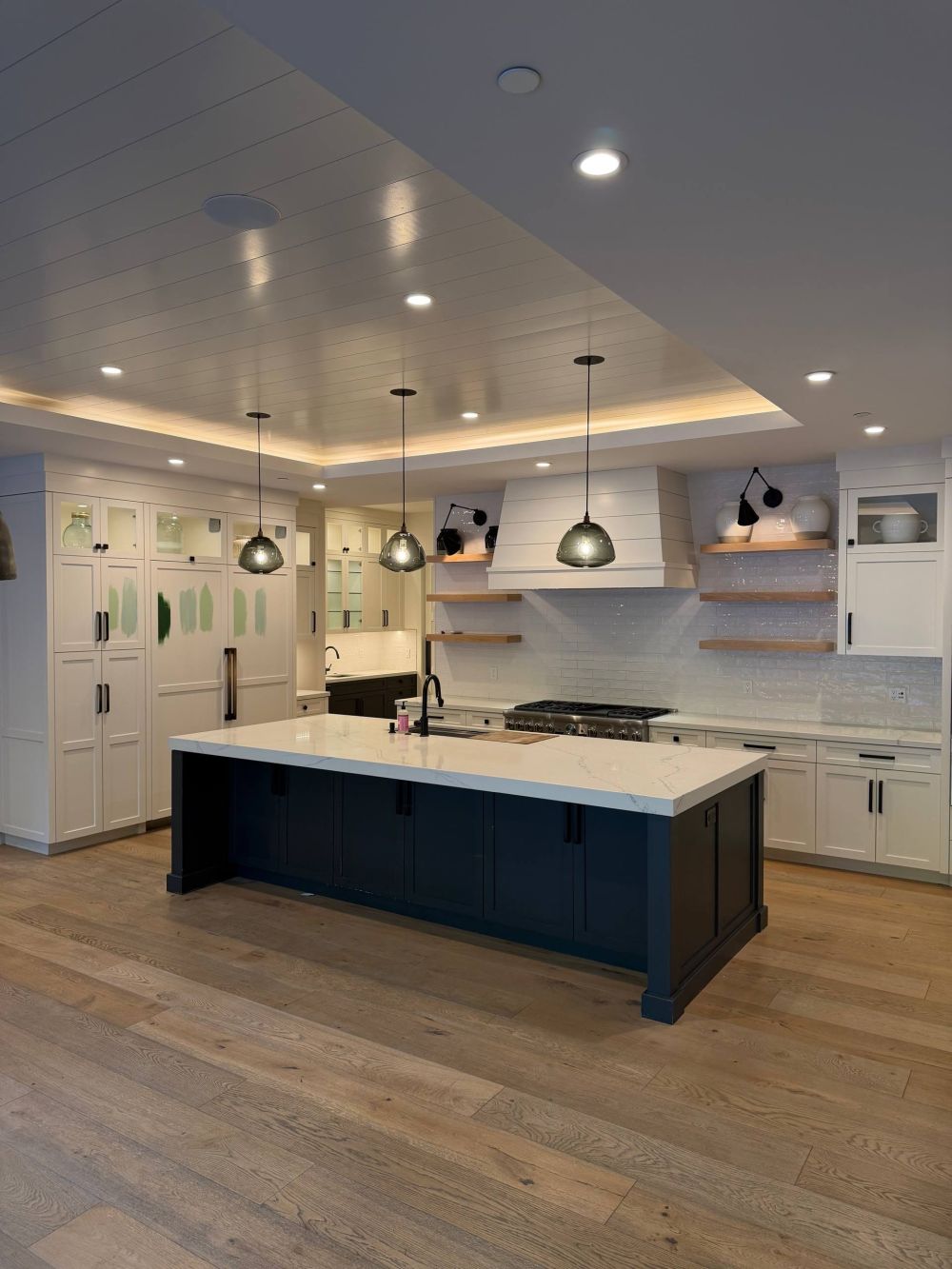
White shaker doors extended to the ceiling, with glass-front compartments above the tall cabinets and black metal handles below. The navy island stood beneath three smoked-glass pendant lights, while a white shiplap hood and floating wood shelves framed the range. Green paint samples on the refrigerator panels showed the new color under consideration.
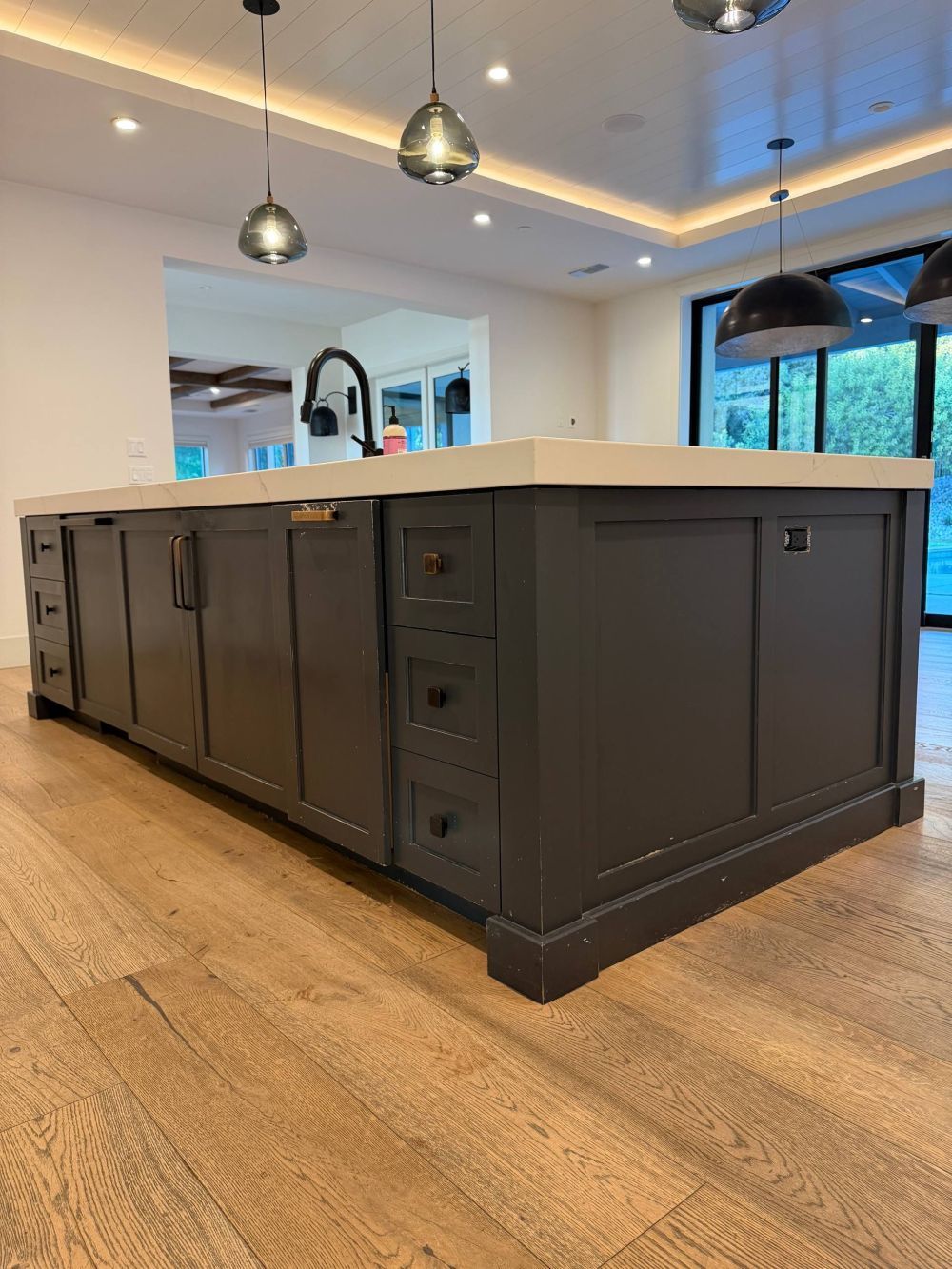
The island had a built-in dishwasher, drawers, and paneled sides beneath the quartz countertop. Wood flooring ran toward black-framed sliding glass doors, with warm cove lighting outlining the recessed shiplap ceiling.
Sage Green Replaced the Two-Tone Cabinet Finish
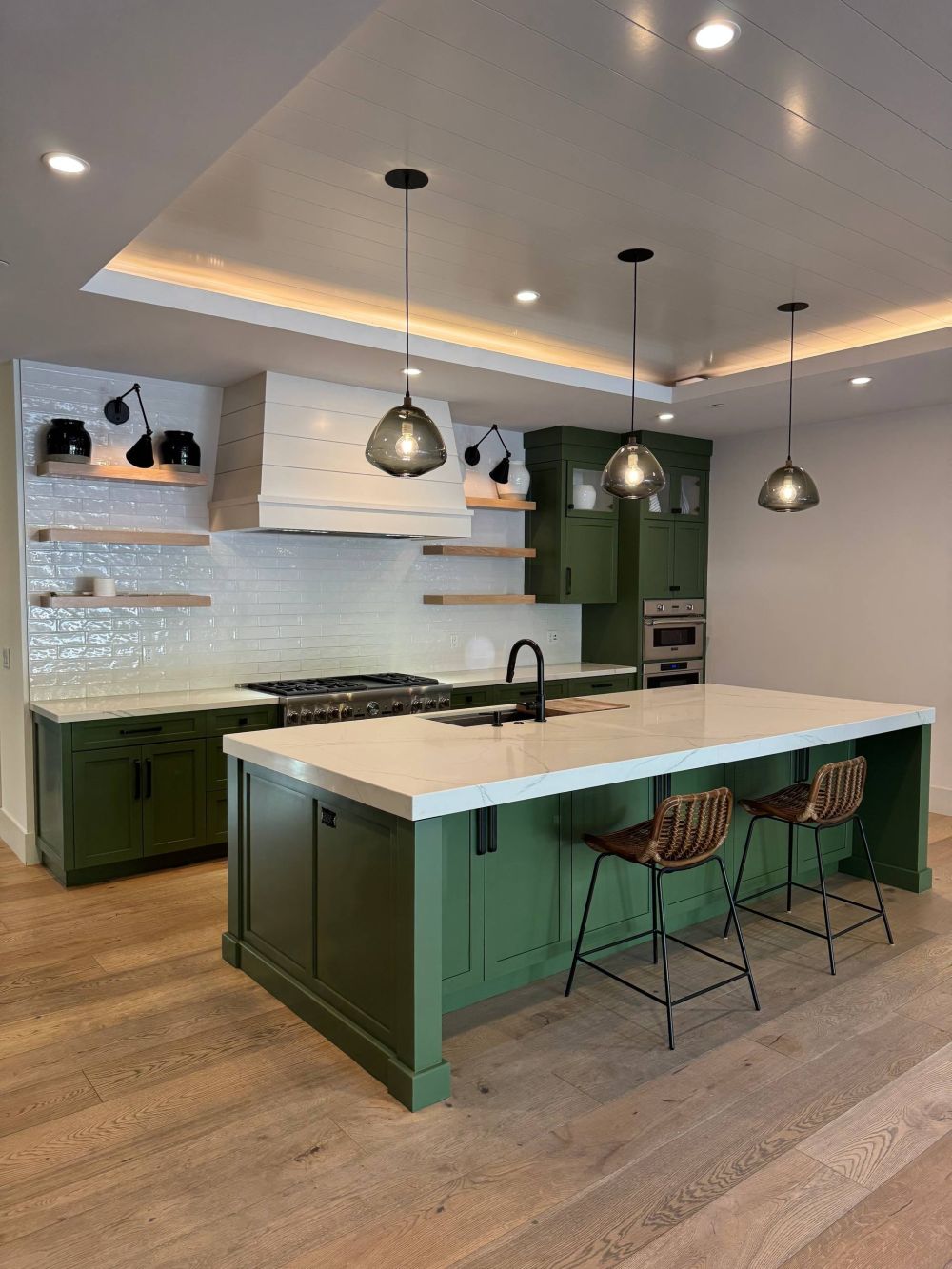
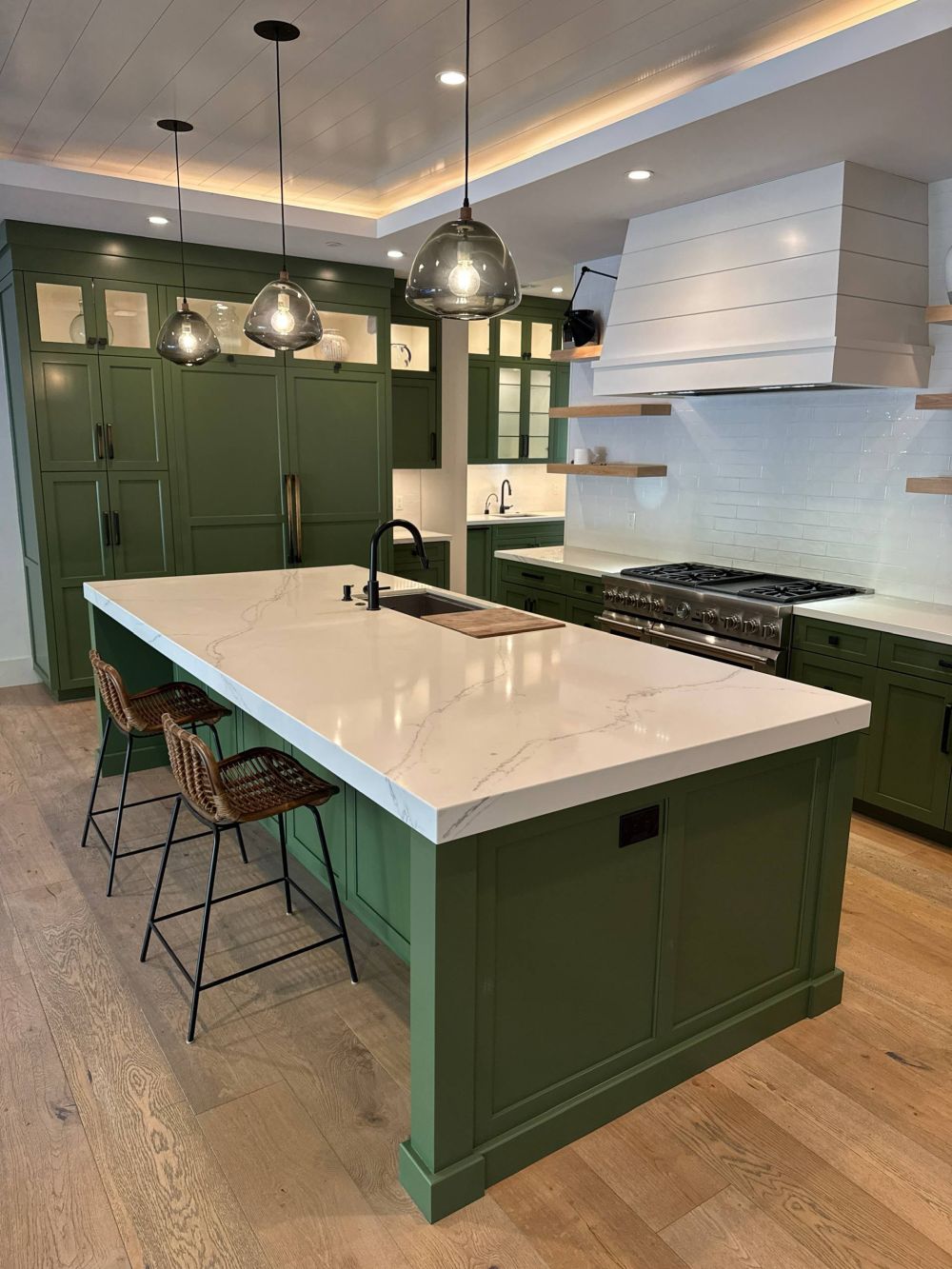
The finished kitchen features sage green cabinets across the cooking wall and island. White quartz countertops contrast with the deeper color, while woven bar stools add a natural material beside the seating area.
The painter retained the original doors and drawer fronts, giving the existing cabinetry a new finish instead of replacing it.
Floor-to-Ceiling Cabinets Conceal the Refrigerator
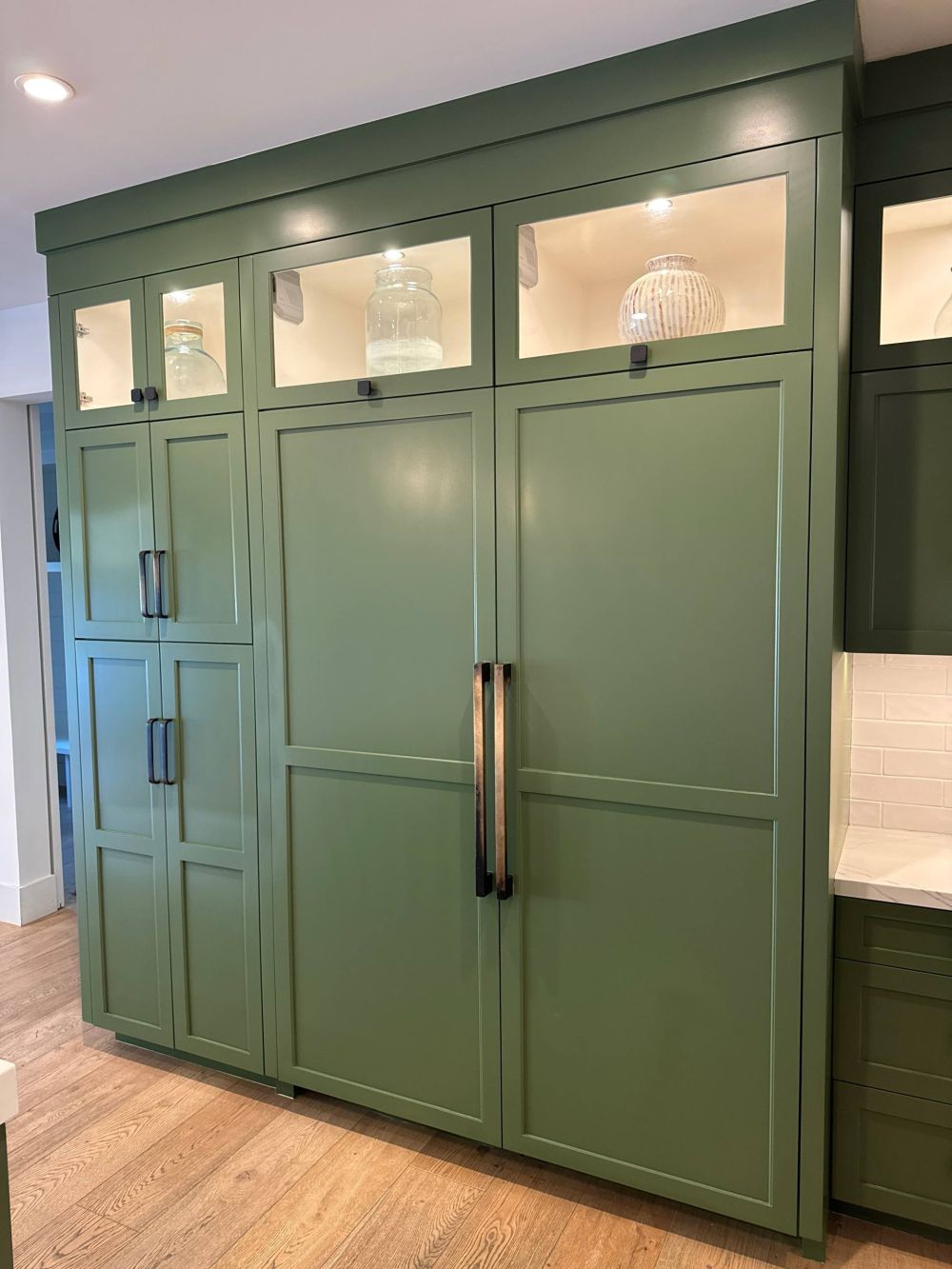
Two large sage green panels hide the refrigerator, with long metal handles marking the doors. Smaller pulls serve the adjoining pantry cabinets, while illuminated glass-front compartments above display jars and ceramic pieces.
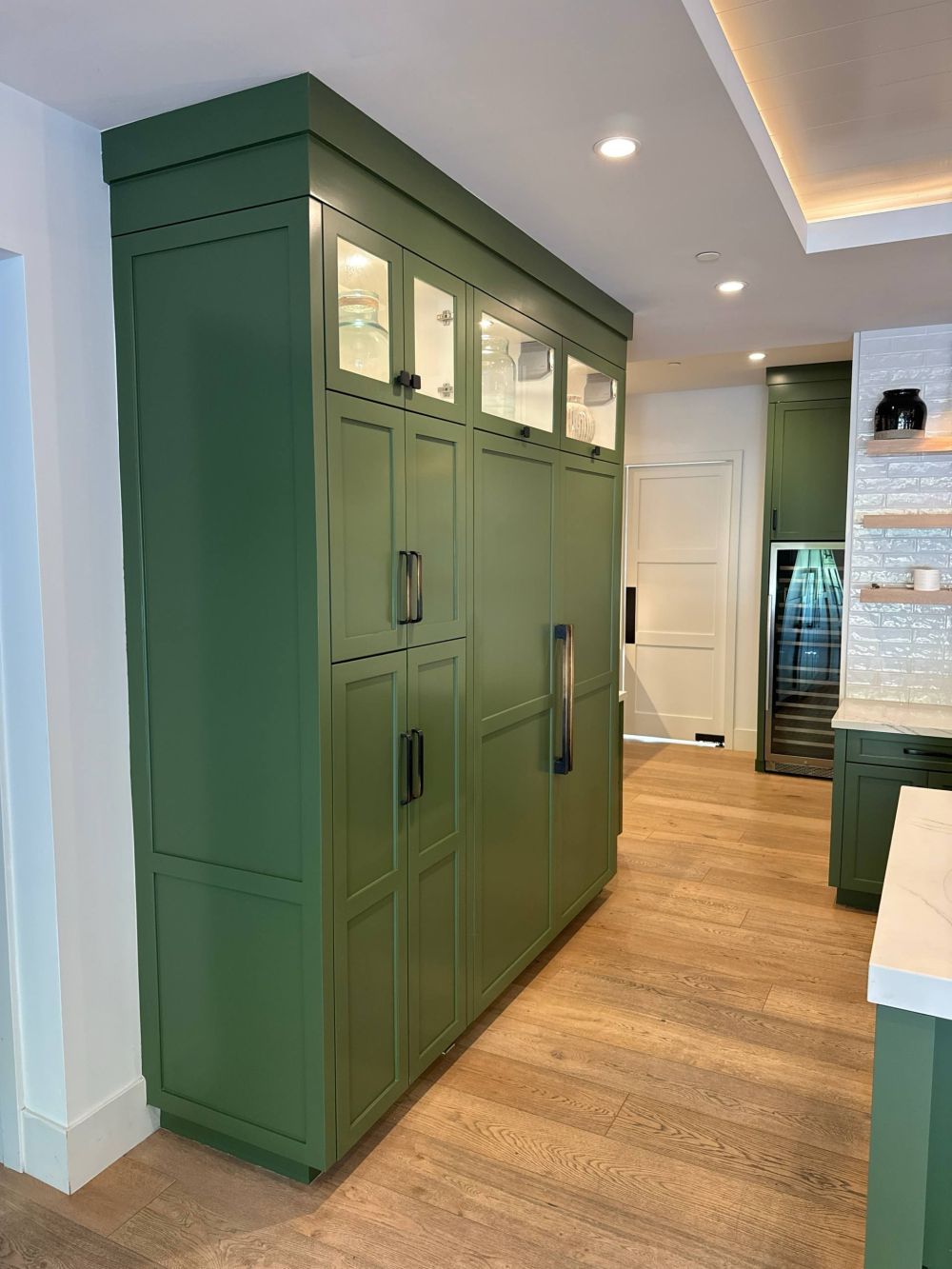
From the side, the cabinet bank forms a full-height wall beside the passage to the beverage area. Matching green cabinetry surrounds a wine cooler at the far end, extending the color into that space.
The White Cooking Wall Stayed Intact
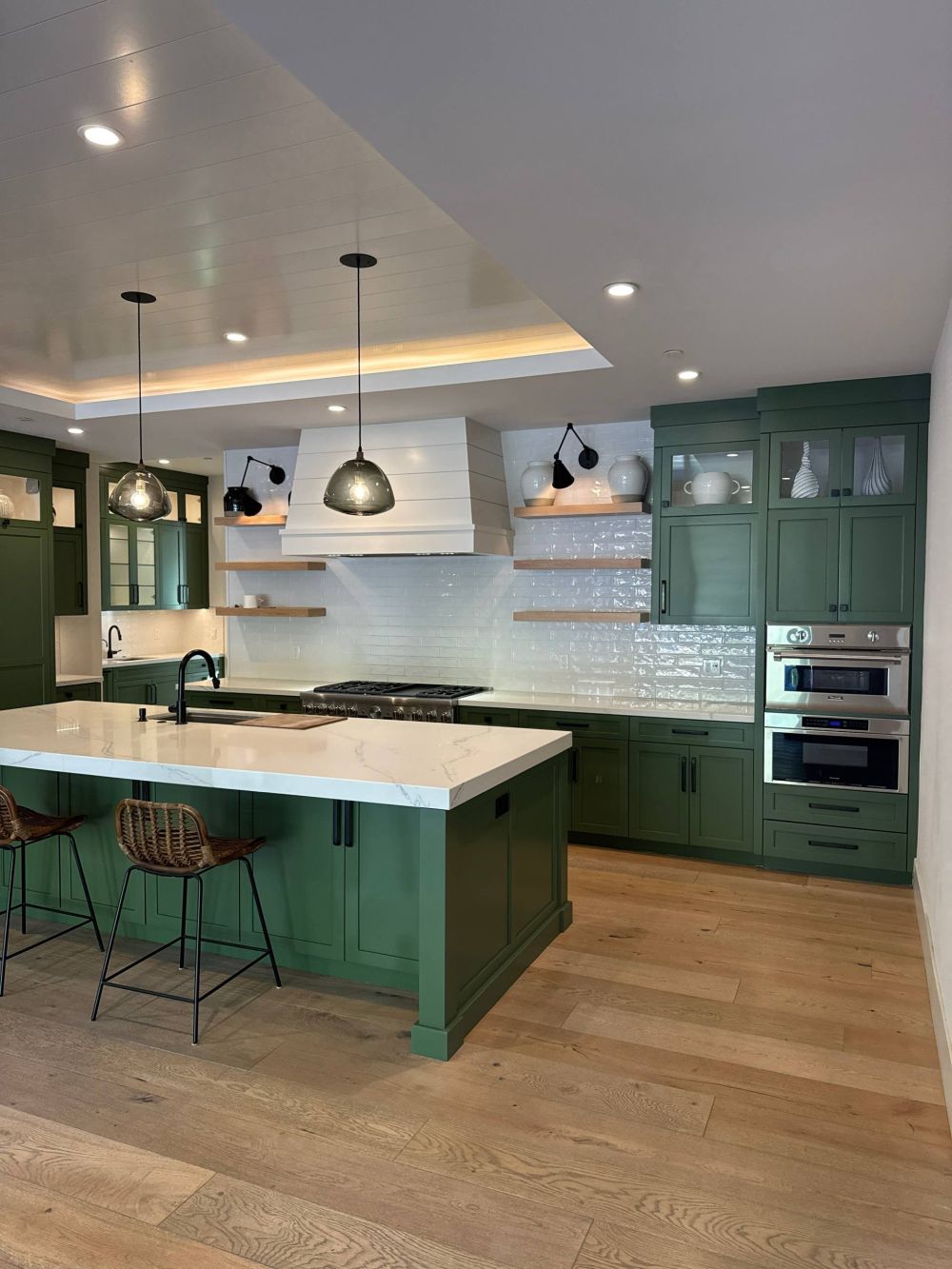
A white shiplap range hood sits above the stainless steel gas range, with glossy subway tile extending across the backsplash. Floating wood shelves flank the hood, holding ceramic jars and dishes beneath black wall-mounted lights.
Green lower cabinets and a tall oven cabinet surround the cooking area, while the white hood provides contrast against the painted woodwork.
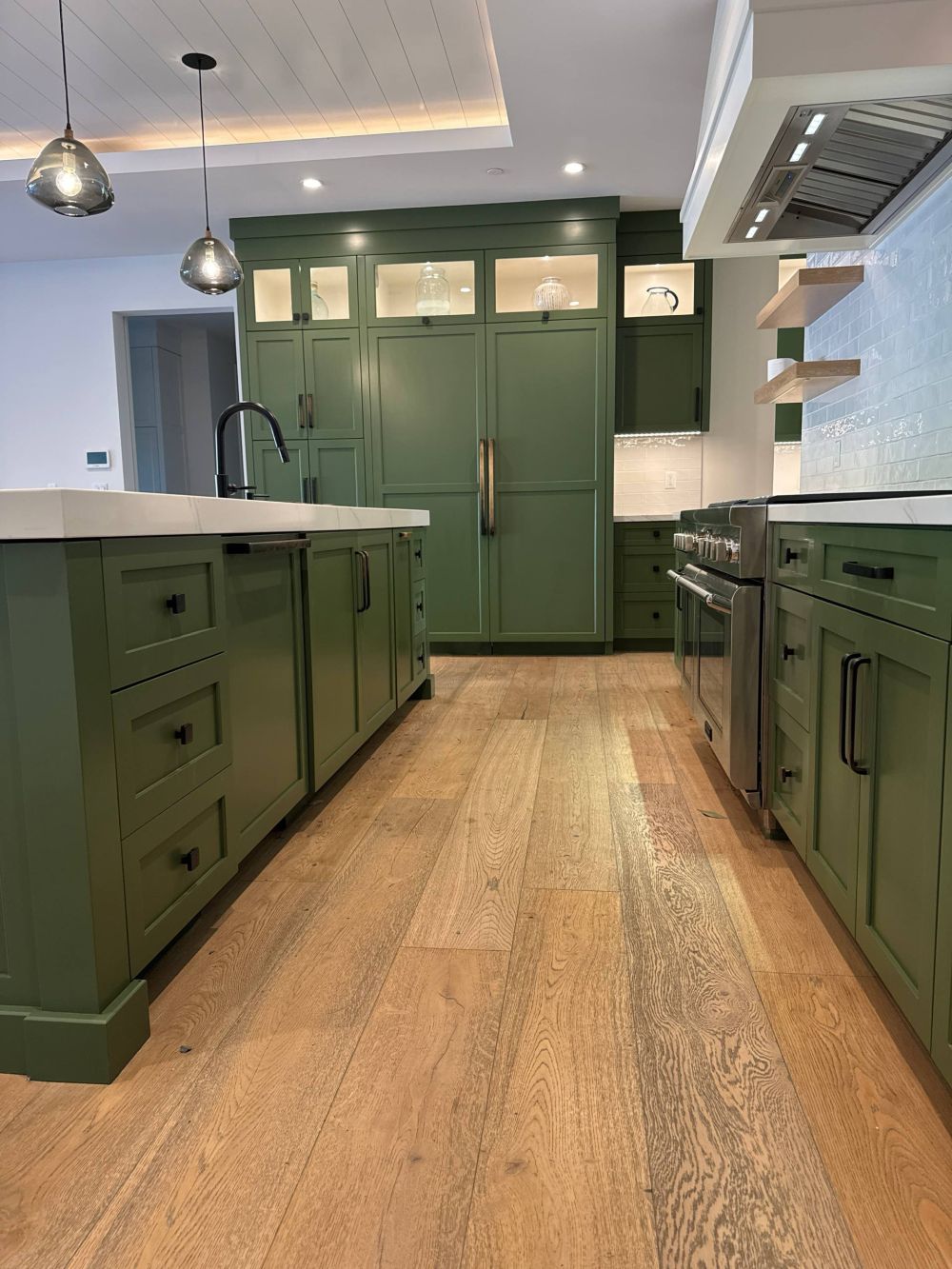
The new finish continues around the stacked stainless steel wall ovens, with drawers beneath and glass-front cabinets above. The original black hardware was reinstalled after painting.
The Large Island Became Part of the Green Kitchen
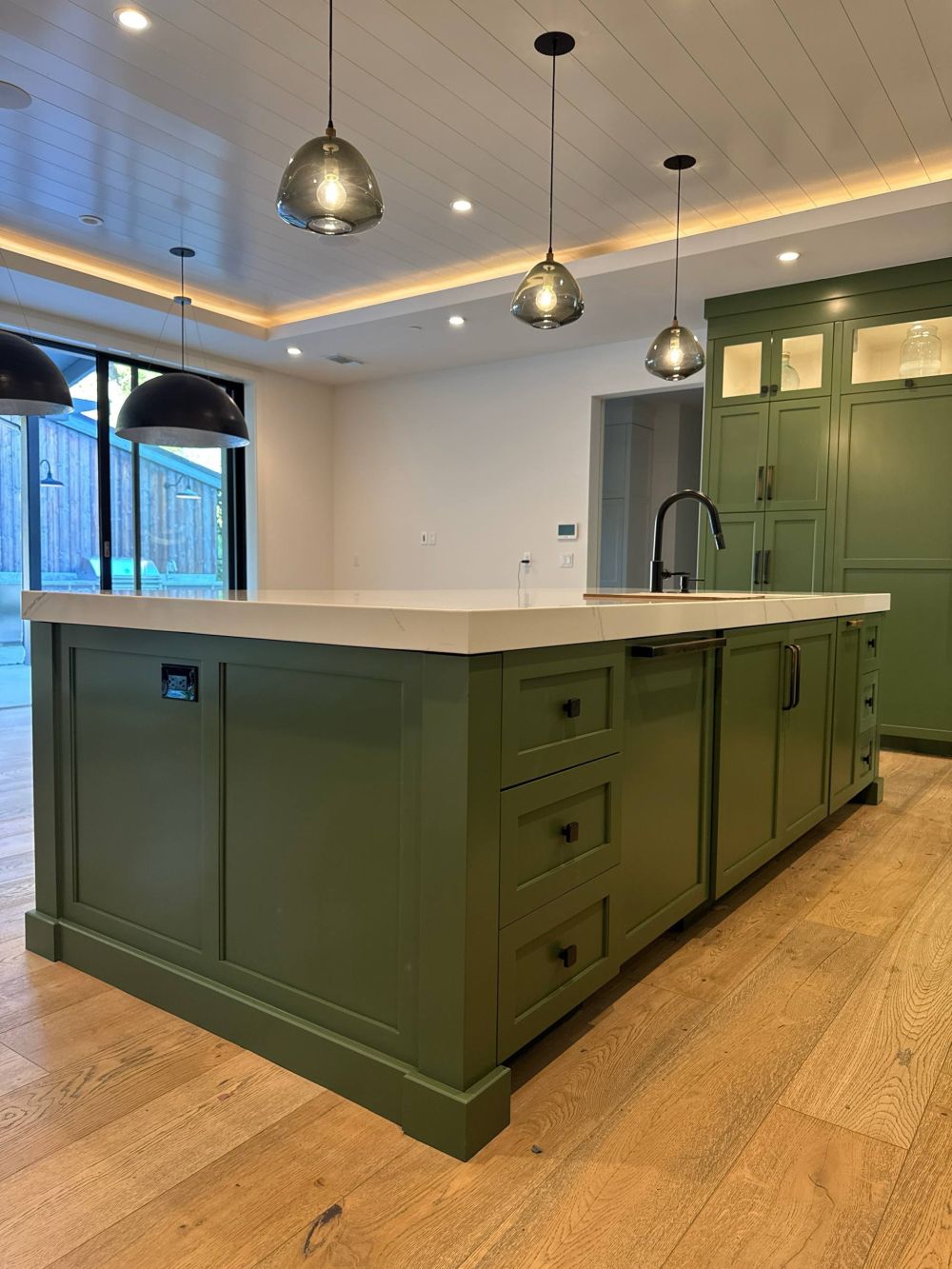
Green panels now cover the island’s base, including the drawers beside the dishwasher. The sink, black faucet, and quartz countertop remain in place, with the island’s seating overhang facing the sliding glass doors.
The aisle between the island and range provides a view toward the paneled refrigerator. Wide plank oak-toned flooring contrasts with the green cabinetry on both sides, while black pulls tie the doors and drawers together.
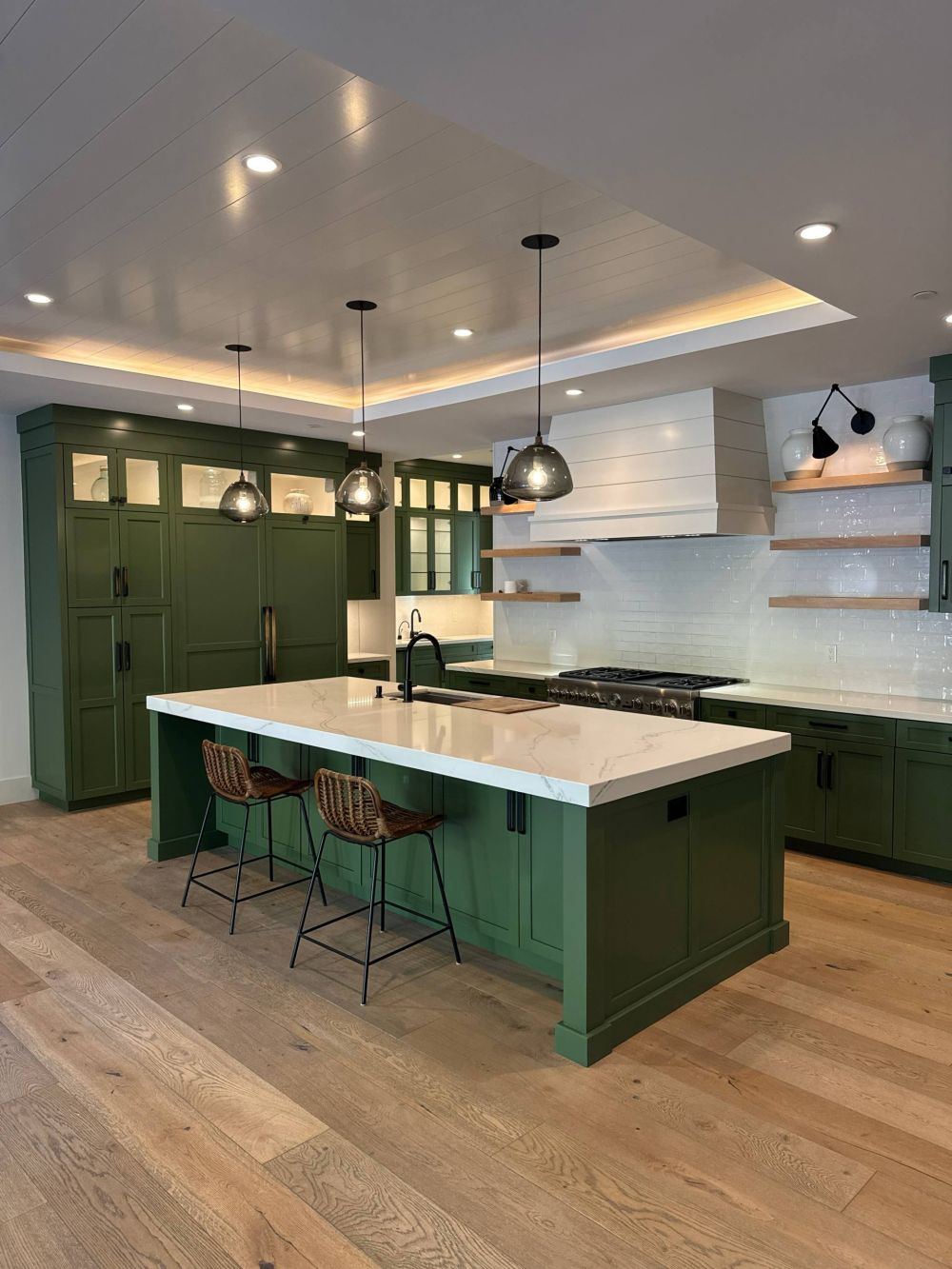
From the seating side, two woven bar stools stand beneath the island overhang. The white countertop has faint gray veining, and the three glass pendants hang above it against the recessed ceiling.
Same Kitchen, Different Color From End to End
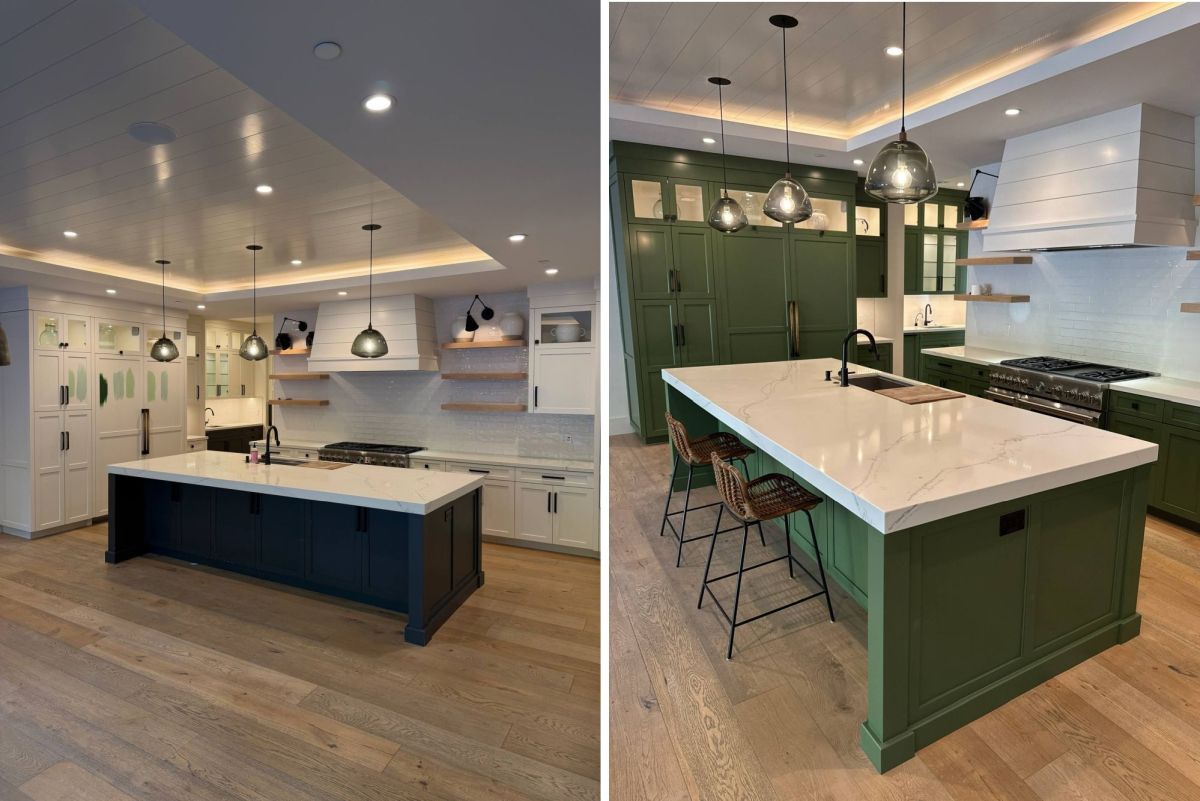
The before-and-after comparison captures the biggest change: white cabinets and a navy island have become one sage green kitchen. The original two-tone design had strong contrast, while the new finish puts more emphasis on the quartz, wood shelves, and illuminated glass cabinets.
Rather than remove a kitchen that already had custom storage and finishes, the homeowners invested in repainting the existing cabinetry.
Would you have kept the white cabinets and navy island, or does sage green suit this kitchen better?
Image credits go to @fixpointman