


Most NZ homeowners rarely think about their hot water thermostat until a morning shower suddenly turns lukewarm—or uncomfortably scalding. Yet the temperature settings governing your water heating system play a vital dual role in the home: they protect your household from dangerous waterborne bacteria while preventing accidental burns at the tap. Whether you live in a classic villa in Auckland or Wellington or a modern family home in Christchurch or Dunedin, as more Kiwis upgrade from ageing electric tanks to modern heat pump hot water cylinder understanding how storage temperatures, tempering valves, and smart sanitisation cycles work together under New Zealand regulations has never been more important.
Why Your System Actually Runs on Two Different Temperatures
When people ask what temperature their hot water should be, they are usually thinking of a single number. In reality, NZ plumbing regulations treat the water sitting inside your storage tank and the water flowing out of your bathroom tap as two completely separate environments.
Under New Zealand Building Code Clause G12 for preventing scalding from tap water, any stored water inside a domestic cylinder must be heated to a minimum of 60°C. The reason is microbiological: stagnant, lukewarm water between 20°C and 50°C creates an ideal breeding ground for Legionella and other harmful bacteria. Maintaining a hot water cylinder temperature of 60°C or higher—most standard mains-pressure cylinders in New Zealand operate with thermostats rated between 60°C and 70°C or 75°C—ensures those pathogens cannot survive.
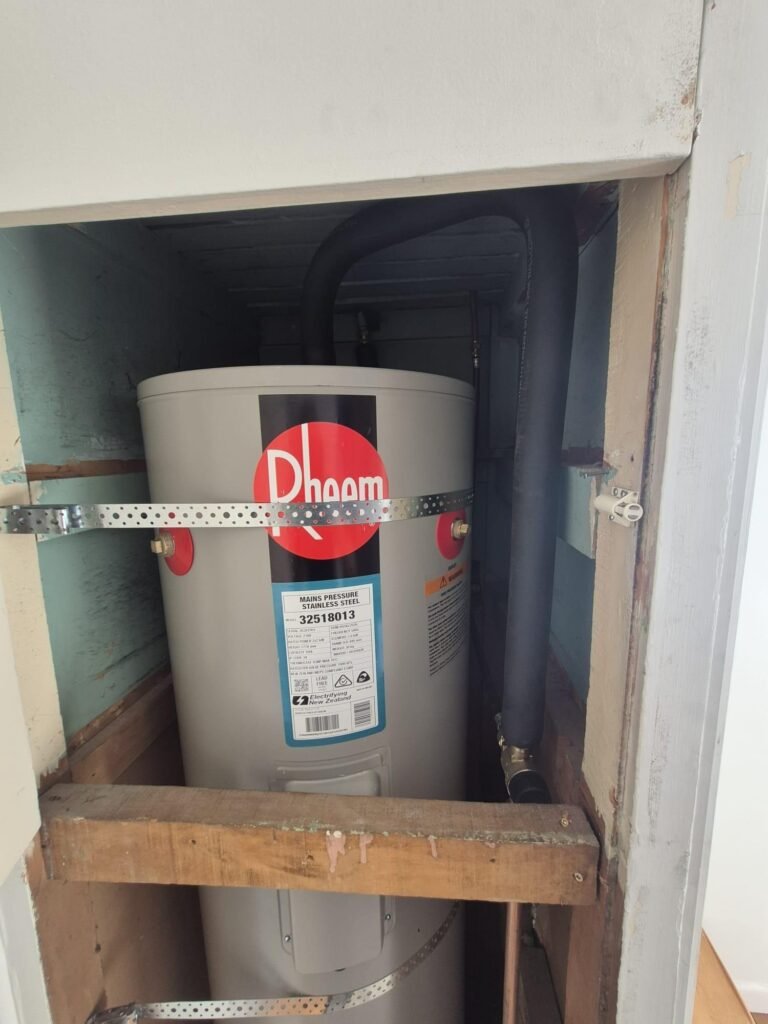
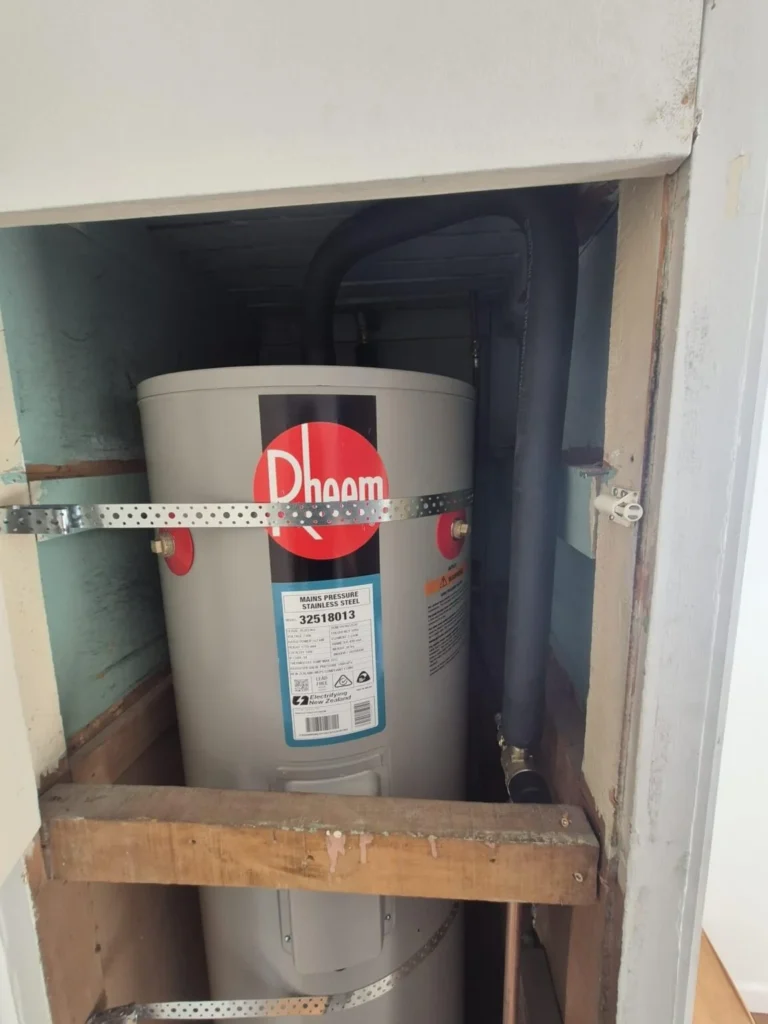
A Rheem mains-pressure stainless steel hot water cylinder installed inside a household cupboard in NZ with seismic strapping and insulated pipework.
Water at 60°C, however, will cause a severe scald on human skin in seconds. To protect residents, Building Code updates require that for sanitary fixtures installed since 2 November 2024—specifically bathroom basins, showers, and baths—hot water delivered at the tap must not exceed 50°C. Older New Zealand homes were typically commissioned with a 55°C tap limit and are not retrospectively required to change unless fixtures are being replaced, while higher-risk environments face even stricter limits: 45°C maximum in schools, hospitals, and aged-care facilities, and 40°C maximum at taps accessible to children in early childhood centres. Kitchen sinks and laundry tubs are exempt from these tap caps because they are used for cleaning rather than personal washing.
The crucial component bridging these two requirements is the tempering valve. Installed on the hot outlet pipe leaving the cylinder, this valve automatically blends a controlled amount of cold water into the 60°C flow from the tank so that the water arriving at your showerhead sits safely at 50°C or below.
The Myth of Turning Down the Thermostat to Save Power
With electricity prices top of mind from Auckland down to Dunedin, a common piece of well-meaning advice circulates online suggesting homeowners dial down their cylinder thermostat to shave money off their monthly power bill. On a conventional electric storage cylinder, doing so is a false economy that introduces a genuine health hazard. Dropping the tank below 60°C saves surprisingly little electricity while leaving the entire cylinder sitting in the exact temperature zone where Legionella thrives.
If your goal is a noticeably smaller energy bill without compromising water safety, practical maintenance and modern hardware deliver far better returns. Fixing a dripping hot tap or a weeping pressure relief valve immediately stops paid-for heat from draining away. Wrapping thermal lagging around the first two metres of hot pipework leaving the cylinder, ensuring an older tank is well insulated, and checking whether your electricity retailer offers an off-peak night rate or ripple-control tariff all help trim running costs.
Even better, when an older tank reaches the end of its life, upgrading to hot water heat pump cylinders transforms the economics of water heating altogether. Because a heat pump extracts ambient warmth from the air rather than relying solely on an immersion element, it heats water to safe storage temperatures using roughly a third of the electricity of a traditional cylinder.
How Thermostats Work Across Electric, Gas, and Heat Pump Cylinders
Where you find the temperature control—and whether you are legally allowed to touch it—depends entirely on the type of water heater installed at your property.
On a traditional mains-pressure or low-pressure electric cylinder, the thermostat sits near the bottom of the tank alongside the heating element, tucked behind a screwed-on access cover. Because live 230-volt wiring sits directly behind that plate, adjusting or testing an electric cylinder thermostat is strictly off-limits for DIYers in NZ and must only be carried out by a registered electrician. By contrast, gas continuous-flow systems such as the Rinnai INFINITY range do not store water at all; they heat water on demand as it passes through a heat exchanger, allowing homeowners to dial in their preferred tap delivery temperature safely via digital wall controllers in the bathroom or kitchen.
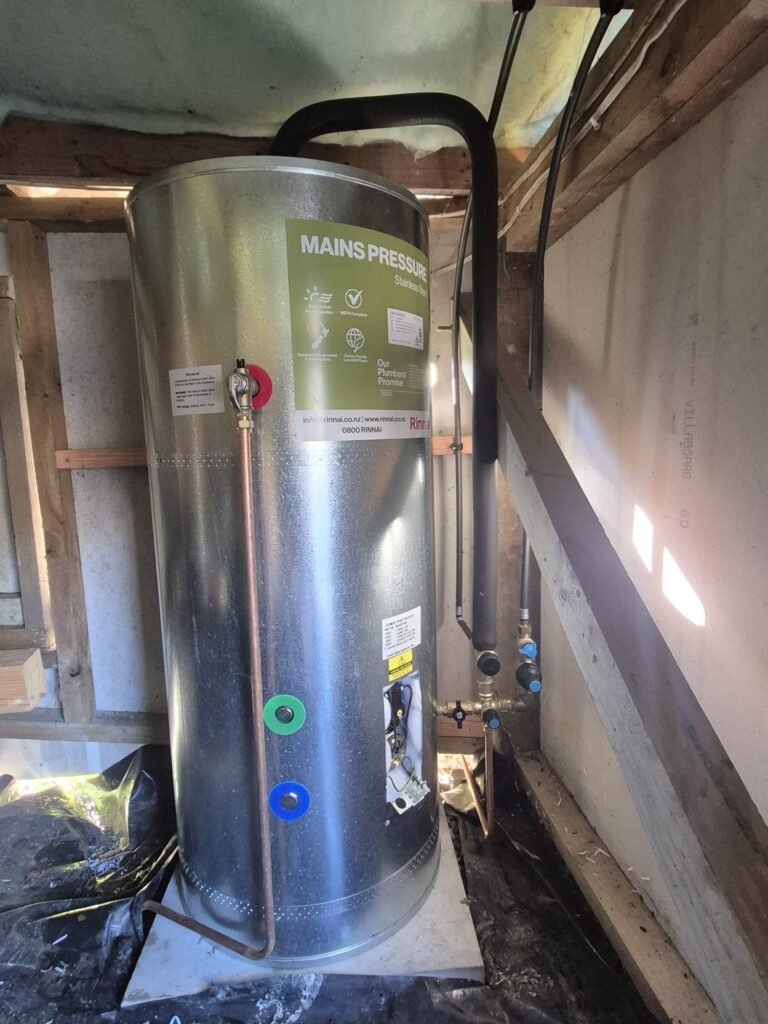
A Rinnai mains-pressure stainless steel hot water cylinder showing the lower electrical access panel where the thermostat and element are housed.
Modern hot water heat pump cylinders offer the best of both worlds by replacing hidden wiring with external digital control panels and smartphone apps. Furthermore, heat pump systems are engineered to balance lower-temperature efficiency with strict bacterial safety. Rather than holding the entire tank above 60°C around the clock when it isn’t needed, many units feature intelligent eco modes supplemented by an automated pasteurisation cycle. The New Zealand-designed Rinnai HydraHeat, for instance, runs at 60°C by default but includes 50°C and 55°C eco settings; when those modes are active, the system automatically boosts the tank above 60°C for a full hour once a week to eradicate any bacteria. Provided you leave that weekly sanitisation cycle enabled, you get maximum heat pump efficiency with full biological safety.
Checking Your Tap Temperature and Spotting Faults Early
If your showers have started feeling hotter or cooler than usual, you can run a simple check at home using a standard digital cooking thermometer. To test the tempered water reaching your family, run the hot tap at the bathroom basin for a minute or two until the temperature stabilises, fill a mug, and take a reading. In a home plumbed since November 2024 it should sit at or just below 50°C, or around 55°C in an older setup. To get a closer indication of the raw cylinder temperature, repeat the test at the kitchen or laundry tap closest to the tank, as those lines are frequently untempered.
How the system behaves usually points straight to the culprit. If water at the shower suddenly becomes scalding hot, either the tempering valve has failed or the cylinder thermostat has welded itself stuck in the “on” position. If the pressure relief valve outside is constantly discharging steaming water, the tank may be overheating due to a faulty thermostat—in which case you should isolate the hot water switch at the switchboard immediately and call a professional. Conversely, water that never gets past lukewarm, or a tank that takes hours longer to recover than it used to, typically signals a failing thermostat or a scaled-up, burnt-out heating element. Complete loss of hot water or a circuit breaker that repeatedly trips on the switchboard usually indicates an electrical fault in the element, thermostat, or ripple relay, or moisture ingress into the wiring. You can explore a full breakdown of symptoms and typical pricing in this guide to common hot water cylinder repairs and costs, or arrange a local technician in Auckland, Wellington, Christchurch, or Dunedin through a dedicated hot water cylinder repairs service.
Repairing a Part vs Upgrading the Cylinder
When a thermostat or element fails on a cylinder that is otherwise young and structurally sound, a targeted repair is almost always the smartest financial move. Having a tradesperson supply and fit a replacement thermostat typically costs between $250 and $400, while a new element generally runs from $250 to $450—a fraction of the $3,500 or more required to supply and install a brand-new cylinder.
However, if the tank itself is well past its ten-to-fifteen-year prime, showing signs of rust around the base, or struggling to keep up with a growing household, pouring money into old components rarely makes sense. Homeowners looking for a straightforward modern swap can browse a wide range of electric hot water cylinders—such as a 177L Rheem mains-pressure model for two to three people, or a 250L Rinnai Enamel or Thermann electric unit for a three-to-four-person home—or use the opportunity to step up to a high-efficiency heat pump system. Whether you need an urgent thermostat fix or want to compare replacement options for your property, requesting a hot water cylinder quote from a nationwide hot water specialist will give you a clear, fixed price before any work begins.