

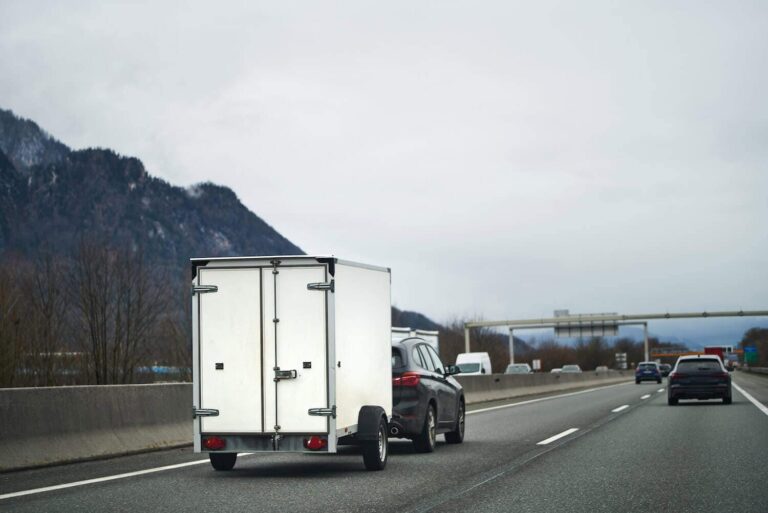

Many Americans rent a trailer or tow something each year, so this question comes up all the time: which trailer rental company is actually the best? Short answer: U-Haul is usually the most dependable choice for trailer rentals, thanks to its huge network and consistent availability. A basic utility trailer often runs about $20 to $60 per day, enclosed cargo trailers cost around $30 to $80, car dollies and car haulers usually cost $50 to $120 per day, and heavy-duty flatbeds can range from $70 to $200 or more.
What you pay depends on weight capacity, trailer type, whether your rental is local or one-way, mileage, insurance, and even how many trailers your nearby locations have on hand. Trailers are also an option that a lot of people choose for their move. At HireAHelper, we help people move every single day, so we have seen every version of trailer confusion there is. Our goal is to make this whole process easier and far less stressful, so you feel confident choosing the right trailer from the start.
What Is a Moving Trailer?
A moving trailer is a tow-behind unit that you attach to your own vehicle to move household items, gear, or even another vehicle. Unlike a truck rental company that gives you a whole box truck to drive, or a moving company that sends a crew with their own truck, a trailer rental company simply provides the trailer. You bring the vehicle and the towing capacity, and you do the driving. People use moving trailers for all kinds of jobs, including:
- Moving household goods (moving trailers, cargo trailers)
- Towing a car (car trailer rental, car dolly rental)
- Moving motorcycles (motorcycle trailer rental near me)
- Hauling materials or equipment (flatbed trailer rentals, 20 ft trailer rental)
- Long-distance moves (cross-country moving trailer rental)
Requirements for Towing a Trailer
When collecting hitch installation quotes, we discovered that two of the cars we were getting quotes for aren’t officially rated for towing. U-Haul has towing requirements that must be met before you can rent a trailer for moving. If your car isn’t rated for towing — or doesn’t meet the other requirements — there’s a chance U-Haul won’t let you rent a trailer. The requirements below were taken directly from the U-Haul website.
U-Haul Towing Vehicle Requirements
- Max recommended speed is 55 MPH.
- Must have 1 7/8″ or 2″ hitch ball (2,000 lbs. minimum).
- Must not exceed maximum allowable hitch ball height of 25″.
- Must have external mirrors on both sides of vehicle.
- Must be equipped with a hard top if it is an SUV or select Jeeps.
- Tow vehicle and trailer lighting must be operational at all times, day and night.
- The curb weight of the vehicle must exceed the weight of the loaded trailer.
- Must be equipped with an adequate hitch system and lighting connections.
Types of Moving Trailer Rentals and When to Use Them
Below is a simple breakdown of the most common trailer types, what they are designed for, and what they usually cost. Prices vary by location, season, and availability, but these ranges will give you a solid idea of what to expect.
| Trailer Type | Typical Use | Typical Size and Weight Limit | Typical Daily Cost |
| Utility Trailers | Small moves, furniture, boxes, yard waste, DIY projects | 4×7 to 6×12, up to about 1,500 to 2,000 lbs | $20 to $60 |
| Cargo/Enclosed Trailers | Household goods, apartment moves, and belongings that need weather protection | 4×8 to 6×12, up to about 1,800 to 2,500 lbs | $30 to $80 |
| Car Trailers (Dolly or Full Hauler) | Towing a second vehicle for long-distance moves or relocations | Car dollies handle front wheels only, full haulers support the entire vehicle, often up to 5,000 lbs | $50 to $120 |
| Motorcycle Trailers | Transporting one or two motorcycles safely | Small open trailers with built-in tie downs, usually up to 1,200 lbs | $25 to $80 |
| Heavy Equipment or Flatbed Trailers | Moving appliances, building materials, lawn tractors, ATVs, or larger equipment | Varies widely by style, often 12 to 20 ft, 3,000 lbs and up | $70 to $200+ |
How to Choose the Right Trailer for a Move
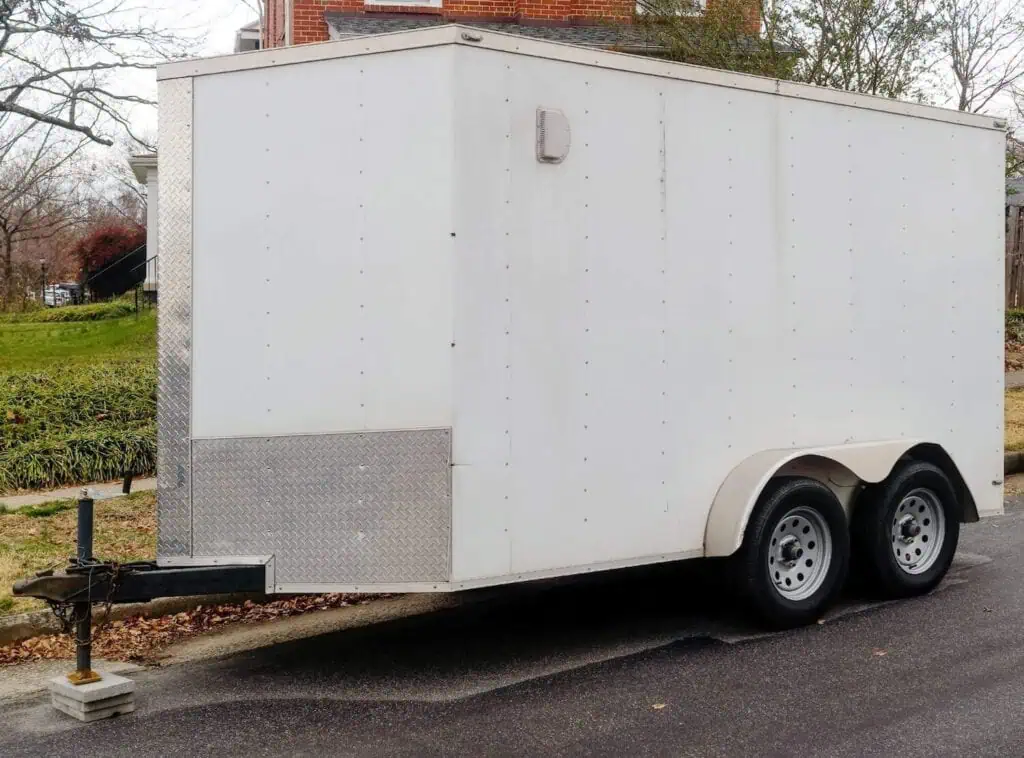
For most people planning a household move, an enclosed cargo trailer is the safest and simplest pick. It protects your boxes and furniture from rain, wind, and road debris, and it keeps everything contained so you don’t have to fuss with tarps or straps every few miles.
Utility trailers work for lighter moves, like hauling a mattress, a few pieces of furniture, or overflow items that will not fit in your car. Since the sides are open, you will need to secure everything well.
Car trailers come into play when you are relocating long-distance and need to bring a second vehicle, and motorcycle trailers serve a similar purpose for your bike. Flatbeds are more of a specialty option. They are great for construction projects, large equipment, bulky yard materials, or anything heavy that would not fit inside a regular trailer.
Moving Trailer Rentals vs Moving Truck Rentals
If you are stuck deciding between renting a trailer or renting a moving truck, here is the simplest way to think about it.
A moving trailer makes sense when you already have a vehicle that can tow, you do not mind driving with a trailer attached, and you want to keep costs low. Trailers are the more budget-friendly option in many cases, especially for smaller moves.
“…[The] average cost to purchase and install a hitch is $546…so if you already have an adequate hitch on your vehicle, then renting a trailer will almost certainly save you money…However, if you need to install a hitch, it may not.”
A moving truck rental is usually the better fit when you have a larger home, want everything to fit in one trip, or do not have a tow-rated vehicle. Renting a truck also gives you a fully enclosed box with plenty of room, ramp access, and no need to worry about towing capacity. If you are searching for “moving truck rentals near me,” trying to rent a box truck, or looking for cheap rental trucks with unlimited mileage, a truck rental company will cover all of that.
In short, trailers are great for lighter loads and people with a tow-capable vehicle. Moving trucks are better for bigger homes, longer distances, and anyone who wants the easiest loading and driving experience.
Moving Trailer Rental Company Comparison
Most people renting a trailer want something simple, affordable, and weatherproof. That is why U-Haul is our top pick. It is the only national company that rents enclosed cargo trailers, which are the safest and most practical choice for most moves. Everything stays contained, dry, and out of the wind, which makes a much bigger difference than people expect.
Below is an updated look at the main companies that offer towable trailers for moves, along with what you can actually rent from each one.
Moving Trailer Rental Companies
| Provider | Trailer Options | One-Way Rentals | Mileage Fee |
| U-Haul |
|
✅ Yes | Unlimited miles |
| Penske |
Trailers are only available with a truck rental. |
✅ Yes | Unlimited miles |
| Budget |
Trailers are only available with a truck rental. |
✅ Yes | Unlimited miles |
| The Home Depot |
|
❌ No Local only | Yes (varies) |
| Lowe’s |
|
❌ No Local only | Unlimited miles |
As the only company on our list that rents out cargo trailers, U-Haul is our top pick. This is simply because enclosed trailers are the best option for most moves. Unlike open-air utility trailers, cargo trailers keep all of your belongings contained and protected from wind and foul weather. Still, every move is unique. So here’s an overview of each company and the pros and cons when it comes to renting a towable moving trailer.
Trailer Rental Company Overview
| Provider | Best For | Cost Structure | Typical Cost |
| U-Haul | Most household moves, weather protection, widest variety of trailers | Flat daily rate, optional add-ons, no mileage fee | About $20 to $120 per day |
| Home Depot | Local DIY projects and same-day hauling | 4-hour, daily, weekly, or 4-week rental, mileage fee applies | Often $30 to $60 for local use |
| Budget Truck | Towing a vehicle behind a Budget truck | Adds on a daily rate to a truck rental | About $50 to $120 per day |
| U-Pack | Long-distance moves without towing | Pay by linear foot in a freight trailer | Varies by distance and space used |
| Penske | Towing a vehicle behind a Penske truck | Adds on a daily rate to a truck rental | About $60 to $120 per day |
| Lowe’s | Small local hauls and home improvement projects | 4-hour, daily, weekly, or 4-week rental | Often $20 to $50 locally |
Now we break down each provider in more detail, including trailer options, pros, cons, and how pricing works.
U-Haul Trailer Rental

U-Haul has over 10 different trailers to choose from, including three sizes of cargo trailers, four sizes of utility trailers, two utility trailers with ramps, and multiple specialty trailers. The best part? You don’t have to rent a U-Haul truck to rent a U-Haul trailer. You just need to have a vehicle capable of hauling a trailer (and a hitch). If you need a hitch, U-Haul will sell you one to fit your car and even install it for you for a fee.
Best For: Most household moves, weather protection, and the widest range of trailer choices
U-Haul Trailer Rental Options
U-Haul’s cargo trailers (the best option for most moves) come in three sizes. The 4×8 trailer is usually big enough for a dorm or small studio apartment, the 5×8 trailer should work for a studio or small 1-bedroom apartment, and the 6×12 trailer can accommodate up to a 2-bedroom home (as long as it’s not too heavily furnished). Cargo Trailers (enclosed and weather-protected)
- 4×8 cargo trailer
- 5×8 cargo trailer
- 6×12 cargo trailer
Utility Trailers (open trailers)
- 4×7 utility
- 5×8 utility
- 5×9 utility
- 6×12 utility
- 6×12 utility with ramp
Specialty Trailers
- Auto transport
- Tow dolly
- Motorcycle trailer
- Boat and sport vehicle haulers
- Hitch sales and installation
- Optional coverage add-ons
U-Haul Trailer Rental Pros and Cons
Pros:
- Enclosed trailer rentals, plus plenty of other options
- You can rent a trailer without renting a truck
- U-Haul also sells and installs hitches
- Unlimited miles on trailer rentals
Cons:
- U-Haul won’t install a 3rd party hitch (you have to buy it from U-Haul if you want them to install it)
- U-Haul charges a flat daily rate based on the trailer type, plus taxes and optional add-ons. There is no mileage fee. Expect roughly $20 to $120 per day.
Budget Truck Trailer Rental
Budget offers the same options as Penske, but the “tow dolly” is called a “car dolly.” Like Penske, the vehicle trailers are only available as an add-on to a truck rental. Budget adds the trailer fee to your truck rental reservation. You pay a daily rate for the dolly or carrier, plus taxes and any protection plan.
Best For: Towing a vehicle behind a Budget truck rental
Budget Truck Trailer Rental Options
- Car dolly
- Car carrier
- Available only with a Budget truck rental
- Optional damage coverage through Budget
Budget Truck Trailer Rental Pros and Cons
Pros:
- Option to tow a vehicle behind a Budget moving truck rental
- Unlimited miles on trailer rentals
- Trailers available for one-way moves
Cons:
- You must rent a Budget moving truck to rent a trailer
Home Depot Trailer Rental

The Home Depot rents out 5×8 open-frame trailers and 5×8 open solid-wall trailers. These are rented out for a variety of purposes, but they could also be used for a local move. The solid-wall trailers offer a little more stability for your items, though you’ll still want to tie them down properly. Trailer rental costs are based on the rental period (4 hours, per day, per week, or 4 weeks), and a mileage fee applies.
Best For: Local DIY projects and same-day hauling
Home Depot Trailer Rental Options
- 5×8 open frame utility trailer
- 5×8 open solid wall trailer
- The ramp gate is included on both
- Optional damage coverage depending on location
Home Depot Trailer Rental Pros and Cons
Pros:
- Solid-wall trailers offer more stability than standard utility trailers
- Trailers come with a ramp gate for easier loading
Cons:
- Limited trailer options
- Trailer rentals must be returned to the same location (no one-way rentals)
- Rentals are pricy compared to U-Haul, plus there’s a mileage fee (which could make the price unreasonable)
U-Pack Trailer Rental
U-Pack does not rent tow-behind trailers. Instead, they offer freight trailers where you pay by the linear foot you use. It is a different style of moving, but it is often compared to renting a moving trailer because it serves a similar purpose for long-distance, budget-friendly relocations. Costs depend on route, linear footage used, and seasonal demand. You pay a fixed rate per foot plus optional add-ons.
Best For: Long-distance moves where you want to avoid towing
U-Pack Trailer Rental Options
- 28-foot freight trailer
- Pay only for the space you use
- Includes transportation
- Optional coverage and guaranteed delivery windows
U-Pack Trailer Rental Pros and Cons
Pros
- No towing required
- Only pay for the space you use
- Often cheaper than driving a rental truck long distance
Cons
- Not a towable moving trailer
- Not available for local moves
- Limited control over loading timeline in some markets
Penske Trailer Rental
Penske only has two types of trailers available to rent: a tow dolly and a car carrier. The tow dolly is for front-wheel drive vehicles. It lifts the front of the car off the road, while the back wheels remain on the asphalt. Car carriers hold the entire car off the road, but are usually more expensive. These are recommended for vehicles with all-wheel or rear-wheel drive. You have to rent a towing-capable Penske truck (16-ft, 22-ft, or 26-ft) in order to rent a Penske trailer. You pay a daily rate added to your Penske truck rental. Exact pricing depends on route and equipment availability.
Best For: Towing a car behind a Penske truck
Penske Trailer Rental Options
- Tow dolly
- Car carrier
- Only available with Penske truck rental
- Optional coverage and tow equipment bundles
Penske Trailer Rental Pros and Cons
Pros:
- Option to tow a vehicle behind a Penske moving truck rental
- Unlimited miles on trailer rentals
- Trailers are available for one-way moves
Cons:
- No cargo trailers
- You must rent a Penske truck as well
Lowe’s Trailer Rental
Lowe’s has a 4×6 utility trailer and a 5×8 highside utility trailer, available to rent for 4 hours, per day, per week, or for 4 weeks. Rentals are available for local use only and must be returned to the same store. Unfortunately for us, the closest Lowe’s with trailers for rent was about 27 miles away, which means 40 minutes there and back.
Also, it was a serious challenge to even find the trailer rental page on Lowe’s website. After several unfruitful Google searches, we finally got the right link from the chatbot. On the plus side, Lowe’s trailer rentals come with unlimited mileage, and a weekly rental of the 4×6 utility trailer is pretty cheap ($116). If you don’t mind a slow move with a small trailer, it could save you some money.
Best For: Small local hauling and home improvement projects
Lowe’s Trailer Rental Options
- 4×6 utility trailer
- 5×8 highside utility trailer
- Local rentals only
- Optional coverage varies by store
Lowe’s Trailer Rental Pros and Cons
Pros:
- Highside utility trailers offer more stability than standard utility trailers
- Unlimited mileage on trailer rentals
- Weekly rental of Lowe’s 4×6 utility trailer is relatively cheap
Cons:
- Limited trailer options
- Trailer rentals must be returned to the same location (no one-way trailer rentals)
- The standard utility trailer is small for moving
Commercial & Fleet Trailer Rental Companies
Some people look into commercial rentals when they cannot find the trailer they want at U-Haul or a home improvement store. These companies are built for contractors first, which means their trailers are heavier, pricier, and made for job sites more than household moves. Still, they can be helpful in a few situations, so here is a quick look at the most common ones.
United Rentals
United Rentals mainly serves construction crews, so the trailers you will find here are designed to move equipment, not couches or boxes. Most locations offer equipment haulers, heavy-duty utility trailers, and job site trailers. They are sturdy, but they often require a vehicle with serious towing strength. The rental process is straightforward, but the pricing is usually higher than what you would pay at a consumer rental company.
- When they make sense: hauling something genuinely heavy, like a compact tractor or large machinery.
- When they don’t: moving into a new apartment or hauling furniture. The trailers are overbuilt for that kind of work.
Sunbelt Rentals
Sunbelt Rentals is similar to United. Their lineup leans toward landscaping gear, construction tools, and material haulers. You can rent a small utility trailer, but even the smaller ones tend to be heavier than what most people expect. You will also need to return everything to the same location.
- When they make sense: picking up materials for a project, moving equipment, or doing a short job that needs something sturdier.
- When they don’t: almost any regular move. For everyday hauling, consumer trailer rentals offer better prices and easier sizing.
Other Commercial Fleet Options
Some regional tool rental companies and farm supply stores also rent trailers. These are usually meant for things like ATVs, mowers, or building materials. They work fine when you need to move something bulky, but they are rarely the best choice for household belongings.
Bottom line: Commercial trailers are great for heavy projects and job site tools. If you are packing up a home, they usually have more trailer space than you need, and you will pay more than you would with a standard moving trailer rental.
How Much Do Trailer Rentals Cost? (Pricing by Type)
Most moving trailer rentals cost somewhere between $20 and $120 per day, depending on the type of trailer you choose and how far you plan to go. Some specialty equipment trailers’ prices can climb higher, while small local trailers often stay on the lower end of that range. Moving trailer rental costs also depend on various factors, such as:
- Rental company
- Size and type of trailer
- Towing accessories (if needed)
- Distance of move or rental time period
- Pick-up and drop-off locations
- Damage coverage
- Seasonality
Below is a simple overview of what you can generally expect to pay.
Trailer Rental Cost Summary
| Trailer Type | Typical Daily Rate | Typical Weekly Rate | Typical Deposit |
| Utility Trailer | $20 to $60 | $100 to $250 | $50 to $150 |
| Cargo / Enclosed Trailer | $30 to $80 | $150 to $400 | $50 to $150 |
| Car Dolly / Car Hauler | $50 to $120 | $250 to $600 | $100 to $250 |
| Motorcycle Trailer | $25 to $80 | $120 to $280 | $50 to $150 |
| Heavy Equipment / Flatbed Trailer | $70 to $200+ | $300 to $800+ | $100 to $300 |
These ranges vary by company and location, but they give you a realistic sense of what budget to set aside.
Local Trailer Rental Costs
A typical local trailer rental for a small move or weekend project usually falls between $30 and $70, depending on the trailer size and how long you keep it.
Local rentals are billed in shorter time blocks, so you often pay by the hour or by the day. U-Haul, Home Depot, and Lowe’s all structure local rentals this way. Smaller utility trailers are typically the cheapest option, while enclosed cargo trailers and car haulers are generally more expensive. Here is how local pricing usually breaks down:
- Utility trailers: $20 to $60 per day
- Cargo trailers: $30 to $80 per day
- Motorcycle trailers: $25 to $80 per day
- Equipment or flatbed trailers: $70 to $200+ per day
Accessories like tie downs, wiring adapters, and damage coverage can add a little to the total. Most companies also require the trailer to be returned to the same location, which keeps the cost lower but limits flexibility.
Example Local Use Cases
| Situation | Trailer Type | Expected Cost |
| Moving a small studio apartment a few miles away | 5×8 cargo trailer | $40 to $60 |
| Picking up materials from a home improvement store | Utility trailer | $20 to $40 |
| Transporting a motorcycle across town | Motorcycle trailer | $30 to $60 |
| Hauling landscaping equipment | Flatbed trailer | $70 to $150 |
One-Way & Cross-Country Trailer Rental Costs
A typical one-way or cross-country trailer rental often costs $50 to $120 per day for the trailer itself, but the total price depends heavily on distance, dates, and the trailer type. Enclosed cargo trailers are the most popular option for long-distance moves because they keep belongings protected from the weather over hundreds of miles.
True one-way trailer rentals are limited. U-Haul is the only major company that consistently offers them, which is why many people end up comparing trailers with long-distance moving trucks or container services. Here is what long-distance pricing usually looks like:
- Cargo trailers (one way): $30 to $80 per day
- Car haulers/tow dollies: $50 to $120 per day
- Utility trailers (limited one-way availability): $20 to $60 per day
Other companies, like Home Depot and Lowe’s, offer local-only trailer rentals, while Budget and Penske only rent trailers as add-ons to a truck rental. For true long-distance needs, some customers compare trailer rentals with freight trailers or container moves, especially for cross-country moving trailer rental options that avoid towing altogether.
Example One Way and Cross Country Use Cases
| Situation | Trailer Type | Expected Cost |
| Moving from one city to another using your own tow vehicle | 6×12 cargo trailer | $40 to $80 per day |
| Driving a moving truck while towing your second vehicle | Car dolly or car carrier | $50 to $120 per day |
| Budget-friendly long-distance move without towing | U-Pack freight trailer (per foot pricing) | Varies by distance and space |
| Transporting a motorcycle during a regional relocation | Motorcycle trailer | $30 to $80 per day |
What’s Better: Trailer Rental vs. Box Truck Rental?

If you are trying to decide between renting a trailer or renting a box truck, the right choice usually comes down to how much you are moving, what you are driving, and how comfortable you feel towing. Both options can work well, but they are built for different situations.
Trailer Rental
A trailer rental works best when:
- You already have a vehicle that can tow safely
- You are moving a smaller home or a lighter load
- You want the lowest-cost option
- You are comfortable backing up, turning, and driving with a trailer
- You prefer not to drive a large truck
Trailers fit people who want something simple, inexpensive, and easy to return. For apartment moves, small homes, or local projects, a trailer can cover everything you need without the cost of a full truck rental.
Box Truck Rental
A box truck rental works best when:
- You are moving a larger home or have bulky furniture
- You need everything to fit in one vehicle
- You want an enclosed space with a ramp or lift
- You do not have a tow-rated vehicle
- You want the easiest loading experience
Box trucks are made for bigger moves. They give you more space, better weather protection, and a smoother moving day because you load once and drive once. They are also helpful for people who feel unsure about towing or do not have the right hitch setup.
Side-by-Side Comparison
| Feature | Trailer Rental | Box Truck Rental |
| Best For | Small moves, people with tow vehicles, budget moves | Larger moves, long-distance trips, and one-trip loads |
| Driving Experience | Requires towing confidence | Easier for most drivers |
| Weather Protection | Good with cargo trailers, limited with utility trailers | Fully enclosed |
| Space | Limited by trailer size | Large enclosed cargo area |
| Cost | Usually cheaper | Higher daily rate |
| Flexibility | Great for short local errands | Best for full household moves |
Is a Moving Trailer Right for Your Move?
Moving trailer rentals are an excellent choice for specific types of moves, but they simply do not work for others. Here are the moving situations where moving trailers make sense, and ones where they don’t.
When a Moving Trailer Makes Sense
- Small, local moves when you already have a hitch on your car: If you already have a hitch, then renting a trailer for a day or two is super affordable!
- Small, local moves when you just need to get the big appliances to your new place: Even if you’re able to transport the bulk of your things with your personal vehicle, no amount of ingenuity is going to make a fridge fit in a hatchback. But you can rent a utility trailer from Home Depot or U-Haul and get the bigger stuff moved in a few hours.
- Small, long-distance moves when you’d rather drive your car than tow it behind a truck: Driving a moving truck can be daunting, but driving a moving truck while towing your vehicle is another thing entirely. If you can fit everything in a trailer and tow it behind your comfy and familiar car, this is a good option.
- Large, DIY moves with a moving truck when you have more stuff than the truck can hold: Sometimes, a 26-ft moving truck just doesn’t cut it. In that case, you have the option of towing a trailer behind the truck or having another driver tow a trailer behind a personal vehicle. Either way, renting a trailer will save you a second trip, which is especially important for long-distance moves. This is especially economical for companies that require you to rent a truck if you want to rent a trailer. The extra cost of the trailer rental is guaranteed to be less than an entire second trip.
When a Moving Trailer Isn’t the Best Option
While moving trailers are a cost-effective solution in some cases, they’re not ideal for every situation. Below, we break down when it’s better to skip the trailer — and share our top alternative ways to move instead.
Local moves when you don’t already have a hitch
If you’re moving locally and don’t already have a hitch installed on your car, you can save money on your move by renting a moving truck instead of a trailer. While a trailer rental is technically cheaper, it’ll cost around $500 to have a new hitch installed (which you’ll have to do in order to rent a trailer).
What we recommend: Moving truck rental
Large, long-distance moves when everything can fit in a moving truck, but not in a trailer
If you’re moving long-distance and have more than can fit into 396 cubic feet, a moving trailer just won’t cut it. While making multiple trips for a local move is doable, it’s impractical (if not impossible) for a long-distance move.
What we recommend: Moving truck rental, freight trailer moving service, or portable moving and storage containers
Moves involving storage for an extended or indefinite period of time

If you’re going to need to put things in storage during your move, moving trailers and trucks aren’t always your best options. Both require initial loading, unloading into a storage unit, later renting another truck or trailer, and then loading it again, then finally unloading everything into your new home. It’s a lot of unnecessary work! But those aren’t your only options. Portable moving and storage containers can be delivered to your driveway and then picked up and stored off-site until you’re ready for them to be delivered to your final destination.
What we recommend: Portable moving and storage containers
Local or long-distance moves as a nervous driver
Towing a moving trailer behind your car requires that you’re a confident driver and are aware of not just your vehicle, but the way the trailer moves and responds to accelerating, braking, and turning. If you’re nervous about towing a moving trailer rental, opt instead for a freight trailer or portable moving and storage containers. Both of these alternatives are dropped off at your home for easy loading, then picked up and transported to your new place. You don’t have to do the driving at all!
What we recommend: Freight trailer moving service or portable moving and storage containers
How to Choose the Right Trailer Rental Company
Picking a trailer rental company is easy with these simple steps. This works whether you are moving across town, towing a second car, or hauling something heavy for a project.
Step-by-Step Trailer Rental Company Selection
- Define your job. Are you moving household items, towing a car, or hauling equipment? Your answer will quickly narrow the list.
- Figure out the weight, distance, and whether you need a one-way rental. Lighter, local moves open up more options. Heavier loads or long-distance trips limit you to companies that allow one-way rentals.
- Create a shortlist of companies. Include both national brands and any local rental shops nearby. Each has different pricing and availability.
- Compare availability, rates, insurance, and deposit terms. Look at the daily or weekly rate, mileage rules, damage coverage, and how much they hold as a deposit.
- Read customer reviews and safety notes. This is where you can spot patterns like damaged equipment or customer service issues.
- Book early and confirm hitch or tow requirements. Make sure your vehicle can handle the trailer you want. Ask if you need wiring adapters, a hitch upgrade, or specific weight ratings.
Questions to Ask Before You Book
Before you book, there are still some things you should know about renting a trailer. Here are the most important questions to ask any trailer rental counter or online rep:
- Do you allow one-way rentals for this trailer type?
- Is there a mileage limit, or is the price a flat rate only?
- What insurance or damage coverage is available?
- What are the late return fees?
- Are there extra charges for cancellations or date changes?
- What should I bring on pickup day?
- Are there specific hitch, wiring, or weight requirements for this trailer?
Getting Help Loading and Unloading a Moving Trailer
A moving trailer can save you money, but it also means you handle all the lifting yourself. If you would rather avoid that part, hiring labor-only movers is one of the easiest ways to make your trailer move feel closer to a full-service experience without the full-service price.
Labor-only movers help with the heavy items, pack the trailer efficiently, and make sure everything is secured the right way so nothing shifts during the drive. This is especially helpful with cargo trailers, car haulers, and anything that needs careful strapping.
“[U-haul] is the only national company that rents enclosed cargo trailers, which are the safest and most practical choice for most moves. Everything stays contained, dry, and out of the wind, which makes a much bigger difference than people expect.”
With HireAHelper, finding that help is simple. You enter your move date and location, browse vetted crews in your area, and book the team that fits your needs. You can see real customer reviews, compare prices, and choose the level of help you want. Our process is outlined here in our step-by-step guide to how HireAHelper works.
You can also add optional coverage like Smart Protection, which gives you an extra layer of confidence on moving day. And if you want to learn more about what makes our marketplace unique, you can take a look at our highly rated platform overview. Hiring help for just the loading and unloading keeps your move budget-friendly while taking the hardest part off your plate. It is a simple way to make a trailer move feel smoother, safer, and a lot less stressful.
Do I Need a Trailer Hitch With My Rental?

There are really only two downsides to moving with a trailer:
- The largest cargo trailer can only accommodate up to a two-bedroom home.
- You need a proper hitch on your vehicle in order to tow a trailer.
If you’re thinking, “No problem, I’ll just go get a hitch installed. How much could it cost?” think again. Based on the various hitch quotes we ran on the U-Haul website, the average cost to purchase and install a hitch is $546! If you already have an adequate hitch on your vehicle, then renting a trailer will almost certainly save you money on your move. However, if you need to install a hitch, it may not.
The Cost to Purchase and Install a Hitch
U-Haul sells hitches and towing accessories and offers an installation service (but only for hitches purchased from U-Haul). When you get a hitch from U-Haul, it actually includes multiple parts:
- The hitch itself
- Ball mount
- Hitch ball
- Pin and clip
- Wiring
- Power wiring (optional)
The year, make, and model of your vehicle will determine what kind of hitch you can get and how much weight you can tow. To get an idea of how much it actually costs to get a hitch and have it installed, we ran four quotes through the U-Haul website.
Hitch and Installation Costs by Vehicle
| Year/Make/Model | Towing Capacity | Hitch | Installation | Total Cost |
| 2014 Kia Soul | Not officially rated for towing by Kia | $297.75 | $132 | $469.09 |
| 2020 Honda CR-V (gas) | 1,500 lbs | $284.75 | $156 | $482.54 |
| 1990 Ford F-Super Duty | 12,500–14,500 lbs | $297.75 | $180 | $523.81 |
| 2024 Toyota Rav4 | 1,500–3,500 lbs | $333.75 | $180 | $562.33 |
| 2020 Honda Civic Coupe | Not officially rated for towing by Honda | $315.75 | $312 | $693.55 |
After collecting these quotes from U-Haul, we called a local trailer hitch company to see what they would charge for the same vehicles. Believe it or not, the quotes we got from the local company were more expensive than the ones we got from U-Haul. Also, unlike U-Haul, the local shop will install hitches purchased elsewhere, but they increase the installation charge by $60/hr. We also searched online for hitch kits for the same makes and models — and even searched for individual parts to see if they’d be cheaper — but it wasn’t all that different. Sure, you might save $50 on all the parts, but then you still need to install them. While installing a hitch can be a pricey endeavor, remember that you get to keep the hitch after your move. That’s a plus point, especially if you plan to use it for something else that needs towing in the future.
Rental Trailer Safety Tips
Towing a trailer is completely manageable once you know what to watch for. A little preparation goes a long way toward keeping both your vehicle and your belongings safe on the road. Here are the most important safety tips to keep in mind before you start your trip.
- Ensure your car is rated for towing and equipped with a proper hitch. Your car should be in decent shape to drive the distance of your move while towing a trailer. Visit your mechanic and have your car inspected to ensure the tires, brakes, etc., are all in good working order.
- Load your trailer so that about 60% of the weight is in the front and 40% is in the back.
- Load the trailer in vertical layers, securing each layer to the walls of the trailer with ropes, ratchets, or tie-downs.
- Drive slower when towing a trailer.
- Do not drive faster than 55 mph, and be sure to travel in the appropriate lane.
- Obey the speed limit.
- Leave extra time and distance between you and the vehicle in front of you, at least 4–5 seconds. It takes longer to stop when you’re towing a heavy load.
- Always wear your seat belt.
- Stay alert and avoid driving when you’re tired.
Trailer Rental Companies FAQ
What is the best trailer rental company?
For most people, U-Haul is the easiest and most flexible choice. It is the only big brand that rents enclosed cargo trailers, which makes a huge difference when you want your things protected from weather and road dust. Their prices are predictable, and you can usually find a location fairly close by.
How much does it cost to rent a trailer for a day?
Most trailer rentals cost between $20 and $120 per day. Utility trailers sit on the low end of that range, while cargo trailers and car haulers land higher.
How much does Home Depot charge to rent a trailer?
Basic Home Depot utility trailers usually cost about $30 to $60 per day for a rental. Pricing varies by location, and you will also pay a mileage fee.
Does U-Haul rent trailers near me?
U-Haul has one of the largest rental networks in the country, so there is a good chance a location near you offers trailer rentals. Availability depends on your area, the season, and the type of trailer you want.
Can I rent a trailer one way?
You can, but your options are limited. U-Haul is the main company that allows true one-way trailer rentals. Most other companies only offer local returns or limit trailers to truck rental add-ons.
What is the 60/40 rule on trailers?
The 60/40 rule is a simple loading guideline. Place about 60% of the weight toward the front of the trailer and 40% toward the back. This helps keep the trailer steady and reduces swaying while you drive.
Is a moving trailer cheaper than a moving truck?
Yes, for most smaller moves. Trailers tend to cost less per day and do not add mileage fees. A box truck costs more but gives you more room and an easier loading setup. The cheaper option really depends on how much you are moving and what you feel comfortable driving.
Does Lowe’s Rent Moving Trailers?
Yes, Lowe’s does rent utility trailers that you could use for moving in some locations. They do not rent them at all of their stores, and availability may be more limited than Home Depot and U-Haul.