

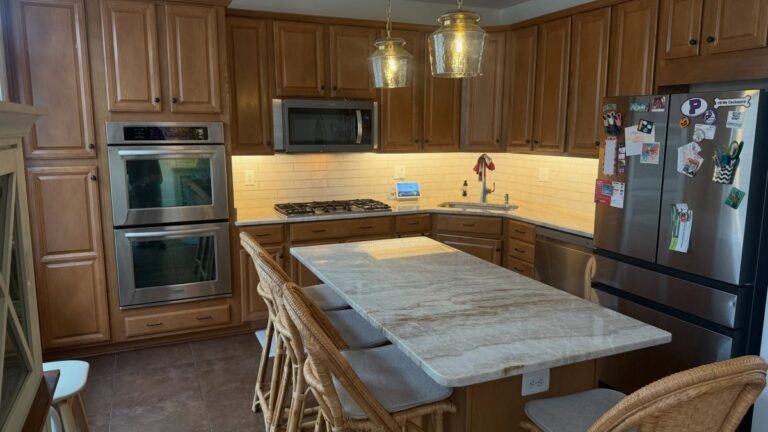


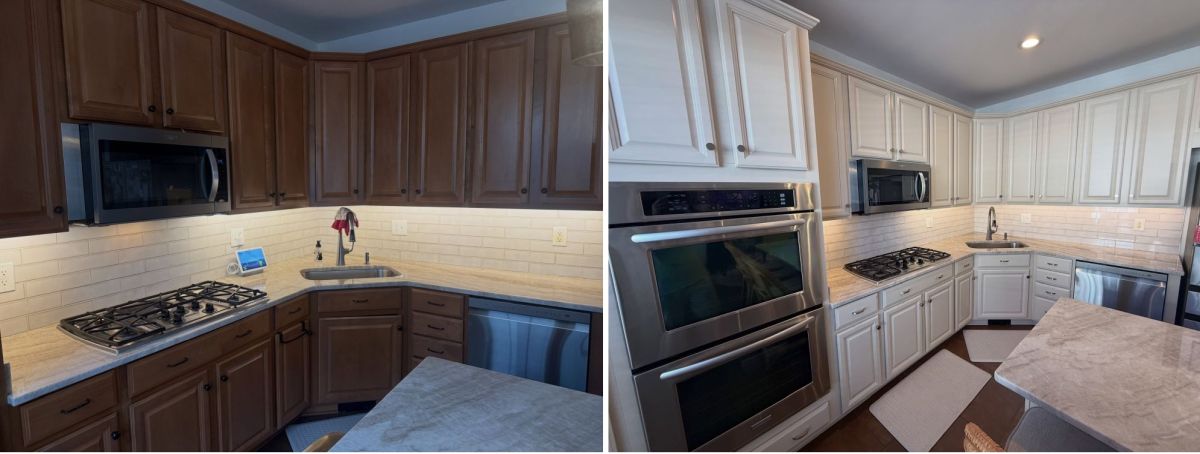
Brown raised-panel cabinets wrapped around this kitchen, from the double wall ovens to the corner sink and refrigerator. Light countertops, cream subway tiles, and glass pendant lights were already in place, leaving cabinet color as the main opportunity for change.
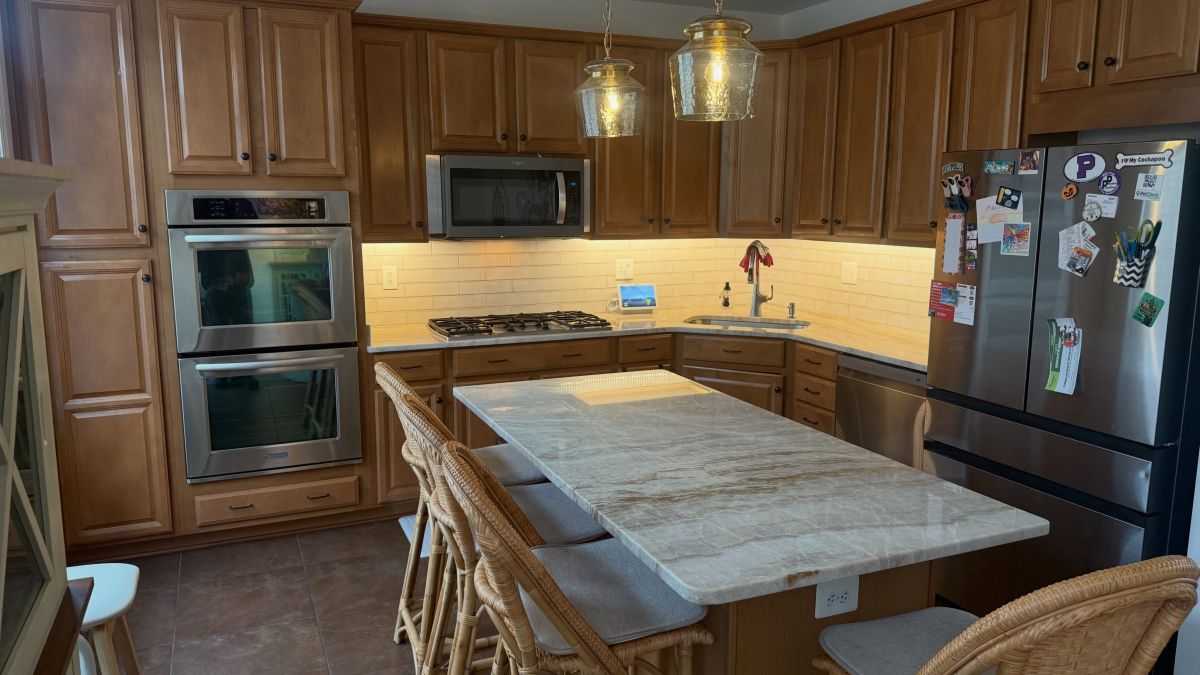
Rather than introducing a stark white, the makeover used Sherwin-Williams Kilim Beige, a shade that works with the existing countertops, backsplash, and brown floor tiles.
Shared by Instagram creator @pezzottipainting, the project used Renner Wood Coatings in a 30-sheen finish, retaining the original cabinet doors, layout, and surrounding finishes.
Brown Cabinetry Dominated the Original Kitchen
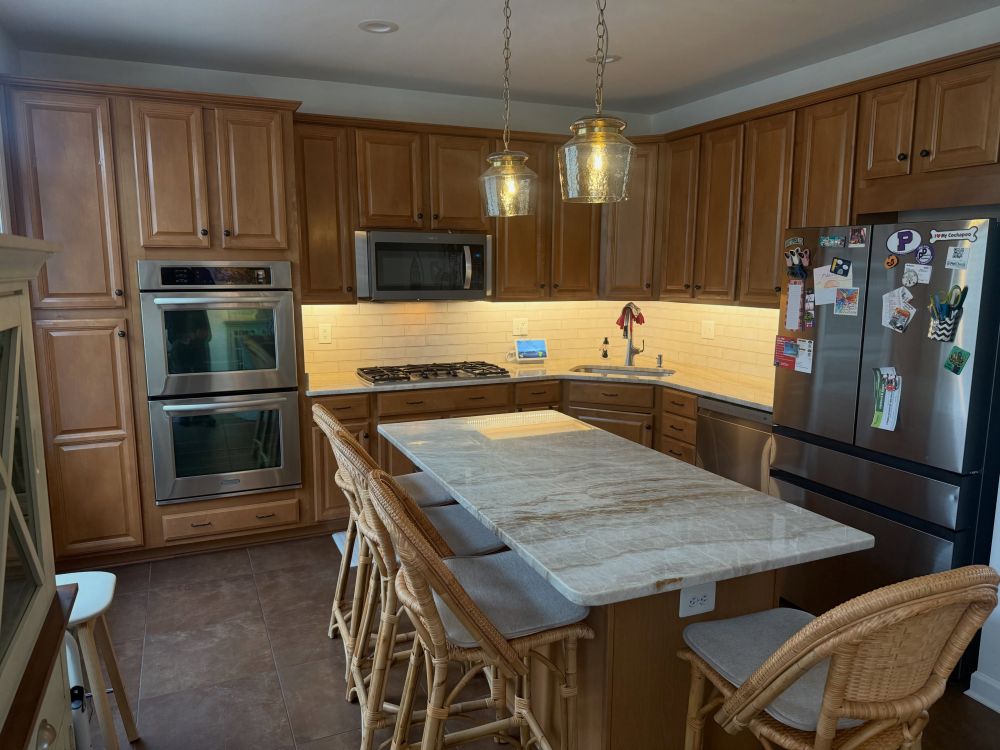
From the tall pantry beside the window to the cabinets above the refrigerator, brown wood covered most of the kitchen walls. Matching crown molding, raised-panel doors, and dark hardware reinforced the traditional appearance.
Combined with brown floor tiles and woven bar stools, the island base introduced another large section of wood into the center of the room.
Existing Countertops and Backsplash Were Worth Keeping
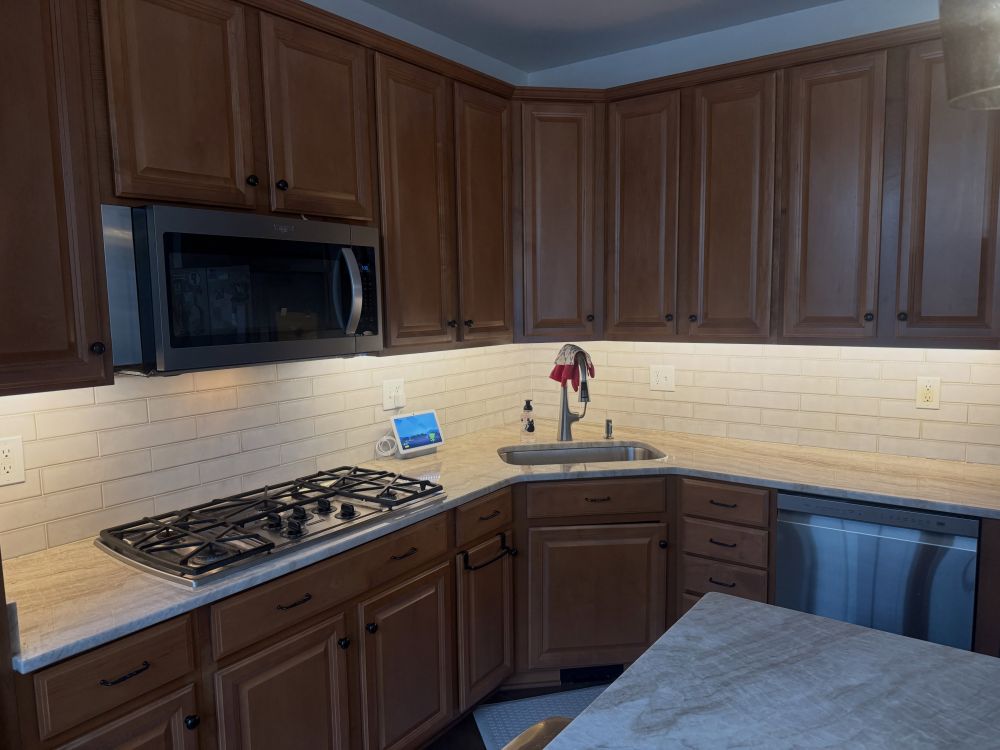
Cream subway tiles and light countertops with beige and gray veining separated the upper and lower cabinets. Under-cabinet lighting highlighted both surfaces, but their colors stood apart from the darker cabinetry.
Choosing a paint color based on these existing materials allowed the surrounding finishes to remain untouched.
Raised-Panel Doors Were Not the Problem
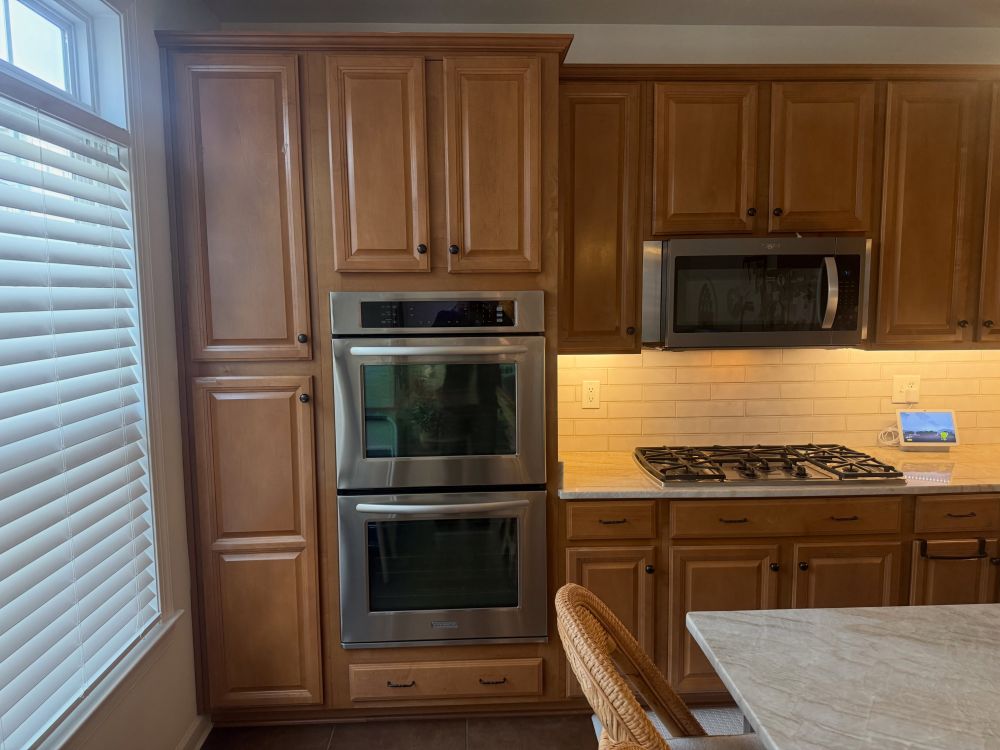
Beside the window, tall pantry cabinets framed two stainless steel wall ovens, with additional storage above and below.
Replacing these cabinets would have meant removing detailed door profiles, crown molding, and an established storage arrangement. Refinishing offered a way to preserve those features while changing the color across the entire cabinet run.
No Changes Were Made to the Kitchen Layout
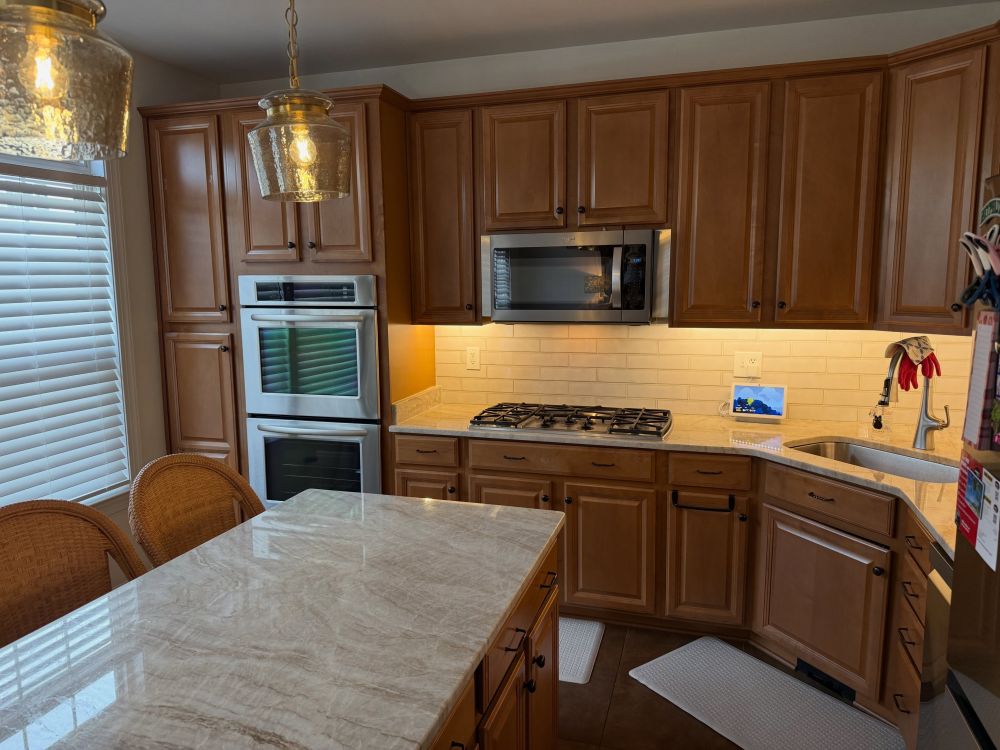
Positioned between the window and cooking area, the island provided preparation space and seating for four. Its large countertop featured distinct bands of brown, cream, and gray.
With the layout already providing storage, counter space, and seating, there was little reason to move the island or alter the perimeter cabinetry.
Cabinet Frames Were Prepared for Spraying

Before spraying began, cabinet doors and drawer fronts were removed, while plastic sheeting protected the cabinet interiors and appliances. Paper and painter’s tape covered the countertops, backsplash, and floor.
Using a spray gun allowed the painter to coat the fixed frames, exposed panels, and crown molding without removing the cabinet boxes.
Kilim Beige Replaced the Brown Wood Finish
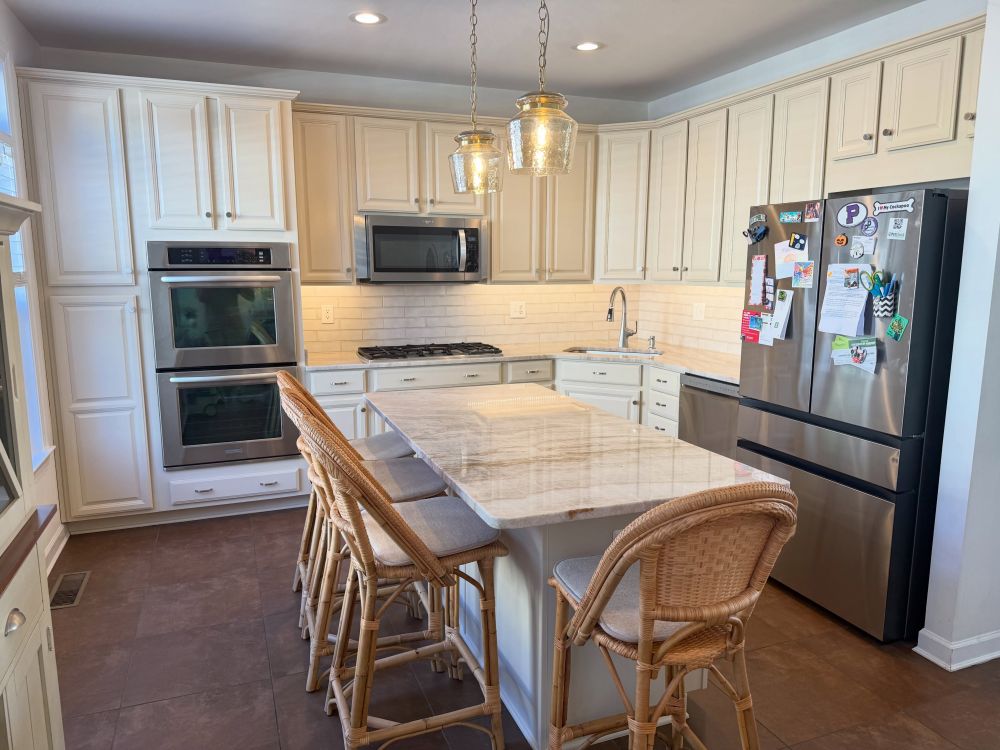
Sherwin-Williams Kilim Beige now covers the cabinetry surrounding the appliances, sink, cooktop, and island.
Unlike a cooler white, this beige shares undertones with the existing stone and subway tiles. Brown flooring and woven seating also work with the new cabinet color without requiring changes elsewhere in the room.
Even the Old Countertops Look Different
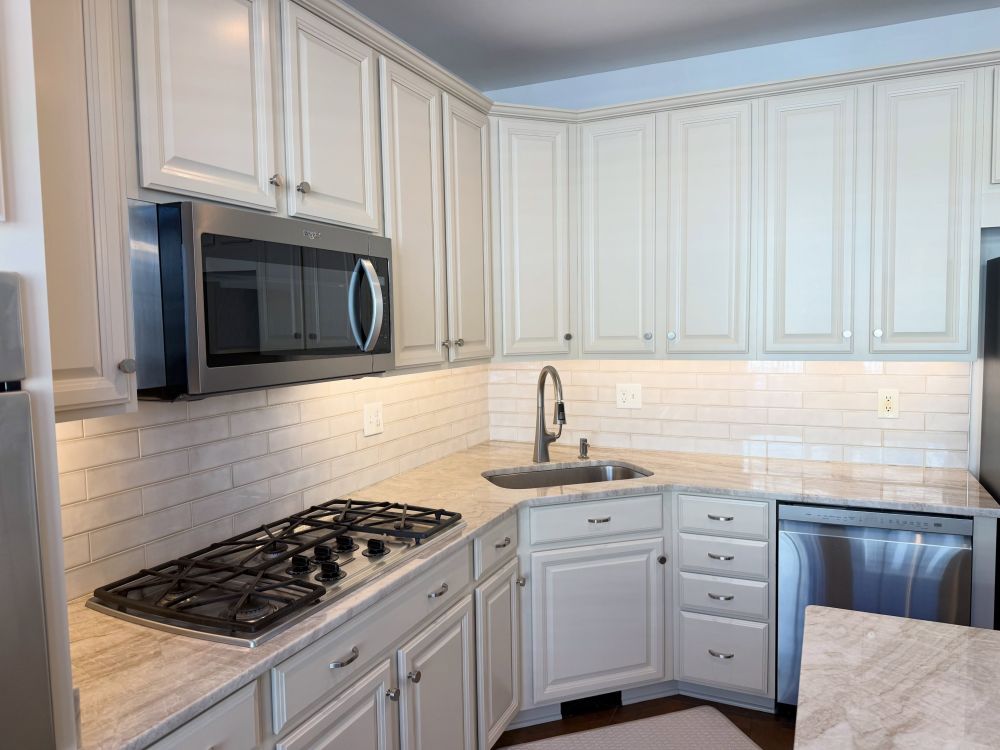
Against Kilim Beige, the cream and gray tones within the countertops become more noticeable. What once appeared as a strip of pale stone between two rows of brown cabinets now forms part of a continuous neutral palette.
Nothing about the countertops changed, but the cabinet color makes their veining and surface pattern easier to appreciate.
Original Cabinet Details Remained Visible
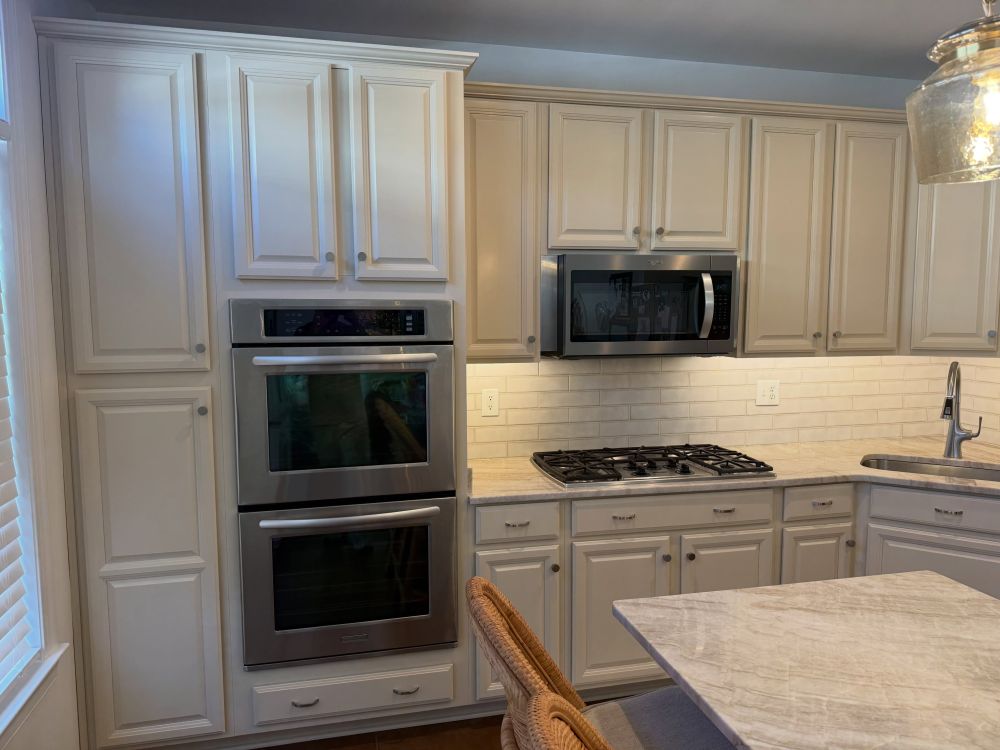
Around the double wall ovens, Kilim Beige follows the same raised-panel profiles, decorative edges, and crown molding found in the original kitchen.
Keeping these details demonstrates how traditional cabinet doors can work with a different color without requiring replacement fronts or structural modifications.
Silver Hardware Replaced the Dark Knobs and Pulls
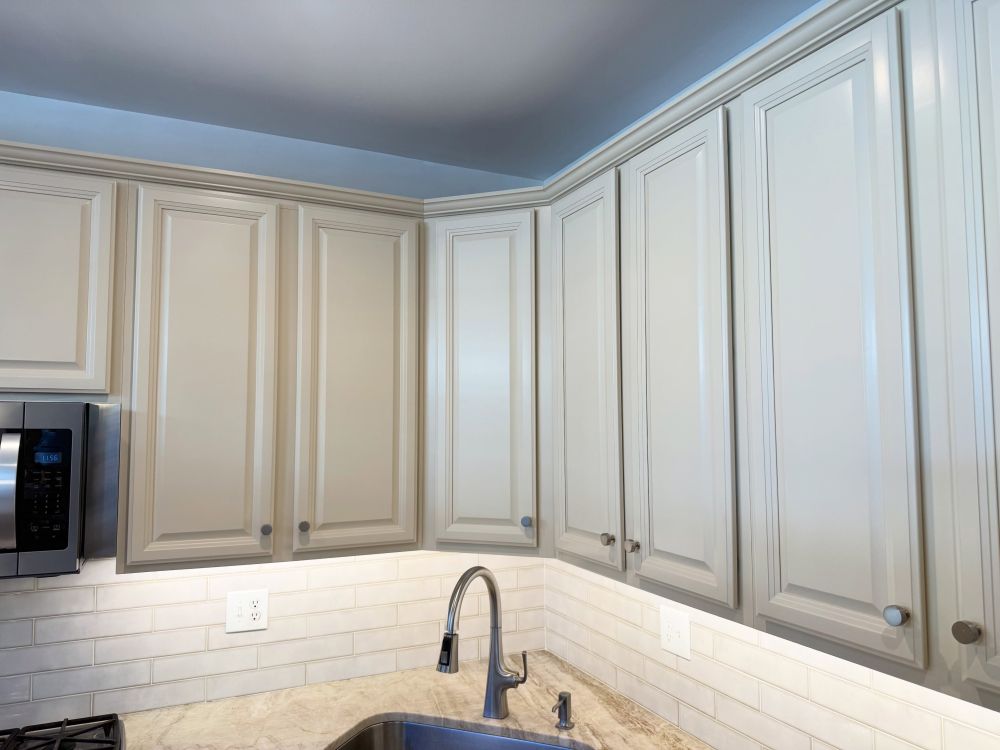
Silver-toned knobs and drawer pulls replaced the dark hardware used on the brown cabinets.
Against the beige finish, these smaller metal accents create less contrast while complementing the stainless steel appliances and sink faucet.
Painting the Island Changed How Its Countertop Stands Out
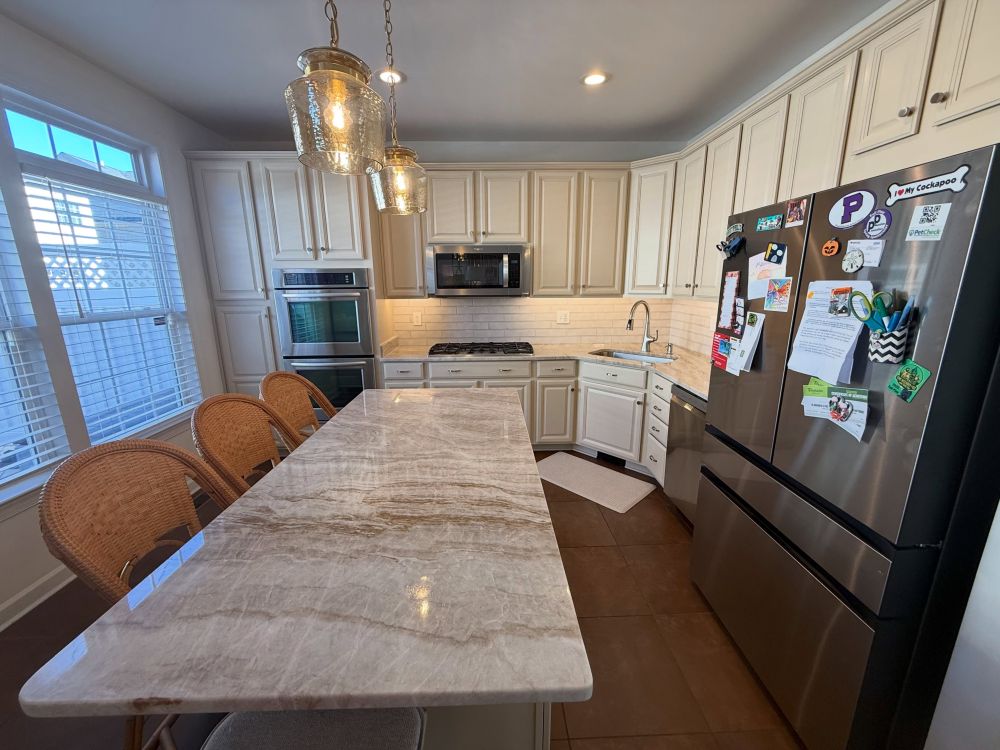
Viewed from the opposite end of the kitchen, the island countertop becomes one of the main features of the makeover.
Its beige base allows the long bands of brown and gray veining to stand out, while the retained pendant lights and woven stools connect the island with the surrounding finishes.
Why Kilim Beige Makes More Sense Than White in This Kitchen
Neutrals remain the top kitchen color choice at 96%, according to the NKBA 2027 Kitchen Trends Report, followed by greens at 83% and blues at 75%. Both green and blue declined from 2026, while neutrals retained their leading position.
Sherwin-Williams Kilim Beige demonstrates the advantage of choosing a neutral that works with existing materials. Its beige undertones complement the cream subway tiles, brown flooring, and countertop veining without the sharper contrast of pure white.
Green remains another option, as seen in a kitchen where the original oak cabinets were spray painted Benjamin Moore Sherwood Green without replacing the countertops or backsplash.
If you were updating brown kitchen cabinets in 2027, would you choose beige over white or go for green?
Image credits belongs to @pezzottipainting