

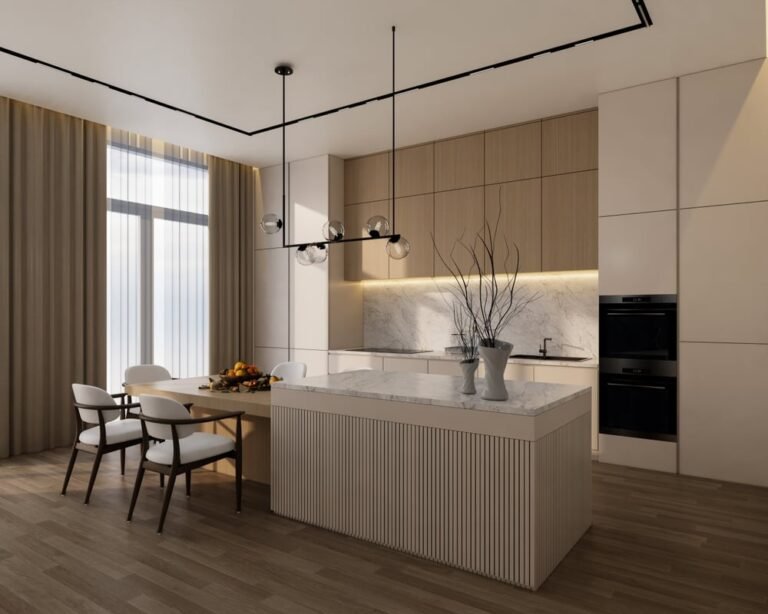

Countertop color can change the entire direction of your kitchen. A countertop designer considers your cabinets, flooring, backsplash, lighting, hardware, and the amount of visual movement already in the room. Looking at those elements together helps narrow a huge range of colors into options that actually belong in your kitchen.
Current trends can give you a useful starting point, but they should not make the decision for you. The strongest countertop color complements the permanent features in your room, gives you enough flexibility for future updates, and still appeals to you after the latest trend changes.
What countertop colors are most popular right now?
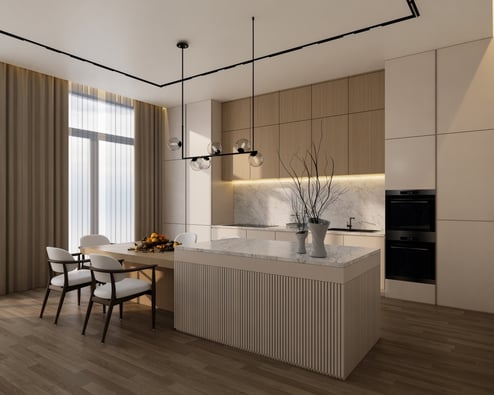
Current countertop color trends favor warmer, more natural-looking surfaces over the stark whites and cool grays that dominated many kitchens for years. Creamy neutrals, quartzite-inspired movement, muted color, and deeper statement surfaces all appeared prominently among new products introduced for 2026.
1. Warm whites & creams
White still has a major place in kitchen design, but warmer versions feel more current. Cream, ivory, and soft off-white brighten the room without creating the sharp effect of a cold blue-white surface.
They pair especially well with:
- Natural wood cabinetry
- Warm white cabinets
- Beige or greige flooring
- Brass, bronze & champagne finishes
- Backsplashes with cream or taupe undertones
Light surfaces with restrained veining also give you more dimension than a completely solid white. Light base colors, marble looks, and subtle finishes remain leading countertop preferences.
2. Beige, taupe & greige
Warm neutral countertops are one of the clearest shifts in current surface design. Beige, sand, taupe, warm greige, brown, and soft gold appeared throughout new countertop collections at the 2026 Kitchen & Bath Industry Show.
Popular directions include:
- Sandy beige
- Mushroom
- Light taupe
- Warm greige
- Cream with brown veining
- Soft gold accents
These shades work particularly well when your kitchen already contains wood tones or warm flooring. They can connect several finishes without making the countertop the loudest element in the room.
3. Charcoal, black & deeper colors
Dark countertops offer a stronger alternative to pale neutrals. Black, charcoal, dark brown, and other saturated surfaces can ground a light kitchen or create a more dramatic effect beside medium or dark cabinetry.
Before choosing one, look at how much natural and artificial light the room receives. A dark surface can look rich in a bright kitchen but considerably heavier in a room with limited light.
How do you choose kitchen countertop colors?
The best kitchen countertop colors work with the cabinets, flooring, backsplash, and other finishes already in the room. Start with the elements you plan to keep, then choose a countertop color that complements them.
1. Start with your cabinets
Cabinet color provides one of the most useful clues because cabinets surround so much of the counter. Look beyond broad labels such as white, gray, or brown and identify whether the finish has warm, cool, or neutral undertones.
As a starting point:
- Warm white cabinets suit cream, beige & warm-veined surfaces.
- Crisp white cabinets can handle cleaner whites or stronger contrast.
- Wood cabinets pair well with colors that complement their undertones.
- Bold cabinet colors often benefit from a quieter countertop.
- Two-tone cabinetry may need a counter that connects both finishes.
You don’t need to match the cabinets exactly. A little contrast can give each surface more definition while still keeping the palette cohesive.
2. Look at your flooring
Flooring sits directly below the cabinets and counters, so conflicting undertones can become obvious once you install everything together. Warm wood floors, for example, may feel disconnected from a strongly blue-gray counter.
Look for a color or vein that relates naturally to the floor without duplicating it. This creates continuity while allowing the counter to have its own character.
3. Check the color in your actual lighting
Counter samples can change considerably between a showroom and your home. Natural daylight, warm bulbs, cool LEDs, and shadows from upper cabinets can all alter the way you see a color.
View your samples:
- In daylight
- Under ceiling fixtures
- Under cabinet lighting
- In shaded parts of the kitchen
- In the morning & evening
A sample that looks neutral in one setting may reveal a yellow, pink, blue, or green undertone somewhere else.
Which countertop colors work with different cabinet colors?
Successful countertop & cabinet color combinations either create clear contrast or intentionally stay within the same color family. Problems usually happen when two finishes almost match but carry undertones that clash.
1. White cabinets
White cabinets give you considerable freedom because they can support pale, dark, warm, or colorful counters. The exact shade of white should guide the choice.
Options include:
- Cream for a warmer palette
- White with subtle veining for a lighter look
- Beige or taupe for softer contrast
- Black or charcoal for definition
- Muted green or blue for more character
Be especially careful when pairing white cabinets with white counters. Two noticeably different whites can look accidental rather than layered.
2. Wood cabinets
Wood already introduces natural color and grain, so the counter doesn’t need to create all the visual interest. Cream, beige, warm white, and restrained veining can let the cabinetry remain prominent.
Contrast can work too. A dark surface may sharpen pale wood cabinets, while a lighter counter can keep walnut, cherry, or other deeper woods from making the room feel too heavy.
3. Green, blue & other colored cabinets
Colored cabinetry has become a larger part of nature-inspired kitchen palettes, including soft greens and muted blues. If the cabinets already provide the main color, consider quieter surfaces such as:
- Warm white
- Cream
- Light taupe
- Soft gray
- Restrained marble-inspired patterns
This keeps the countertop from competing with the cabinetry while still giving the kitchen depth.
When do dark countertops work best?
Dark countertops work best when you want stronger contrast, visual weight, a clearly defined focal area, or as part of a specific style such as a rustic, industrial or contemporary look. They can ground white cabinetry, bring depth to natural wood, or create a dramatic island in an otherwise lighter kitchen.
Clear contrast between surfaces can also support accessible kitchen design by making different work areas easier to distinguish.
1. Use contrast intentionally
Black or charcoal against pale cabinets creates a clean distinction between vertical and horizontal surfaces. You can also use a dark counter on an island while keeping the perimeter lighter.
If you’re replacing older laminate countertops in a color or pattern that no longer feels current, it’s a good opportunity to rethink how much contrast you want between the counters and cabinets.
Dark colors may work especially well when your kitchen has:
- Plenty of natural light
- Pale cabinetry
- Light flooring
- A simple backsplash
- Warm wood accents
The surrounding surfaces prevent the deeper color from taking over the entire room.
2. Consider everyday maintenance
Dark color does not automatically hide everything. Depending on the finish and material, crumbs, dust, fingerprints, water spots, and streaks may stand out more on a black or very dark surface.
Look at an actual sample and touch it before choosing. Finish and pattern can affect how visible everyday marks appear just as much as color.
Which quartz countertop colors are popular?
Popular quartz countertop colors follow the broader movement toward warm neutrals, softer marble looks, and organic patterns. Quartz and quartzite also remain among the countertop materials showing the strongest growth in demand among kitchen design professionals.
1. Warm marble-inspired colors
White and cream backgrounds with taupe, beige, soft gray, or gold veining can bring movement into the kitchen without requiring a very dramatic pattern.
These colors pair easily with:
- Painted cabinets
- Natural wood
- Warm metal hardware
- Neutral backsplashes
- Both light & medium flooring
They also give you more flexibility if you plan to change smaller design elements later.
2. Organic neutrals
Beige, cream, taupe, and warm gray quartz create a quieter surface than pronounced marble-style patterns. These colors work especially well when cabinetry, tile, or flooring already supplies plenty of visual detail.
3. Dark quartz
Black and charcoal quartz can make a strong statement on an island or across the entire kitchen. Before choosing one, compare it against the cabinet color and test the sample under the room’s actual lighting.
How should your countertop color work with the backsplash?
Your countertop color palette and backsplash should connect without competing for attention. Decide which surface will carry more pattern first, then let the other play a supporting role.
1. Balance visual movement
A strongly veined counter usually works best with a simpler backsplash. If the counter stays relatively quiet, you have more freedom to add pattern, texture, or color behind it.
Before combining two expressive finishes, ask:
- Do both have strong patterns?
- Do their undertones coordinate?
- Is one clearly the focal point?
- Does the countertop edge profile suit the overall look?
- Do they repeat any of the same colors?
- Will the combination still work with the cabinetry?
Giving one surface more visual emphasis usually creates a calmer result.
2. Repeat one connecting color
You don’t need an exact match between the counter and backsplash. Instead, find one undertone or secondary color that appears in both.
A cream counter with taupe veining, for example, can connect naturally with a backsplash that repeats the taupe. That relationship often looks more intentional than trying to match the counter’s main background color exactly.
Where can I find an experienced countertop designer?
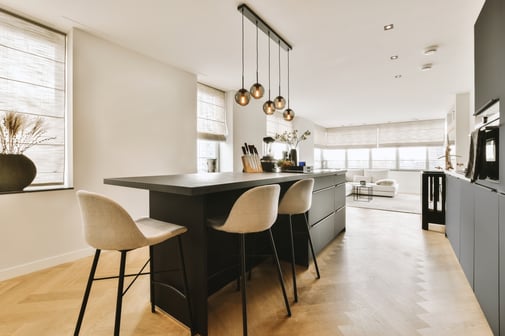
Kitchen Magic is a family-owned remodeling company that has transformed more than 60,000 kitchens since 1979. When you meet with our team, we bring materials, colors, and samples into your kitchen so you can see how they work with your cabinets, lighting, and surrounding finishes before making a decision.
After you choose your countertop, our team takes care of the installation as well. Give us a call to schedule your free estimate and get started!