



When most people think of renting a moving truck, two names typically come to mind: U-Haul and Budget. Between them, they make up the vast majority of rental trucks on American roads. U-Haul alone has more than 24,000 locations across all 50 states, while Budget operates about 1,500 branches nationwide, often in partnership with Avis.
At first glance, they might look the same. Both let you rent a truck, load your belongings, and drive it yourself. But costs, insurance coverage, truck options, and customer experiences can vary more than you might expect.
In short, U-Haul wins for availability and flexibility, while Budget often beats it on price and fewer surprise fees.
However, not every move is the same. That’s why this guide takes a closer look at Budget vs. U-Haul by comparing prices, truck sizes, customer reviews, mobile apps, and overall service based on our own 2025 rental research. By the end, you’ll know which company fits your move best.
Budget vs. U-Haul at a Glance
U-Haul and Budget are the biggest names in DIY truck rentals for a reason. Both let you handle your move on your own schedule, and both keep their base rates simple: a daily fee plus mileage. But once you dig deeper — into the size of their fleets, the add-on costs, and what customers actually experience — their differences start to show.
U-Haul wins when convenience matters most. It has more than ten times as many locations as Budget, along with cargo vans, trailers, and multiple truck sizes that fit almost any move. Budget, on the other hand, often costs less for long-distance trips and tends to tack on fewer surprise fees. If you’re flexible with pickup times and locations, you can usually save a noticeable amount with Budget.
U-Haul vs. Budget Truck Rentals: Key Differences at a Glance
| Category | U-Haul | Budget |
|---|---|---|
| Best For |
|
|
| Locations and Service Area |
|
|
| Cost Structure | Daily fee + mileage | Daily fee + mileage |
| Typical Base Rental Cost | About $140 on average | About $130 on average |
| Typical Mileage Cost | Around $1.39 per mile | Slightly lower, varies by city |
| Typical Fees |
|
|
| Truck Sizes | Cargo vans, 10’–26’ trucks, trailers | 12’, 16’, and 26’ trucks only |
| Reputation | Widely available, but mixed reviews on truck condition and billing | Smaller footprint, but better marks for value and billing clarity |
Both companies offer online reservations, pickup through mobile apps, and optional damage protection. U-Haul’s huge network makes it easier to book a truck on short notice. Budget, on the other hand, feels easier to plan for. Its booking process has fewer screens and clearer pricing, which makes it easier to compare options when you have time to plan ahead.
U-Haul Pros and Cons
U-Haul is the company most people picture when they think about renting a moving truck. Its size and flexibility make it the go-to for countless local and one-way moves. But that reach also comes with a few tradeoffs.
Pros
- You can find a U-Haul location just about anywhere in the country.
- There’s a huge range of truck sizes, plus trailers and cargo vans for smaller jobs.
- One-way rentals are easy to set up, even at the last minute.
- It’s simple to bundle moving supplies or hire labor help right through their site.
- Many locations offer 24/7 pickup and drop-off, which makes timing easier.
Cons
- The website and app can feel cluttered, with lots of upsells along the way.
- Some customers mention surprise charges or trucks that weren’t in top shape.
- Long-distance moves tend to get pricey once mileage and insurance add up.
- Truck condition can vary depending on the pickup location.
Budget Pros and Cons
Budget Truck Rental might not have as many locations, but it’s a strong competitor for people focused on saving money or planning longer moves. It keeps things straightforward and avoids many of the hidden costs that frustrate renters elsewhere.
Pros
- Usually cheaper for long-distance and cross-country trips.
- Billing is more transparent, with fewer unexpected fees.
- Discounts often show up automatically when you book online.
- Trucks tend to be newer and better maintained.
- The booking process is quick and simple, with fewer screens to click through.
Cons
- There aren’t as many pickup and drop-off locations to choose from.
- Smaller options like cargo vans aren’t part of the lineup.
- Same-day or short-notice rentals can be harder to find.
- The app and website sometimes glitch when adjusting dates or locations.
Similarities Between U-Haul and Budget for Truck Rentals
If you’ve ever rented from U-Haul or Budget, you know they are pretty similar in most areas. They both have you pick a truck size, pay per day and for mileage. Both companies let you reserve online and drop off the truck somewhere else if you’re moving out of town (one-way rentals).
They also show up just about everywhere. In most cities, you can find one within a short drive. Prices tend to stay in the same ballpark, too. Neither company is perfect, but the types of complaints they receive (hidden fees, older trucks, or slow help at pickup) are very common across the industry.
At the end of the day, they both get you from one palace to another without too much fuss. If you just need a reliable truck and you’re keeping an eye on your budget, either one will do the job.
Budget vs. U-Haul Cost Comparison
When it comes to price, U-Haul and Budget look close on paper, but real-world numbers tell a different story. We wanted to find out which company actually costs less once you factor in mileage, fees, and a realistic route. So we ran our own test.
Our team pulled quotes from nine U.S. markets — large cities, mid-size towns, and smaller areas — to get an average price for local, regional, and cross-country moves. We used the same truck size, the same travel dates, and the same time of day for every quote to keep things even. All prices below reflect the average total cost, including mileage and basic fees.
Average Moving Truck Costs: U-Haul vs. Budget
| U-Haul | Budget | |
| Average Local Rental
(under 50 miles) |
$139 | $130 |
| Average Regional Rental (about 200–400 miles) |
$168 | $132 |
| Average Cross-Country Rental
(1,000+ miles) |
$3,249 | $2,682 |
Overall, Budget came out cheaper in every category, especially on long-distance moves, where it averaged about $560 less than U-Haul. That difference adds up fast once you include gas and insurance.
How We Gathered This Data
We booked identical quotes from both companies using their online tools. Each quote used a 15- or 16-foot truck for a realistic residential move. Local quotes covered short city routes (10-25 miles), regional quotes were roughly “next-state-over” distances, and cross-country quotes spanned coast-to-coast routes.
No promo codes were applied, and we avoided holiday or same-day pricing spikes to keep things fair. This approach was intended to create a scenario that best matched what most people can expect when booking a standard move online.
Base Rates and Mileage Fees
Both companies use the same general formula: a flat daily rate plus a per-mile charge for local moves. Long-distance rentals include mileage in the total quote, but you’ll still pay for gas out of pocket.
| U-Haul | Budget | |
| Local Pricing Structure | About $29.95 per day + $1.39 per mile | About $79 per day + $0.99 per mile |
| Long-Distance Pricing Structure | One-way rate, mileage included; fuel extra | One-way rate, mileage included; fuel extra |
For shorter moves, U-Haul often looks cheaper up front because the daily rate is low. But that advantage fades once you add mileage. For regional and long-distance trips, Budget’s higher daily rate is offset by lower per-mile costs, which is why it usually wins on total price.
If you’re driving under 30 miles, U-Haul can still be the better deal. Once your route stretches past about 50 miles, Budget starts to pull ahead.
Insurance and Add-On Costs
Both companies offer optional protection plans, but they work a little differently.
U-Haul has two main plans: Safemove and Safemove Plus:
- Safemove covers damage to the truck and limited cargo protection.
- Safemove Plus adds liability coverage that protects you if another driver or property is involved in an accident.
- Prices range from $14–$30 per day, depending on truck size and location.
Budget sells its own Injury & Damage Waiver (IDW) and optional Supplemental Liability Insurance (SLI):
- The IDW covers damage to the rental truck with no deductible in most cases.
- SLI adds third-party liability coverage up to $1 million.
- Expect to pay around $15–$28 per day for both combined.
For most moves, a basic plan like U-Haul’s Safemove or Budget’s IDW is worth it, since they cover the most common mishaps, like backing into a pole or scraping a mirror. The premium plans make more sense for long-distance drives or big-city routes where traffic is heavier and there are more chances for damage to occur.
Extra Fees
While both brands list base rates clearly, each sneaks in a few more charges. Here’s what to expect.
| Fee Type | U-Haul | Budget |
| Refueling | Must return with the same gas level or pay a premium per-gallon rate | Must return with the same gas level or pay a premium per-gallon rate |
| Cleaning Fee | $25–$50 if the truck is returned dirty | $25–$50 if the truck is returned dirty |
| Late Drop-Off | Charged another full day after a 30-minute grace period | Usually a one-day charge after a 60-minute grace period |
| Mileage Overage (One-Way) | May apply if you exceed the estimated miles | May apply if you exceed the estimated miles |
| Environmental/Fleet Fees | Small line-item fees added to total (typically under $10) | Small line-item fees added to total (typically under $10) |
These fees are common across the industry, but U-Haul’s tend to appear in more places. Budget’s invoices are usually easier to read, which helps avoid surprises later.
Discounts
Both companies run regular promotions, though they vary by season and location. Here is an outline of some of the most common ones, and whether U-Haul, Budget, or both offers them.
| Discount Type | U-Haul | Budget |
| AAA Members | 10% off truck rentals and supplies | 10% off base rates (may vary) |
| Military | 10–15% off total rental | 20% off local moves, 15% off one-way rentals |
| Student/College | Occasional discounts at select locations | 20% off with student ID (varies) |
| Online Booking/Promo Codes | Frequent seasonal codes on U-Haul’s site | Frequent online-only offers and automatic web discounts |
You can also stack discounts with seasonal sales or coupons, which Budget seems to do more aggressively. For AAA members in particular, it’s worth checking both brands—Budget’s deeper online codes sometimes beat U-Haul’s standard 10%.
If you’re new to comparison shopping for truck rentals, check out AAA discounts on moving trucks for up-to-date ways to save before booking.
Our take: U-Haul wins for convenience and same-day flexibility, but Budget usually wins on price once mileage and add-ons are factored in. For short local moves, the difference is small; for longer ones, Budget’s savings can cover your gas or a night in a hotel.
Truck Sizes and Options
The truck you choose can make or break your move, so the number of size options really matters. U-Haul takes the lead here, offering everything from small cargo vans to large 26-foot trucks, plus trailers for odd-sized or extra-heavy loads. Budget keeps things simpler, sticking to midrange trucks that fit most apartment or home moves.
Our data below comes directly from each company’s current rental listings and 2025 booking tests.
U-Haul vs. Budget: Truck Sizes and Availability
| U-Haul | Budget | |
| Cargo Vans | ✅ | ❌ |
|
10’ Truck Dorm/Studio Apartment |
✅ | ❌ |
|
12’ Truck Studio/1 Bedroom |
✅ | ✅ |
|
16’ Truck 2 Bedroom |
✅ | ✅ |
|
20’ Truck 3 Bedroom |
✅ | ❌ |
|
26’ Truck 4 Bedroom + |
✅ | ✅ |
| Trailers | ✅ | ❌ |
U-Haul trucks are slightly taller inside, which helps when stacking boxes or furniture. However, Budget’s trucks often have a longer loading area, making them easier to pack front to back. If you’re hauling big furniture or a long sofa, that extra floor space can really come in handy.
Availability and Locations
When it comes to finding a rental, U-Haul is everywhere. With more than 24,000 locations across all 50 states, chances are there’s a truck a few minutes from you, whether you’re in a big city or way out in the country. That wide reach is one of the main reasons people pick U-Haul — it’s just easy to get to.
“Keep in mind that [Budget truck] returns at airport-area sites can involve a short shuttle or shared counter lines, so you should plan a little buffer time if you are returning during peak hours.”
Budget is a little different. They’ve got about 1,500 branches in 48 states, mostly tied to Budget and Avis car rental offices. You’ll see them around airports or in bigger cities, but not as much in smaller towns. That means you might have to drive a bit to pick up your truck, or plan ahead for one-way trips.
If convenience is your top priority, U-Haul wins by a mile. But if you’re okay with booking early and traveling a little for pickup, Budget can still be a smart choice — especially if it saves you money.
Customer Reviews and Reputation
Overall sentiment is mixed for both brands. Review sites show low star ratings and a steady stream of complaints about billing, availability, and customer service. The big difference: U-Haul gets credit for convenience and coverage, while Budget earns points for value when things go right.
Review Snapshot: U-Haul vs. Budget
| U-Haul | Budget | |
| Trustpilot Score | 1.3/5 | 1.2/5 |
| BBB Score | F (varies by location) | F (varies by location) |
U-Haul: Easy to find and book, but reviews often mention surprise costs and uneven service.
Budget: Can be cheaper, yet many reviews focus on waits, add-ons, and billing follow-ups.
Note: The BBB lists ratings per location, not one companywide grade. Different offices can show different scores. It’s best to check your own location before booking.
U-Haul Reviews and Reputation
People choose U-Haul because it is everywhere, and that comes through in reviews. On the flip side, customers regularly call out unclear pricing and last-minute reservation changes. Advocacy coverage has also criticized the famous “$19.95” truck message because the real total often lands higher once mileage and fees are added.
Representative issues that show up often include:
- Price changes between the initial quote and pickup, plus add-on fees people did not expect.
- Reservation or pickup location shifts close to move day.
- Slow support or inconsistent equipment condition at specific branches.
You will also find satisfied renters who liked the convenience and quick booking. Sentiment just swings widely by location, so you might want to check the specific reviews for Uhauls in your area.
Bottom line on U-Haul: great coverage and availability, but double-check your quote and pickup details before moving day.
Budget Reviews and Reputation
Budget’s biggest draw is the price. Many renters report saving money compared with other brands. At the same time, public reviews highlight long lines at airport-area counters, disputes over add-ons, and trouble getting billing fixes after drop-off.
Here are some common themes on booking through Budget that we saw across various sources:
- Satisfaction rises when quotes are clean and pickup is smooth.
- Complaints about unexpected fees or hard-to-reach support.
- Reputation varies a lot by branch. Local BBB pages reflect that variation.
Bottom line on Budget: strong value when everything clicks, but plan extra time at pickup and review the bill closely.
Service and Experience
Booking a truck from either brand feels familiar: you pick a size, choose dates, add coverage, and check out online. Day-plus-mileage pricing is clear on both sites.
Where they differ is the path to the quote and how smooth pickup and return feel. In our tests, U-Haul showed more choices and more prompts in the booking process.
Budget kept the process shorter, but we ran into a few hiccups when testing certain booking scenarios. The difference carries through to moving day: U-Haul wins on convenience and location options, while Budget feels easier to navigate and often cheaper if you plan ahead.
Booking and Using U-Haul

Reservation process
U-Haul’s online flow takes more clicks, mostly because there are lots of add-ons and upsells along the way. Our secret shopper had to pass through about ten screens before reaching a final number. The upside is that you can bundle almost everything in one place, including moving supplies and labor help.
Truck quality and reliability
Inventory is deep, which helps with last-minute needs, but the actual truck age and condition can vary by location. That’s pretty common with very large fleets. We found equipment when and where we needed it in all three markets we tested, including a one-way cross-country route.
Customer service quality
Support is available online and at thousands of partner locations. The flip side of a massive network is inconsistency from branch to branch, which matches what you see in public reviews. We did not hit form errors during checkout in our tests.
Refueling and return
Return the truck at the same fuel level to avoid per-gallon charges. Many locations support after-hours drop-off, which is handy if your unloading runs long. Late returns typically trigger another day’s charge.
Booking and Using Budget
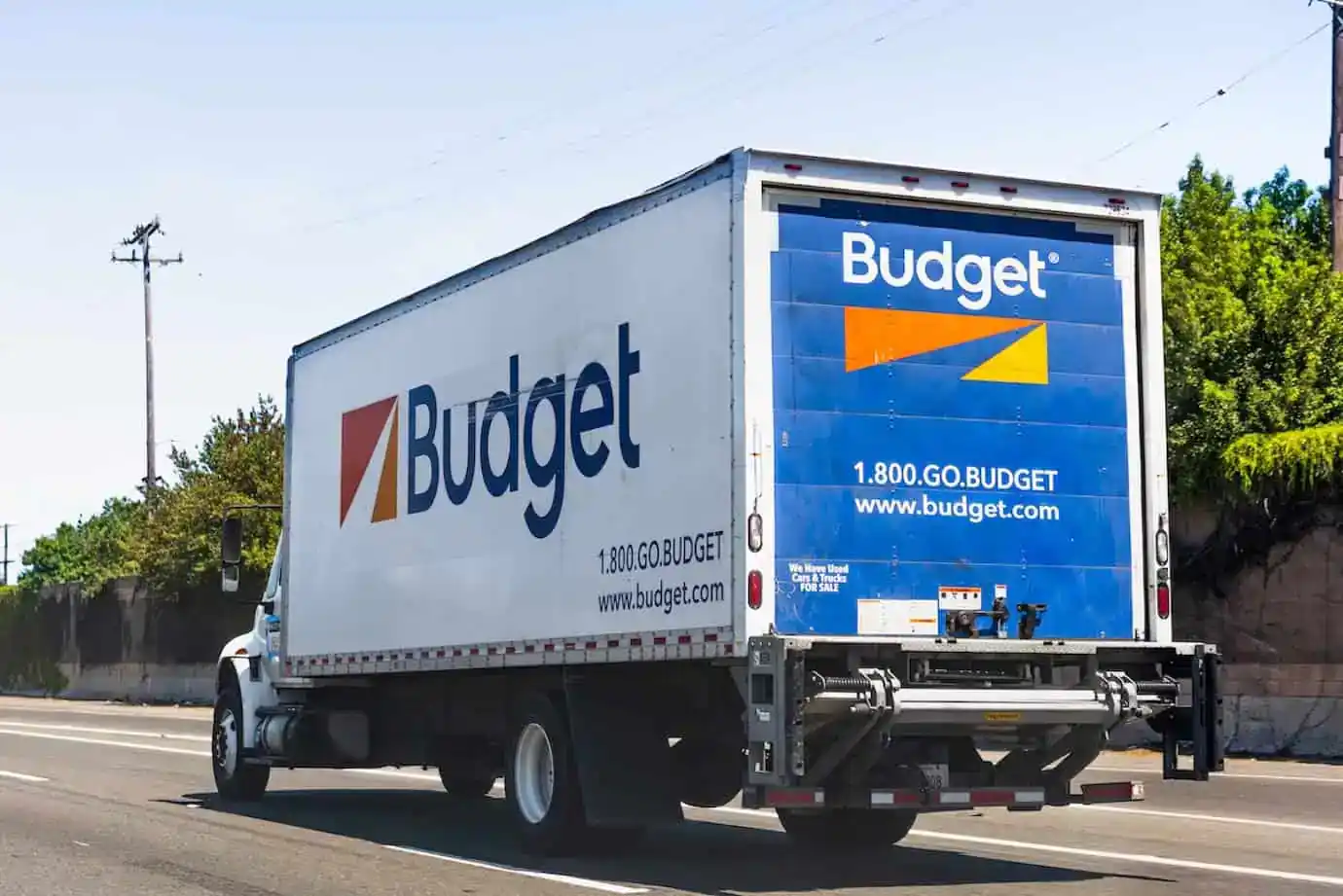
Reservation process
Budget’s checkout is faster. Our tester reached a final quote in about six screens, and some quotes auto-applied a discount online. We did see some quirks: a mid-size city quote forced a two-day rental, and one long-distance search threw an error that required a restart.
Truck quality and reliability
Fleet options are simpler, but trucks in our tests were newer and well-maintained. Availability is also strongest in metro areas. One one-way booking in a mid-size market did not complete, which might be due to Budget’s smaller footprint, and they simply didn’t have a return center in our scenario.
Customer service quality
Counters are usually at Budget or Avis car rental locations. We liked the straightforward pricing display, but the taxes and fees line item did not always add up cleanly to its subtotal, which can confuse renters.
Refueling and return
Budget has the same fuel-to-fuel policy as U-Haul. Keep in mind that returns at airport-area sites can involve a short shuttle or shared counter lines, so you should plan a little buffer time if you are returning during peak hours.
Budget vs. U-Haul Mobile Apps
We downloaded both apps and used them to grab quotes, check truck sizes, and look at pickup options. The goal was simple: would either app make the rental easier than using the website?
U-Haul app: what stood out
- Offers more ways to complete a rental without a counter visit, including mobile check-in and photo verification.
- Inventory visibility is better thanks to the larger network, so same-day or next-day options show up more often.
- There are more prompts to add extras. That mirrors the longer website flow we saw in testing.
Budget app: what stood out
- Quicker to a price. It mirrors the shorter website journey, which we preferred when we already knew our dates and size.
- Occasional glitches when we modified dates or locations. That matches the oddities we hit on the desktop path in one market.
Do the apps actually help?
Yes, with caveats. If you are booking last-minute or juggling pickup spots, U-Haul’s app benefits from that huge network. If you are planning ahead and just want a clean quote, Budget’s app feels lighter and doesn’t upsell as much. In both cases, the app is best for checking availability and managing pickup and drop-off details. For complex one-ways, we still prefer finishing the reservation on a laptop so you can review every fee line before you confirm.
Takeaway: If convenience and same-day flexibility matter, the U-Haul app is the safer bet. If you want a quick path to a lower price and you are booking early, Budget’s app gets you there faster.
Which Brand is Best For My Move?
Every move is different, so the “better” truck rental company really depends on what kind of trip you’re planning. Both Budget and U-Haul have their strengths — one shines for flexibility, the other for saving money. Here’s how they stack up by move type and situation.
Local Moves
If you’re just moving across town or to a nearby city, U-Haul usually makes life easier. With so many pickup points, it’s simple to find a truck close by, even on short notice. Their smaller options, like cargo vans and 10-foot trucks, also fit tighter spaces or apartment parking lots. The tradeoff is that prices can rise once mileage adds up, so it’s worth estimating your route before booking.
Regional or State-to-State Moves
For moves that stretch a few hundred miles, Budget often comes out ahead. The daily rates are higher, but the per-mile charge is lower, and there tend to be fewer add-on fees. As long as you plan your pickup and drop-off ahead of time, it’s an affordable way to move between states without paying extra for flexibility you don’t need.
Cross-Country Moves
On long hauls, Budget is the clear winner for price. In our 2025 secret-shop test, their cross-country quote came in about $560 cheaper than U-Haul on average. That can easily cover your gas or a hotel night mid-trip. U-Haul, however, remains easier to book in smaller towns along the way, so if your route goes through rural areas, it’s worth checking both before locking in.
Bottom line: Go with U-Haul for convenience and last-minute moves. Choose Budget if you’re planning ahead, watching your spending, or driving a long distance.
Alternatives to Budget and U-Haul
Budget and U-Haul may be the best-known names in DIY truck rentals, but they’re not your only options. If you want to skip the driving, need a different type of setup, or just want to compare value, several other companies can get your move done. Each one works a little differently — and depending on your timeline, budget, or comfort level, one might fit you better.
PODS
If you’d rather not drive a truck at all, PODS can be a great alternative. Instead of renting a vehicle, you pack your things into a portable container that’s dropped off at your home. When you’re done loading, PODS picks it up and delivers it to your new address or stores it until you’re ready.
“The truck you choose can make or break your move, so the number of size options really matters. U-Haul takes the lead here, offering everything from small cargo vans to large 26-foot trucks, plus trailers for odd-sized or extra-heavy loads.”
It’s usually more expensive upfront than renting a truck, but it saves time and stress — especially for long-distance moves or when you’re juggling closing dates. Customers tend to like the flexibility and easy scheduling, but mention high pricing during peak months.
For a deeper breakdown of how PODS pricing works, check out The True Cost of Moving Using PODS in 2024.
Penske
Penske sits somewhere between Budget and U-Haul on price and service. Their trucks tend to be newer, with fewer mechanical complaints in reviews, and every quote includes unlimited mileage for one-way moves — something neither U-Haul nor Budget offers.
Availability is lower than U-Haul’s but broader than Budget’s, and customer satisfaction is typically stronger for truck condition and reliability. Penske also partners with AAA and offers discounts for military members and college students.
If truck quality is your top concern, Penske might be worth the slightly higher cost. We took the time to compare Penske to U-Haul here.
Ryder
Ryder focuses more on business rentals than residential moves, but some locations do serve personal customers. Their trucks are larger and built for heavy loads, which makes them useful if you’re moving commercial equipment or very large furniture.
The tradeoff is convenience — not every Ryder branch rents to individuals, and reservations usually need to be made over the phone. For straightforward household moves, most people find U-Haul or Budget easier to work with. If you’re set on renting a truck, check out our comparison of The 7 Cheapest Moving Trucks of 2025.
Full-Service Professional Movers
If you’d rather leave the loading, driving, and unloading to someone else, full-service movers are the next step up. Instead of paying for a truck and doing the work yourself, you hire a professional crew that handles everything from start to finish.
It’s the most expensive route, but it’s also the least stressful — especially for long-distance moves or households with heavy furniture. Prices can vary widely depending on distance and services, but many people find the cost worth it when time, safety, or logistics are a concern.
To explore this option, HireAHelper’s marketplace can help you compare professional moving services and find vetted movers near you.
Final Thoughts
Both Budget and U-Haul can get the job done — it just depends on what kind of move you’re planning. If you want something close by and easy to grab at the last minute, U-Haul is hard to beat. If you’d rather save a little and don’t mind booking ahead, Budget is usually the better deal.
The truth is, prices change a lot depending on where and when you’re moving. That’s why it’s always worth checking both before you decide. Get a quote from each, look at the total with mileage and insurance, and see which one makes the most sense for your trip.
Whichever you choose, you’ll have the control, flexibility, and confidence that come with handling your move your own way.