



When you’re putting your stuff in storage, your primary concern might be getting everything to fit inside. But you should also pay attention to another important part of your unit: security. Storage units get broken into more often than most people realize, and it’s usually preventable. Whether you’re storing things for a few weeks during a hybrid move or keeping furniture safe for months, you want your belongings to be protected.
This guide will walk you through everything you need to know about self-storage security solutions, from what to look for in a facility to the locks and gear that actually work. We’ll walk through what the facility handles, what you should take care of on your own, and the practical moves that really keep your things secure.
Understanding Facility Security Features
Not all storage facilities prioritize security, but there are signs you can look out for when you’re choosing a company. Good ones feature gated access, video cameras, alarms, and on-site staff, all reducing the risk of theft. Here’s why each measure matters.
Access Control Systems
Most modern storage facilities use electronic gate codes or card readers instead of physical keys. You’ll get a unique code or card that tracks your entry and exit times, which is helpful if there’s ever a dispute about who was on the property. Avoid sharing your access code with too many people. If you need someone you approve of to get to your unit, like a moving company, try to be on-site to use the code yourself rather than handing it out.
Video Surveillance
Some facilities have cameras everywhere, while others have a couple of dummy cameras that aren’t even plugged in. When you’re checking out a facility, look for cameras that are obviously well-maintained and positioned to cover high-traffic areas. Ask the manager how long footage is stored (some places only keep it for a week) and whether the cameras record continuously or just when motion is detected.
On-Site Management and Patrols
Facilities with on-site managers during business hours are harder to break into because there’s someone there to notice suspicious activity. Some places even have staff living on-site, which means there’s coverage outside regular hours, too.
PULL QUOTE: “Should you count on what the facility has or bring your own stuff? You probably need both. The facility’s security…is your baseline protection, but adding on your own good lock or alarm means you’re making doubly sure everything is protected.”
Security patrols are less common (unless you’re paying for premium storage), but the facility might do routine checks. If so, ask how often they happen and at what times of day. Evening and overnight patrols are obviously more valuable than someone walking around at 2 p.m. on a Tuesday.
Choosing the Right Locks and Physical Barriers
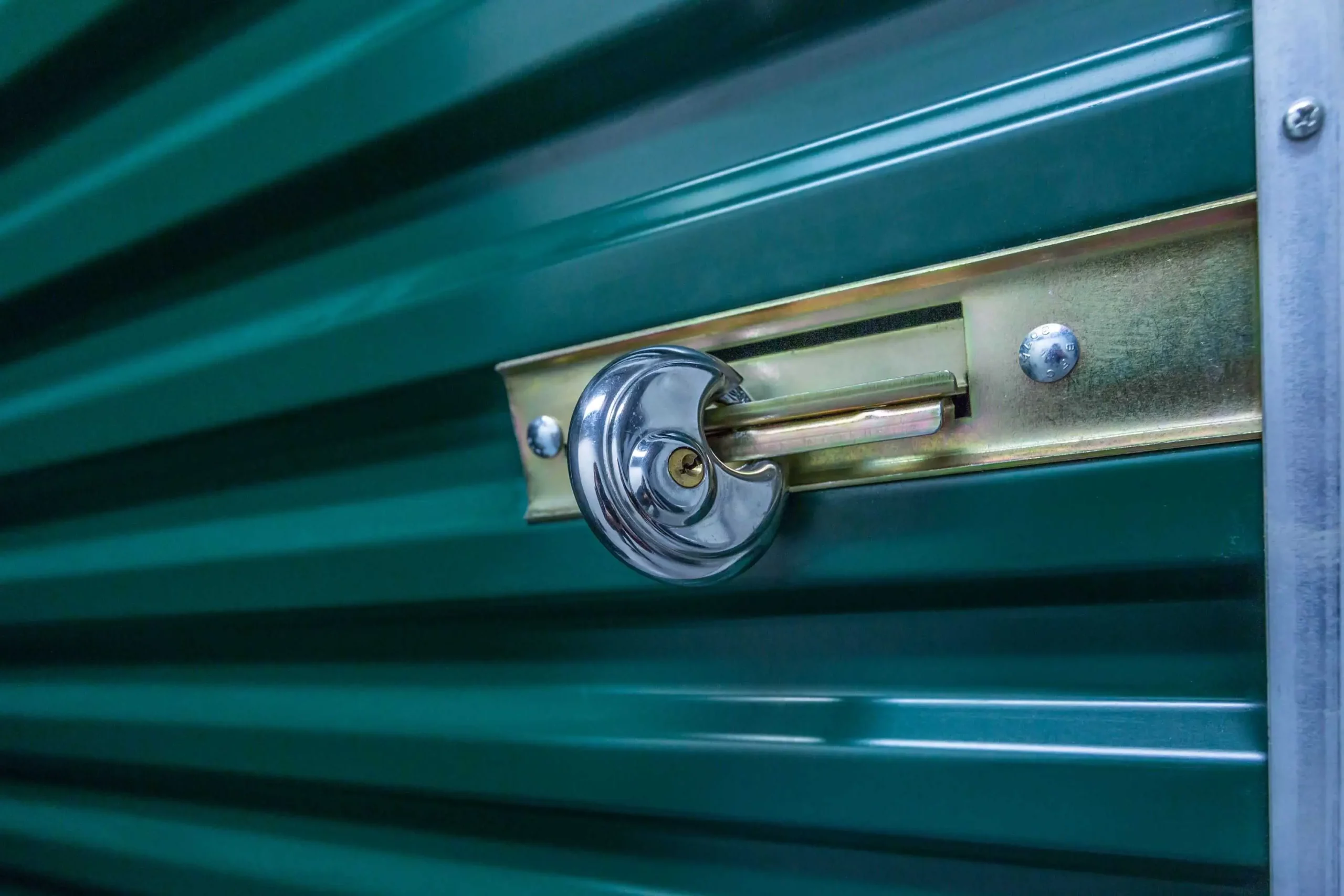
There are three main types of locks you’ll see on storage units: disc locks, cylinder locks, and heavy-duty padlocks. Disc locks are the most secure option because the shackle is almost completely enclosed, making it really hard to get bolt cutters around it. Cylinder locks are similar and fit into a small hole on the latch, so there’s nothing to grab onto. In general, you should look for locks with hardened steel bodies that resist sawing, shrouded or protected shackles that can’t be easily accessed, and a good security rating from a trusted brand.
High-Security Padlocks
A good padlock needs a few things: a shackle that’s tucked in so bolt cutters can’t reach it, a steel body tough enough to resist drills and saws, and a lock cylinder that’s hard to pick. If your facility isn’t climate-controlled, get one with weatherproofing so it doesn’t rust or seize up. You’ll spend around $30 to $60, which feels like a lot for a lock, but it’s nothing compared to what you’d lose if someone broke into your unit. Abloy, ABUS, and the nicer Master Lock models are all good bets.
Door Braces and Lock Boxes
For extra protection, some people add door braces or lock boxes on top of their main lock. A door brace is basically a metal bar that reinforces the door and makes it almost impossible to pry open, even if someone manages to cut the lock. Lock boxes cover your padlock entirely, so thieves can’t get to it with bolt cutters in the first place.
These add-ons usually cost $50 to $100 or more, but if you’re storing really valuable items or keeping things in storage for a long time, they’re worth considering. Just make sure your facility allows them, since some places have rules about what you can attach to the unit doors.
Monitoring Your Stored Items Remotely
If you worry about what’s happening with your stuff, personal security devices like motion-activated cameras, door sensors, and portable alarms can help. You’ll need to check with your facility first since not all allow third-party gear. Battery-powered cameras from brands like Blink, Wyze, and Ring send alerts to your phone when they detect movement, but you should expect to recharge them every few weeks.
Door sensors are simpler, last longer on a battery, and alert you if the unit opens unexpectedly. Portable alarms are a cheaper option, and go off if someone tampers with your door, but they only work if there’s someone around to hear them. No matter what you end up going with, always get permission from the facility manager before installing anything and document it in writing.
Packing and Organizing for Security
It’s important not to leave your valuable stuff right by the door in boxes that announce what’s inside. Tuck valuables toward the back, behind furniture or boxes of less important things. Get rid of the original packaging if possible. A box that says “Sony 65-inch TV” might as well have a sign that says “steal me.” Instead, use a numbering or coloring system that only makes sense to you.
You can also grab some tamper-evident seals online. They’re simple plastic ties or stickers that show if someone’s been messing with your boxes. When you’re loading everything, try to leave a path down the middle so you can actually get in there and check on things without dragging everything out. And if you need a hand getting organized, you can inventory your items ahead of time and book helpers through HireAHelper to knock it out faster.
Understand the Benefits of Enhanced Storage Security
Enhanced security measures don’t only prevent theft. They can also lower your insurance premiums if you’re carrying a policy on your stored items. Some providers offer discounts when you use facilities with strong security features, or when you use high-security locks.
There’s also the peace of mind factor. The upfront cost of good locks and a personal alarm might seem like a lot, but compare that to replacing everything in your unit. Even if your stuff isn’t super valuable, the hassle of dealing with a break-in (filing police reports, insurance claims, replacing items) makes the upfront investment worth it.
Learn the Potential Risks and Limitations
Here’s the thing: no security setup is bulletproof. Someone who really knows what they’re doing can get past even the best locks and cameras. What security really does is make thieves think twice. You’re basically trying to make your unit look like more trouble than it’s worth. Most thieves want the easy score, so if your setup looks like it’ll take a lot of work or time to break into, they’ll just move along to something simpler.
PULL QUOTE: “Not all storage facilities prioritize security, but there are signs you can look out for when you’re choosing a company. Good ones feature gated access, video cameras, alarms, and on-site staff, all reducing the risk of theft.”
There’s also the uncomfortable reality that sometimes it’s an inside job. In other words, someone who works there or has access might take your things. It’s rare, but it can happen. That’s why you need photos, lists, and serial numbers of everything inside the unit. And don’t rely on facility insurance, since it usually doesn’t cover everything you need it to. If you’re storing anything valuable or sentimental, get your own policy.
Comparing DIY Security vs. Facility-Provided Measures
Should you count on what the facility has or bring your own stuff? You probably need both. The facility’s security (the gate, cameras, staff) is your baseline protection, but adding on your own good lock or alarm means you’re making doubly sure everything is protected.
If you’re only storing things for a few weeks during a move, a decent lock plus what they already have is probably fine. But if you’re keeping valuables there for months, it’s worth adding your own camera or alarm so you can keep tabs on things yourself.
Final Steps for a Secure Self-Storage Experience
Before moving anything in, walk through your unit with a critical eye. Check for damage, look at the lighting, and spot any security concerns you missed during the tour. You should also take photos of the empty unit from multiple angles to document its condition. Once you start loading, update your locks and access codes if allowed, and document everything with photos, serial numbers, and receipts.
If you need help, booking helpers through a self-storage move with HireAHelper makes the process way less stressful. Professional movers can load your unit efficiently based on unit dimensions and help you think through security and organization.
Frequently Asked Questions
What type of lock should I use for my storage unit?
Use a disc lock or cylinder lock if your facility allows them. They’re the most secure because there’s almost no exposed shackle for bolt cutters to grab. If you need a padlock, get a high-security model with a hardened steel body and shrouded shackle, rated ASTM F883 or higher. Just make sure any lock you get complies with your facility’s lock requirements.
Can I install my own security camera inside a storage unit?
It depends on your facility’s policy. Some allow battery-powered cameras as long as they only record your unit and don’t point at hallways or other tenants’ spaces. Others ban personal cameras entirely due to privacy concerns. If allowed, use battery-powered models since units rarely have outlets, but expect connectivity issues in concrete buildings with poor cell service.
How often should I visit or inspect my storage unit?
Check valuable items at least once a month. Look for signs of moisture, pests, tampering, or security changes. You should also inspect your lock for scratches or damage that might indicate tampering attempts, as well as the door and frame for pry marks. Finally, take a quick look inside for water damage or pest activity.
Will better security measures lower my insurance premium?
Maybe. Some providers offer small discounts if you use high-security locks or store at facilities with strong security features. You should always document your security measures and ask your insurance agent. Even if it doesn’t lower your premium, the documentation helps if you need to file a claim.
What should I do if I notice a security issue at the facility?
Tell the facility manager right away. Whether it’s a busted gate, a nonworking camera, or just a light that’s out, it’s important to mention. If someone actually broke into your unit, don’t touch anything yet. Take photos of the damage first, then call the police and your insurance company. Most insurance policies have deadlines for reporting, so don’t wait.