



Kitchen cabinets spent years moving toward solid doors, hidden storage, and uninterrupted wall surfaces. Dishes, glassware, and serving pieces disappeared behind panels designed to keep everything out of sight.

Across these kitchens, a different approach has started showing up. Glass-front cabinets place everyday items back on display while maintaining the clean appearance that homeowners expect from modern cabinetry.
Some use clear glass, others rely on interior lighting, metal frames, or furniture-inspired detailing. Together, they show how glass-front cabinets are bringing display storage back into the kitchen without returning to open shelving.
Glass-Front Cabinets Turned Everyday Storage Into Display

Glass-front cabinets stretch across the entire wall instead of appearing as a small accent. Interior lighting highlights glassware, ceramics, and serving pieces while darker cabinet interiors keep the display from feeling cluttered.
The design creates the visual openness associated with shelving while keeping everything protected behind doors.
Black-Framed Glass Cabinets Bring Display Storage Into Modern Kitchens

Dark metal-framed glass doors introduce display storage without relying on traditional upper cabinetry. Walnut cabinetry below grounds the composition while LED shelves create depth against the darker wall.
The display becomes part of the architecture instead of functioning as separate furniture.
Traditional Cabinetry Gains Visual Depth Through Glass Panels

Tall glass sections break up what would otherwise be a large block of cream cabinetry. Decorative molding, fluted details, and glass inserts create variation across the elevation.
Without the glass, the wall would read as a continuous cabinet bank. The transparent sections add dimension and reduce visual weight.
Glass Cabinets Balance Heavy Countertop Materials

Dark stone dominates the island, backsplash, and work surfaces. Glass-front cabinets offset that weight by introducing lighter visual elements along the perimeter.
Display storage helps prevent the kitchen from feeling closed despite the substantial materials.
Interior Lighting Changes How Glass Cabinets Function

Cabinets remain visible even when the room lighting changes. Integrated lighting transforms glass storage into a feature wall that continues working after sunset.
Copper cookware, ceramics, and accessories become part of the overall design rather than disappearing behind solid doors.
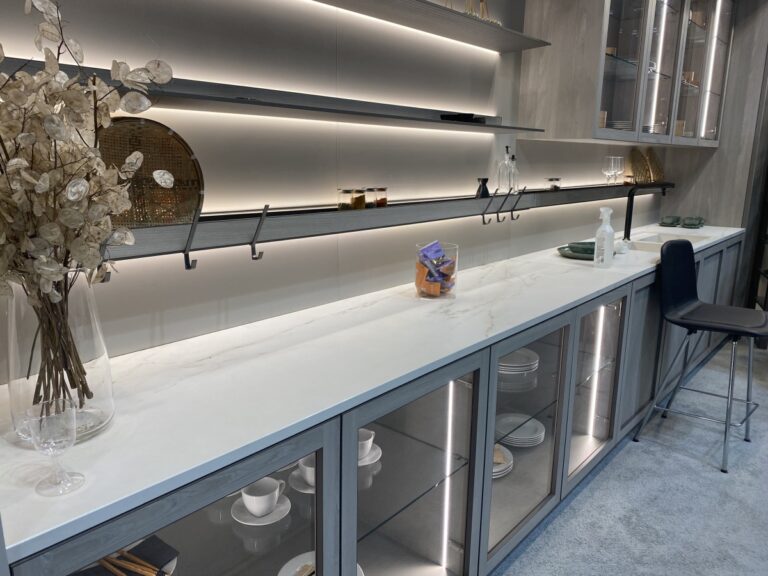
Lower Glass Cabinets Extend The Trend Beyond Upper Storage

Glass fronts appear below the countertop instead of above it. Plates, bowls, and serving pieces remain visible while long floating shelves provide another display layer.
The arrangement shifts attention away from upper cabinets and creates a furniture-like appearance.
Glass Storage Breaks Up Dark Cabinet Walls

Black cabinetry covers most of the kitchen. LED glass sections prevent the wall from becoming visually flat.
White dishes and glassware introduce contrast while preserving the clean lines of the cabinetry.
Glass Doors Soften Tall Appliance Walls

Full-height gray cabinetry surrounds integrated appliances, yet glass cabinets prevent the kitchen from feeling dominated by storage.
The transparent sections introduce texture and create visual breaks within the vertical wall.
Metallic Details Become Part Of The Display

Glass-front cabinets showcase decorative pieces while metallic trim and gold accents reinforce the furniture-inspired design.
Display storage supports the luxury aesthetic without requiring additional open shelving.
Display Niches Replace Standard Upper Cabinets

Open LED niches sit between tall storage sections. Glass shelving creates display zones while preserving a clean, integrated appearance.
The composition feels closer to built-in furniture than conventional kitchen cabinetry.
Statement Lighting Works Alongside Glass Storage

Large pendant fixtures draw attention toward the island while LED glass cabinets frame the perimeter.
Display storage contributes to the layered appearance of the room without competing with the lighting.
Glass Cabinets Highlight Collections Instead Of Hiding Them

Glassware becomes a decorative element rather than something stored out of sight. Internal lighting emphasizes shapes, reflections, and transparency.
The cabinets function as display cases integrated directly into the kitchen.
Marble And Glass Create A Lighter Cabinet Wall

Large marble surfaces dominate the room. Glass cabinet sections prevent the composition from becoming overly solid.
The combination keeps the kitchen open despite the extensive use of stone.
Mixed Materials Benefit From Display Storage

Metal mesh, glass, open shelving, and under-cabinet lighting create multiple layers across a compact wall.
Glass doors allow storage to remain visible while preserving a cleaner appearance than fully open shelving.
Glass Cabinets Add Depth To Monochromatic Kitchens

Black and white cabinetry creates strong contrast. Glass-front storage introduces another layer through reflections, transparency, and visible dishware.
Instead of relying on color, the design uses depth and visibility to create interest.