

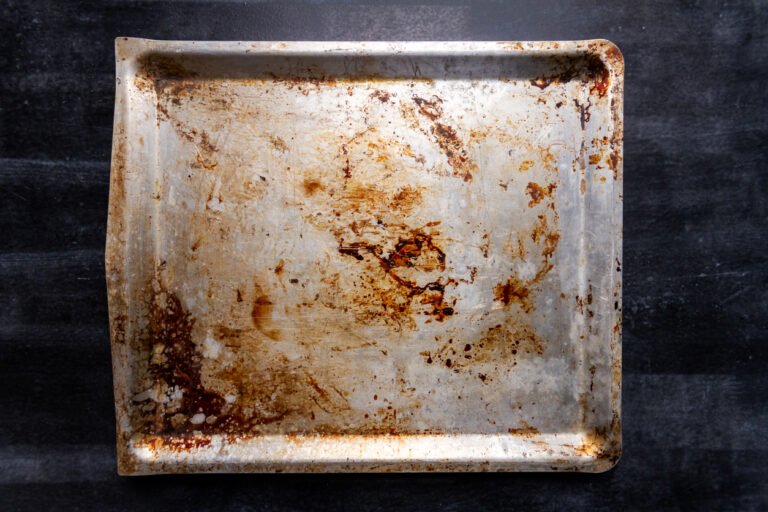


You pull the baking sheet out for Thanksgiving and wince. The corners are brown, the middle has a sticky amber patch that never washes off, and the last time you tried to fix it you scrubbed for half an hour and only scratched the metal.
The sheet isn’t ruined, and you weren’t scrubbing wrong. You were scrubbing too soon. That brown layer builds up one roast at a time, as oil and drips bake onto the pan again and again, and it doesn’t come off with force alone. It needs something to sit on it first. A thick paste of baking soda and hydrogen peroxide, left in place for up to 20 minutes, does the hard part before the sponge ever touches the pan.
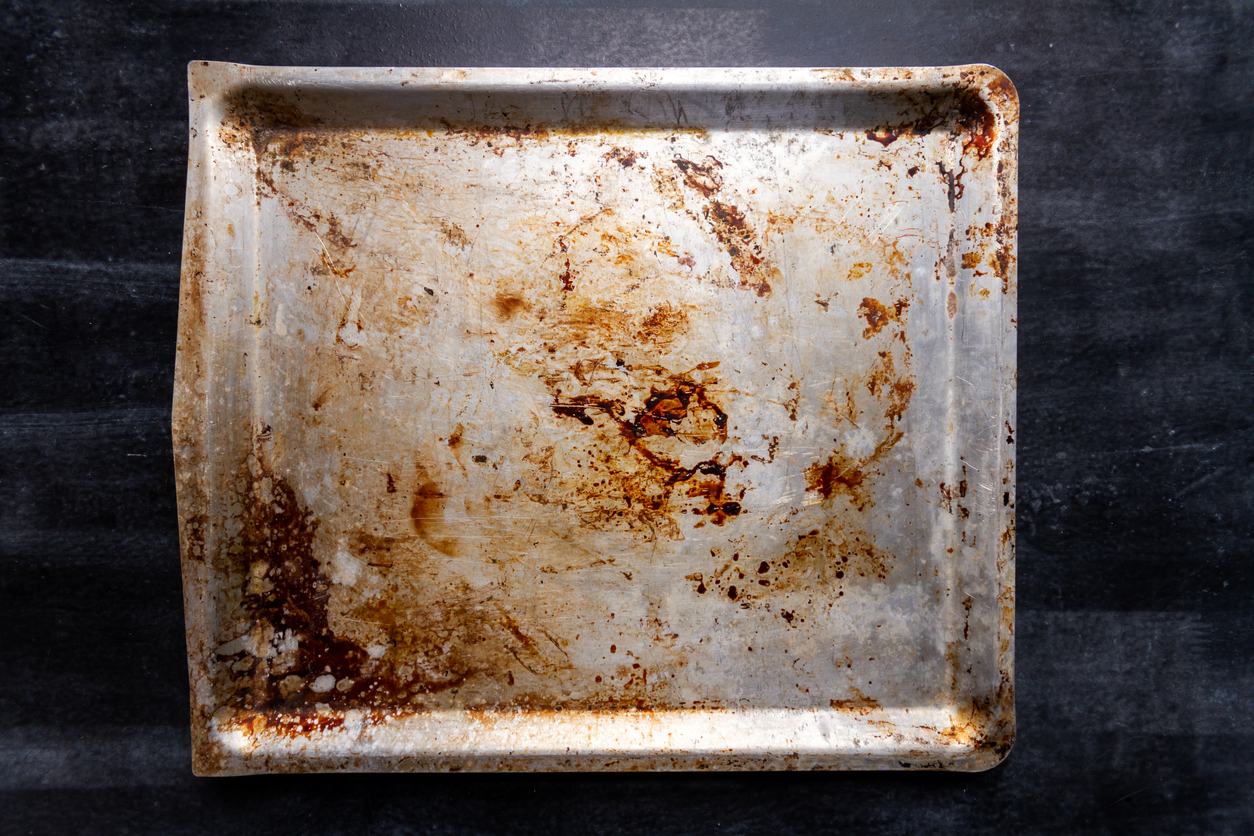
Why the paste beats the scrub brush
Hydrogen peroxide turns baking soda into a thick, spreadable paste that clings to the stains instead of running off. Given time, it loosens the baked-on film so a soft sponge can lift it. Scrubbing hard with a metal pad does the opposite: it can leave tiny scratches in the surface, and grease grips those scratches faster the next time you bake.
Use the regular household 3% hydrogen peroxide. Poison control specialists note that small exposures to household 3% hydrogen peroxide usually cause only mild irritation.
How to make old baking sheets look brand new
This method is meant for uncoated aluminum and stainless steel sheets. Here is the routine:
- Mix the paste. Stir about 1/2 cup of baking soda with 2 to 3 tablespoons of hydrogen peroxide until it looks like toothpaste.
- Cover the stains. Spread it over the brown and sticky spots in a thick layer.
- Wait up to 20 minutes. Let the paste sit while it softens the buildup.
- Scrub gently. Work it with a non-scratch sponge. On stainless steel, go back and forth along the grain.
- Rinse and dry. Rinse with warm water and dry the sheet right away.
If a few spots remain, repeat the paste rather than pressing harder.
Oven racks collect the same brown crust, but they are too big for a paste. Soaking them in a bathtub of hot water with dishwashing detergent for about four hours is the easier way to clean oven racks, with only a light wipe at the end.
When to use a gentler mix instead
Nonstick sheets need a softer approach. Sprinkle baking soda on the stains, add a small squeeze of dish soap and a few drops of warm water to make a paste, leave it for 20 minutes, then work it in with a non-abrasive sponge before rinsing. Skip the peroxide paste and any scrubber that could damage the coating.
Keep an eye on plain aluminum while the paste sits, and rinse it off if the metal starts to look discolored.
Don’t mix hydrogen peroxide with vinegar. The National Center for Healthy Housing lists that combination among the ones to avoid when you clean. If any paste splashes into your eyes, poison control advises rinsing them right away with plenty of running water for 15 to 20 minutes.
Wear gloves if your skin is sensitive, work at the sink and rinse everything well before the sheet goes back in the oven.
Spread it on, walk away for 20 minutes, and let the paste do the scrubbing. That’s the trick.