

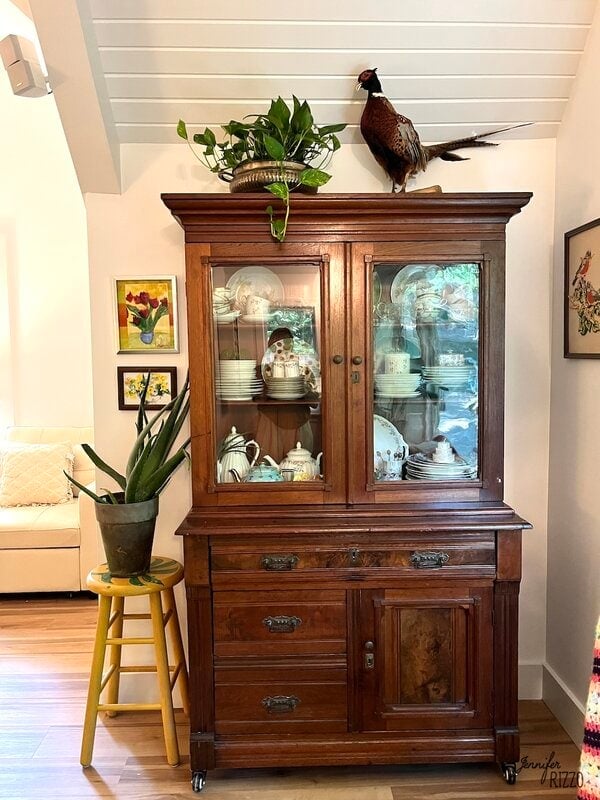

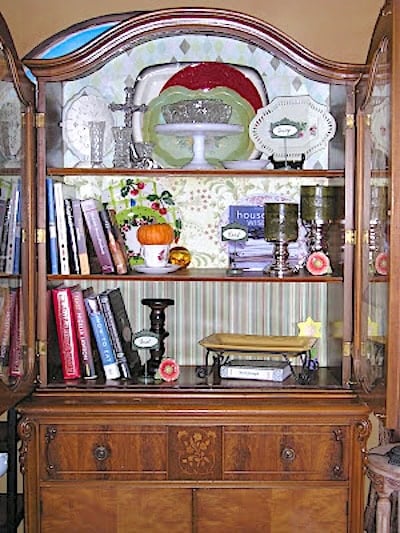
My obsession with repurposing china cabinets started way back on August 28th of 2008. How do I know? Because it’s like a time machine and this was what I first wrote about it: This is a subject near and dear to my heart…. For the last 8 years my china cabinet and hutch dutifully sat across from each other in my “dining room”. Why? I don’t know. ‘Cause they were supposed to? I had junk jammed in them that I never used. I hated dusting everything because it never got used (Okay, I admit, I never dusted .), and it looked, well, stuffy. When I was moving my furniture around, it occurred to me that my house is small enough that I need every piece to really work for me. There was no room for things to just take up space. With my china cabinet, I realized I didn’t need to display 40 china place settings that just sat and dusty wine glasses from Sweden that no one else really noticed any way. I packed them up and put in the things I really put the miles on, cook books, decorating books, serving platters I used a lot, and even candles I rotate and placed it in our new sitting area. I wanted it to be useful. It’s funny to look back on that and see how many times my china cabinets have been reused and reinvented over and over. I love that it also keeps them out of the landfill. Since it’s the new year, it’s a great time to rethink old uses with new purposes!
Taking the China Out of the China Cabinet
It’s now 2026 and china cabinets aren’t really needed as much anymore. Many of my clients still use them for their original purpose, but you can find so many either super cheap on Marketplace or simple given away fore free. They are almost like a relic of times past. Except, once you get past what they “used to be” you can actually add extra useful storage in your home! You can see more about this china cabinet repurposing here.
A Few Ideas for Repurposing China Cabinets
-Create an extra pantry in the kitchen
-Use it as a book shelf
-Remove the doors and create open shelving
-Remove the top and use that as an accent piece
-Remove the top and use the bottom as an entertainment center
Ways I’ve Repurposed China Cabinets
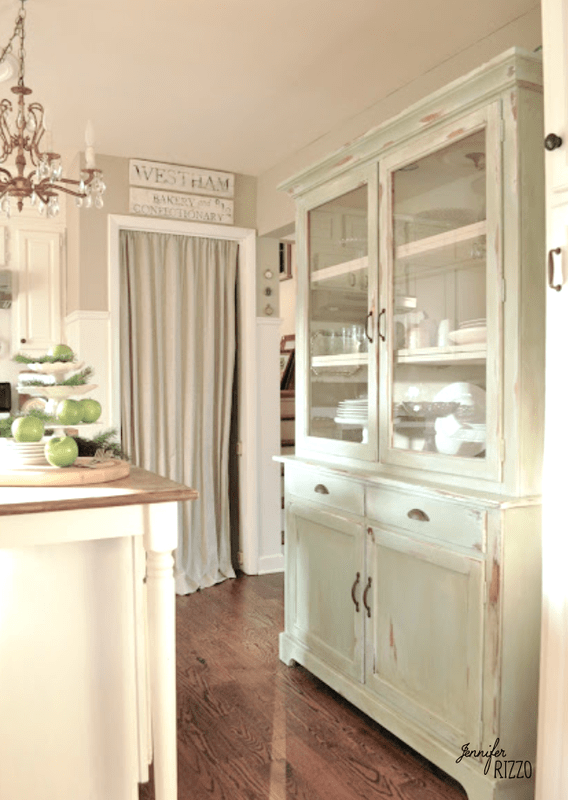
Over the last 18 years, I’ve ended up using different china cabinets in so many different ways! It started out when we redid our kitchen. We pulled out the ugly cabinets and added this china hutch that we painted blue in the kitchen that was painted and used for out every day dishes. It was cheaper than cabinets of the same size and made the kitchen look vintage and custom at the same time!
The china cabinet from the first image above has had many lives. Not only was it first a book shelf, but then it moved from my dining area to the living room and became a large diorama display case for treasures.
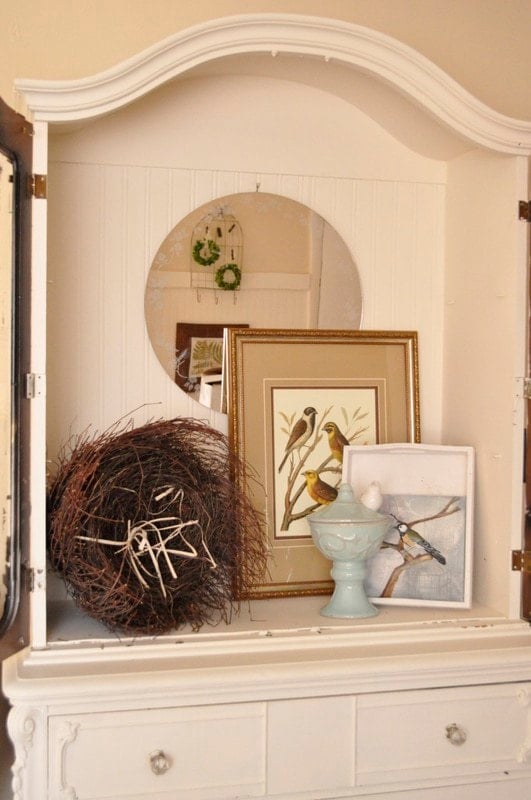
That was fun because there were so many ways to change out the styling. I could give it a more nature study look with a large bird nest, a decorative jar and bird art.

Or I could style it with vintage art to create a mini-gallery. Once I removed the doors it really made it more like a shelving unit with storage underneath.

In this home makeover I styled, this cabinet/hutch was used to hold kitchen pretties and was eventually used for extra dishes and cookbooks. Removing the doors really updated it and made it so much for accessible.
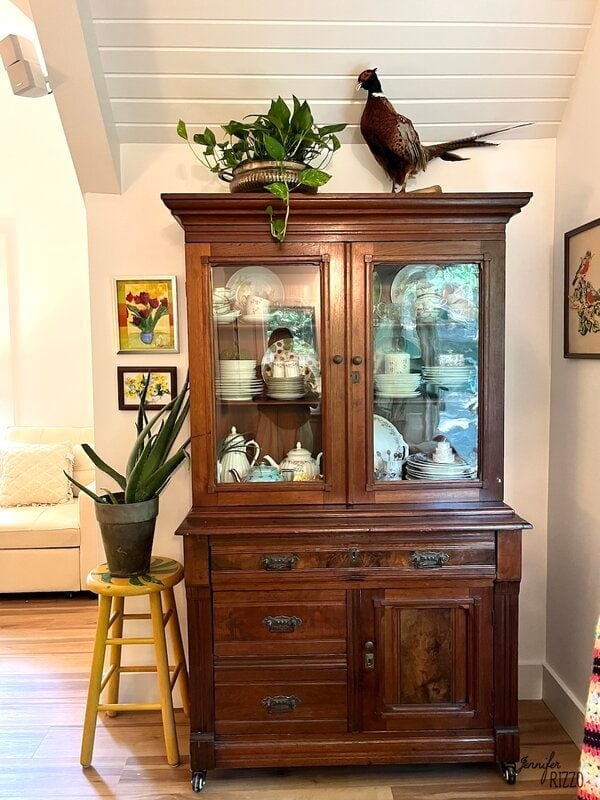
In this vintage home, we actually loaded it up with a collection of vintage dishes to serve both as storage and to give it a collected feel.
We were also gifted a giant retro china cabinet about 10 years ago. Someone else wanted the top (which those on their own can make great book shelves!) so we took the bottom and created an entertainment center in our sub-level. This piece also lived a few places in our home and is currently upstairs as our main TV stand.

China Cabinets in Retail Spaces
Once thing I really think china cabinets are good for is display for retail spaces. I’ve used them many times in my own stores.
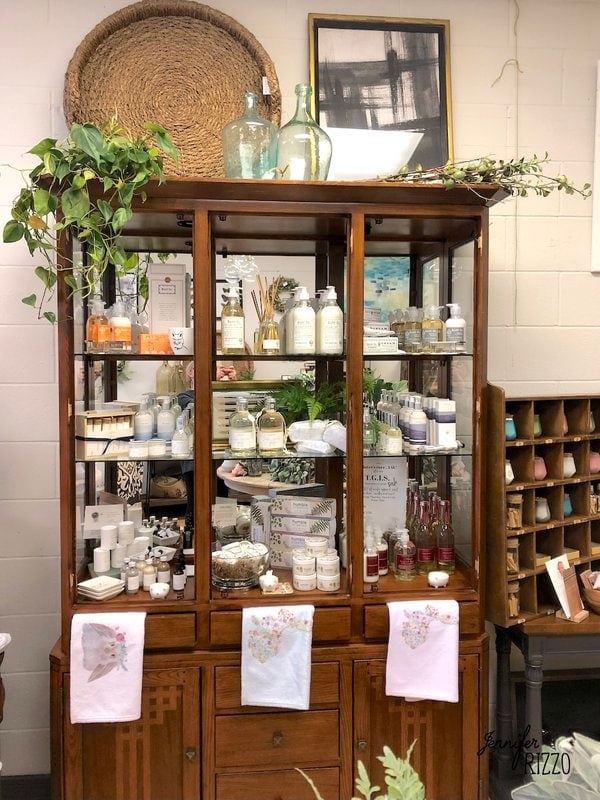
In my first store we utilized this free wood cabinet with the doors removed to display soaps, lotions and other body products. It was pretty with the mirrored back.
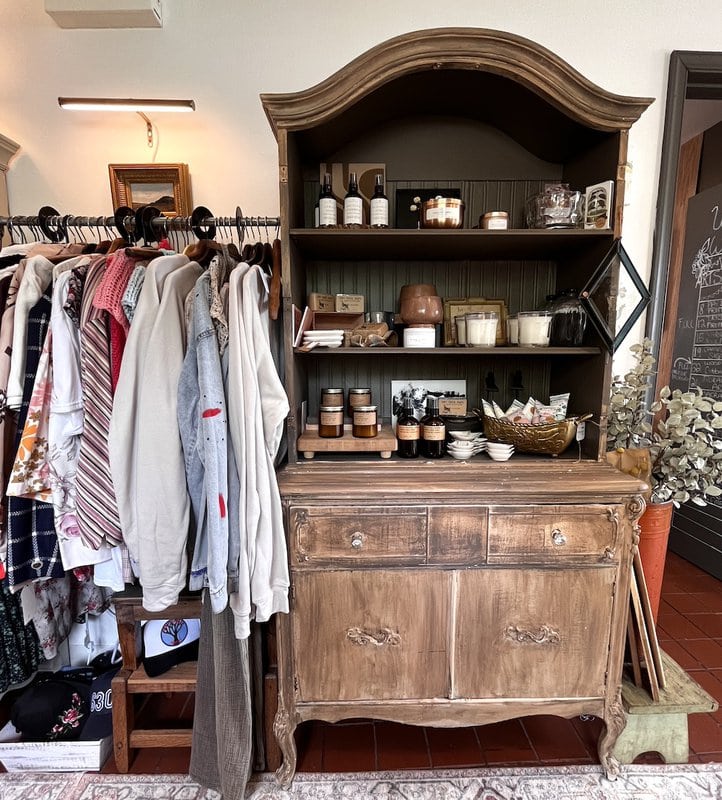
This cabinet is the very same cabinet in the first image on this post. It’s been painted several times now and has lad a lot of lives. It went from holding candles and room sprays to jewelry and more.

Then a Halloween season, it became a place to display all kinds of cute decor. It always continues to evolve. So the next time you come across an old china cabinet, instead of passing it by, consider how you can give it a second life and make it into something new.
