

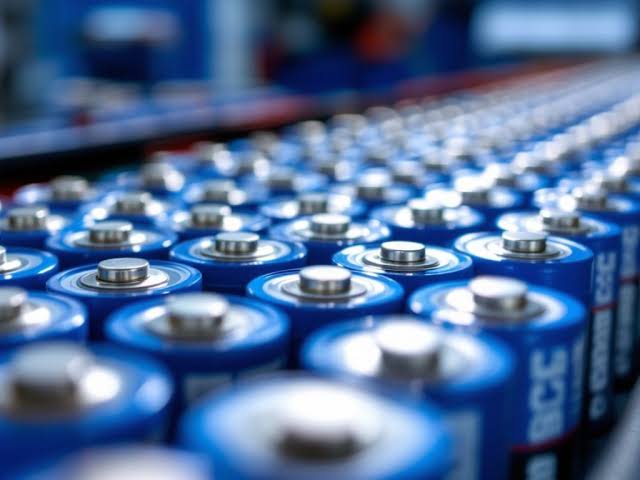

A car audio battery does not fail only when it goes flat. It fails when it cannot recover between bass hits. That is the real reason LTO batteries have become so valuable in high-power car audio. SCiB LTO is not popular because it has the biggest amp-hour number. It is popular because it can accept charge fast, deliver current hard, and keep voltage more stable while amplifiers are pulling repeated bursts of current.
AGM batteries are familiar and affordable, but they are slow to recover once the system is pushed hard. LiFePO₄ is a useful lithium upgrade for many 12V applications, but it is not the same as LTO when repeated high-current input and output are the priority. NMC lithium is energy-dense, but it is not the chemistry most car audio builders should be chasing for abuse-heavy subwoofer systems.
This guide compares LTO, AGM, LiFePO₄ and NMC from a car audio point of view. Not EV range. Not solar storage. Not camping batteries. The focus here is clean voltage under bass load, fast alternator recovery, long-term abuse tolerance, and whether LTO actually makes sense for your build.
Quick answer: For serious car audio, SCiB LTO is the strongest chemistry when voltage stability, fast recovery, high-current discharge and long service life matter. AGM can still work for smaller systems. LiFePO₄ can suit moderate or auxiliary use. NMC is usually the wrong direction for car audio battery banks because it prioritises energy density over abuse tolerance and safety margin.
Quick Answer: Why LTO Works So Well for Car Audio
LTO works well in car audio because it behaves differently under stress. A large amplifier does not pull current gently. It pulls current in hard bursts. Every bass hit creates a demand spike, and the battery has to supply that current without the voltage collapsing.
A good SCiB LTO bank is strong in the areas car audio cares about most:
– fast charge acceptance from the alternator,
– strong current delivery during bass hits,
– fast voltage recovery between notes,
– long cycle life under repeated use,
– stable behaviour across daily driving and demo conditions,
– better abuse tolerance than traditional AGM setups.
This does not mean LTO is automatically required for every system. If the setup is mild, AGM may still be enough. If the build is mostly auxiliary power with light-to-moderate audio, LiFePO₄ may make sense. But once the system is built around big bass, high RMS power, frequent demos or repeated voltage abuse, LTO moves into a different category.
For general buyer guidance, read Evolution Lithium’s best battery for car audio NZ guide .
What Makes LTO Different From Normal Lithium Batteries?
LTO stands for Lithium Titanate Oxide. The main difference is inside the cell. Most lithium-ion batteries use a graphite-based anode. LTO replaces that with lithium titanate. That material change affects how the battery charges, discharges, ages and handles abuse.
In simple car audio terms, many lithium batteries are designed to store a lot of energy in a small space. LTO is designed to move energy in and out quickly. That is exactly what a high-power car audio system needs when the amplifier is pulling hard and the alternator is trying to refill the bank between hits.
This is why LTO is used in demanding applications where fast charge, high input/output, long cycle life and safety matter more than maximum energy density. Those same traits translate extremely well to car audio, especially when the system is used hard every day.
The Lithium Titanate Anode Explained in Basshead Terms
Think of the anode as one of the parts inside the battery that stores and releases energy. In many lithium cells, the anode can suffer more stress as the cell is charged and discharged hard. That stress adds up over time, especially when high current is involved.
LTO behaves differently. The lithium titanate structure is far more tolerant of repeated cycling and high-rate charging than common graphite-anode lithium designs. For car audio, that means the battery is not being abused in the same way when it is repeatedly charged by the alternator and discharged by the amplifier.
That is the real advantage. It is not just “lithium.” It is a lithium chemistry that is unusually well matched to repeated current abuse.
Why Low-Strain Cycling Matters for Daily Demos
A daily demo vehicle is brutal on batteries. The system gets charged, hit hard, partially discharged, charged again, then hit again. That can happen many times in a single drive or demo session.
With AGM, the battery can heat, sag and recover slowly. With many lithium chemistries, high-rate cycling can still create long-term stress if the battery is not used in the right window. LTO handles that style of use better because repeated charge and discharge cycles are one of its core strengths.
For the basshead, this means the system is less likely to feel fresh for a short period and then fade as the battery struggles to recover. A properly built LTO bank keeps the electrical foundation more consistent.
What LTO Feels Like in a Car Audio System
The biggest difference most people notice is not a spec sheet number. It is how the system feels.
With a weak battery setup, the first bass hit might sound strong, but the next few hits soften. The voltage drops, the amplifier has less to work with, and the system starts feeling tired even though the equipment is technically still running.
With a properly sized SCiB LTO bank, the system feels more controlled. Bass hits stay tighter. Recovery between notes is faster. Long tracks and repeated demos are more consistent. The amplifier has a stronger electrical platform, so the system does not rely on one quick burst before falling away.
This is why people often describe LTO systems as feeling “stiff” or “solid.” It is not because LTO magically creates power. It is because the voltage drop is better controlled and recovery is faster.
For more on this effect, read how voltage drop affects car audio performance .
LTO vs AGM: Why Lead-Acid Struggles When Power Climbs
AGM batteries have been used in car audio for years because they are easy to understand, widely available and familiar to installers. For smaller systems, a quality AGM can still be a practical upgrade from a weak factory battery.
The problem is that AGM was not designed for modern multi-kilowatt bass systems. Once amplifier power climbs, AGM starts showing its weaknesses. It is heavy, voltage sag is more noticeable, recovery is slower, and deep cycling or partial charging can shorten battery life.
AGM can still make sense for:
– factory or mild audio upgrades,
– budget-conscious systems,
– lower RMS daily drivers,
– simple installs where lithium charging is not being planned.
But for serious bass, AGM becomes a compromise. Adding more AGM batteries can increase reserve, but it also adds weight, space, wiring complexity and slower recovery. At some point, stacking AGM becomes less effective than moving to a chemistry that is better suited to high-current abuse.
Category: Voltage under bass load | AGM: More sag as power increases | SCiB LTO: Stronger voltage stability
Category: Recovery after demos | AGM: Slower | SCiB LTO: Much faster
Category: Deep-cycle abuse | AGM: Not ideal long term | SCiB LTO: Much better suited
Category: Weight | AGM: Heavy when stacked | SCiB LTO: Better output-to-weight in serious builds
Category: Best use | AGM: Mild to moderate systems | SCiB LTO: Hard daily, demo and SPL-style systems
For a broader chemistry comparison, see LTO vs AGM vs LiFePO₄ .
LTO vs LiFePO₄: Why Both Are Lithium but Not the Same
LiFePO₄ is a very useful lithium chemistry. It is lighter than AGM, offers good cycle life, and works well in many 12V auxiliary, camping, marine and moderate power applications. It is also commonly seen as the “safe lithium” option compared with more energy-dense lithium chemistries.
But LiFePO₄ and LTO are not the same. LiFePO₄ is generally stronger than AGM in many areas, but LTO is better matched to repeated high-rate charge and discharge abuse. That matters in car audio because the system is not simply drawing a smooth load like a fridge or light bar. A large amplifier creates hard current spikes over and over again.
LiFePO₄ can make sense for:
– moderate daily systems,
– auxiliary loads,
– weight-saving 12V setups,
– users who want lithium benefits without building a high-voltage LTO-style system.
LTO pulls ahead when:
– the system is high RMS,
– the vehicle is demoed often,
– alternator recovery matters,
– charging and discharging happen hard and repeatedly,
– long-term abuse tolerance is more important than compact energy storage.
Category: Nominal cell voltage | LiFePO₄: Approx. 3.2V | SCiB LTO: Approx. 2.3V–2.4V
Category: Energy density | LiFePO₄: Higher | SCiB LTO: Lower
Category: Fast charge tolerance | LiFePO₄: Good, depending on cell and design | SCiB LTO: Excellent
Category: Voltage recovery | LiFePO₄: Good in suitable systems | SCiB LTO: Excellent for high-current car audio
Category: Best car audio use | LiFePO₄: Moderate systems and auxiliary loads | SCiB LTO: Hard daily, demo and SPL-style systems
LTO vs NMC: Why Energy Density Is Not the Priority for Big Bass
NMC lithium cells are common in EVs, laptops, power tools and many high-energy applications because they can store a lot of energy in a compact package. That is useful where energy density is the priority.
Car audio is different. A serious subwoofer system does not mainly need maximum stored energy in the smallest possible space. It needs high current delivery, fast recovery, safety margin and durability under abuse.
That is why NMC is usually not the ideal chemistry for car audio battery banks. It can offer strong energy density, but it is more sensitive to heat, overcharge and abuse than LTO. For daily-driver and demo builds, the extra energy density does not outweigh the need for stability and safety margin.
Category: Main strength | NMC: High energy density | SCiB LTO: High abuse tolerance and fast input/output
Category: Safety margin | NMC: More sensitive to abuse | SCiB LTO: Very strong safety profile
Category: Cycle life under hard use | NMC: Lower than LTO | SCiB LTO: Very high
Category: Car audio suitability | NMC: Poor choice for most builders | SCiB LTO: Excellent for serious systems
The Real Downsides of LTO Batteries
LTO is not perfect. If an article only tells you the advantages, it is not giving you the full picture.
The biggest downside is energy density. LTO stores less energy per cell volume than LiFePO₄ or NMC. That means more cells are usually required for the same stored energy. The cell voltage is also lower, so the bank design is different from typical 12V lithium thinking.
LTO also costs more upfront. The cells, bus bars, enclosure, fusing, cable and install work all need to be considered. For a small system, that investment may not make sense.
The main LTO drawbacks are:
– lower energy density than LiFePO₄ and NMC,
– lower cell voltage, so more cells are needed in series,
– higher upfront cost,
– more planning around charging voltage,
– not necessary for low-power systems,
– requires proper installation, fusing and mounting.
These drawbacks matter. But in serious car audio, energy density is often less important than current delivery and recovery. If the system is large enough, the benefits usually outweigh the trade-offs.
Charging LTO from an Alternator
One of LTO’s biggest strengths is charge acceptance. A SCiB LTO bank can absorb current very quickly compared with traditional AGM setups. That makes it excellent for vehicles where the alternator is constantly refilling the bank between bass hits.
But this does not mean you can ignore the charging system. Alternator output, charging voltage, cable size and grounding still matter. LTO is strong, but it is not a licence to run poor wiring or guess the voltage.
For 6S SCiB car audio systems, Evolution Lithium commonly works around a practical charging range of roughly 14.8V to 16.2V, with 15.6V to 15.9V being the preferred sweet spot for strong real-world performance. The absolute maximum is 16.8V for a 6S bank if each cell is taken to 2.8V, but that does not make 16.8V the normal daily target.
Most serious LTO systems should be planned around:
– suitable alternator output,
– correct charging voltage,
– proper OFC cable,
– short, clean grounds,
– quality fuse holders and distribution,
– voltage monitoring at the battery and amplifier,
– an active balancer where relevant.
If your vehicle needs charging changes for LTO, read upgrading your vehicle for an LTO lithium battery and high-output alternator compatibility with LTO .
Where LTO Should Be Mounted in a Vehicle
Evolution Lithium does not recommend mounting lithium car audio banks under the bonnet. The engine bay is hot, exposed, wet, dirty and full of vibration. It is the wrong location for a serious lithium battery bank.
A SCiB LTO bank should be mounted in the boot or rear cabin, close to the amplifier current path where practical. The bank should be secured properly, protected from movement, and installed with safe cable routing and fusing.
Good mounting matters because a car audio battery is not just sitting still. It deals with braking, cornering, vibration, bass pressure and heat cycles. A strong bank still needs a safe physical install.
For placement guidance, read the lithium battery trunk install guide .
When LTO Makes Sense and When It Does Not
LTO makes the most sense when the audio system is hard enough to expose the limits of AGM or general-purpose lithium. If the battery is only supporting a small amplifier, LTO may be more than the system needs.
Build Type: Factory stereo or mild upgrade | Does LTO Make Sense?: Usually no | Reason: The current demand is too low to justify the cost.
Build Type: Small subwoofer system | Does LTO Make Sense?: Sometimes | Reason: Useful if voltage drop is already an issue, but AGM may still be enough.
Build Type: High-power daily driver | Does LTO Make Sense?: Yes | Reason: Daily hard play benefits from fast recovery and stable voltage.
Build Type: Demo vehicle | Does LTO Make Sense?: Yes | Reason: Repeated demos punish slow-recovery batteries.
Build Type: SPL-style build | Does LTO Make Sense?: Yes | Reason: High-current delivery and voltage stiffness are major advantages.
Build Type: Budget-first install | Does LTO Make Sense?: Maybe not | Reason: Wiring, alternator and install hardware may need attention first.
If you are unsure what size bank suits your system, use the car audio lithium battery calculator .
Car Audio Battery Chemistry Comparison Table
The table below compares the common battery chemistries from a car audio point of view. This is not a general EV or solar-storage ranking. It is focused on amplifier support, voltage behaviour and abuse tolerance.
Chemistry: AGM | Voltage Stability: Acceptable at low power, weak at high demand | Recovery Speed: Slow | Cycle Life: Limited under deep-cycle abuse | Energy Density: Low | Car Audio Verdict: Useful for small systems, not ideal for serious bass
Chemistry: LiFePO₄ | Voltage Stability: Good in suitable systems | Recovery Speed: Good | Cycle Life: Strong | Energy Density: Good | Car Audio Verdict: Good auxiliary and moderate audio option
Chemistry: NMC | Voltage Stability: Not the main strength | Recovery Speed: Application-dependent | Cycle Life: Lower under abuse than LTO | Energy Density: High | Car Audio Verdict: Not the preferred car audio battery-bank chemistry
Chemistry: SCiB LTO | Voltage Stability: Excellent under high-current use | Recovery Speed: Excellent | Cycle Life: Very high | Energy Density: Lower | Car Audio Verdict: Best suited to serious car audio abuse
The Biggest Mistake: Treating LTO Like a Normal 12V Battery
The biggest mistake people make with LTO is treating it like a drop-in AGM replacement without understanding voltage, charging and system design. LTO is not normal 12V lead-acid thinking.
A 6S SCiB bank operates at a higher useful voltage than a traditional 12V AGM setup. That is part of why it performs so well in car audio, but it also means the rest of the system needs to be suitable. Amplifiers, alternator voltage, wiring, fuse hardware and vehicle electronics all need to be considered.
Do not just buy cells, bolt them together and hope. A proper LTO setup is planned as a complete electrical system.
For system-level planning, read complete power setup for car audio and wiring SCiB LTO lithium banks .
Frequently Asked Questions About LTO Batteries for Car Audio
Why do LTO batteries recover faster between bass hits?
LTO batteries recover faster because they have very strong charge acceptance and low internal resistance compared with traditional battery options. In car audio terms, that means the alternator can refill the bank quickly and the voltage can rebound faster after the amplifier pulls current.
Is LTO better than LiFePO₄ for a 3000W or 5000W car audio system?
For hard daily, demo or SPL-style use, LTO is usually the stronger choice. LiFePO₄ can work well in moderate systems, but LTO is better suited to repeated high-current charge and discharge abuse. At 3000W to 5000W RMS, the decision depends on how hard the system is played, the alternator, the wiring and whether voltage stability is the priority.
Can a stock alternator charge an LTO battery bank?
A stock alternator may charge an LTO bank, but that does not mean it is ideal. LTO can accept current quickly, so the alternator and charging path need to be suitable. If the system demand is high, a weak alternator will still become a limit. Serious LTO car audio systems should be planned around alternator output, charging voltage and cable size.
What voltage should a 6S LTO bank charge at for car audio?
For a 6S SCiB LTO car audio bank, the practical charging range is roughly 14.8V to 16.2V, with 15.6V to 15.9V being the preferred daily sweet spot for strong performance. The absolute maximum is 16.8V, but that should not be treated as the normal target for daily car audio use.
Why does LTO have lower energy density than LiFePO₄ or NMC?
LTO trades energy density for safety, fast charge capability, long cycle life and high-rate input/output behaviour. It stores less energy per size than LiFePO₄ or NMC, but it handles abuse better. In car audio, that trade-off often makes sense because voltage stability and recovery are more important than maximum energy storage in the smallest package.
Is LTO safer than NMC lithium for car audio?
LTO has a much stronger safety margin than NMC for high-abuse car audio use. NMC is valued for energy density, but it is more sensitive to heat, overcharge and abuse. LTO is better suited to systems where high current, fast charge and repeated cycling are expected.
Does LTO need a high-output alternator?
Not always, but high-output alternator support becomes important as system power increases. LTO can absorb charge quickly, so a stronger alternator can help the bank recover faster. However, the alternator must be matched to the system, charging voltage and wiring. LTO does not remove the need for proper charging support.
Is LTO worth it for a daily driver?
LTO is worth it for a daily driver when the system is played hard and voltage stability matters. If the setup is mild, AGM or LiFePO₄ may be enough. If the vehicle runs a serious subwoofer amplifier, frequent demos or high RMS power, LTO can make the system more consistent and reliable.
Can LTO replace AGM completely?
In a properly designed car audio system, yes, LTO can replace AGM battery support. But it should not be treated as a careless drop-in swap. Charging voltage, alternator behaviour, fusing, mounting and wiring need to be planned properly. For many serious builds, LTO is a better long-term direction than stacking AGM.
Why do LTO banks cost more upfront?
LTO banks cost more upfront because the cells, construction, bus work, protection hardware, cable, fusing and installation all need to be done properly. The value is in long service life, voltage stability and abuse tolerance. In a serious car audio build, the total cost over time can make more sense than repeatedly replacing weaker battery setups.
Where should an LTO battery bank be mounted in a vehicle?
An LTO battery bank should be mounted in the boot or rear cabin, not under the bonnet. It should be securely mounted, protected from movement and wired with correct fusing and cable. Engine bay heat, vibration and exposure make the bonnet area the wrong place for an Evolution Lithium SCiB LTO bank.
What is the biggest mistake people make with LTO in car audio?
The biggest mistake is treating LTO like a normal 12V battery and ignoring the rest of the electrical system. LTO needs correct charging voltage, proper cable, strong grounds, good fusing, secure mounting and suitable alternator support. The battery is strong, but the system around it still has to be built correctly.
Final Verdict: LTO Is Built for Repeated Car Audio Abuse
Car audio systems are brutal on batteries. Large amplifiers create repeated current spikes, alternators refill the bank unevenly, and demo vehicles can punish the electrical system for long periods. AGM struggles when power levels climb. LiFePO₄ is useful, but it is not the same as LTO under repeated high-current abuse. NMC prioritises energy density, which is not the main goal in serious car audio battery banks.
SCiB LTO is different because it is strong where car audio is hardest on batteries. It charges fast, recovers quickly, holds voltage well under load, and handles repeated cycling with far less drama than traditional options.
LTO is not the cheapest choice and it is not necessary for every build. But if your goal is clean voltage, hard bass, fast recovery, long-term durability and a battery bank that can survive years of daily or demo use, LTO is one of the best chemistry choices available for car audio.
Explore Evolution Lithium’s SCiB LTO lithium battery banks or use the car audio lithium battery calculator to start matching a bank to your system.
7 Soper Lane, Springlands, Blenheim, Marlborough,
New Zealand Phone: +64 22 073 1730 |
Email: sales@evolutionlithium.co.nz
Open 24/7 — evolutionlithium.co.nz