

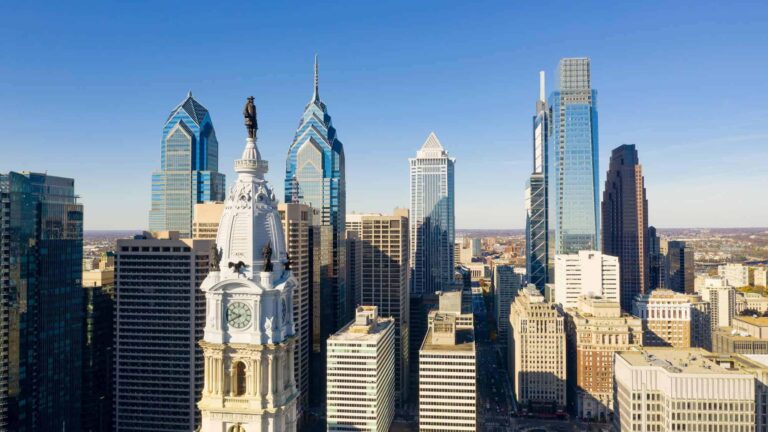

Fishtown, Rittenhouse Square, and Chestnut Hill are among the most popular neighborhoods in Philadelphia. Most areas are seeing a steady influx of new residents who are drawn to the city’s unique blend of colonial history and modern grit. According to HireAHelper’s 2026 Migration Report, the Philadelphia-Camden-Wilmington metro area saw 41,128 inbound moves in 2025, proving the City of Brotherly Love is still a major draw for people across the country.
At HireAHelper, we help people pull off successful moves daily. We know that where you land is just as important as how you get there. While Philadelphia has many fantastic places to live, there are some that will be a better fit than others. Our guide breaks down the local vibes, costs, and logistics to help you make the best choice for your budget and lifestyle.
Should You Move to Philadelphia?
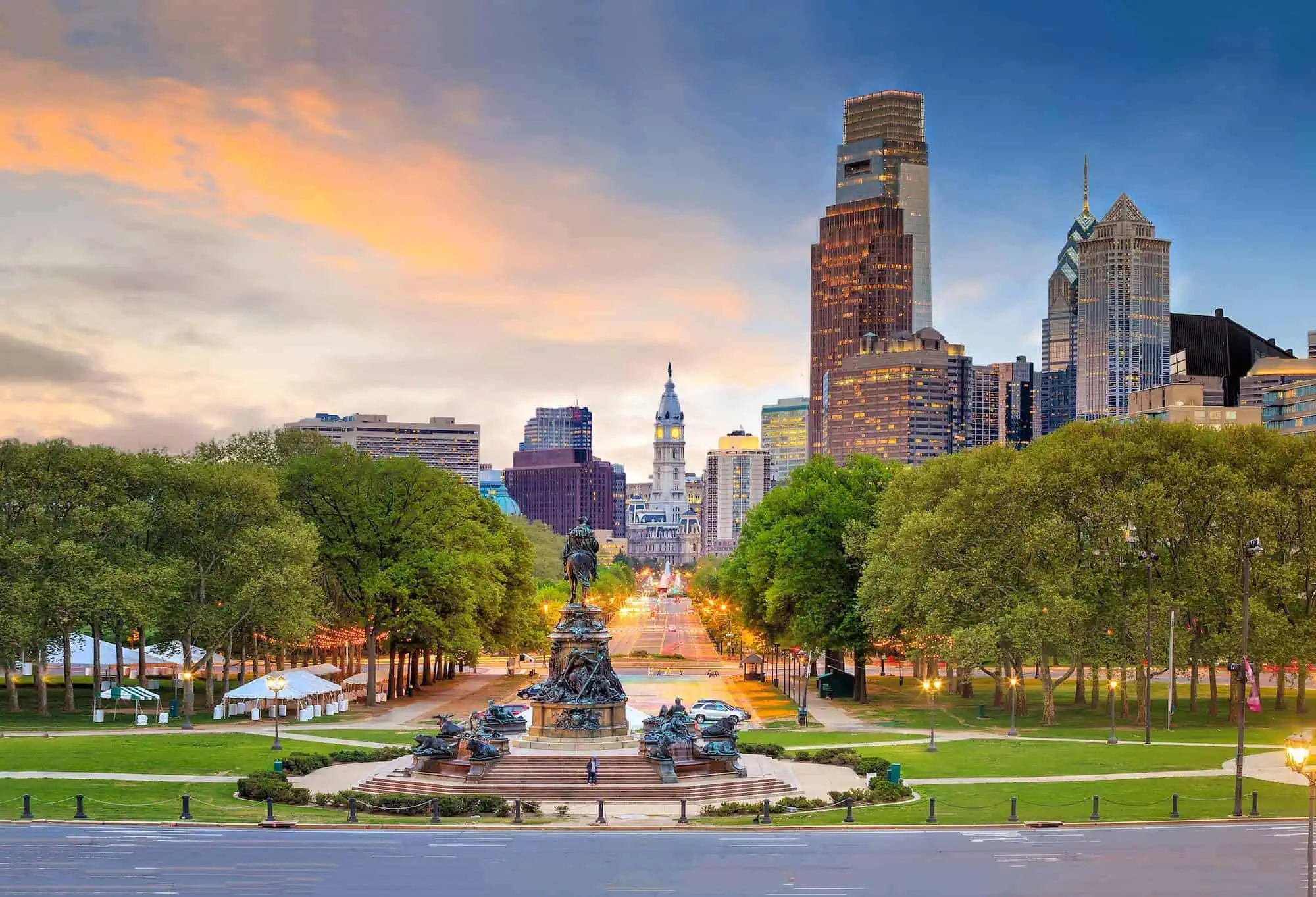
Philadelphia is an excellent place to live for people who want a big-city lifestyle without the sky-high price tags of New York or Los Angeles. It’s a city with a distinct personality where you can find world-class museums, incredible food, walkable streets, vibrant murals, and lush parks.
However, the local sports fans are legendary for their passion, and the traffic on I-76 can be a headache. Plus, the weather isn’t exactly mild. The winters are definitely cold, and summers can get humid. And in general, you have to be ready for a city that’s loud and proud.
If you value history and strong community vibes, it may be a good fit for you. If you prefer a quiet or reserved atmosphere, you may need to get used to the energy. Ultimately, Philadelphia rewards those who live life fully and have strong hometown pride.
Real Estate in Philadelphia, PA
Real estate in Philadelphia is currently stabilizing, offering decent opportunities for both buyers and renters who know where to look. According to Zillow’s market trends for Philadelphia, home values have seen steady shifts over the last year. While prices have risen historically, they remain more accessible than nearby metros. The market is competitive, so you need to be ready to move fast when you find a desirable place.
The median home sale price in Philadelphia sits around $241,667, with typical home values hovering near $227,453. This is significantly lower than the national average, which allows many first-time buyers to enter the market sooner than they could elsewhere.
“Choosing the right mover for your Philadelphia move comes down to finding crews who can navigate tight corners and old buildings. Local experience is nonnegotiable here.”
For renters, the market is active. You can find everything from luxury high-rises to historic rowhomes. The average rent hovers around $1,701, depending on the location. It’s a market where a little research pays off.
Philadelphia Neighborhood Map
A map of Philadelphia neighborhoods reveals a grid of distinct pockets, each with its own culture, boundaries, and unwritten rules. In Philly, a few blocks can change the entire vibe.
When you look at the map, think about your commute and budget. Some areas are perfect for walking to work, while others offer more space but require a car. For a closer look at moving logistics in these areas, check out our Philadelphia movers page.
Best Neighborhoods in Philadelphia
The best neighborhoods in Philadelphia range from quiet, leafy enclaves to bustling urban centers filled with nightlife. It can be hard to choose, so we curated this list to give you an idea of what’s out there, and all of these areas represent the variety that makes Philly special.
Fishtown
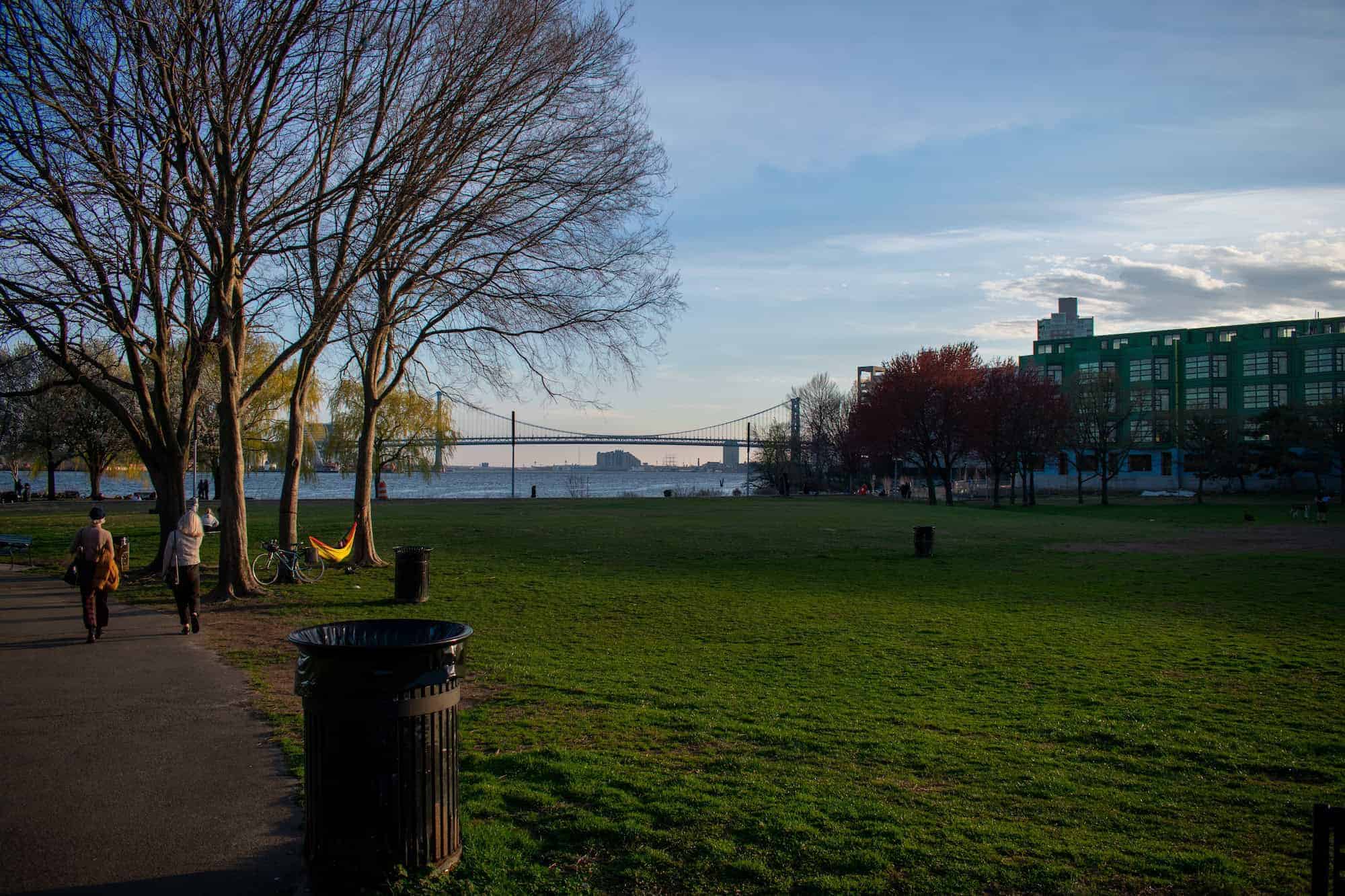
- Vibe: Artsy, culinary-focused, and energetic
- Location: Northeast of Center City, along the Delaware River
- Great for: Young professionals, foodies, and creatives
- Typical home value: $368,527
- Average rent: $1,701 (City average, no neighborhood data available)
Fishtown has transformed over the last decade into a beloved area. It used to be a fishing center, but now it’s a hub for some of the city’s best restaurants and bars. Frankford Avenue is the main artery here, and you can spend an entire Saturday just walking up and down the avenue and exploring the scene.
You’ll find award-winning pizzerias, coffee roasters, vintage shops, dive bars, and indie music venues like The Fillmore and Johnny Brenda’s. The neighborhood also has a strong community feel where people sit on their stoops and neighbors know each other.
Better yet, the Market-Frankford subway line, which locals call the El, runs right through the neighborhood, which makes commuting to Center City a breeze.
Rittenhouse Square
- Vibe: Upscale, bustling, and sophisticated
- Location: In the heart of Center City, west of Broad Street
- Great for: City lovers, affluent professionals, and retirees
- Typical home value: $458,322
- Average rent: $1,701 (City average, no neighborhood data available)
This is the Philadelphia you often see in movies. The neighborhood is anchored by the eponymous square, which is a beautiful park filled with sculptures, fountains, and benches. On a sunny day, it’s packed with people picnicking, reading, and people-watching.
Surrounding the park are high-rise apartments and historic brownstones with stunning architecture. You’re steps away from the best shopping in the city on Walnut Street, which features major global brands. The dining scene is equally impressive, giving you access to high-end steakhouses and French bistros. Another plus is that living here means you rarely need a car because everything is at your doorstep, including easy access to the SEPTA regional rail and subway lines.
Chestnut Hill
- Vibe: Green, historic, and family-oriented
- Location: Northwest Philadelphia, near the border of Montgomery County
- Great for: Families, nature lovers, and those wanting a quieter pace
- Typical home value: $854,672
- Average rent: $1,701 (City average, no neighborhood data available)
If you want the perks of the city but the look of a suburb, this is the place to be. Chestnut Hill is famous for its cobblestone grandeur and garden-like feel. Germantown Avenue runs through the center and is lined with bakeries, toy stores, boutiques, antique shops, and cheese counters. It feels like a small town tucked away from the rest of the city.
The housing stock includes gorgeous Victorian homes and stone mansions that offer significantly more square footage than downtown. There’s also a lot of green space here since you’re right next to the Wissahickon Valley Park. It’s perfect for hiking, biking, and escaping the urban grind on weekends. The commute to Center City is longer, but the Chestnut Hill East and West regional rail lines make it manageable for daily commuters.
University City
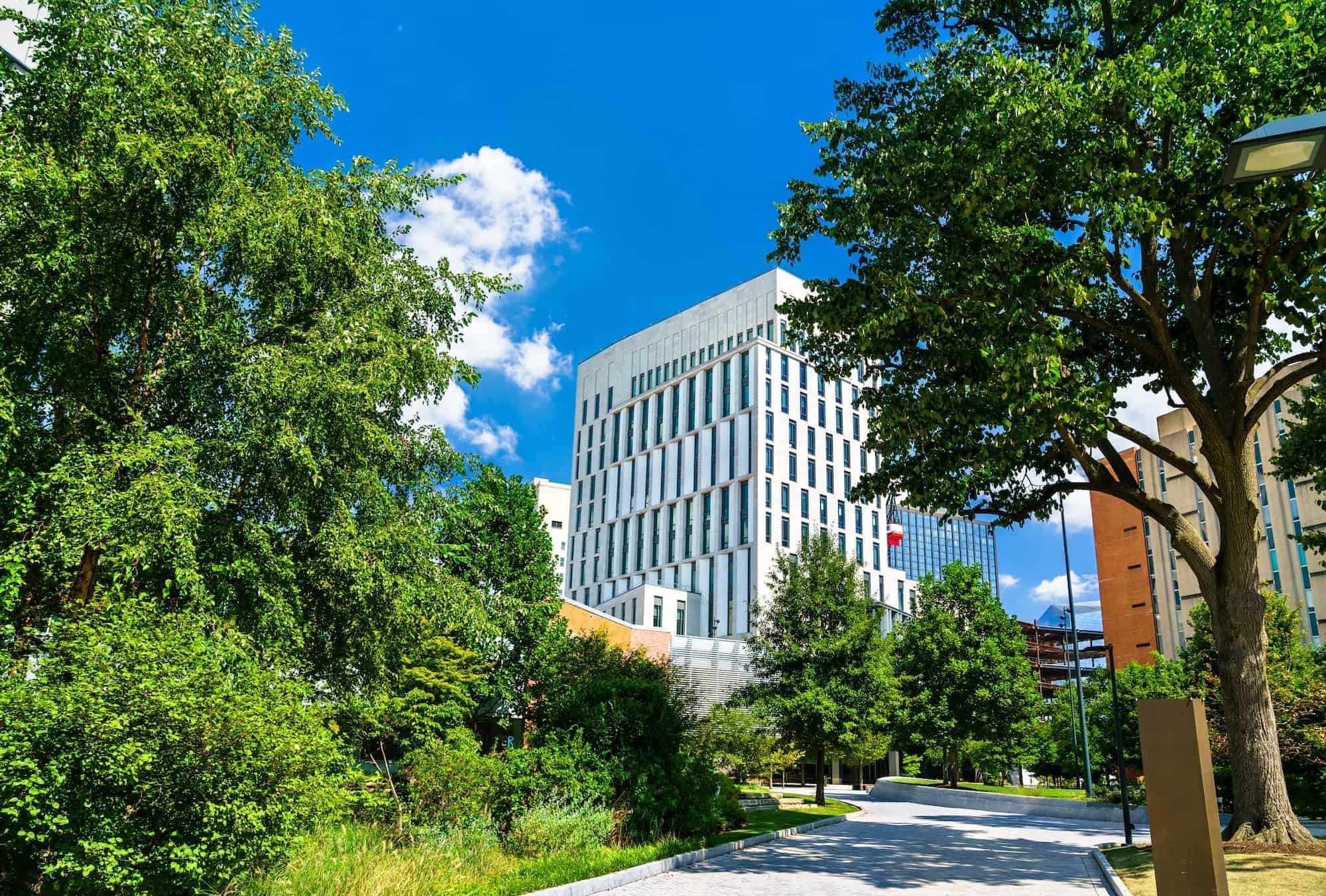
- Vibe: Intellectual, diverse, and youthful
- Location: West Philadelphia, just across the Schuylkill River
- Great for: Students, medical professionals, and academics
- Typical home value: $452,291
- Average rent: $1,701 (City average, no neighborhood data available)
This neighborhood is dominated by the University of Pennsylvania and Drexel University, but it’s more than just dorm rooms and campuses. It offers a vibrant mix of grand residential streets and busy commercial corridors.
The population is global, thanks to the universities and the massive hospital systems that employ thousands in the area.This diversity is also reflected in the food scene, so you can find amazing cuisine from all over the world.
The vibe changes a little as you move west. Near the river, it’s bustling with students, but go even further west, and the neighborhood becomes quieter with beautiful porch-fronted Victorian twins. Clark Park is a central gathering spot that hosts a massive farmer’s market on weekends and outdoor Shakespeare performances in the summer.
Manayunk
- Vibe: Active, collegiate, and nightlife-heavy
- Location: Northwest of Center City, along the Schuylkill River
- Great for: Recent grads, fitness enthusiasts, and young couples
- Typical home value: $350,006
- Average rent: $1,701 (City average, no neighborhood data available)
Manayunk has a unique geography because it’s built into a steep hill overlooking the river. Living here means you can get a workout just walking to your car or bringing groceries home.
Main Street is the heart of the action, and is lined with dozens of bars, boutiques, brunch spots, yoga studios, and riverside cafes. On weekends, it’s packed with people enjoying the nightlife. Manayunk is also a gateway to the Schuylkill River Trail, making it a hot spot for runners and cyclists who commute into the city by bike. It has its own regional rail station, but parking can be notoriously difficult due to the narrow, hilly streets.
Old City
- Vibe: Historic, tourist-friendly, and artistic
- Location: East of Center City, near the Delaware River waterfront
- Great for: History buffs, artists, and loft-lovers
- Typical home value: $366,538
- Average rent: $1,701 (City average, no neighborhood data available)
This is the most historic square mile in America. You have the Liberty Bell, Independence Hall, and the Betsy Ross House right in your backyard. But you don’t feel like you’re living in a museum, as the neighborhood is a vibrant area with a thriving art scene. On the first Friday of every month, galleries open their doors to the public for evening viewings.
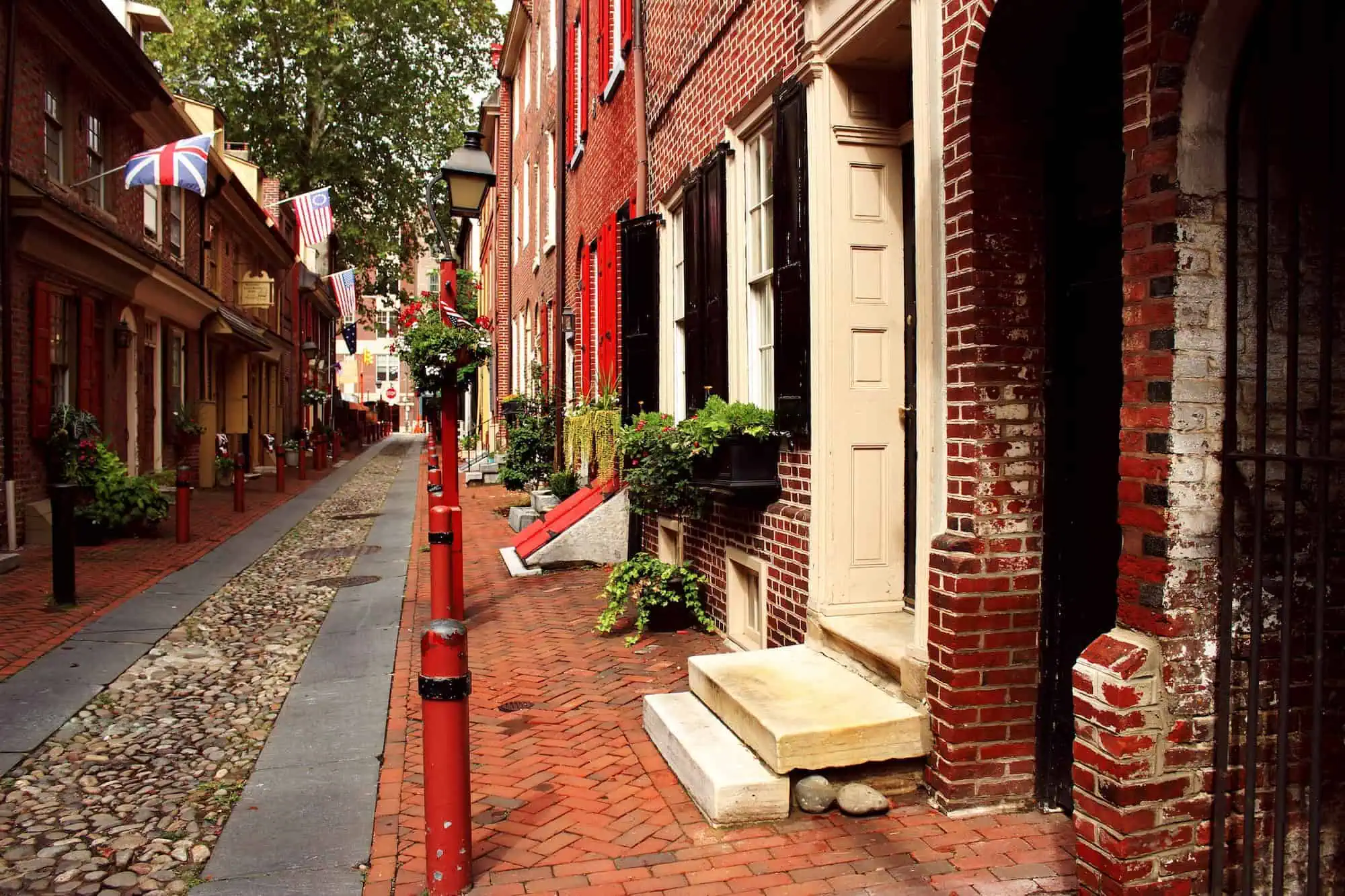
The housing here is unique because many old warehouses have been converted into spacious industrial lofts with high ceilings and exposed brick. Charming trinity houses are also tucked down alleyways like Elfreth’s Alley, one of the oldest residential streets in the country. You are also right next to Penn’s Landing on the waterfront, which hosts festivals, concerts, and pop-up parks throughout the year.
Northern Liberties
- Vibe: Hip, walkable, and beer-centric
- Location: North of Old City, west of Fishtown
- Great for: Young families, professionals, and beer lovers
- Typical home value: $498,544
- Average Rent: $1,701 (City average, no neighborhood data available)
This neighborhood was one of the first to boom in the city’s recent renaissance, so it has a slightly more established feel than its neighbor, Fishtown. The focal point is the Piazza, a large outdoor courtyard surrounded by apartments and shops that hosts markets and events.
The architecture is a mix of traditional brick rowhomes and striking modern metal structures. 2nd Street is the main thoroughfare, filled with craft beer halls, bowling alleys, and international restaurants. It’s incredibly walkable and has several grocery stores, making it convenient for day-to-day living. The neighborhood is also very pet-friendly, with plenty of dog parks and businesses that welcome four-legged friends.
Passyunk Square
- Vibe: Community-focused, delicious, and eclectic
- Location: South Philadelphia, centered around East Passyunk Avenue
- Great for: Food lovers, couples, and long-time residents
- Typical home value: $395,637
- Average rent: $1,701 (City average, no neighborhood data available)
Passyunk Square is arguably the food center of the city. East Passyunk Avenue was once named one of the ten best foodie streets in America, and you have classic Italian spots sitting next to modern Mexican, French, and Asian fusion restaurants. This is where the famous cheesesteak rivalry between Pat’s and Geno’s lives, but locals know the avenue offers much more.
The neighborhood blends old-school South Philly energy with a new wave of younger residents. The housing is mostly two-story rowhomes that are relatively affordable compared to Center City. It’s walkable to the subway, putting you just a few stops away from the stadiums or downtown.
Fairmount
- Vibe: Relaxed, cultural, and green
- Location: Just north of Center City, near the art museum
- Great for: Families, art lovers, and professionals who want quiet
- Typical home value: $430,795
- Average rent: $1,701 (City average, no neighborhood data available)
Fairmount feels like a separate village lined with trees and beautiful brick rowhomes. It sits right next to the Philadelphia Museum of Art, which is where the famous Rocky Steps are located. The neighborhood has great access to Fairmount Park, a massive green space perfect for jogging, biking, or having a picnic.
Because it’s slightly removed from the subway lines, it feels quieter and more residential than other parts of the city. However, Fairmount Avenue offers plenty of bars and restaurants, including the historic Eastern State Penitentiary, which is now a museum. It’s a favorite spot for young families who want to stay in the city but desire easy access to playgrounds and outdoor space.
Queen Village
- Vibe: Historic, settled, and charming
- Location: South of Old City, along the Delaware River
- Great for: Established families and history lovers
- Typical home value: $553,367
- Average rent: $1,701 (City average, no neighborhood data available)
Queen Village was settled in the 1600s, and you can feel that history in the streets. The sidewalks are brick, and the trees are huge, so it feels very permanent and cozy. South Street serves as the northern border. It’s busy and eclectic, known for its counter-culture shops and nightlife, but the residential streets below it are incredibly quiet.
The area has excellent schools, which attract many families who put down roots here. You’ll find pocket parks scattered throughout the grid, and Fabric Row on 4th Street offers a mix of historic textile shops and trendy boutiques. Parking can be tight, but the walkability and charm make it one of the most desirable zip codes in Philadelphia.
Moving Costs and Logistics in Philadelphia
Moving costs in Philadelphia are heavily influenced by the layout of the city, specifically parking permits and the narrowness of the streets. If you’re moving into a rowhome, access can be tight. Many streets are one-way and barely wide enough for a car, so they’re definitely tight for a moving truck.
“The median home sale price in Philadelphia sits around $241,667, with typical home values hovering near $227,453. This is significantly lower than the national average…”
You’ll likely need a temporary No Parking permit from the City of Philadelphia, so you can reserve roughly 40 feet of curb space for your moving truck. Without them, you might have to park blocks away, adding time and money to your move.
Also, consider the stairs. Many older Philly homes are called trinities. These three-story houses have just one room on each floor, connected by a winding, narrow staircase. Moving a queen-sized box spring up those stairs is often impossible. You might need a split box spring or special furniture that comes apart, and knowing this ahead of time means you and your movers won’t get stuck or delayed.
Check out our moving cost calculator to get an estimate. Don’t forget to review our moving checklist so you don’t miss a step.
How to Choose the Right Mover for Your Philadelphia Move
Choosing the right mover for your Philadelphia move comes down to finding crews who can navigate tight corners and old buildings. Local experience is nonnegotiable here. You want a driver who isn’t scared of a narrow one-way street in South Philly.
When searching on HireAHelper, look for reviews that mention punctuality and care with stairs, and read what past customers say about their parking situations to see how the movers handled it. Here are a few highly-rated options you might find on our Philadelphia movers page:
- Lucas Moving & Home Services: A customer favorite with over 1,000 verified reviews, they’re praised for speed, efficiency, and handling both residential and business moves with ease.
- H&M Movers: This family-owned and operated company has been in business for over 17 years, bringing licensed and insured reliability to every job.
- Vyking Moving Co.: Established in 2019, this newer crew has quickly built a reputation for hard work and professionalism, making them a top choice for labor-only moves.
To get started, visit our movers page, but you can also read about how HireAHelper works, or guides on how to choose a good moving company and questions to ask before moving.
FAQs About Philadelphia Neighborhoods
How many neighborhoods are in Philadelphia?
There isn’t a single official count, but most locals agree that Philadelphiahas over 100 neighborhoods. The city is often called a “city of neighborhoods” because each one maintains a strong and separate identity.
What is the difference between major neighborhoods and smaller areas?
The difference is that major neighborhoods, such as Center City or South Philly, are large regions that contain many smaller pockets. Major neighborhoods include West Philly and the River Wards, while smaller and less-known neighborhoods include areas such as Pennsport, Bella Vista, or Brewerytown. When locals ask where you live, they usually want the specific neighborhood name.
What neighborhoods in Philadelphia are walkable?
Center City, Rittenhouse Square, and Washington Square West are incredibly walkable. You can easily live in these areas without a car. Neighborhoods such as Fishtown and Passyunk Square also have high walk scores with grocery stores and bars within a short stroll.
What neighborhoods in Philadelphia have good nightlife?
Fishtown and Old City are the top destinations for nightlife. Fishtown offers a mix of dive bars and music venues, while Old City has a higher concentration of clubs. Manayunk is also popular for bars and entertainment along Main Street.
What neighborhoods in Philadelphia have parks?
Fairmount and the Art Museum area offer immediate access to Fairmount Park, while Chestnut Hill is close to the Wissahickon, which is great for hiking. Rittenhouse Square is built around a famous urban park, which is smaller but manicured.
Why Trust HireAHelper?
You can trust HireAHelper because we’ve been helping people move since 2007. We’ve facilitated hundreds of thousands of moves across the country, so we understand that moving isn’t just about boxes. It’s about life changes. Our marketplace is built to give you choices, transparency, peace of mind, expert advice, and reliable support. We vet our Service Providers so you can focus on settling into your new Philadelphia home. We’ve seen it all, and we’re here to help you get there.