

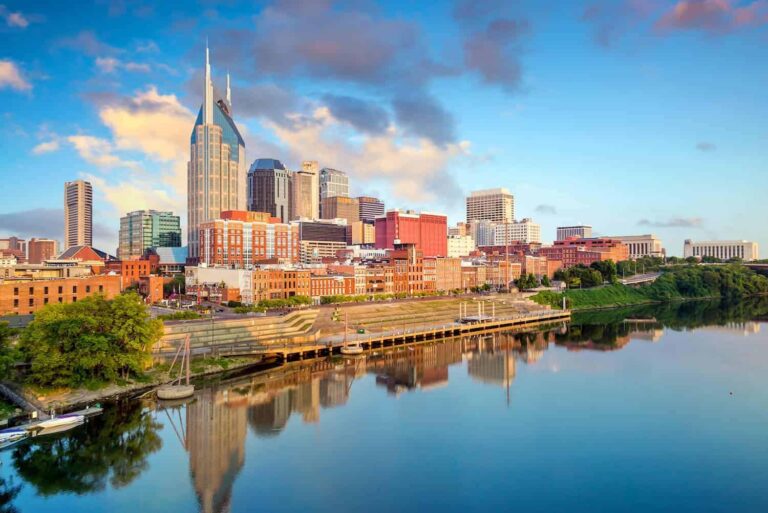

Downtown, Germantown, The Gulch, and East Nashville are among the most popular neighborhoods in Nashville. As one of the fastest-growing cities in the Southeast, these areas will only get even more in-demand, so if you want to follow the 31,431 people who moved into the area last year (according to HireAHelper’s 2026 Migration Report), knowing which neighborhood you want to settle in ahead of time is important.
At HireAHelper, we’ve helped thousands of people relocate to Music City, giving us unique insight into what makes each neighborhood tick. This guide will help you discover which areas align best with different lifestyles and budgets.
Should You Move to Nashville?
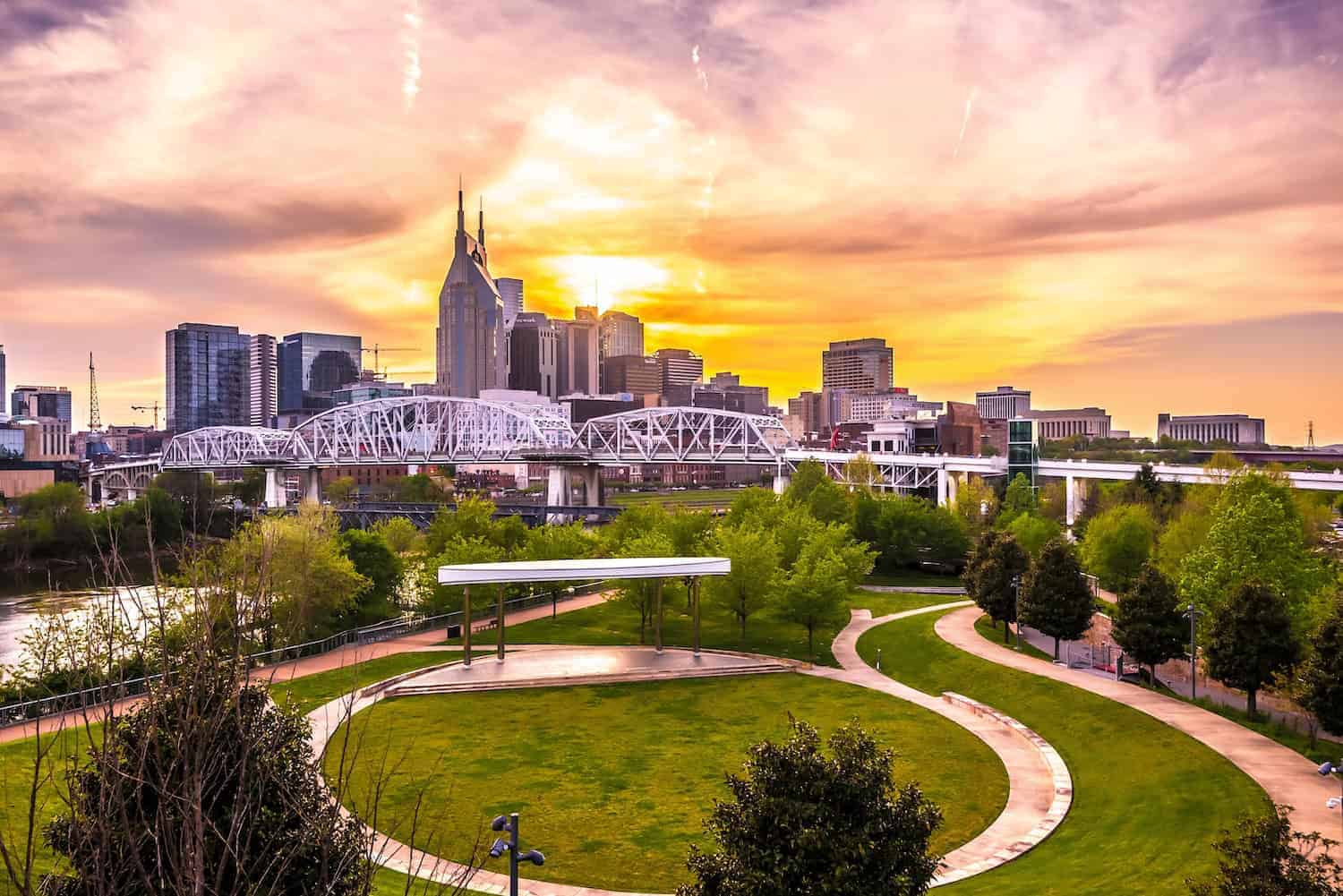
Nashville is a strong fit for young professionals, creatives, and families looking for economic opportunity mixed with Southern charm. The city’s job market ranks among the nation’s best, particularly in healthcare, music and entertainment, finance, and tech. The cost of living sits just below the national average (excluding housing), and Tennessee’s lack of state income tax is a major draw for higher earners.
Nashville appeals to people who enjoy live music, a vibrant food scene, and access to outdoor recreation, like parks, greenways, and hiking.
However, Nashvillehousing costs have risen sharply in recent years, making affordability a challenge for some buyers and renters. The city’s public transportation is also limited compared to major metros, so owning a car is often necessary. Not to mention, traffic congestion has also increased as the population has grown. If you prefer a slower pace, a highly walkable city, or cooler climates, Nashville might not be the best match.
Real Estate in Nashville, TN
Nashville’s real estate market has seen significant growth over the past decade, with home values rising as the population has surged. According to Zillow, the typical home value in Nashville is approximately $428,500 as of early 2026. Homes typically sell in about 45 days, reflecting a steady demand despite some cooling from peak prices in 2022.
“For moves in East Nashville or Germantown, where historic homes often have narrow doorways and steep staircases, experienced movers who know how to navigate these obstacles are essential.”
The market has shifted toward more balanced conditions after years of rapid appreciation. Homes are staying on the market slightly longer than during the pandemic boom, giving buyers more time to make decisions. However, competition remains strong in desirable neighborhoods like Germantown, The Gulch, and East Nashville, where move-in-ready homes often receive multiple offers.
For renters, the average apartment costs around $1,750 per month, with most leases falling between $1,000 and $2,000. Rental availability has improved as new apartment complexes have opened across the metro, particularly in areas like Downtown and Midtown. Overall, Nashville’s real estate market remains robust, driven by job growth, population influx, and the city’s expanding reputation as a cultural and economic hub.
Nashville Neighborhood Map
Understanding Nashville’s neighborhoods starts with knowing how they’re defined. Unlike some cities with strict district boundaries, Nashville’s neighborhoods often overlap and blend into one another, shaped more by culture and character than official lines. Some areas, like Downtown and The Gulch, are compact and walkable, while others, like East Nashville, sprawl across multiple smaller neighborhoods with distinct vibes.
Still, you can check out the map below to see an overview of where the hottest neighborhoods are located. And if you’re using this as help when planning your move to the city, finding reliable movers in Nashville will make the transition smoother and less stressful, too.
Best Neighborhoods in Nashville
From quiet, family-friendly streets to lively hubs, and from modern, upscale to down-home and practical, Nashville neighborhoods differ widely by lifestyle, budget, and atmosphere.But when you’re spoiled for choice, it can be hard to know where to start. That’s why we’ve elaborated on some of the most exciting and best neighborhoods Nashville has to offer. Check them out, and find a place in Music City to call your very own.
Downtown
- Vibe: Urban and energetic
- Location: The central core of Nashville, bordered by the Cumberland River to the east and I-40 to the south
- Best for: Young professionals and nightlife enthusiasts
- Median home sales price: $597,000 (Zillow)
- Average rent: $1,891/month
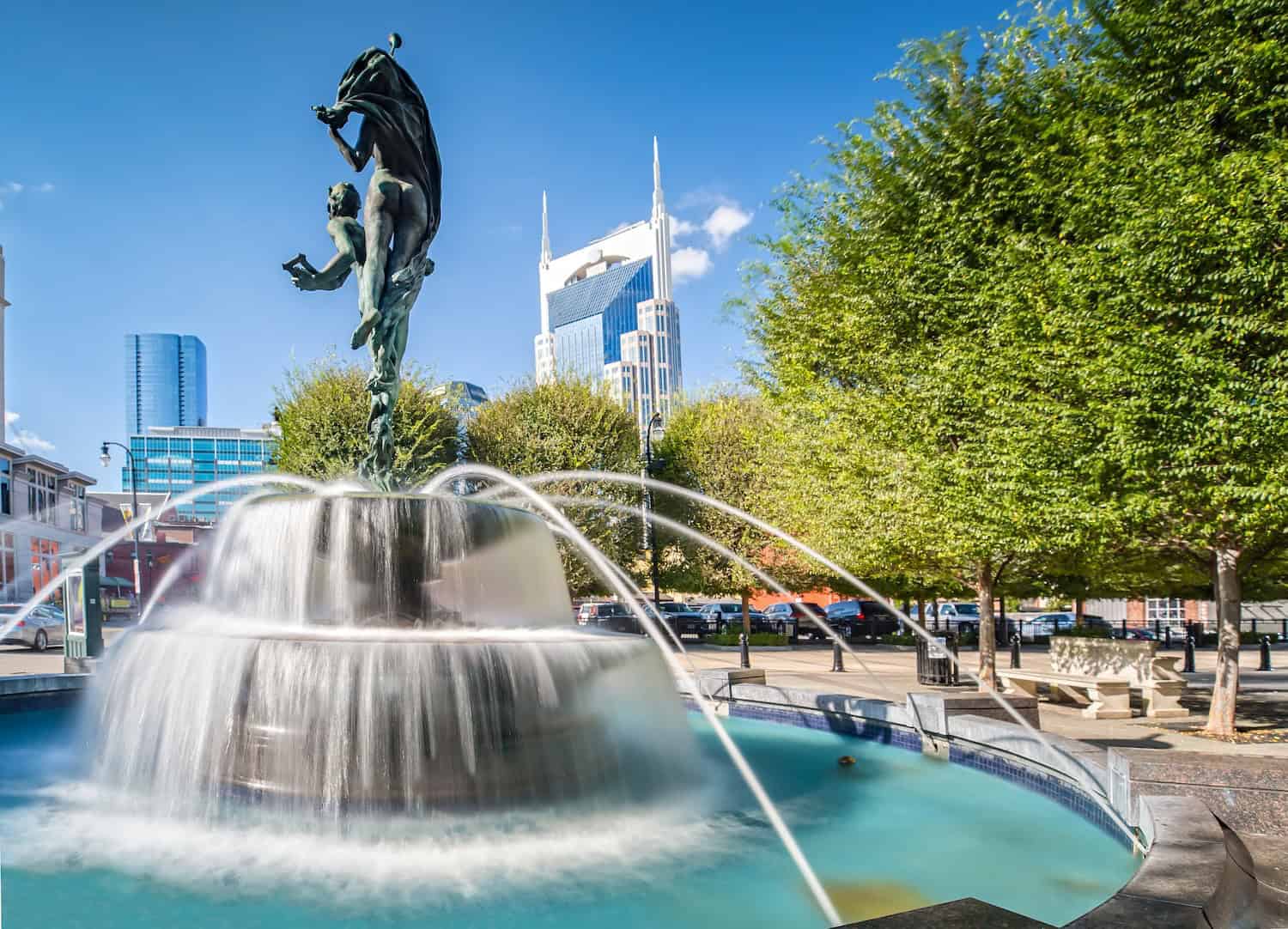
Your initial instinct might be to avoid this area for the sheer amount of tourists and tourist-adjacent amenities that populate Downtown, but there actually is more to the area than the Country Music Hall of Fame and Museum and Honky Tonk Highway. It’s the beating heart of everything Nashville, and you’ll find cultural institutions like the Frist Art Museum and the Tennessee State Museum at the north end of Bicentennial Capitol Mall State Park.
And outside of the vortex of tourists, Downtown has the energy you might expect from the center of a big metro. Condos, lofts, and high-rise apartments offer plenty of opportunities to put all the dining, drinking, and partying options right outside your doorstep. Plus, if you want to escape the urban jungle for a bit, the city’s greenways offer the opportunity to walk, jog, or bike to multiple other spots in the city.
Germantown/Salemtown
- Vibe: Historic with upscale dining
- Location: North of Downtown, stretching from Rosa Parks Boulevard east to the Cumberland River
- Best for: Professionals and foodies seeking walkable historic charm
- Median home sales price: $712,000 Germantown / $752,000 Salemtown (Zillow)
- Average rent: $2,270/month Germantown / $2,231/month Salemtown
Germantown sits along the north edge of Downtown, stretching from Rosa Parks Boulevard to the east-lying Cumberland River.The western side of the neighborhood is where you’ll find lots of single-family homes, brick sidewalks, some of Nashville’s best dining, and, appropriately for a place called Germantown, plenty of great beer.
To the east, development projects are underway, transforming the banks of the river into a region of mixed-use living that’s starting to rival the variety and glitz of Downtown.Between the two areas, you’ll absolutely find something that fits you and your lifestyle. And yes, Nashville’s Oktoberfest takes place right here!
Salemtown, just across Hume Street to the northwest, is essentially an extension of the western part of Germantown, with slightly larger homes, yards, and streets. With a proud reputation for having a tight communal feel, Salemtown remains Germantown’s quieter, more laid-back twin. So, if you’re interested in a more suburban or laid-back vibe to the bustling and busy feel of other areas, then Salemtown is definitely worth a look.
The Gulch
- Vibe: Trendy and cosmopolitan
- Location: South of Downtown, between I-40 and Broadway
- Best for: Young professionals seeking modern urban living
- Median home sales price: $890,000 (Zillow)
- Average rent: $2,650/month
The name of this neighborhood may not elicit images of urban color and cosmopolitan flair, but that’s exactly what you’ll find here.A low-lying expanse of land that was once home to Nashville’s railroad yard, The Gulch is nowone of Music Town’s trendiest places to live, with boutique to brand-name shopping, great dining options, and some Instagrammable murals scattered around this charming area.
The allure of the neighborhood has not escaped the attention of tourists, either. This side of the tracks gets its fair share of attention and foot traffic coming from Downtown, but The Gulch remains a magnet for the young, energetic crowd and is a great place to live.
Midtown
- Vibe: College town energy
- Location: West of Downtown, centered around Vanderbilt University and Music Row
- Best for: Students, young professionals, and music industry workers
- Median home sales price: $632,000 (Zillow)
- Average rent: $2,000/month
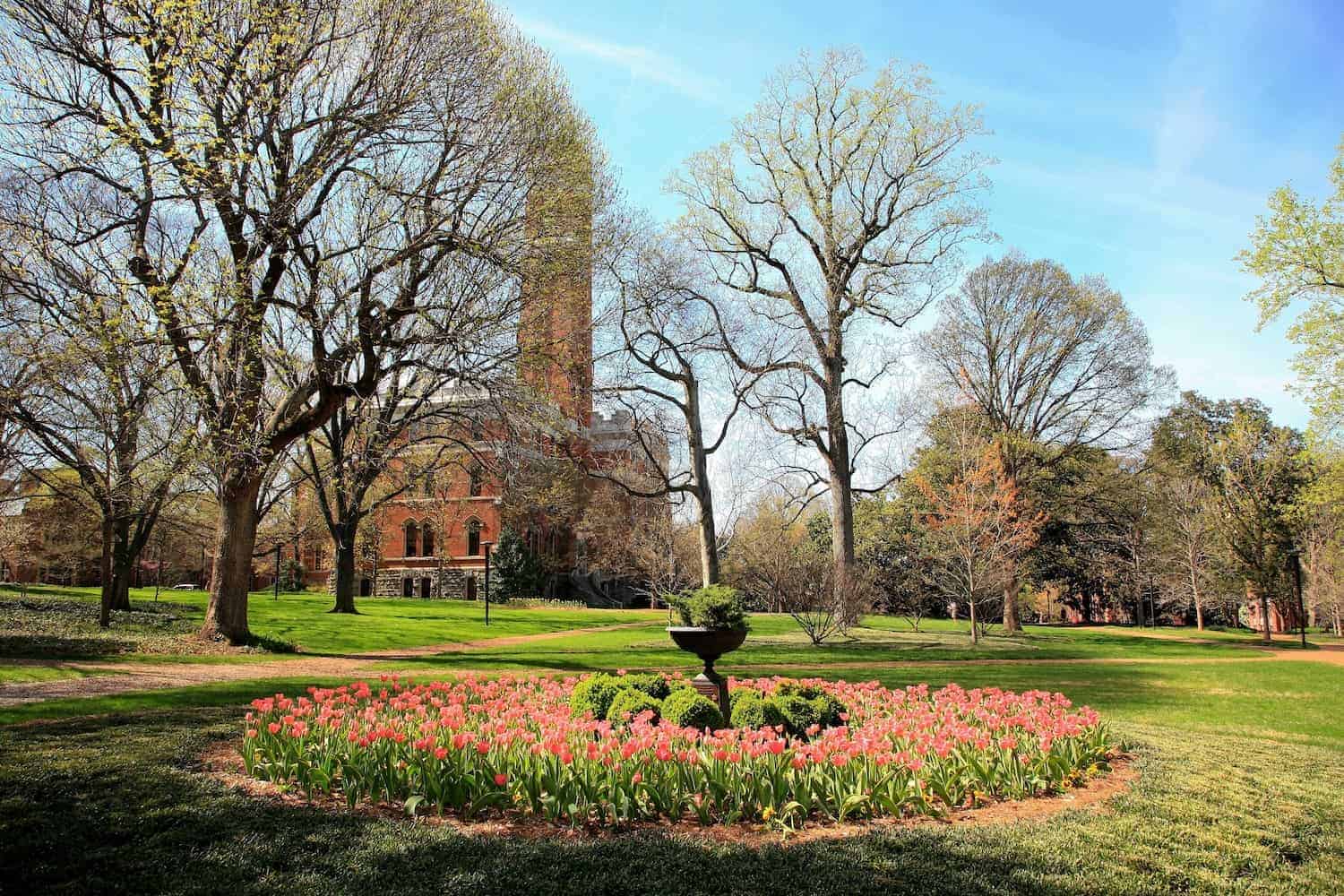
This neighborhood has a great food and drink scene, along with an energy that’s all about the people who live here.Namely: college students. Vanderbilt University (along with its Medical Center) lies in this neighborhood and is one big aspect of the Midtown vibe. The musicians who congregate around Music Row on the eastern side add more local flavor, and Centennial Park brings out the recreation and relaxation lover in everyone.
With all that’s crammed into Midtown,it’s no surprise there aren’t a lot of single-family homes available. There are, however, plenty of apartments and condos. And while Midtown leaves little to be desired, Downtown is just a short bus ride away.
East Nashville/Five Points
- Vibe: Eclectic and artsy
- Location: East of the Cumberland River, centered around the five-way intersection where Main Street becomes Gallatin Avenue
- Best for: Families, creatives, and those seeking a neighborhood feel
- Median home sales price: $578,000 Five Points / $572,000 East Nashville (Zillow)
- Average rent: $2,100/month in Five Points / $1,800/month in East Nashville
As the name suggests, this area is centered around the five-way intersection that sits off where Main Street curves north and turns into Gallatin Avenue. Here you’ll find many single-family homes, giving the neighborhood a more suburban feel. It’s also a great place for families or those looking to start one. But, if you long for that busy metro vibe once in a while, Five Points is still quite close to Downtown.
Speaking of interesting neighborhoods just next door, Five Points is actually part of the broader East Nashville district, which includes Shelby Hills, home to the delightfully green and faculty-rich Shelby Park, and Capitol View for even quieter streets a little further north.
Sylvan Park
- Vibe: Quiet, walkable, community-focused
- Location: West Nashville, just west of Midtown and Vanderbilt
- Best for: Families, professionals, and those wanting a neighborhood feel close to downtown
- Median home sales price: $650,000 (Zillow)
- Average rent: $1,900/month
Nestled in West Nashville, Sylvan Park offers a more laid-back alternative to Nashville’s busier urban centers. One of the neighborhood’s standout features is McCabe Greenway & Golf Course, a public green space with walking trails and a golf course woven directly into the community. It’s a favorite for runners, dog walkers, and families.
Sylvan Park also stands out with a big draw when it comes to food. It’s home to destination dining spots like Answer Restaurant, a nationally recognized restaurant known for its rotating tasting menus. With easy access to Downtown and nearby Warner Parks, Sylvan Park offers a rare balance of neighborhood charm, outdoor space, and city access, all without the high-rise hustle.
Moving Costs and Logistics in Nashville
Where you choose to live in Nashville directly impacts your moving experience and costs. Neighborhoods with narrow streets, limited parking, or high-rise buildings can add time and complexity to your move, which often translates to higher labor costs.
Downtown and The Gulch, for example, feature condos and apartment buildings with elevators, parking restrictions, and strict building access rules. Many buildings require you to reserve freight elevators in advance and limit moving hours to weekdays. If you’re moving into a high-rise, expect additional charges for stairs or elevator usage, and factor in extra time for loading and unloading in tight urban spaces.
“…[The] typical home value in Nashville is approximately $428,500 as of early 2026. Homes typically sell in about 45 days, reflecting a steady demand despite some cooling from peak prices in 2022.”
In contrast, neighborhoods like East Nashville, Germantown, and Salemtown have more single-family homes with driveways and street parking, making moves more straightforward. However, some historic homes in these areas have narrow staircases, which can complicate furniture placement and require more careful planning.
Neighborhood layout can also impact crew size and equipment needs. Longer carries from street to unit may require extra movers or specialized dollies, while buildings without loading docks can slow the process. Parking enforcement is another factor. Tickets or tow risks in busy areas can cause delays that cost you time and money.
How to Choose the Right Mover for Your Nashville Move
Finding reliable movers in Nashville starts with understanding your move type and the unique challenges your neighborhood presents. Local moves differ significantly from long-distance relocations, both in logistics and pricing. Local movers typically charge by the hour, while long-distance moves are priced based on weight and distance.
Neighborhood-specific challenges also matter when selecting a mover. If you’re moving into a Downtown high-rise, you’ll want movers experienced with building access requirements, freight elevator scheduling, and tight parking situations. For moves in East Nashville or Germantown, where historic homes often have narrow doorways and steep staircases, experienced movers who know how to navigate these obstacles are essential.
HireAHelper makes it easy to find and compare movers across the country. For Nashville specifically, check out our Nashville movers page to browse top-rated local companies with verified reviews and transparent pricing.
Here are two highly rated Nashville movers to consider:
- All-Star Movers consistently earns high marks for professionalism and efficiency. Their crews are trained to handle everything from apartment moves to full-house relocations, and they’re familiar with the unique challenges of Nashville’s diverse neighborhoods.
- All Around Movers offers flexible labor-only services, perfect for those who need help loading or unloading a rental truck or moving container. They are consistently praised for their expertise, but overwhelmingly for their speed and efficiency. Their model works well for budget-conscious movers who want professional assistance without paying for full-service transport.
Before booking any mover, understand how HireAHelper works, review our guide on how to choose a good moving company, and check out who the best moving companies are. Also, don’t forget to ask the most important questions before hiring a moving company to help with your move.
FAQs About Nashville Neighborhoods
How many neighborhoods are in Nashville?
The Metro Nashville government recognizes around 26 major planning districts, but within those districts are many smaller, unofficial neighborhoods with their own distinct identities. When you include sub-neighborhoods and community areas, the number can exceed 50.
What are the major Nashville neighborhoods vs smaller areas?
Major Nashville neighborhoods include Downtown, The Gulch, Midtown, Germantown, East Nashville, and 12 South. These areas are well-known, heavily populated, and offer a wide range of amenities. Smaller and less-known neighborhoods include Salemtown, Shelby Hills, Capitol View, Sylvan Park, and Inglewood. These areas tend to be quieter, more residential, and often offer a tighter community feel.
What neighborhoods in Nashville are walkable?
Downtown, The Gulch, Germantown, and Midtown are Nashville’s most walkable neighborhoods. All four areas score well in walkability, offering easy access to restaurants, shops, parks, and public transit. East Nashville’s Five Points area is also relatively walkable, especially along main corridors like Gallatin Avenue and Main Street.
What neighborhoods in Nashville have good nightlife?
Downtown is the epicenter of Nashville’s nightlife, with Honky Tonk Highway, live music venues, and late-night bars. The Gulch offers a more upscale nightlife scene with rooftop bars and trendy cocktail lounges. Midtown, particularly around Elliston Place and Demonbreun Street, attracts a younger crowd with college bars and live music. East Nashville has a more laid-back nightlife vibe with neighborhood bars, breweries, and intimate music venues.
What neighborhoods in Nashville have parks?
Centennial Park is located in Midtown and features the iconic Parthenon replica, walking trails, and open green space. Shelby Park in East Nashville offers 361 acres of trails, a golf course, and a community center. Riverfront Park sits along the Cumberland River in Downtown, providing scenic views and event space, while Germantown and Salemtown residents enjoy easy access to several smaller neighborhood parks and greenways that connect to the broader Nashville trail system.
Why Trust HireAHelper
At HireAHelper, we’ve spent years helping people move across the country, and that experience has given us unique insight into what makes a great neighborhood and a successful relocation. We’ve facilitated hundreds of thousands of moves, connecting people with trusted moving companies in cities like Nashville and beyond.
Our annual Migration Report tracks real-time moving data, showing us where Americans are relocating and why. This firsthand knowledge helps us understand which neighborhoods are growing, what amenities matter most to those on the move, and the general demographic or vibes that go along with the different lifestyles and budgets. When you’re choosing a Nashville neighborhood, your decision impacts your daily commute, the quality of life you’ll have, and your overall satisfaction. We’re here to help you make that choice with confidence.