

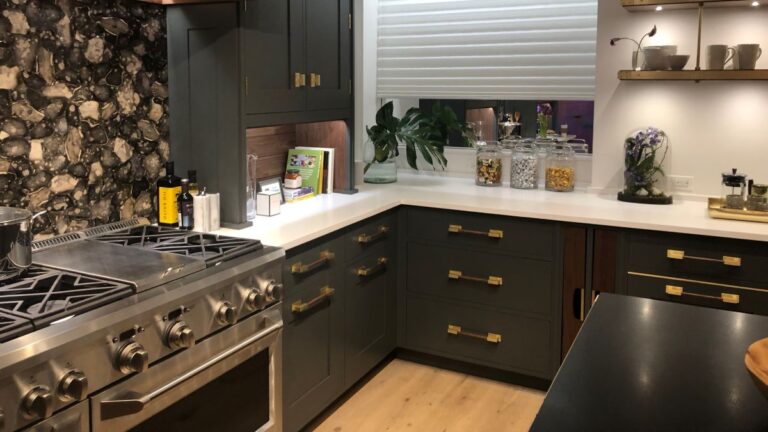


Large cabinet handles no longer define every new kitchen. Featured here, slim brass pulls match the proportions of the dark shaker cabinets instead of dominating them. Across the kitchens in this collection, designers take different approaches, replacing oversized hardware with recessed channels, finger pulls, edge profiles, and compact pulls that blend into the cabinetry.

No single solution fits every cabinet style. Flat slab doors often hide the opening point inside the cabinet edge, while framed and shaker cabinets rely on hardware scaled to the door rather than stretching across it. These kitchens show how cabinet hardware can stay functional without becoming the first thing you notice.
Concealed Finger Pulls Keep the Upper Cabinets Seamless

Tall matte beige wall cabinets open from the bottom edge instead of relying on long pulls across each door. Once closed, the upper run reads as one continuous surface, making the horizontal cabinet layout stand out more than the opening method. Open shelving beneath the cabinets breaks the wall into functional sections without interrupting the clean cabinet fronts.
Glossy brown island cabinets continue the handle-free approach. Nothing projects from the doors, leaving the thick wood countertop and waterfall island as the strongest features in the foreground. Even with three cabinet finishes in the same room, the absence of bulky hardware keeps the composition from feeling busy.
Small Edge Pulls Replace Long Bar Handles

Nearly every cabinet door opens from a discreet edge pull that stays hidden until viewed from the side. Instead of adding another material across the cabinet faces, the opening detail blends into the narrow shadow lines separating each panel. Large slab doors make the beige finish the first thing people notice.
Tall appliance cabinets, lower storage, and the cooking wall follow the same approach, creating one uninterrupted run across the room. Floating shelves beside the hood remain free of decorative brackets, reinforcing the same restrained design language used throughout the cabinetry.
Shadow Lines Become the Cabinet Hardware

Gray slab cabinets rely on narrow reveals between the doors rather than exposed handles. Vertical and horizontal gaps define each cabinet while preserving a flat front across the appliance wall. Built-in ovens disappear into the composition because the surrounding cabinetry follows the same clean geometry.
Glass display cabinets introduce aluminum frames and interior lighting, adding depth without changing the restrained cabinet design. Gray, black glass, white countertops, and walnut accents create contrast through materials instead of decorative hardware.
Aluminum Channels Stretch Across Every Cabinet

Continuous aluminum channels replace individual handles from one cabinet to the next. Instead of reaching for a separate pull on every door, the entire row opens from the same recessed profile, producing long horizontal lines across the cabinet wall.
Natural oak panels interrupt the gray cabinetry at selected locations, marking pantry storage and appliance towers without changing the handle system. Even the island follows the same language, making the recessed channels feel like part of the cabinet construction rather than an added accessory.
Slim Brass Pulls Match the Cabinet Proportions

Dark painted shaker cabinets prove that traditional doors do not require oversized hardware. Narrow brass pulls sit close to the rails and stiles, providing enough grip without covering the door design. Each drawer keeps the same restrained scale, allowing the cabinet fronts to remain the dominant feature.
White countertops, dark stone behind the range, walnut details, and brass shelving create several strong materials in one space. Matching those elements with heavy handles would compete for attention, while the slimmer pulls tie into the brass accents instead.
Narrow Bar Pulls Suit Framed Cabinets

Framed cream cabinets use compact black pulls that follow the width of the rails instead of extending across the doors. Hardware stays proportional, allowing the molding and panel profiles to define the cabinet style instead of large metal pieces.
Glass-front cabinets, open display cubbies around the hood, and brick walls already introduce several textures into the room. Keeping the pulls understated prevents another layer of visual detail from competing with those finishes.
Dark Hardware Almost Disappears Against Blue Paint

Deep blue shaker cabinets create enough contrast that the black pulls blend into the paint instead of standing apart from it. Long drawer runs beneath the windows maintain a consistent rhythm while the hardware remains secondary to the cabinet color.
Large windows, white countertops, and warm wood flooring brighten the space, allowing the darker cabinetry to anchor the room without appearing heavy. Hardware supports that balance instead of becoming another decorative element.
Decorative Cabinet Frames Hide the Pulls

Raised panel doors already contain decorative routing around every opening, leaving little need for oversized hardware. Small metal pulls sit close to the frame, preserving the cabinet detailing rather than covering it.
Black stone across the backsplash and countertop provides the strongest visual contrast in the kitchen. White cabinetry frames that darker surface, while restrained hardware prevents the lower cabinets from becoming crowded with competing details.
Brass Shelving Shares Attention With the Hardware

Brass pulls repeat the finish used on the suspended shelving above the sink, turning the hardware into part of a coordinated material palette instead of a separate design element. Because every pull stays narrow, the gray oak grain remains visible across the cabinet fronts.
Tall pantry cabinets frame the workspace while open brass shelves replace upper cabinets above the sink. Cabinet hardware works with those shelves rather than drawing attention away from them, creating one continuous brass accent across the wall.
Integrated Brass Rails Become Part of the Island

Slim brass rails built into the island edge replace bulky bar handles while extending the metal finish across the seating area. Matching brass faucet, cabinet accents, and toe-kick lighting continue the same detail without interrupting the flat cabinet fronts.
Gold-toned upper cabinets reflect light above the work surface, while tall dark glass storage adds depth on the opposite side. Cabinet doors remain almost uninterrupted, allowing the stone island, lighting, and metal finishes to carry the visual weight instead of oversized hardware.
Statement Hardware Fits Traditional Cabinet Doors

Bright red double ovens and a copper range hood dominate this kitchen, leaving the cabinet hardware to support the design instead of competing with it. Green shaker cabinets use compact brass pulls and knobs sized to each door and drawer, proving that traditional cabinetry benefits more from proportional hardware than oversized bars stretching across every panel.
Cabinet color does much of the visual work. Green paint, brass accents, stainless steel appliances, and the bold red ovens already create strong contrast. Slim pulls keep the cabinet fronts balanced, allowing the appliances to remain the focal point while every door stays comfortable to open.
Horizontal Pulls Match the Cabinet Layout

Walnut cabinets rely on long, thin pulls that follow the direction of each drawer and door instead of drawing attention across the fronts. Full-height pantry cabinets receive vertical handles, while wide drawers and lower storage use horizontal pulls, reinforcing the cabinet proportions instead of disrupting them.
Dark walnut grain covers nearly every cabinet surface, paired with black stone countertops and a matching island. Open shelving replaces some upper cabinets, reducing the amount of hardware needed while keeping frequently used dishes within reach.
Long Pulls Echo the Horizontal Design

Large slab cabinets use slim linear pulls that extend across much of each drawer without overwhelming the glossy finish. Handle placement follows the strong horizontal layout created by the backsplash lighting, floating hood, and stacked cabinetry.
Cream cabinet fronts contrast with black walls, black stone, and walnut accents built into the island and ceiling hood. Because every pull shares the same length and finish, the kitchen reads as one coordinated composition rather than a collection of individual cabinets.
Small Knobs Suit Compact Cabinet Doors

Glass display cabinets use round metal knobs instead of long pulls, fitting the narrow frame construction and smaller doors. Lower cabinets continue the restrained approach with compact knobs that leave the detailed moldings visible from edge to edge.
Classic trim surrounds every cabinet, extending to the crown molding above the glass doors. Marble countertops, stone backsplash, and painted cabinetry already provide texture, making oversized hardware unnecessary in a space built around traditional detailing.
Open Storage Reduces the Need for Hardware

Island storage replaces several cabinet doors with open cubbies, eliminating hardware across the center section while keeping bowls and serving pieces visible. Shaker doors on each side receive curved dark pulls that complement the cabinet style without dominating it.
Soft sage paint pairs with butcher block counters and white perimeter cabinets, mixing painted finishes with natural wood. Because part of the island remains open, fewer handles appear in the overall design, giving the furniture-style island a lighter appearance.
Floating Shelves Replace More Cabinet Doors

Upper cabinets stop short of the sink wall, making room for open shelving that stores mugs and everyday dishes without another row of cabinet doors. Remaining base cabinets rely on integrated edge pulls that stay hidden beneath the countertop line.
Oak-look lower cabinets introduce wood grain while the upper cabinets remain smooth taupe slabs. White countertops, under-cabinet lighting, and open shelves create contrast through materials and layout instead of decorative hardware.
Dark Wood Cabinets Pair With Slim Modern Pulls

Rich walnut cabinetry features narrow rectangular pulls that sit close to the rails and stiles, leaving the raised door profiles unobstructed. Hardware follows the cabinet geometry rather than becoming another decorative layer across the wood.
Olive green horizontal backsplash panels introduce unexpected color beneath the upper cabinets, while heavily veined natural stone wraps the countertops. Glass inserts and carved wood details already supply visual interest, making restrained hardware the better choice.
Recessed Aluminum Rails Replace Separate Handles

Lower cabinets open from continuous aluminum rails integrated into the cabinet construction rather than individual handles mounted on each door. Upper cabinets remain completely free of hardware, producing uninterrupted slab fronts around the range hood.
Taupe cabinet doors combine with stainless steel trim and a commercial-style range, giving the kitchen an industrial influence without making the cabinetry feel heavy. Integrated rails provide the grip needed for daily use while preserving the clean lines that define the entire composition.