

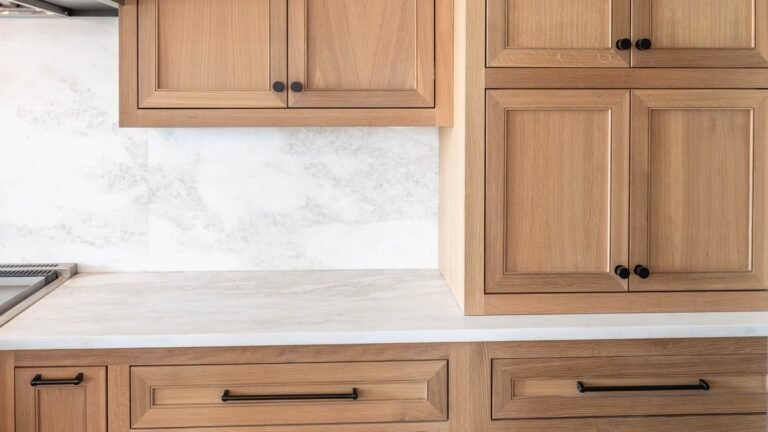


Kitchen cabinets are doing more than storing dishes, cookware, and pantry staples. New designs are building dedicated spots for paper towels, spices, produce, trash bins, small appliances, and even pet bowls right into the cabinets.

Narrow gaps beside the range become pull-outs, deep drawers hide everyday clutter, and cabinet doors conceal entire work zones. Spaces that once went unused now have a specific job.
These eight ideas show how far kitchen storage has moved beyond standard shelves and drawers, keeping more everyday items off the counters, floors, and out of sight.
Narrow Pull-Out Cabinets Are Replacing Dead Space Beside the Range

Narrow spaces beside a range no longer have to become filler panels or awkward cabinets. Slim pull-outs turn those gaps into full-depth storage, keeping cooking essentials close to the stove without taking space from larger drawers.
Storage is only part of the range wall. Glossy white subway tile switches to a herringbone layout behind the stove, creating a focal point without introducing another color or material. A brass pot filler breaks up the white backsplash and connects with the warm cabinet hardware.
Together, these details show how the cooking zone has become one of the most planned parts of the kitchen. Pull-out storage uses overlooked inches, the pot filler adds function above the range, and the backsplash gives the area its own visual identity without making the kitchen feel busy.
These Ventilated Island Drawers Keep Potatoes and Onions Out of Sight

Produce storage is becoming part of the kitchen cabinetry itself. These island drawers use brass mesh across the fronts and bottoms, creating airflow around potatoes and onions while keeping them away from light on an open counter.
Ventilation matters for produce stored outside the refrigerator, but the solution does not need to look like a utility bin. Brass mesh turns the drawers into a decorative feature, matching the surrounding hardware while revealing just enough of what sits inside.
It is also an example of kitchen islands taking on more specialized jobs. Instead of filling every section with identical drawers, storage can be designed around specific foods, appliances, cookware, or daily routines.
Double-Layer Drawers Put Spice Storage Right Beside the Range

Spice storage gets two levels behind one cabinet front. A shallow upper tray holds jars at an angle so labels stay visible, while the deeper pull-out underneath stores larger containers and cooking tools.
Positioned beside the range, the drawer keeps seasonings within reach without using countertop space or a wall cabinet. A utensil pull-out on the opposite side creates a cooking zone with tools and spices arranged around the stove.
Built-In Paper Towel Drawers Are Clearing Kitchen Countertops

Paper towel holders are moving off the counter and into dedicated drawers. This island drawer holds the active roll horizontally at the front, leaving it exposed enough to grab and tear a sheet without opening another cabinet.
Dividers behind the holder create storage for replacement rolls, keeping the full supply in one spot. It turns an everyday item that often sits beside the sink into part of the cabinetry without making it harder to reach.
Deep Pull-Out Cabinets Can Hide Trash and Recycling Bins

Trash and recycling no longer need to sit in freestanding bins at the end of a cabinet run. Deep pull-outs can conceal full-size containers behind matching cabinet fronts, keeping them close to a prep counter or sink without leaving them exposed.
Using separate compartments also makes sorting trash and recycling part of the cabinet layout. When closed, the pull-outs look like the rest of the cabinetry and free up floor space that would otherwise go to visible bins.
Built-In Dog Bowl Stations Are Becoming Part of Kitchen Cabinetry

Pet bowls no longer have to occupy a corner of the kitchen floor. This island includes a recessed dog bowl station with its own faucet, low basin, and nearby shelves, putting water and pet supplies into one dedicated zone.
A removable cabinet door can conceal the entire station when it is not needed, allowing the end of the island to return to a finished furniture look. The setup also keeps spills around the bowls contained instead of spreading across the kitchen floor.
Pocket Doors Are Making Entire Kitchen Work Zones Disappear

Pocket doors let more than small appliances disappear behind cabinetry. Here, tall reeded wood doors slide out of the way to reveal an arched work zone with open shelves, stone surfaces, and lower cabinets.
When closed, the doors read as part of the surrounding cabinetry instead of a separate room or workstation. It gives the kitchen two looks: an open display and prep area when in use, then a cleaner wall of cabinetry when everything needs to be hidden.
Appliance Garages Are Moving Up Into Upper Cabinets

Appliance garages are no longer limited to countertop cabinets with roll-up doors. This version uses a pair of upper cabinet doors to hide a dedicated appliance space, with an electrical outlet built into the back so a coffee maker, toaster, or other small appliance can stay plugged in.
Closing the doors removes the appliance from view without giving up counter space below. It also keeps the cabinet wall consistent, making everyday appliances accessible without leaving them on display.
Have you added any specialized storage to your kitchen cabinets that you now couldn’t live without—or one that sounded useful but wasn’t?
All image credits go to @scscabinets.