

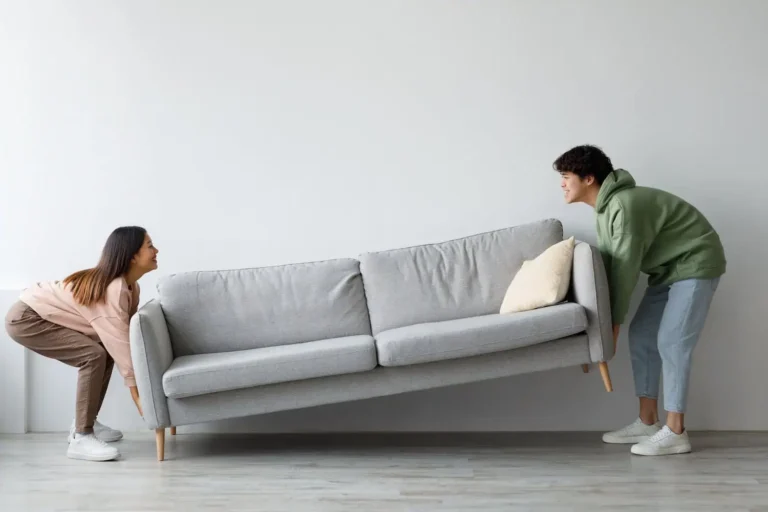

We have all seen that scene in Friends. Ross is screaming “Pivot!” while his new sofa is hopelessly wedged in a stairwell. It is funny on TV, but when you’re the one sweating in a hallway with a heavy piece of furniture stuck between the jambs, it is a lot less hilarious.
But you don’t have to end up stuck. With the right techniques and a little math, you can almost always find a way to make it work. This guide will walk you through exactly how to get a couch through a door, from taking the right measurements to mastering the tilt-and-pivot maneuver.
Why Proper Planning Matters
It is tempting just to pick up the couch and hope for the best, but that is usually how walls get scratched and upholstery gets ripped. Taking five minutes to plan the route now will save you from a world of frustration on moving day.
Start by visualizing the path. You have to consider more than the doors, and look at the hallways leading up to them, any tight corners you have to turn, and obstacles like low-hanging light fixtures or radiators. If you have a clear path and know where the trickier parts are ahead of time, you have a much better shot at maneuvering the furniture without damaging it.
“ If the couch is exceptionally heavy or the path is dangerous (like a narrow, steep staircase), it is safer to call in professionals.”
You also need to be realistic about your muscle power. Couches are heavy and awkward. If you don’t have a reliable friend (or two) to help you lift, you risk injuring yourself or dropping the piece. If your friends are all busy that weekend, this is a perfect time to find furniture moving help on HireAHelper. You can book strong, highly-rated locals for just the hour or two you need to load or unload the heavy stuff.
Measuring Your Couch and Doorway
Before you lift a single cushion, you need your tape measure. Knowing your couch measurements for moving is the only way to know if it will actually fit.
Start with the basics: length, width, and height. But here is the biggest pro tip: measure the diagonal depth. This is the distance from the top back corner of the frame to the bottom front corner. This number is often smaller than the total upright height of the couch, and it is the key to sliding it through narrow openings.
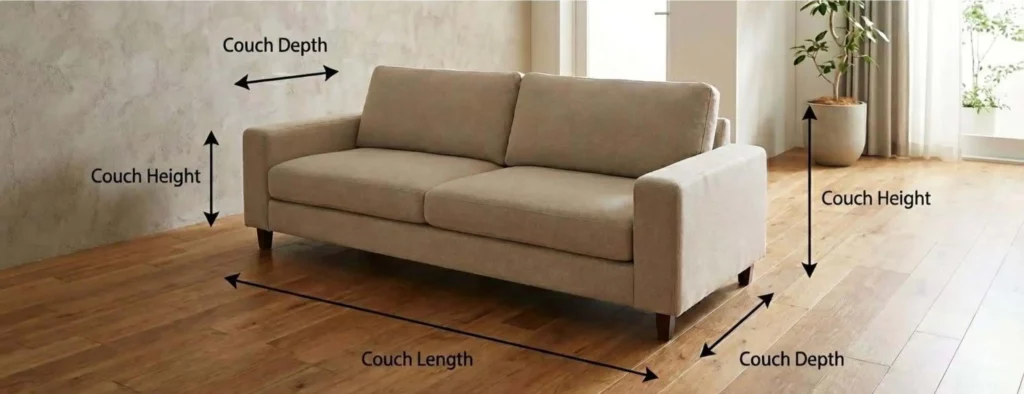
Next, measure the door. You want the width of the actual opening, not just the frame. If the door usually opens only 90 degrees, measuring from the face of the door to the opposite stop is your true clearance. It helps to have a second person hold the tape so you aren’t guessing at the numbers. If your couch height is 34 inches and your door width is 32 inches, don’t worry just yet. There are certain ways around that.
Prepping the Space and Your Couch
You can buy yourself a few extra inches of clearance just by taking things apart. The easiest way is to remove the door itself. You can pop the hinge pins out with a screwdriver and a hammer, and set the door aside. This often gives you an extra inch or two of space, which can make all the difference.
On the couch itself, take off everything you can. Throw pillows and seat cushions should go in a separate box. If the legs screw off, remove them. This makes the couch both lighter and shorter.
If you’re worried about the fabric getting snagged on the door latch, wrap the couch in moving blankets or plastic wrap. It protects the upholstery and helps the fabric slide against the door frame rather than catching on it.
Techniques for Fitting a Couch Through a Door
Once you are prepped, it’s finally time to move. But keep in mind that the goal here isn’t brute force — it is body mechanics. You’ll also want to communicate with your partner constantly. If you hired labor-only movers through HireAHelper, they will likely take the lead here, but if you are DIYing it, make sure you and your helper agree on the plan before you lift.
Tilt-and-Pivot Method
This is the classic move for a reason. If the couch is too wide to walk straight through, you need to angle it. Here are the steps to take:
- Stand the couch on one end so it is vertical (tall).
- Angle it so the seat is facing the door frame.
- Hook the top of the couch through the doorway first.
- Pivot the couch around the door frame, swinging the bottom section through as you rotate it.
This technique uses the “diagonal depth” measurement we talked about earlier. It allows a 36-inch-deep couch to slip through a 30-inch door because you use the sofa’s V-shape to curl around the jamb. You definitely need two people for this — one to guide the top and one to steer the bottom.

Disassembly Approach
If the tilt-and-pivot fails, you might need to disassemble the couch. Many modern sofas have backs or arms that unbolt, so check underneath the dust cover or between the back cushions for bolts or levers.
If you can remove the back panel or the arms, you’ve turned one giant, unmovable object into three or four manageable pieces. Just make sure you keep all the screws and bolts in a labeled bag taped to one of the pieces so you don’t lose them during the move.
Benefits of DIY Couch Moving
Moving the couch yourself is definitely the most budget-friendly option. You save money by not hiring a full-service moving company, and you have the flexibility to do it on your own schedule. This approach is often the best-case scenario when the logistics are simple — for example, if you live on the first floor, have a straight path to the truck, and have a couple of friends or family members willing to work for pizza. It also makes a lot of sense if you are only moving a single piece of furniture rather than a whole house full of boxes.
When DIY May Fall Short
Sometimes, no amount of pivoting is going to work. If you have an antique sofa with a solid wood frame that doesn’t come apart, or a hallway with a sharp 90-degree turn immediately after the door, you might be stuck. Other challenges can include walk-up apartments or old buildings where the elevators and hallways are simply too small.
DIY moves also come with risks. Back injuries are common, and scratching up the walls of a rental can cost you your security deposit. If the couch is exceptionally heavy or the path is dangerous (like a narrow, steep staircase), it is safer to call in professionals. Labor-only movers have the equipment and the experience to handle tight squeezes without damaging your home or their backs.
Comparing DIY vs. Labor-Only Movers
It helps to see your options side by side.
- DIY: Cheapest option, total control over schedule, high physical effort, higher risk of damage/injury.
- Labor-Only Movers: Moderate cost, professional expertise, zero physical effort for you, lower risk of damage.
If you are just moving a loveseat into a first-floor apartment, DIY is great. If you are trying to move a couch through a doorway on the third floor of a walk-up, the extra cost for helpers is usually worth every penny.
Final Thoughts on Fitting Your Couch Through Any Door
Most of the time, if you think a couch won’t fit, you just haven’t found the right angle yet. By measuring carefully, removing legs and doors, and using the tilt-and-pivot method, you can fit furniture through door frames that look impossibly small.
Don’t force it. If you feel resistance, stop and reassess. And remember, if you get stuck, you can always book a couple of strong helpers on HireAHelper to save the day.
Frequently Asked Questions
Will every couch fit through a standard door?
Most will. Standard interior doors are usually 30 to 32 inches wide. Most couches are deeper than that, but because they have soft backs and angled frames, you can usually manipulate them through. The exception is often oversized overstuffed sofas or custom pieces with rigid frames that exceed the door’s height and width.
What tools do I need to remove couch legs or hardware?
You will need a Phillips head and a flathead screwdriver, an adjustable wrench, a set of Allen keys (hex keys), and a rubber mallet. The screwdrivers and Allen keys are essential for removing legs and hardware from the couch frame. The adjustable wrench handles any bolts, and the rubber mallet is perfect for gently tapping the hinge pins out of the door if you need to remove it for extra clearance.
Can I remove the door frame instead of the door?
No. Or at least, you shouldn’t. Removing the actual door frame (the trim and jamb) is a much bigger construction project that risks damaging the drywall. Only remove the trim (casing) if you are absolutely desperate for that extra half-inch and are comfortable making minor carpentry repairs afterwards. It’s much better to try removing the door first.
How much does hiring labor-only movers cost?
The cost depends on where you live and how many helpers you need. Generally, you book by the hour. On HireAHelper, you can compare upfront quotes from different local movers, so you know exactly what you will pay before you book. It is usually surprisingly affordable compared to full-service movers.
What if my couch still won’t fit?
If you have tried everything and it won’t budge, you have a few options. You can hire a professional furniture disassembly service, where they actually take the upholstery off and rebuild it inside your new home. You can look for an alternative entry point, like a large window or sliding patio door. Or, unfortunately, you might have to sell it and buy a modular sofa that comes in boxes. If you need to lift the couch over a balcony or squeeze it through a second-story window, check HireAHelper for specialized movers who can handle the complexities.