

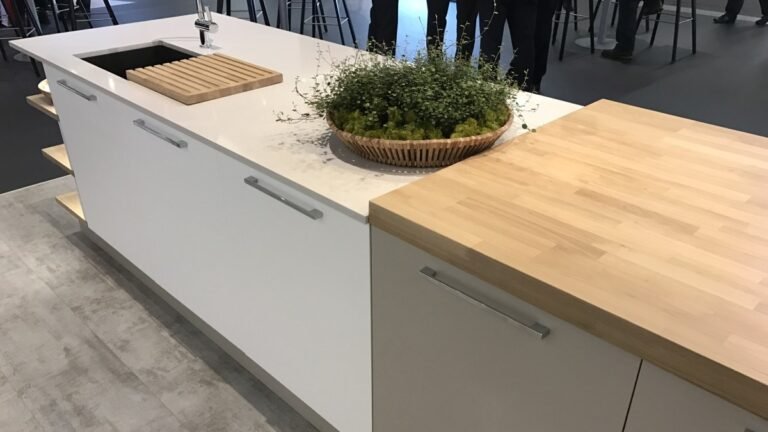


Most kitchen islands are designed as solid pieces of cabinetry: countertop above, doors and panels below. That works for storage, but on a large island, the base can become one of the biggest visual blocks in the room.
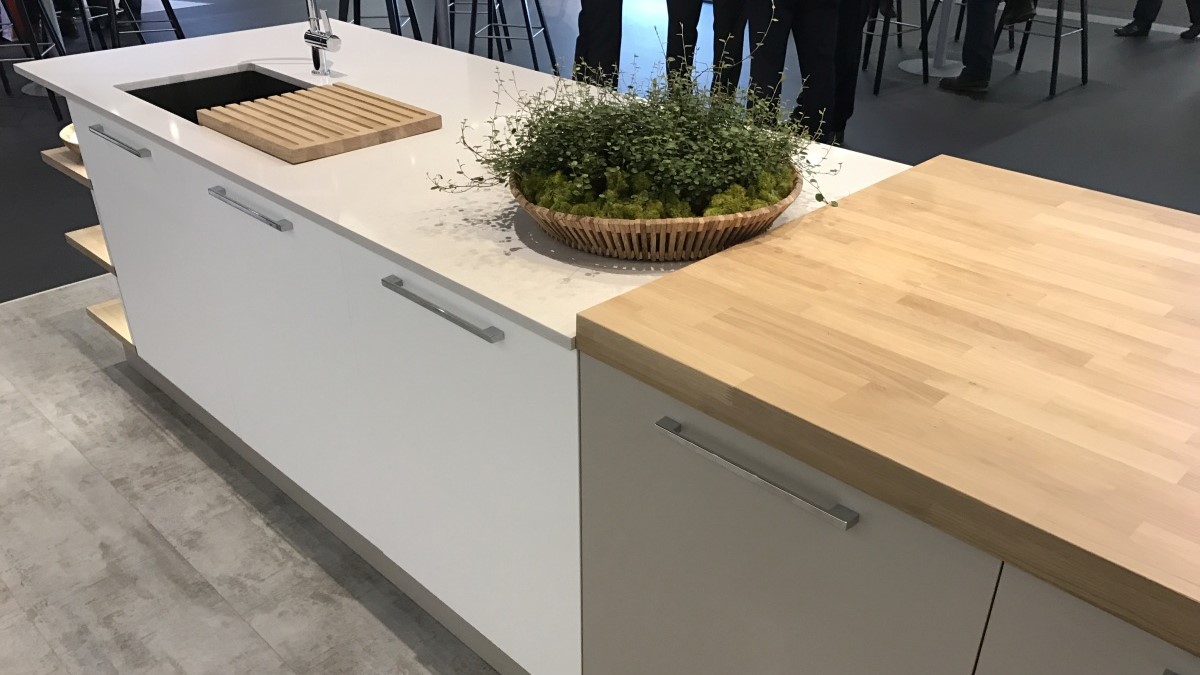
This kitchen keeps the size, sink, and work surface, but changes what happens underneath. Instead of adding another stretch of cabinetry to look at, the base picks up the floor, furniture, and colors around it.
From some angles, the effect is convincing enough that the white countertop appears to float across the room. The island is still there, but one unexpected material makes much of its visual weight disappear.
Mirror panels make the floor appear to continue under the island
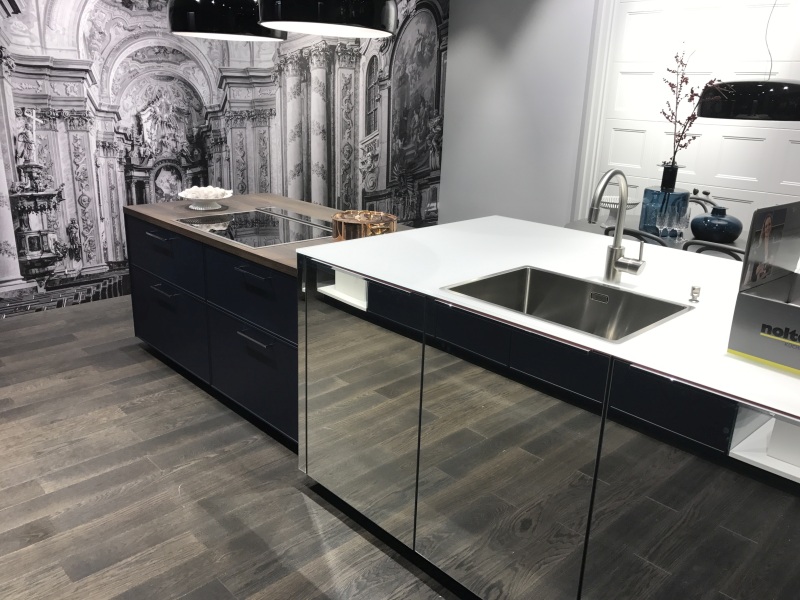
The white countertop looks as if it extends over an open section when viewed from the sink. Look closer and vertical seams reveal the actual base: large mirror panels.
Those panels pick up the dark wood floor, nearby cabinets, and furniture. Instead of seeing another row of dark cabinetry beneath the counter, your eye sees a reflection of the room.
The effect changes from the other side
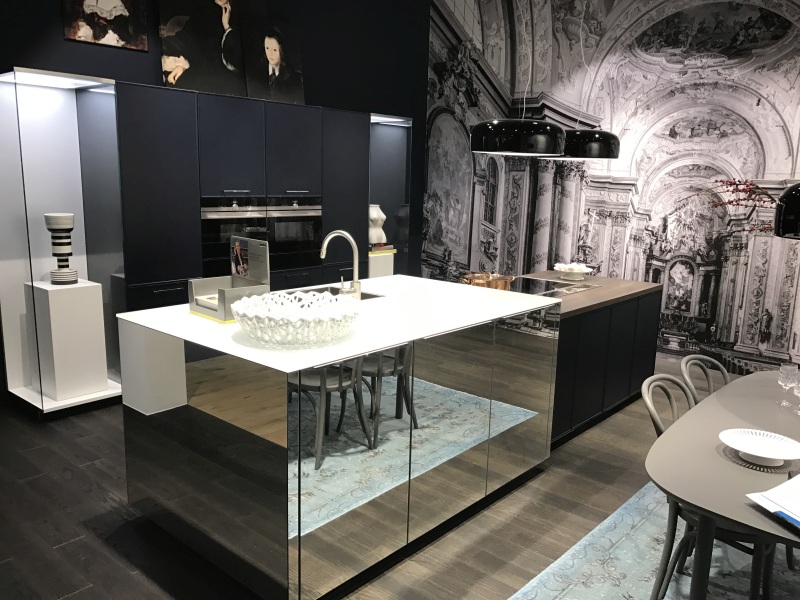
From this angle, the island reflects the dining chairs, blue rug, and wood flooring. Each panel shows a different section of the room, so the base never reads as one flat block.
The thin dark strip at floor level and seams between panels give away the construction. Without them, parts of the island are easy to mistake for open space.
A wide island loses much of its visual weight
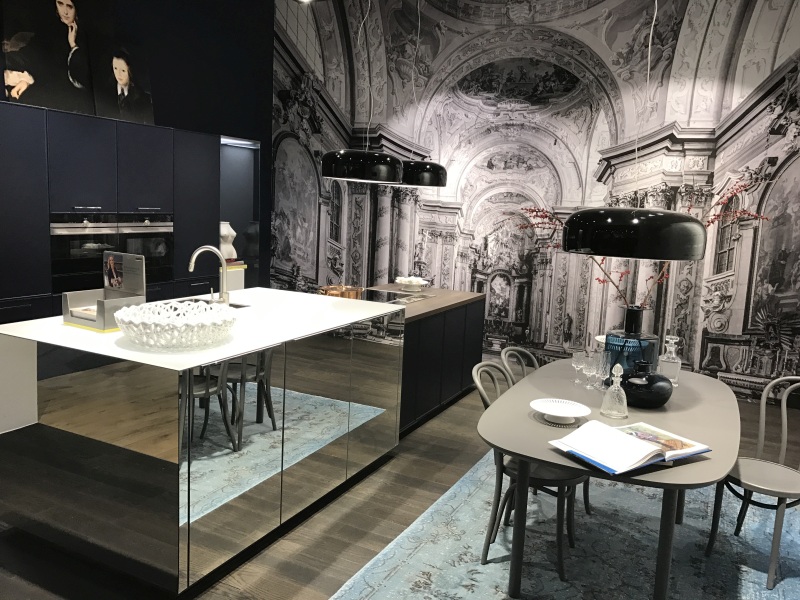
The full-room view shows how large the island is. It sits between the kitchen and dining table, with enough depth for the sink and a broad white work surface.
Covering that same footprint with dark panels would create another dark mass beside the tall black cabinets. Mirrors break up the base by repeating the flooring and dining area across its surface.
From farther away, the countertop appears to float
Distance strengthens the illusion. The reflected wood floor lines up with the real floor around the island, while the white countertop remains easy to see above it.
The island has not become smaller, and none of its footprint has been removed. What changes is how much of the base the eye registers when entering the space.
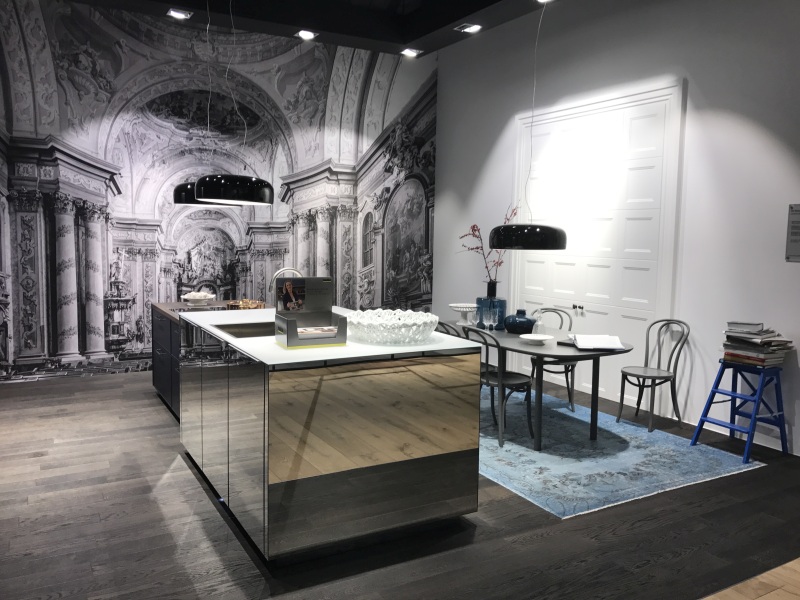
Mirrors usually make a room feel larger from the walls. This kitchen puts that effect at floor level, where reflections of the wood flooring, rug, chairs, and cabinets keep changing as you move around the island.
Would you cover a kitchen island in mirrors, or would the reflections be too much for your space?