

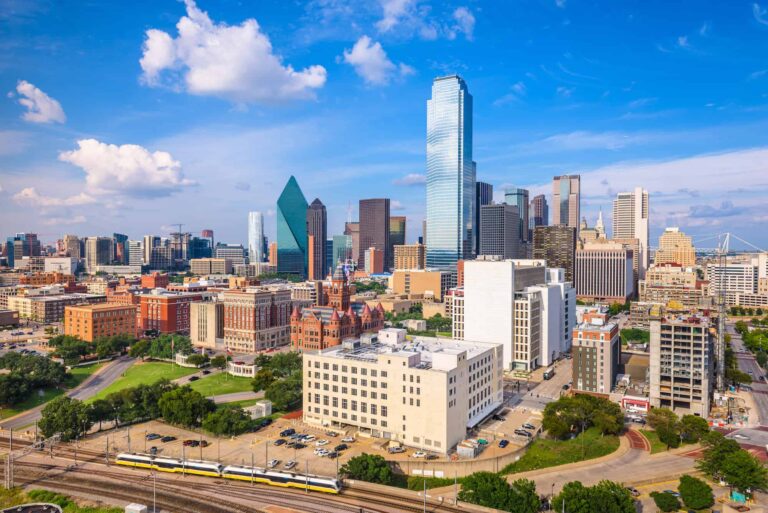

With the city’s steady growth, job opportunities, and lower taxes, Dallas remains one of the most common destinations in the country. And within the city, Uptown, Deep Ellum, Lake Highlands, Bishop Arts District, and the Design District are among the most popular neighborhoods in Dallas today.
But the “best” neighborhood depends on your lifestyle and budget. It’s also based on how you feel about traffic, walkability, schools, and nightlife. Choosing the right neighborhood really can change how much you enjoy living here.
This guide will help you understand Dallas neighborhoods, real estate expectations, moving costs, and how to choose the right mover once you decide where to live.
Should You Move to Dallas?

Dallas continues to attract new residents from all over the United States, and the city offers a mix of Southern culture, big-city opportunity, and suburban comfort that appeals to many life stages.
Dallas is a great fit for people who want access to jobs, entertainment, and big-city amenities without coastal price tags. It appeals to young professionals drawn to nightlife and career growth in major industries like healthcare and energy, families looking for more space and parks, remote workers wanting lower housing costs, and frequent travelers who appreciate being near a major international airport. It also suits anyone who enjoys variety, from food and sports to museums, churches, and year-round events.
But Dallas isn’t everyone’s dream fit. It’s a city with higher average temperatures and extremely hot summers. The city is also quite spread out. Even two addresses in Dallas can be 45 minutes apart, so owning a car is practically a necessity. Public transit exists, but doesn’t cover everything.
In short, if you want room to spread out, job options, and a variety of neighborhoods to match your stage of life, Dallas makes sense. But if you want a very compact, walk-everywhere city, you may prefer a different metro.
Real Estate in Dallas, TX
The Dallas housing market today is stable but competitive in pockets, with pricing that reflects both the city’s size and its diverse neighborhood types. According to Zillow’s Home Values Index, the typical home value in Dallas is about $302,721, and that figure combines single-family homes, condos, and townhomes across a wide range of communities.
“Summer moves usually go more smoothly in the morning, but keep in mind that relocating in the summer or on the weekend tends to cost more due to high demand.”
Across the city, price trends have softened slightly over the past year, with values showing modest declines or minor stability. Buyers entering the Dallas market today will notice that homes are staying on the market a little longer and that there’s somewhat more inventory to choose from compared with the tight conditions of recent years.
Renters also benefit from relatively broad options. The average rent in Dallas sits near $1,950 per month, a figure that has edged down slightly year-over-year and remains a bit lower than the national average. This means that whether you’re looking to buy or rent, Dallas generally offers more choice.
Dallas Neighborhood Map
Dallas isn’t one compact block of skyscrapers. It’s a network of neighborhoods that each feels like a small town inside a larger city. Neighborhoods are usually defined by their location in relation to Downtown, their school districts, and how easily they connect to major roads and highways. Housing style also plays a role. Some areas lean toward condos and townhomes, while others are dominated by single-family homes, lofts, or new developments near shopping and restaurants.
Use the map below to see how these neighborhoods sit in relation to each other and to major landmarks, parks, and highways. If you’re comparing options or planning a move into one of these areas, you can also review crews that work specific ZIP codes through the Dallas movers page on HireAHelper.
Best Neighborhoods in Dallas
Here are five standout Dallas neighborhoods people often consider when relocating. Each offers a different lifestyle, price point, and personality. Your best choice depends on whether you want bars or backyards, music or quiet, walkability or parking space.
Lake Highlands

- Median home sale price: ~$605,000
- Average rent: ~ $2,060/mo
Lake Highlands sits northeast of Downtown Dallas and is known for its family-friendly vibe, mature trees, and a mixture of affordable and upscale homes nestled within walkable pockets. Residents enjoy plentiful parks and easy access to White Rock Lake’s trails and waterfront activities, creating a neighborhood that feels both connected to nature and close to city life. Homes here range from mid-century ranch styles to larger modern builds, with newer redevelopments offering a mix of sizes and layouts.
Lake Highlands also stands out because it offers a rare combination in Dallas: established neighborhoods alongside ongoing redevelopment and new retail. Many residents commute to major employment centers in Richardson and North Dallas via US-75 or I-635, while others choose it for proximity to Presbyterian Hospital or TI. From a moving standpoint, most homes have driveway parking and wider streets, which makes moving trucks easier to stage than in denser urban districts, even when homes sit on curvier, older streets.
Uptown
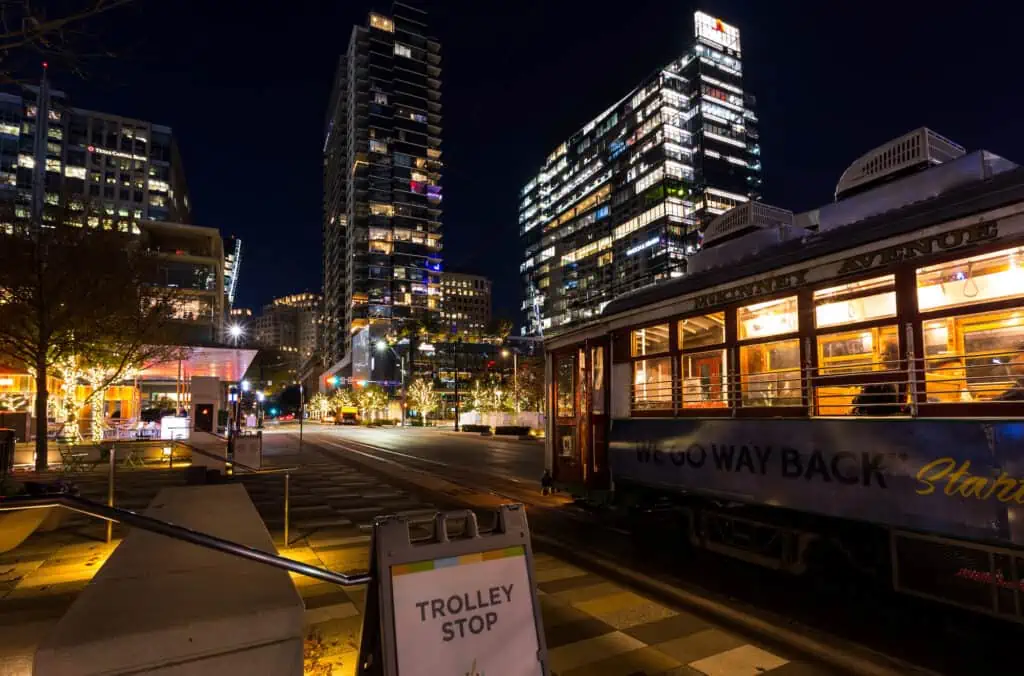
Uptown is often the picture people imagine when they think of modern Dallas living, with a vibrant mix of walkable streets, condos, and apartment communities. Here, dining, nightlife, rooftop bars, and coffee shops are mere steps apart, and residents can often walk or cycle to work and play instead of relying on a car. The McKinney Avenue trolley, nearby to major highways and DART rail, and proximity to the Katy Trail all add to Uptown’s unique transit and lifestyle appeal.
Because Uptown is so central and walkable, housing tends toward condos and mid-rise apartments with modern finishes, and rents command a premium compared with broader Dallas.
Apartment amenities are also a major draw here. Think gyms, rooftop pools, dog parks, concierge services, and attached parking garages. Moves here can involve loading docks and elevators rather than driveways, but most buildings are set up for frequent resident turnover and have clear procedures in place.
Deep Ellum
Deep Ellum is Dallas’s historic entertainment district, known for live music venues, street art, eclectic restaurants, and a nightlife vibe that no other neighborhood quite matches. Originally a commercial hub for artists and musicians, the area still pulses with creativity, drawing residents who want culture and a social scene as part of their everyday backdrop.
Deep Ellum has gone through several waves of reinvention, and that history is part of its appeal. This renovation also means housing options in the neighborhood are diverse, and range from lofts and condos in converted industrial spaces to modern townhomes. The neighborhood also has quick access to major highways and to Baylor University Medical Center, which attracts medical professionals and students. Because streets are narrower and nightlife is busy on weekends, scheduling moves earlier in the day or mid-week often makes the process smoother.
Bishop Arts District
- Median home sale price: ~$500,000
- Average rent: ~ $2,000–$2,800+/mo
Bishop Arts District offers small-town charm inside the larger Dallas landscape. It features walkable streets, independent boutiques, local coffee shops, and a festival-like vibe that feels distinctly different from more corporate commercial zones. From bungalows to renovated craftsman styles, its historic homes with character sit alongside newer infill construction, giving the area a dynamic mix of old and new.
Commutes into Downtown or the Medical District are also manageable, especially using I-35E or the nearby streetcar connections, which makes it easy to reach central Dallas while still enjoying a slightly quieter, more personalized neighborhood rhythm.
The historic street grid, local businesses, and porch-front homes give Bishop Arts a neighborhood identity that appeals to people who prefer character over high-rise glass. Most homes have alley access or driveway space, which typically makes moving logistics easier than in condo-dense areas.
Design District
- Median home sale price: ~$575,000+
- Average rent: ~ $2,500+/mo
The Dallas Design District blends modern living with industrial heritage, where renovated warehouses house art galleries, furniture showrooms, and high-end eateries that give the area a creative, stylish edge. This neighborhood is ideal for people who want a blend of cutting-edge design and convenience.
The Design District’s location along the Trinity River levee also puts residents near future redevelopment and trail connections planned for the river corridor. Quick access to I-35E, the Tollway, and Woodall Rodgers makes commuting to Uptown, Downtown, Love Field, or the Medical District straightforward.
Many apartment buildings are newer construction, meaning elevators, loading zones, and parking garages are designed to accommodate frequent move-ins. For people who want a modern home close to galleries, showrooms, and destination restaurants, this district checks a lot of boxes.
Moving Costs and Logistics in Dallas
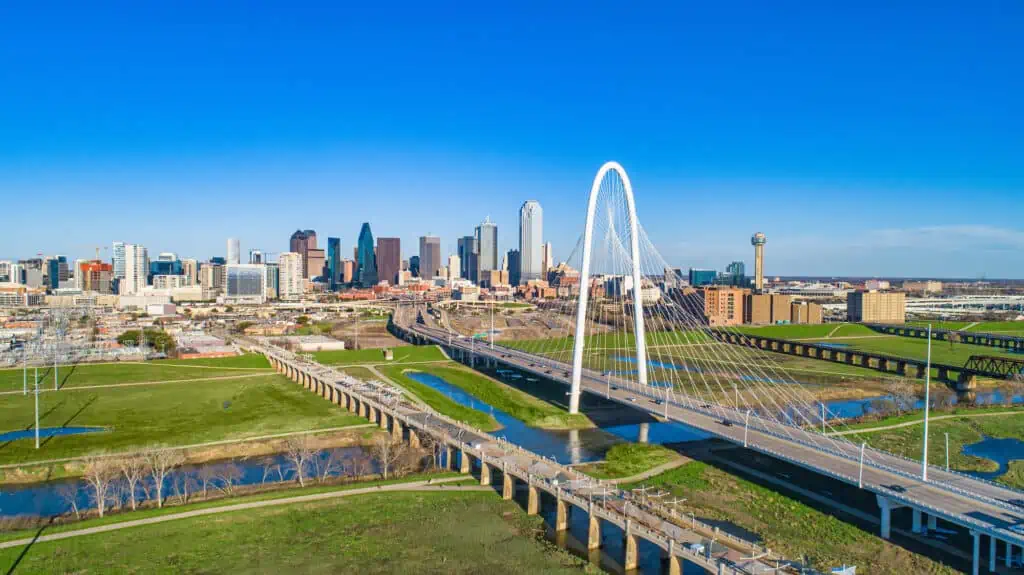
Two people can move the same distance in Dallas and have completely different experiences. In Uptown, Deep Ellum, and parts of the Design District, movers often deal with limited truck parking, restricted loading hours, elevator reservations, and long hallways between units and trucks. In Lake Highlands and similar suburban neighborhoods, crews typically have wider streets, driveway parking, and shorter carrying distances, which makes loading and unloading faster and simpler.
Timing matters too. Dallas rush hour is real, and so is the heat. Both slow things down. Summer moves usually go more smoothly in the morning, but keep in mind that relocating in the summer or on the weekend tends to cost more due to high demand during those times. Suburban areas tend to stay more predictable, while urban cores can change block by block depending on events.
If you want a realistic estimate before booking, try HireAHelper’s moving cost calculator to get a clearer picture of the total price, and pair it with their moving checklist to plan packing, utilities transfers, address changes, and supplies.
How to Choose the Right Mover for Your Dallas Move
Dallas’s mix of high-rise districts, older neighborhoods, suburbs, and tollways means a move can feel entirely different depending on where you’re going, so choosing the right mover matters more than you’d expect.
Start by deciding whether your move is local or long-distance. If you’re staying within the metro area, it’s easy to compare and book local movers or browse Dallas movers specifically to find crews who already know the quirks of the city. If you’re arriving from out of state, look for companies experienced with interstate moves and storage coordination.
“Across the city, price trends have softened slightly over the past year, with values showing modest declines or minor stability. Buyers entering the Dallas market [in 2026] will notice that homes are staying on the market a little longer…”
It also helps to understand the process before you book. You can read exactly how HireAHelper works to see what services movers provide and how scheduling, payment, and reviews fit together. Choosinga good moving company usually means researching the best moving companies to understand licensing, insurance, and service levels.
Neighborhood-specific challenges are where great movers stand out. Before you commit, use this list of important questions to ask movers so you can discuss stairs, fragile items, parking distance, and heat-of-day timing in advance instead of on the spot. When a crew is prepared for your exact building style and traffic patterns, your move is faster, safer, and usually cheaper in the end.
FAQs About Dallas Neighborhoods
Which neighborhoods are most walkable?
Uptown is the most consistently walkable, with restaurants, shops, and trails all within a short distance. Parts of the Bishop Arts District and the Design District also offer strong walkability, but expect pockets that still require short drives.
Where do families tend to live?
Many families choose Lake Highlands, North Dallas, and parts of Far North Dallas for their parks, neighborhood feel, and access to schools and commuter routes. These areas usually have larger yards and quieter streets than urban districts. They also offer easier driveway parking and less nightlife traffic, which many parents prefer.
Do you need a car in Dallas?
In most neighborhoods, yes. A few districts offer genuine walkability, and DART rail serves select corridors, but the city as a whole is spread out. Most residents rely on a car for commuting, errands, and school drop-offs, even if they live near transit.