



Most kitchen renovations involve finding ways to hide the refrigerator behind cabinet doors that match the rest of the kitchen. But what happens when the goal is to make the appliance stand out rather than blend in?
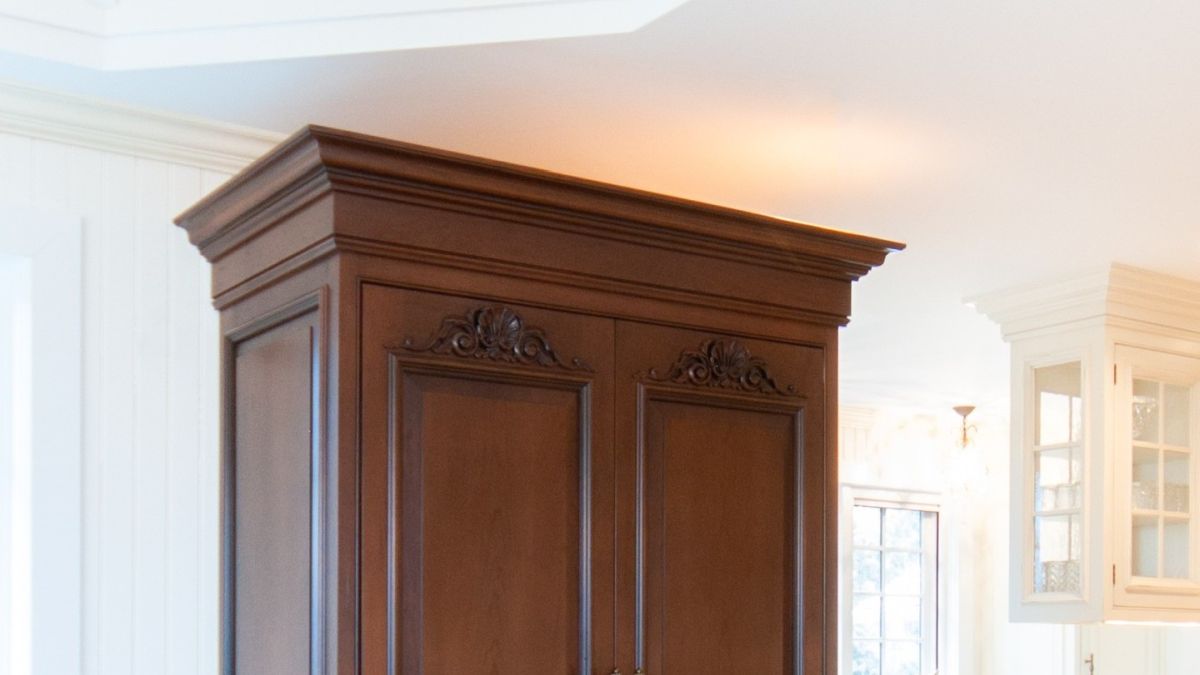
What appears to be an antique wooden armoire in this kitchen is neither a pantry nor a cabinet for dishes. Behind the carved wooden doors is a full-size refrigerator, giving one of the largest kitchen appliances the appearance of a separate piece of furniture.
Shared by Bloomsbury Kitchens, the design brings back a tradition from English kitchens, where freestanding cupboards, dressers and armoires furnished the room long before fitted cabinets became the standard.
Furniture-Style Cabinetry Inspired by Traditional English Kitchens
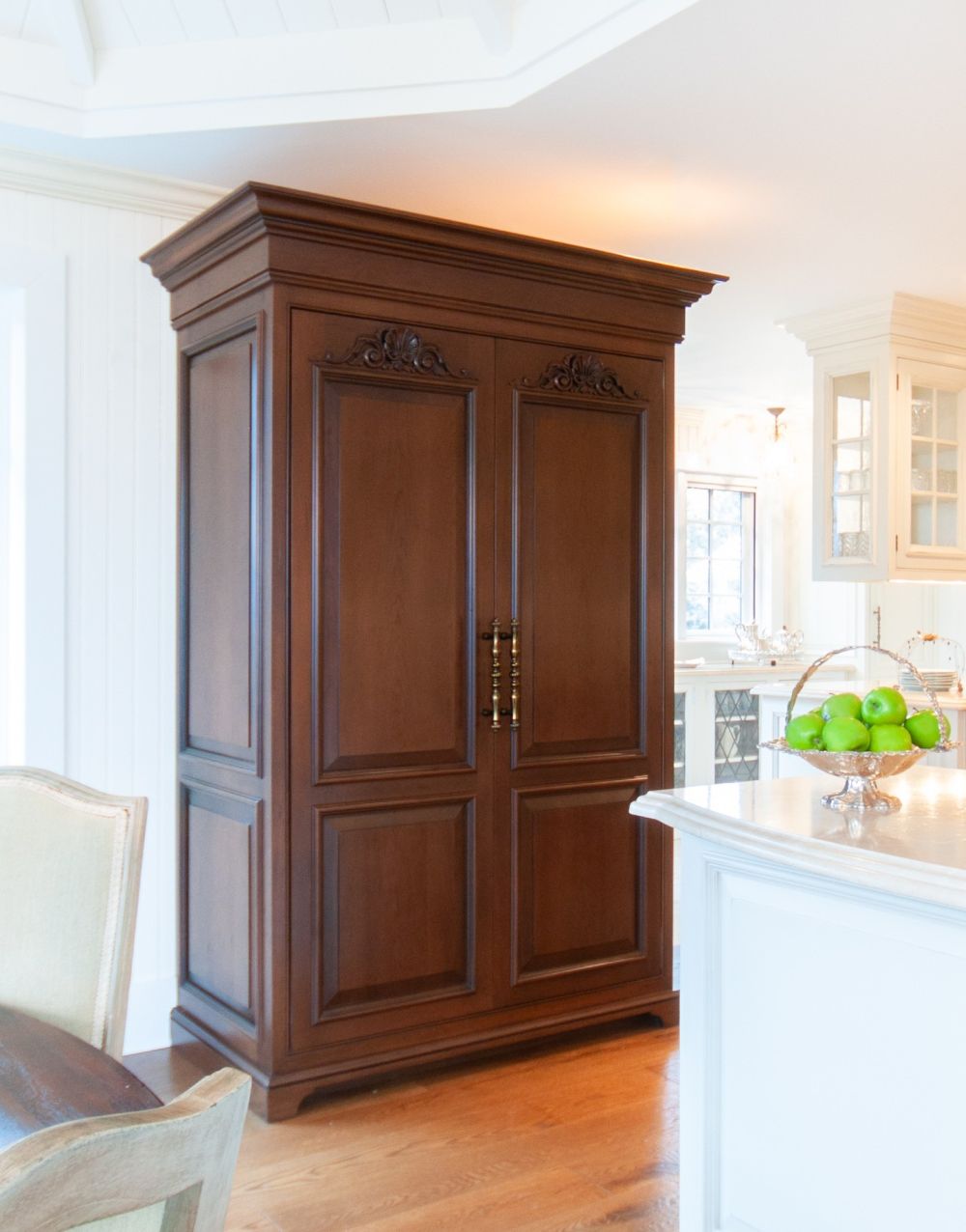
Before fitted kitchens became common, cupboards, dressers and armoires provided storage for cookware, dishes and food. Bloomsbury Kitchens carries on this tradition by incorporating modern appliances into furniture-style cabinetry.
Dark wood, raised panels and decorative molding distinguish the cabinet from the surrounding white kitchen units.
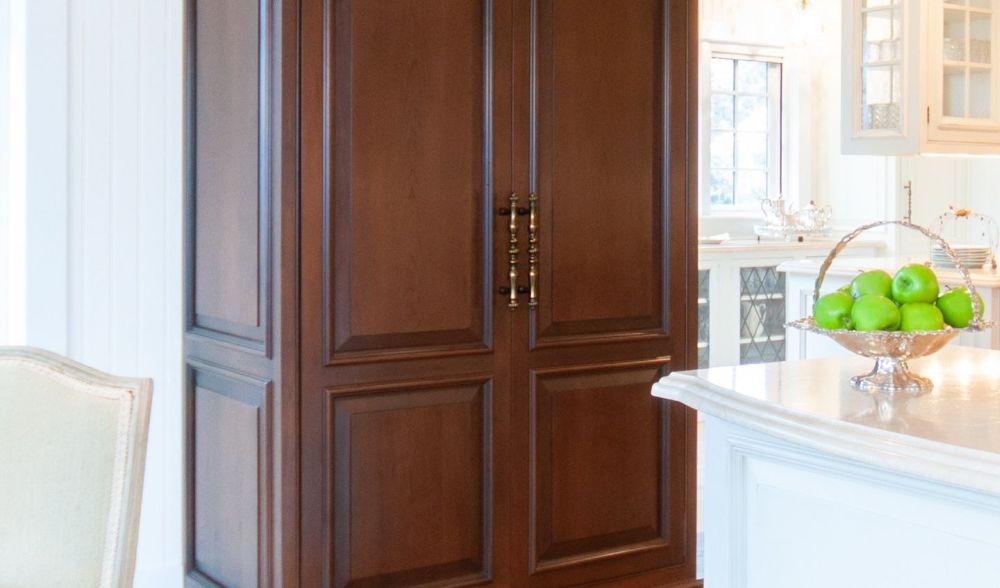
Antique-style brass handles reinforce the appearance of a traditional armoire, leaving no visible indication of the appliance behind the doors.
Wooden Doors Conceal a Full-Size Refrigerator
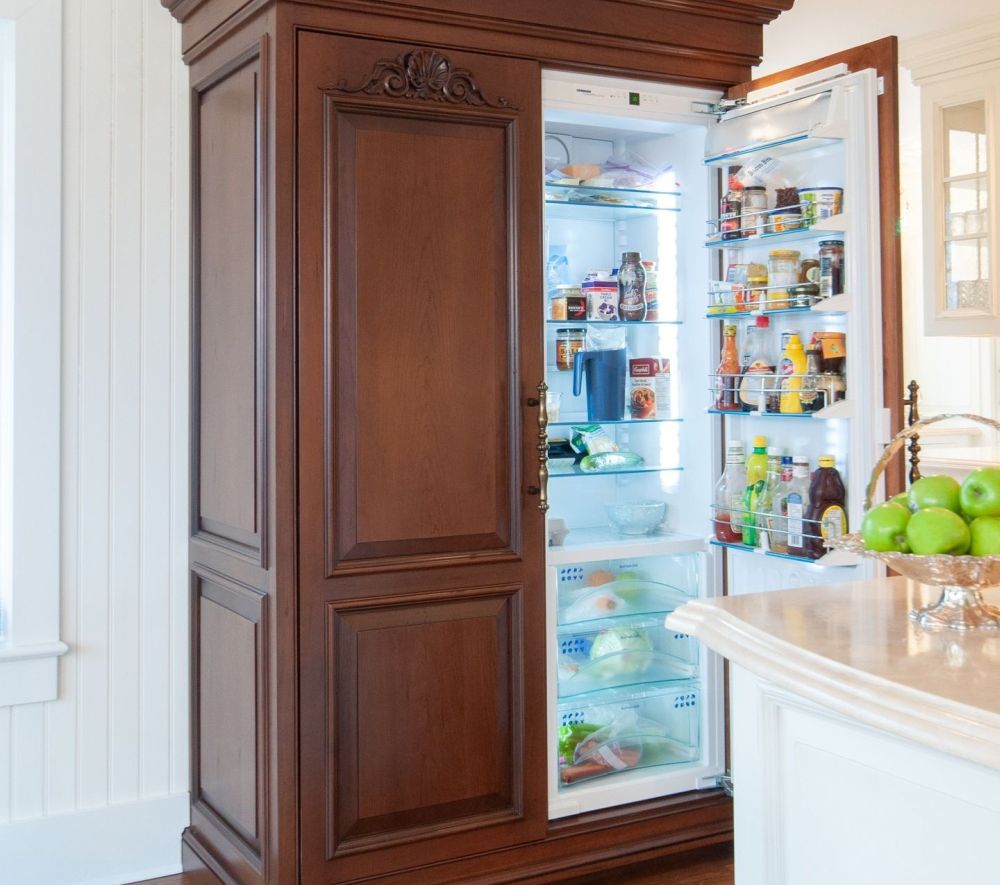
Opening one of the wooden doors reveals refrigerator shelves, transparent drawers and compartments for bottles and food. Decorative panels attached to the appliance doors allow the refrigerator to retain the appearance of furniture when closed.
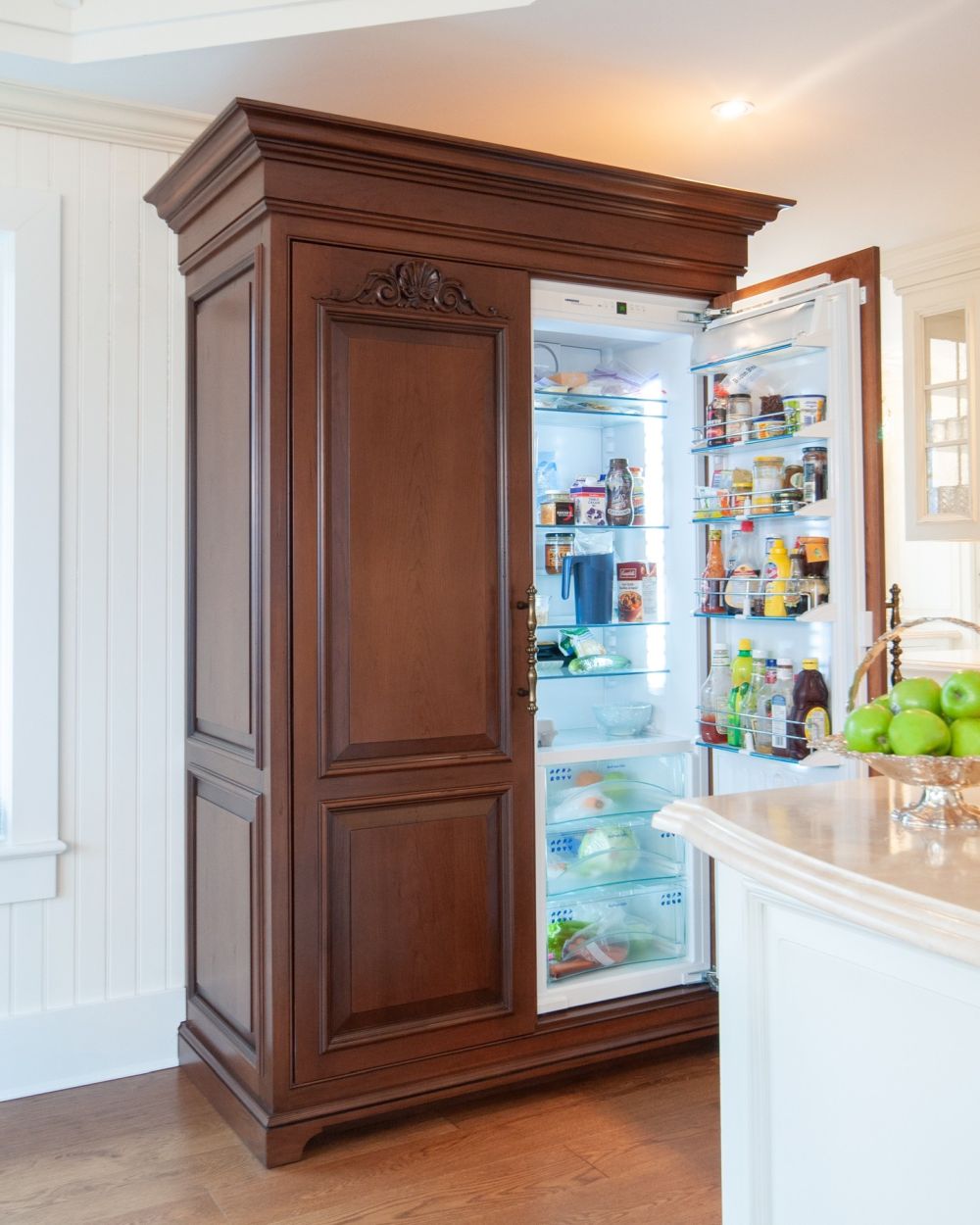
Unlike integrated refrigerators designed to blend into surrounding cabinets, this enclosure stands on its own. Paneled sides, an extended crown and a molded base complete the furniture-style design.
What to Know Before Choosing a Furniture-Style Refrigerator
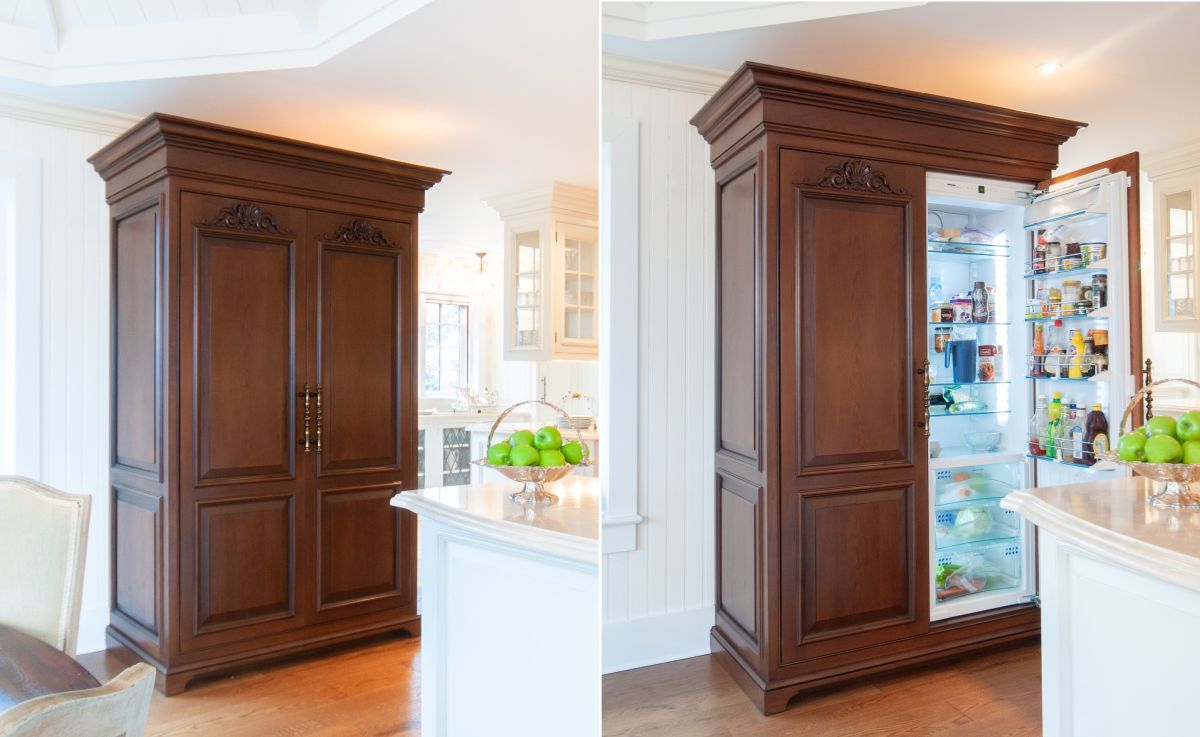
Creating this look requires more than placing a refrigerator inside an existing wooden armoire. Panel-ready refrigerators are designed to accommodate custom door fronts, while the enclosure must meet the manufacturer’s requirements for ventilation, panel weight and door clearance.
Energy consumption is another factor to consider. According to ENERGY STAR, larger refrigerators tend to consume more electricity, while models with fewer doors can reduce cold air leakage. Refrigerators with top-mounted freezers also tend to consume less energy than side-by-side models.
Before selecting an appliance for custom cabinetry, compare its annual electricity consumption in kilowatt-hours (kWh) alongside its dimensions and storage capacity.
Would you choose a refrigerator disguised as antique furniture or prefer a conventional stainless steel appliance?