

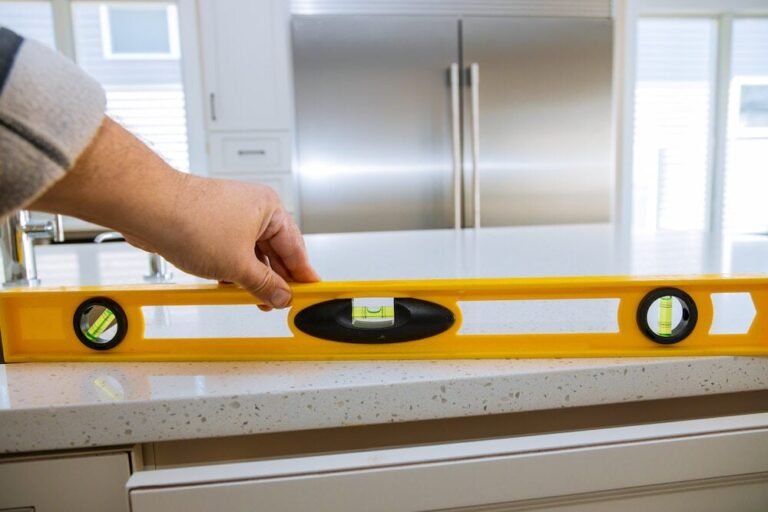

An accessible kitchen remodel may involve major changes to your cabinetry, but it does not automatically mean you need new countertops too. If the granite is still in excellent condition and you like how it looks, keeping it can seem like an obvious way to control the scope and cost of your project.
Whether that stone can (or should) stay depends on much more than its appearance. The way it was installed, the number and location of seams, the existing cabinet footprint, sink and cooktop cutouts, and the changes you want to make all affect whether the slabs can come out and go back in safely.
The bigger question is whether preserving the countertop still allows you to make the functional improvements that prompted the project. Saving an expensive surface may be worthwhile, but not if doing so locks you into cabinet heights, work areas, or a layout that no longer works for the people using the kitchen.
If modifications for accessibility are not a consideration, your existing cabinetry is in good condition, and the layout is already the best for the space, refacing is an excellent alternative that allows you to keep your granite countertops in place as they are.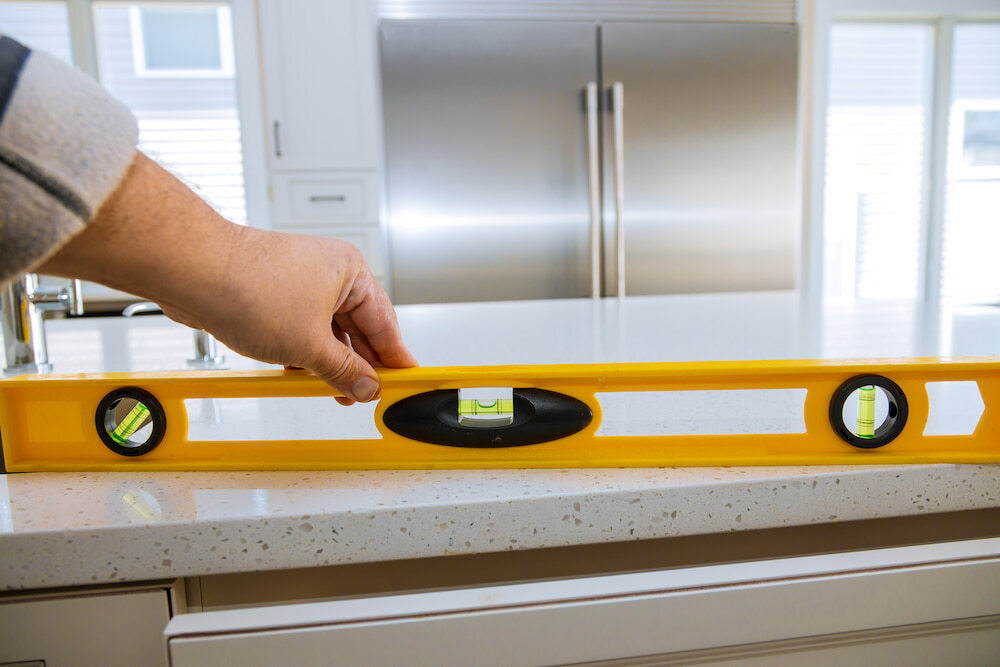
Can you reuse granite countertops when replacing cabinets?
It is rare that you will be able to reuse granite countertops when replacing the cabinets underneath them. The best candidates are intact slabs installed over a cabinet layout that will remain largely unchanged.
Granite is rigid, heavy, and fabricated to fit a specific kitchen. Once installers cut the stone for walls, corners, sinks, cooktops, and seams, those dimensions become difficult to change substantially.
Reuse is most realistic when:
- The granite is in good condition
- You plan to keep roughly the same cabinet footprint or better still, plan to reface your existing cabinets
- Sink and cooktop locations will remain the same
- The slabs have manageable seams
- The stone can easily be removed without excessive force
- The new cabinets can support the existing dimensions
- You still like the color, edge, and pattern
A countertop fabricator should inspect the stone before cabinet demolition begins. That gives you a better idea of the risks before you make the rest of the remodel depend on keeping it.
What determines whether existing granite can be reused?
The condition of your existing granite countertops matters, but fit is equally important. A beautiful slab may still be a poor candidate if the new cabinetry changes the dimensions or support underneath it.
1. Check the condition of the stone
Look closely for existing cracks, repaired areas, chips, fissures, and weak spots around cutouts. Pay particular attention to:
- The front and back of the sink opening
- Narrow strips around a cooktop
- Inside corners
- Existing seams
- Long unsupported sections
- Previously repaired areas
Small imperfections do not automatically rule out reuse, but they may increase the chance of damage during removal.
2. Compare the old & new cabinet footprint
Granite is much easier to reuse when the new base cabinets follow the same general dimensions as the existing ones. Changes that will complicate or rule out reuse include:
- Moving an island
- Changing cabinet depth
- Removing or adding a peninsula
- Changing corner configurations
- Moving the sink
- Moving the cooktop
- Adding new cabinet runs
- Changing countertop overhangs
Even a relatively small layout change can leave the existing stone too short, too long, or cut in the wrong place.
3. Look closely at granite countertop seams
Granite countertop seams allow installers to divide a large surface into manageable sections, but they also become important during removal and reinstallation.
The Natural Stone Institute explains that stone countertop seams use fillers such as epoxy, polyester resin, grout, or flexible sealants. Movement in the supporting structure can contribute to cracking in the seam or stone, which is one reason the support underneath matters so much.
If your countertop has several seams, ask where the installer expects to separate the pieces and whether those joints can be recreated cleanly afterward.
What happens during granite countertop removal?
Granite countertop removal involves disconnecting anything (this often includes heavy glues or epoxies) attached to the stone, releasing the countertop from the cabinets, separating seams where necessary, and lifting the slabs without placing too much stress on weak areas.
This is one part of the project where DIY savings may not be a wise approach or worth the risk. Granite slabs are extremely heavy, and cutouts can leave relatively narrow pieces of stone that are easier to damage.
1. Disconnect sinks, plumbing & appliances
Before the countertop can move, the crew may need to disconnect:
- Sink plumbing
- Garbage disposal
- Faucets
- Cooktop connections
- Dishwasher attachments
- Backsplash connections
Undermount sinks also need to be separated from the countertop.
2. Release the stone from the cabinets
Countertops may be attached using silicone, adhesive, mechanical fasteners, or a combination of installation methods. How easily the granite releases depends partly on how it was originally installed.
For stone surfaces, professional countertop removal can reduce the chance of damaging the slab or injuring someone while trying to lift it. Installers typically work gradually around the countertop instead of forcing one section upward.
3. Move each section carefully
Granite that lies flat across cabinets is well supported. Once removed, that same slab needs careful handling and storage.
Long pieces, sink cutouts, and narrow strips require particular attention. Even if the granite survives removal, it still has to remain intact while the old cabinets come out and the new ones go in.
Can you replace cabinets under granite countertops without removing the stone?
Sometimes, but completely replacing cabinets under granite countertops while leaving the stone suspended in place is a very rare, specialized and costly approach, not appropriate for every kitchen, and can negate the savings of trying to re-use the existing top.
The countertop needs continuous, reliable support during the work. Removing cabinets one at a time or building temporary supports may be possible in certain situations, but a contractor needs to determine whether the slab configuration makes that safe.
Trying to preserve the countertop in place becomes more complicated when:
- Large sections span several cabinets
- The stone has vulnerable cutouts
- Cabinet dimensions are changing
- The island or peninsula is moving
- The countertop already has cracks
- The new cabinets differ in height
If the cabinet boxes themselves are structurally sound, refacing may offer a simpler way to update the kitchen without disturbing the countertop at all.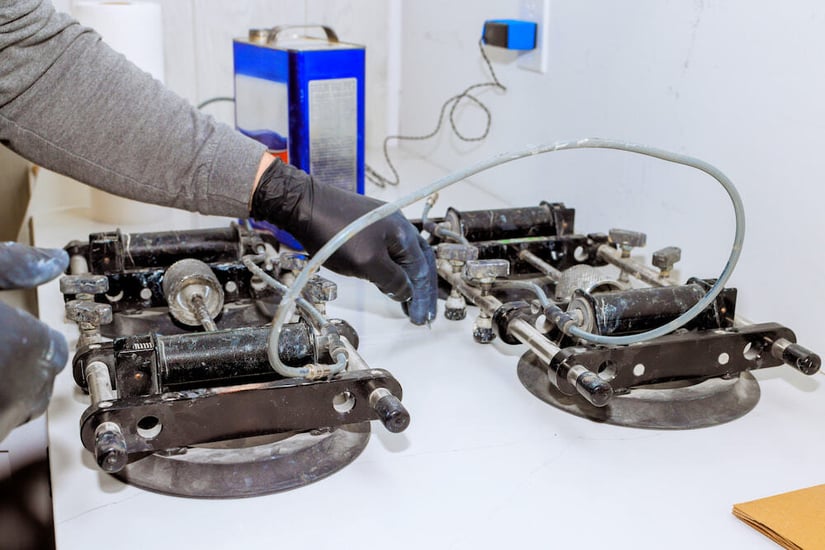
What makes granite countertop reinstallation successful?
Granite countertop reinstallation works best when the new cabinet configuration accurately recreates the support and dimensions the original stone was fabricated around. Small differences underneath can become large problems once a rigid slab returns to the kitchen. It will also be best when adhesives used for existing tops can easily be removed and were not liberally applied at installation.
1. Make sure the new cabinets are level
Stone should rest on a stable, correctly prepared foundation.
Natural Stone Institute guidance states that cabinets affecting the dimensions of stone countertops should be permanently installed before field measurements and specifies tight flatness and level tolerances for cabinet tops.
In practical terms, cabinet tops need to be flat and level enough to properly support stone countertops, rather than allowing the granite to rock or bridge over high and low points.
2. Confirm the slab still fits before fastening it
The installer should dry-fit the reused pieces before permanently securing them. Check:
- Wall fit
- Cabinet overhang
- Sink alignment
- Cooktop opening
- Appliance clearances
- Seam alignment
- Backsplash relationship
Do not assume a cabinet order based on nominal dimensions will reproduce the old footprint perfectly.
3. Expect the seams to need attention
Old seam material generally cannot simply remain untouched through removal and reinstallation. The installer may need to clean and remake the joints once the slabs return to position. Pattern alignment also matters, especially when the granite contains strong movement or veining.
Can an existing granite countertop be modified to fit new cabinets?
Sometimes. A stone fabricator may be able to make limited modifications if the new configuration differs slightly from the old one. Possible changes could include:
- Trimming an exposed edge
- Adjusting an overhang
- Enlarging some openings
- Refinishing an altered edge
- Adding a small complementary piece
However, granite cannot simply be stretched or patched invisibly when the new layout requires more stone.
Cutting an existing slab also introduces additional risk. If you need to trim or modify the granite, professional evaluation is important because narrow cuts and installed stone can be vulnerable to breakage. Natural granite is brittle, prone to natural fissures and breakage.
A modification that looks minor on the floor plan may not be simple once the fabricator considers the slab pattern, nearby cutouts, and available material.
When does keeping granite limit your remodeling options?
Keeping granite can save an existing material you still value, but it also makes the countertop dimensions one of the fixed points of the new design. That matters if the real reason for remodeling is to improve how the kitchen functions.
You may need more freedom if you want to:
- Reposition the sink
- Create a lower work area
- Remove base cabinetry below a work surface
- Change an island size
- Improve circulation
- Relocate appliances
- Alter cabinet depth
- Add or remove a peninsula
If mobility is a priority, wheelchair-friendly kitchen planning should come before saving a slab simply because it is expensive. The broader layout determines whether you can approach work areas, move between tasks, and use the room independently.
The same applies to storage. New accessible cabinet design may require changes that no longer match the original countertop footprint, while wheelchair-accessible cabinet storage may work best with different drawer banks, openings, or cabinet widths.
A good remodel starts with the changes that improve everyday use, then determines whether the existing stone can work with them.
When is replacing the granite the better choice?
New countertops may make more sense when preserving the old granite creates too many compromises or too much risk. Replacement is worth considering when:
- The granite already has cracks or substantial damage
- You want a substantially different cabinet layout
- Sink or cooktop locations are changing
- The existing cutouts do not suit the new fixtures
- The slabs contain difficult seams
- Significant refabrication would be required
- You no longer like the granite
- Reuse costs approach the cost of replacement
Do not evaluate the stone only by what you originally paid for it. The relevant question is what it costs and allows you to do now.
If keeping the granite forces you to design the new kitchen around an old layout you already dislike, reuse may save material while reducing the value of the remodel itself.
Is cabinet refacing with granite countertops a better option?
Cabinet refacing with granite countertops can be an excellent and often superior alternative when you like the current layout and countertop but want to change the appearance and function of the cabinetry.
Because the existing cabinet boxes stay in place, the countertop does not normally need to be removed simply to update doors, drawer fronts, and exterior cabinet surfaces. Refacing is an excellent way to upgrade your cabinets while preserving an investment in quality granite countertops that may have preceded your cabinet remodel.
Refacing may make sense when:
- Cabinet boxes are structurally sound
- The existing layout already works
- Granite is in good condition
- You want a different cabinet style or color
- You want to avoid disturbing the countertop
- Major cabinet-height changes are unnecessary
You may also be able to improve cabinet interiors with new drawers, pull-outs, organizers, or hardware while preserving the surrounding structure.
This approach will not solve every layout or accessibility problem. If the location, height, or dimensions of the existing cabinets create the barrier, retaining those cabinet boxes may preserve the problem too.
How should you decide whether reusing granite is worth it?
Start with the remodel you actually want, then see whether the granite fits that plan. Do not design the entire project around saving the countertop before you know what functional changes are needed.
Before deciding, ask:
- Is the granite still in excellent condition?
- Do I still like its color and pattern?
- Will the base cabinet footprint stay essentially the same?
- Are the sink and cooktop staying in place?
- How many seams does the countertop have?
- Can a fabricator remove it with a reasonable chance of success?
- Will the new cabinets provide the correct support?
- Does keeping it restrict important layout changes?
- What will removal, storage, modification, and reinstallation cost versus an all new top?
- What happens to the project if a slab breaks?
Get the countertop fabricator and cabinet professional involved before demolition. That way, you can compare the real cost and limitations of reuse against replacement instead of assuming that keeping existing stone will automatically be the less expensive choice.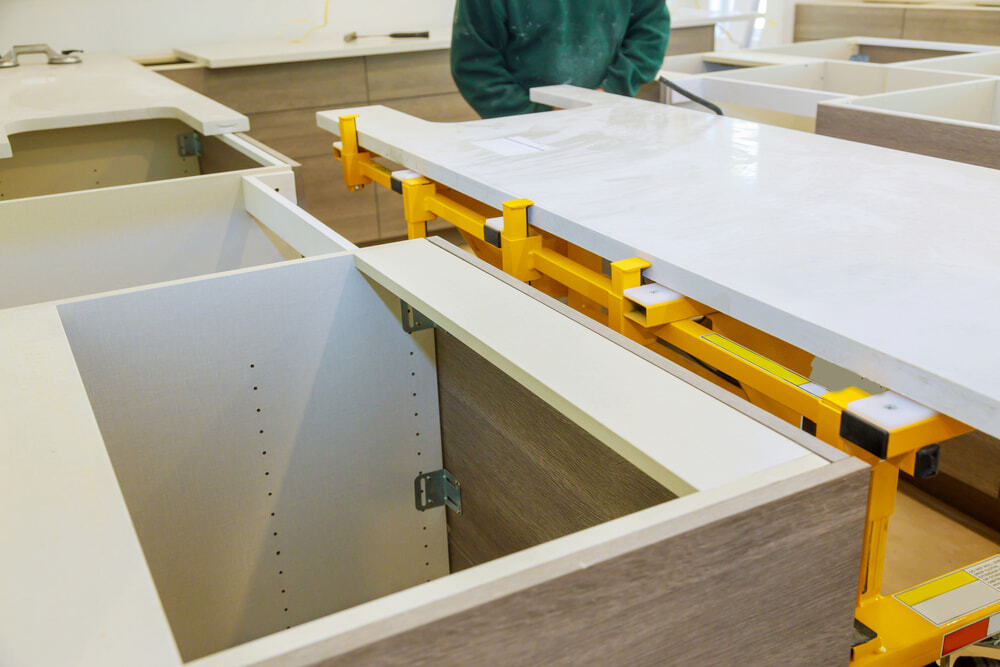
Who can help plan an accessible kitchen remodel while keeping existing granite?
Kitchen Magic has helped transform more than 60,000 kitchens since 1979, and our team can help you determine whether your existing cabinets, countertop, and layout support the changes you want to make. When the cabinet boxes remain structurally sound, refacing can also provide a way to update the kitchen while leaving a granite countertop in place.
Call us to schedule a free consultation. We can help you weigh cabinet changes, storage improvements, countertop reuse, and the other decisions that determine whether your existing granite should stay or make way for a more functional design.