

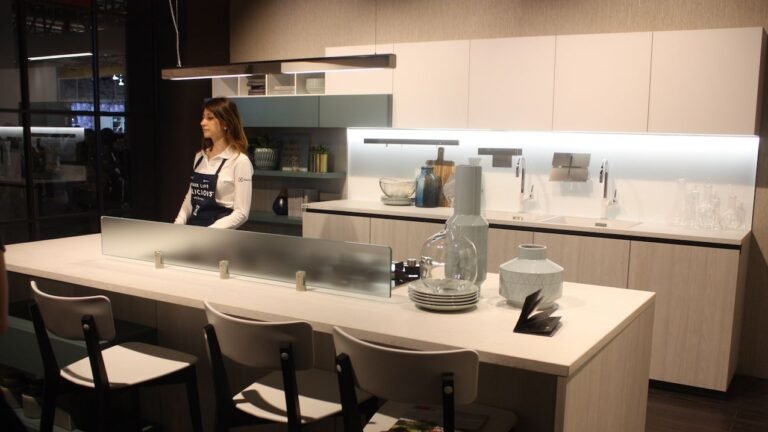


White paint was the answer for countless kitchens with dated oak cabinets. Now homeowners are choosing wood again, and the numbers show a reversal. The 2026 U.S. Houzz Kitchen Trends Study found that 29% of renovating homeowners chose wood cabinets, compared with 28% choosing white. Wood gained six percentage points from the previous study, while white lost five.
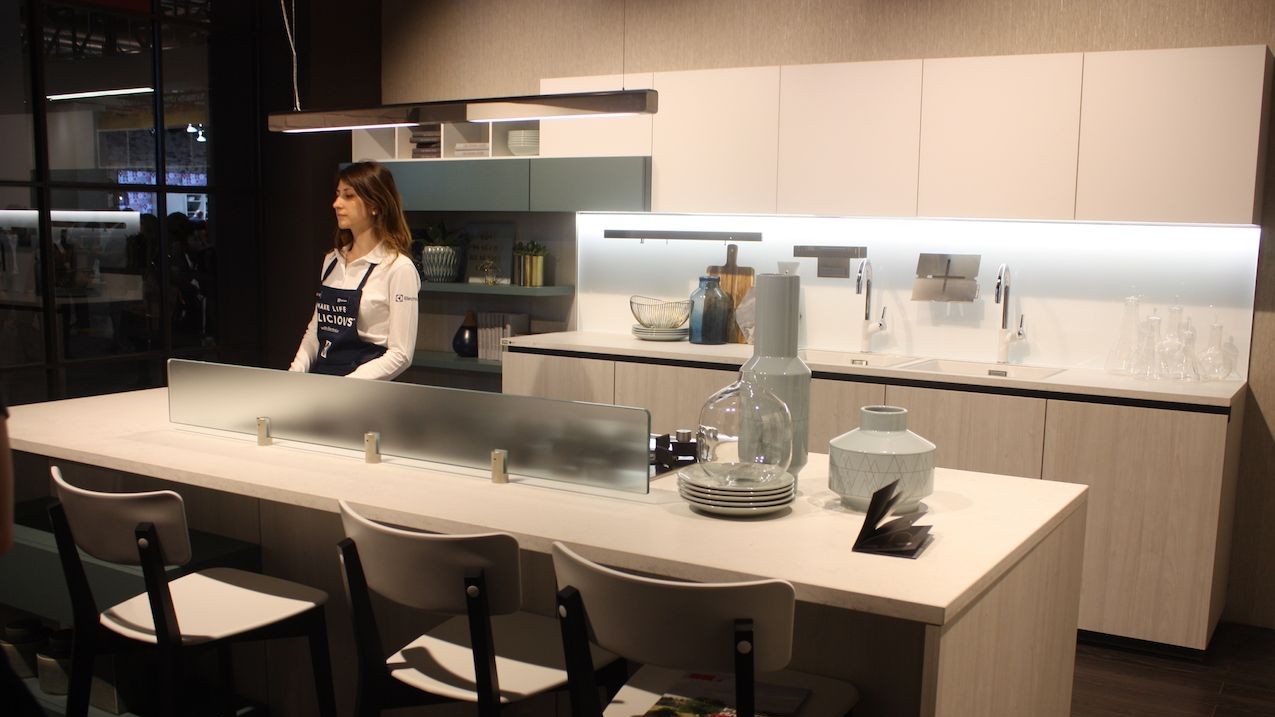
The return of wood doesn’t mean a return to orange oak cabinets and matching trim. These 11 kitchens show different approaches, from flat-front cabinetry to striped finishes, dark stone, and wood-paneled appliance walls.
Flat Wood Cabinets Without Traditional Door Frames
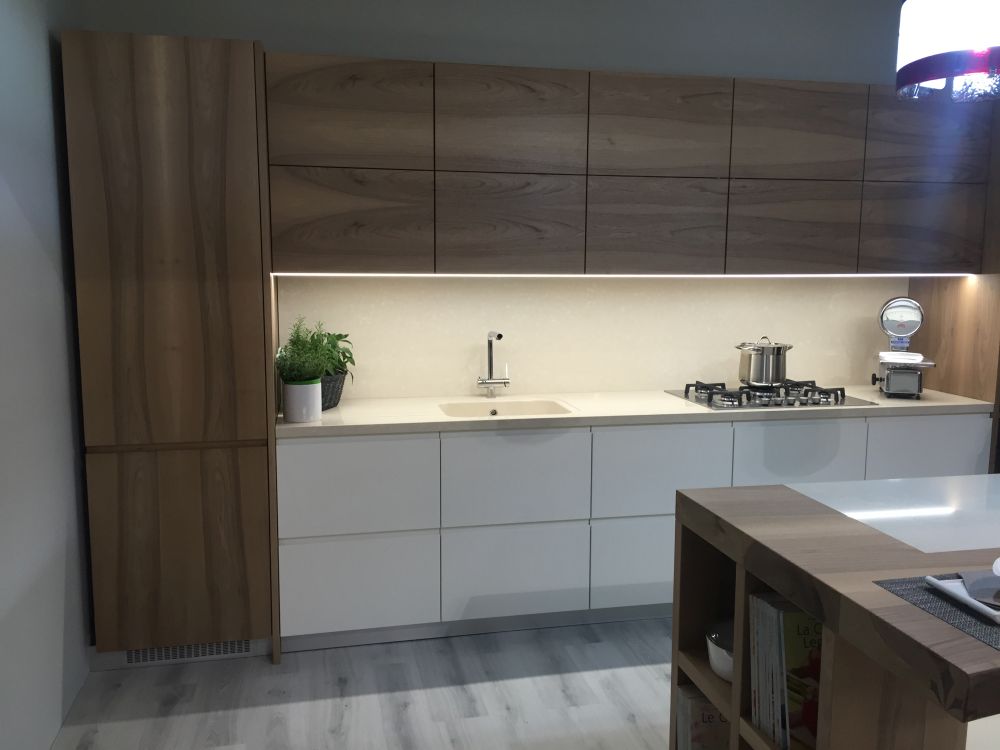
Horizontal wood-grain upper cabinets sit above white handleless drawers, with a continuous LED strip separating the two finishes. A matching tall cabinet conceals the refrigerator, while the same wood finish appears on the island.
The doors have no raised panels, knobs, or visible handles. Their flat surfaces put the grain pattern on display.
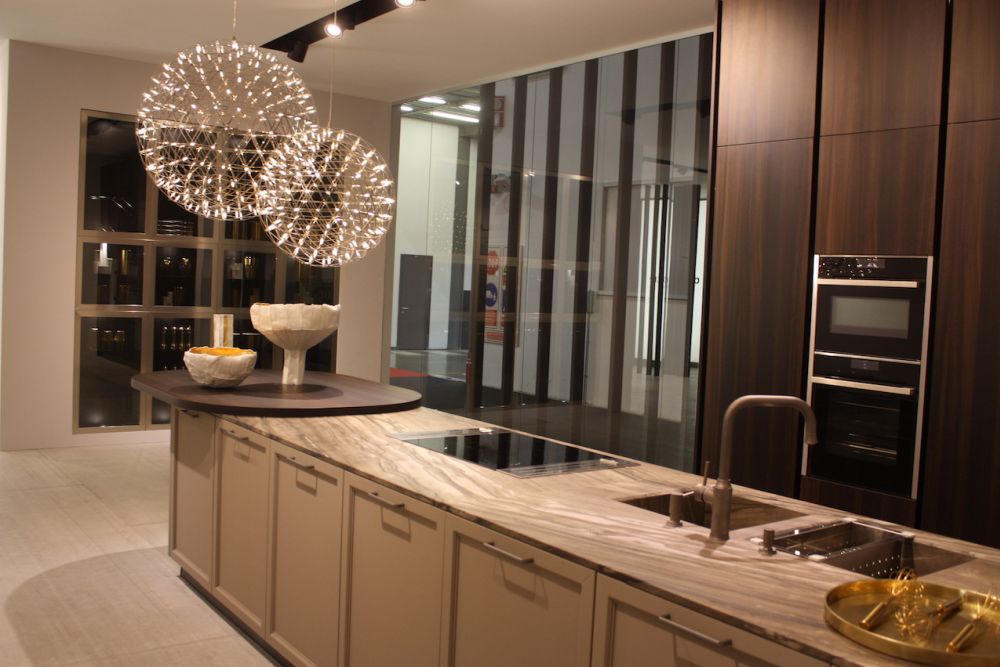
Full-height walnut-toned cabinets form an appliance wall behind a pale stone island. Built-in ovens sit flush with the cabinetry, avoiding the gaps created by freestanding appliances.
An oval wood counter extends from one end of the island, creating a dining spot separate from the cooking surface.
Wood Cabinets With Black Stone and Exposed Brick
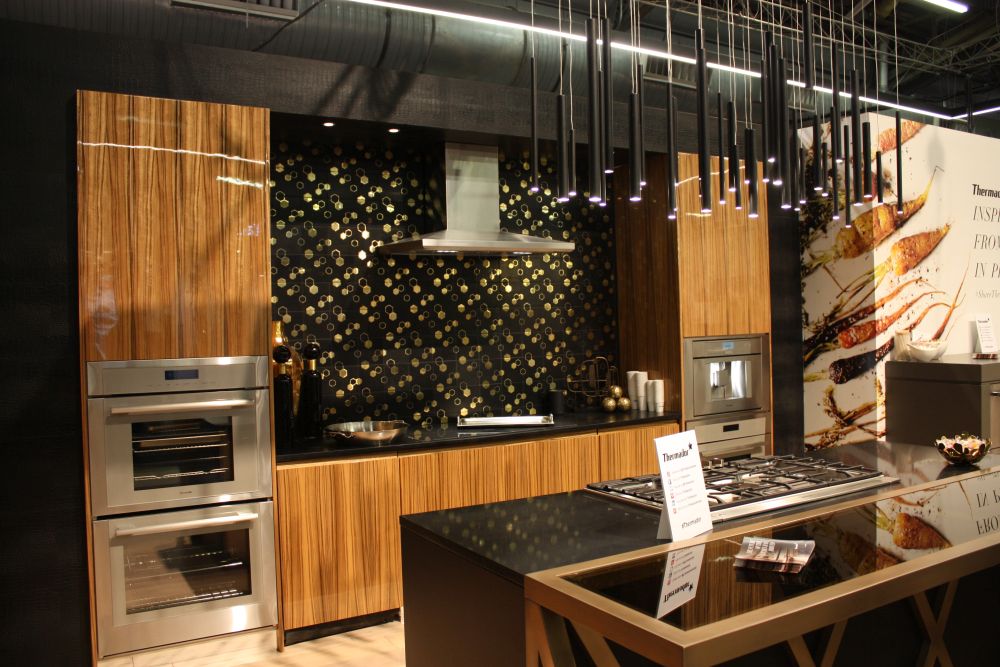
High-gloss striped wood fronts frame a black backsplash covered in small gold circular patterns. Stainless steel double ovens occupy one cabinet tower, while a large black island holds the cooktop.
The finish resembles polished striped veneer rather than conventional stained oak.
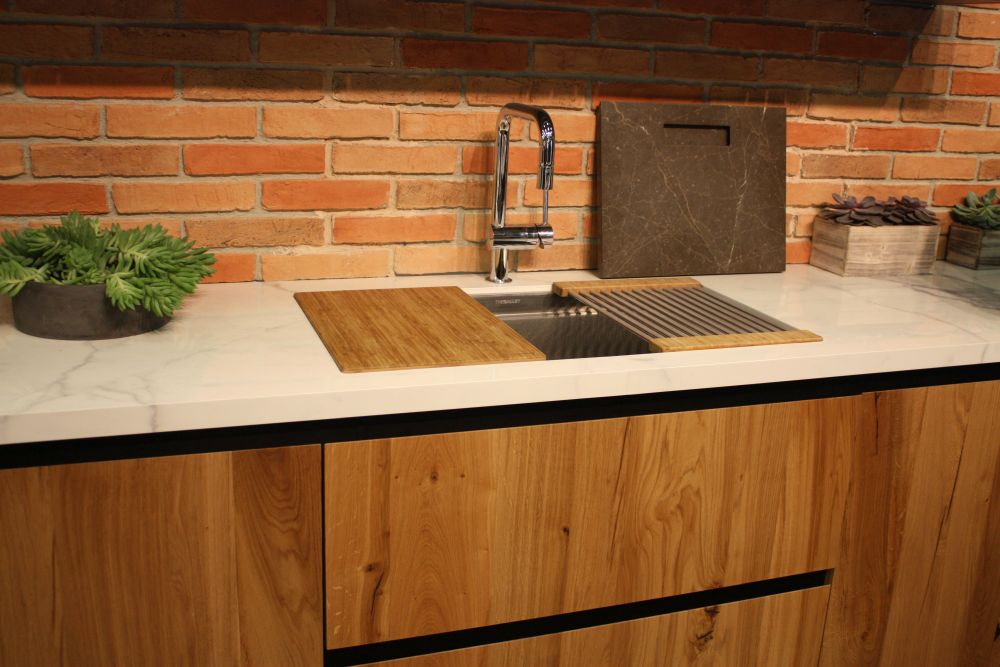
Exposed red brick serves as the backdrop for flat wood drawers and a white countertop. Thin black channels replace protruding handles, allowing the grain to run across the drawer fronts without interruption.
A built-in sink with a wooden cutting board and metal draining rack makes use of the counter space.
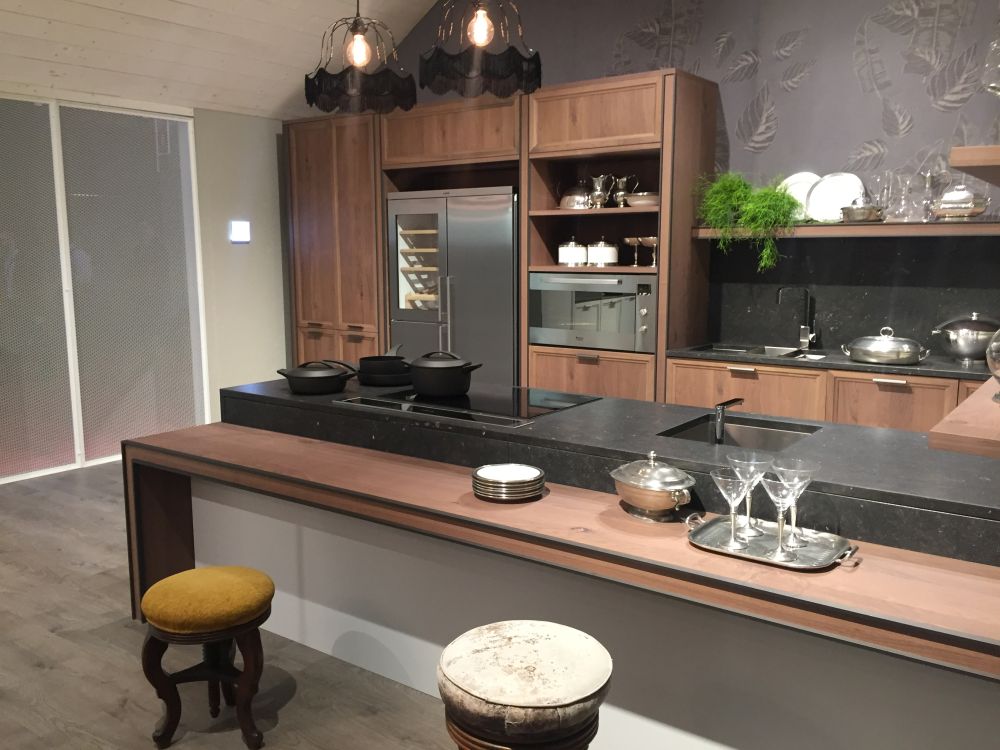
Medium-brown cabinets surround a built-in refrigerator and oven, with open shelving at the right. A black cooking island extends toward a raised wooden breakfast bar.
The raised counter separates seating from food preparation without adding another island.
Wood Cabinets With Decorative Details
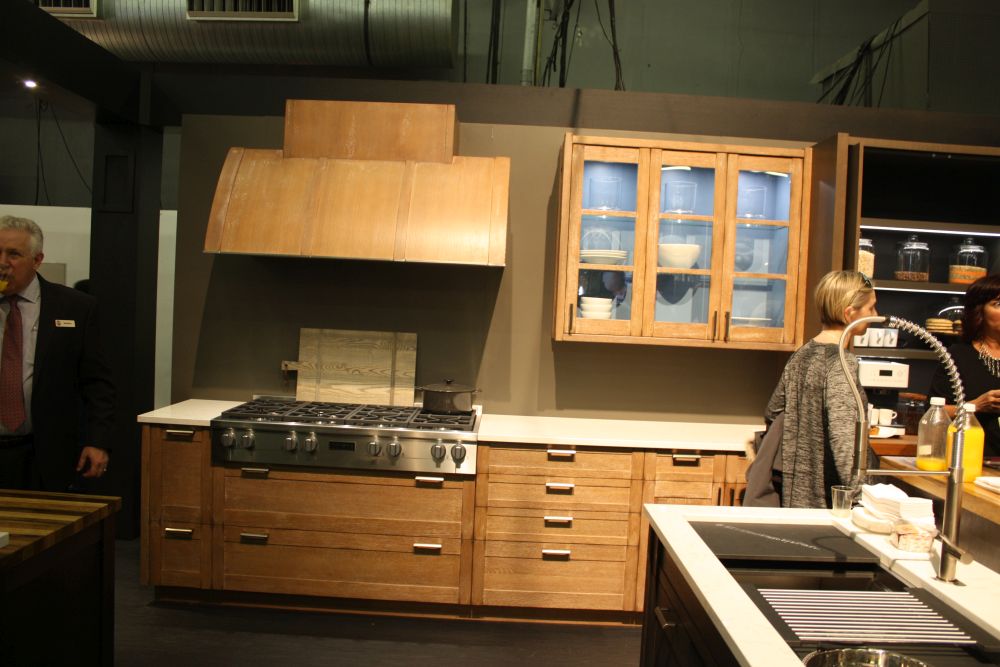
An oversized wood-clad range hood takes the place of the standard stainless steel extractor. Its curved upper section matches the surrounding wood cabinets, with glass-front doors and wide drawers below.
The hood gives the cooking wall a focal point without introducing another material.
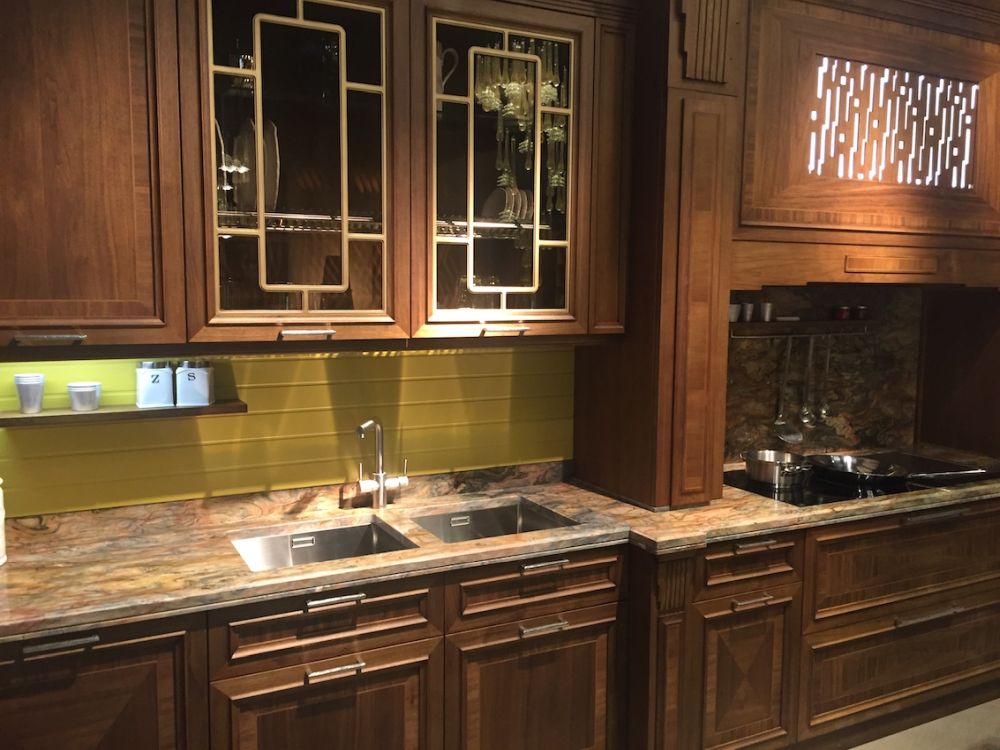
Dark wood cabinets feature geometric gold-toned inserts across their glass doors. A mustard-green horizontal backsplash runs behind the sink, above a heavily patterned stone counter.
Unlike flat-front cabinetry, these doors rely on recessed panels, decorative trim, and metalwork.
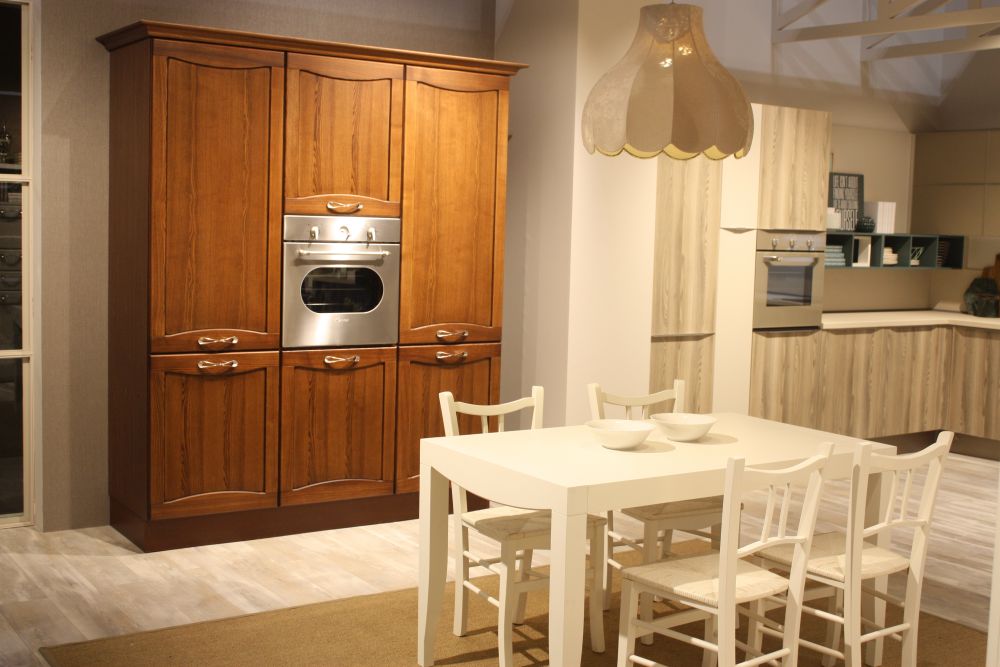
A freestanding-style wood cabinet houses a built-in oven between paneled doors. Crown molding across the top and a continuous base give the unit the proportions of a traditional cupboard.
The cabinet stands beside a white dining table instead of extending across an entire kitchen wall.
Wood Around Sinks and Built-In Appliances
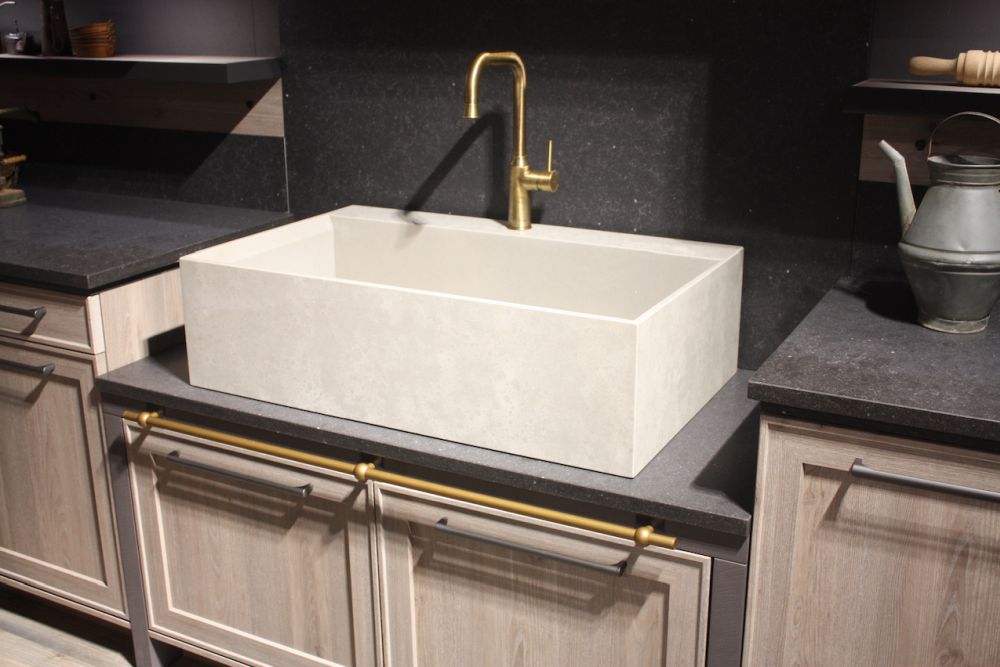
A thick rectangular farmhouse sink rests above pale wood cabinet fronts, surrounded by black countertops and a black backsplash.
The sink’s straight sides and brass faucet provide contrast with the horizontal grain and slim metal handles beneath it.
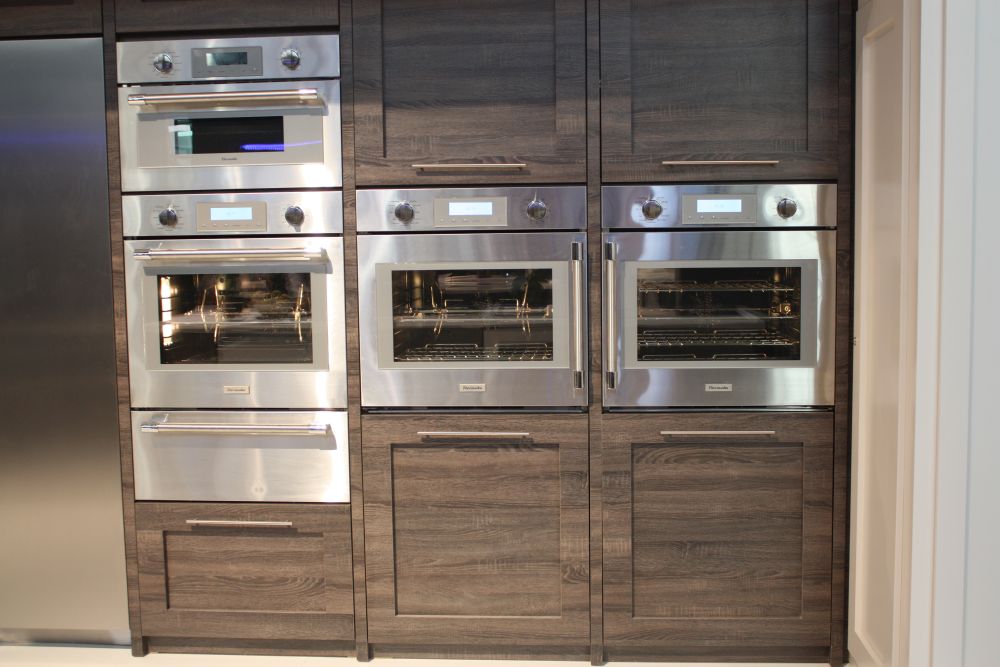
Gray-brown wood-grain cabinetry surrounds a bank of stainless steel cooking appliances, with matching cupboard doors and drawers filling the remaining wall space.
One vertical appliance pair sits beside two additional built-in ovens. This arrangement concentrates the cooking equipment in one cabinet wall instead of distributing it among the countertops.
Wood cabinet design now extends beyond choosing oak, walnut, or a stain color. Flat doors, appliance integration, contrasting materials, and grain direction determine whether the result resembles an older kitchen or a new one.