

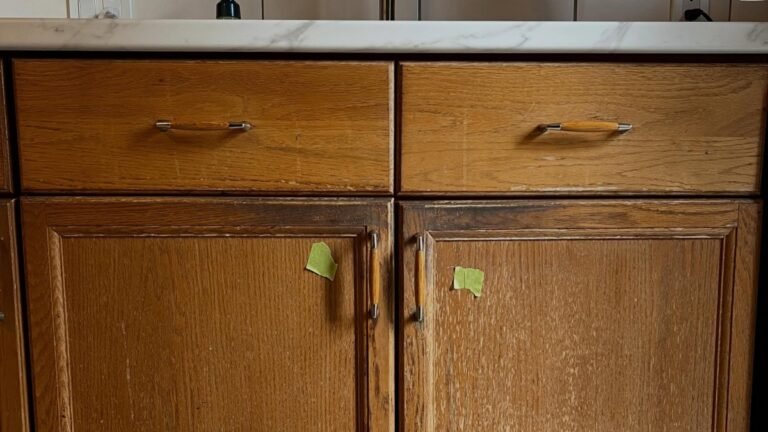


Most kitchen renovations involving orange-toned oak cabinets end with a coat of paint. White, green, or navy replaces the wood grain, and the raised-panel doors often disappear in favor of Shaker fronts. But one couple in Brandon, Manitoba, had a different problem. Their red oak cabinets had become worn and sun-bleached after more than 15 years, yet the homeowners still wanted the same kitchen.
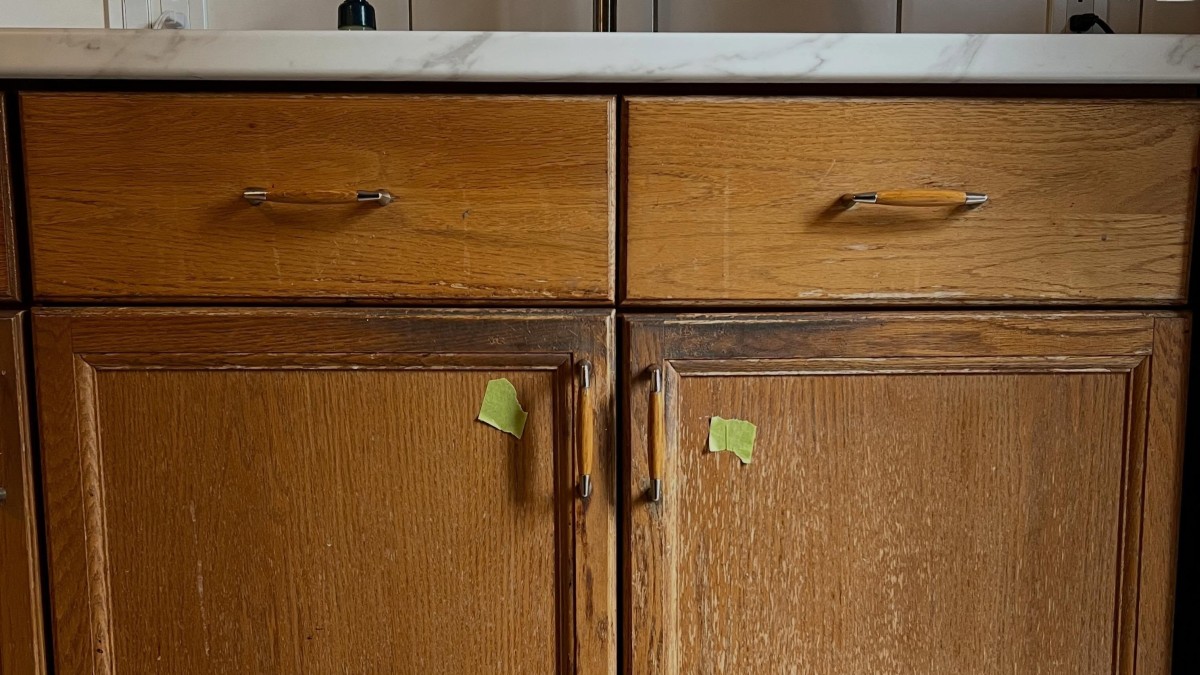
Instead of changing the color or replacing the cabinet style, they asked @refreshedandrefurbishedmb to reproduce the original cathedral doors and match the existing stain. The goal was to make the damaged cabinets look new without losing the red oak grain.
Years of Wear Had Left the Oak Cabinet Doors With Uneven Color
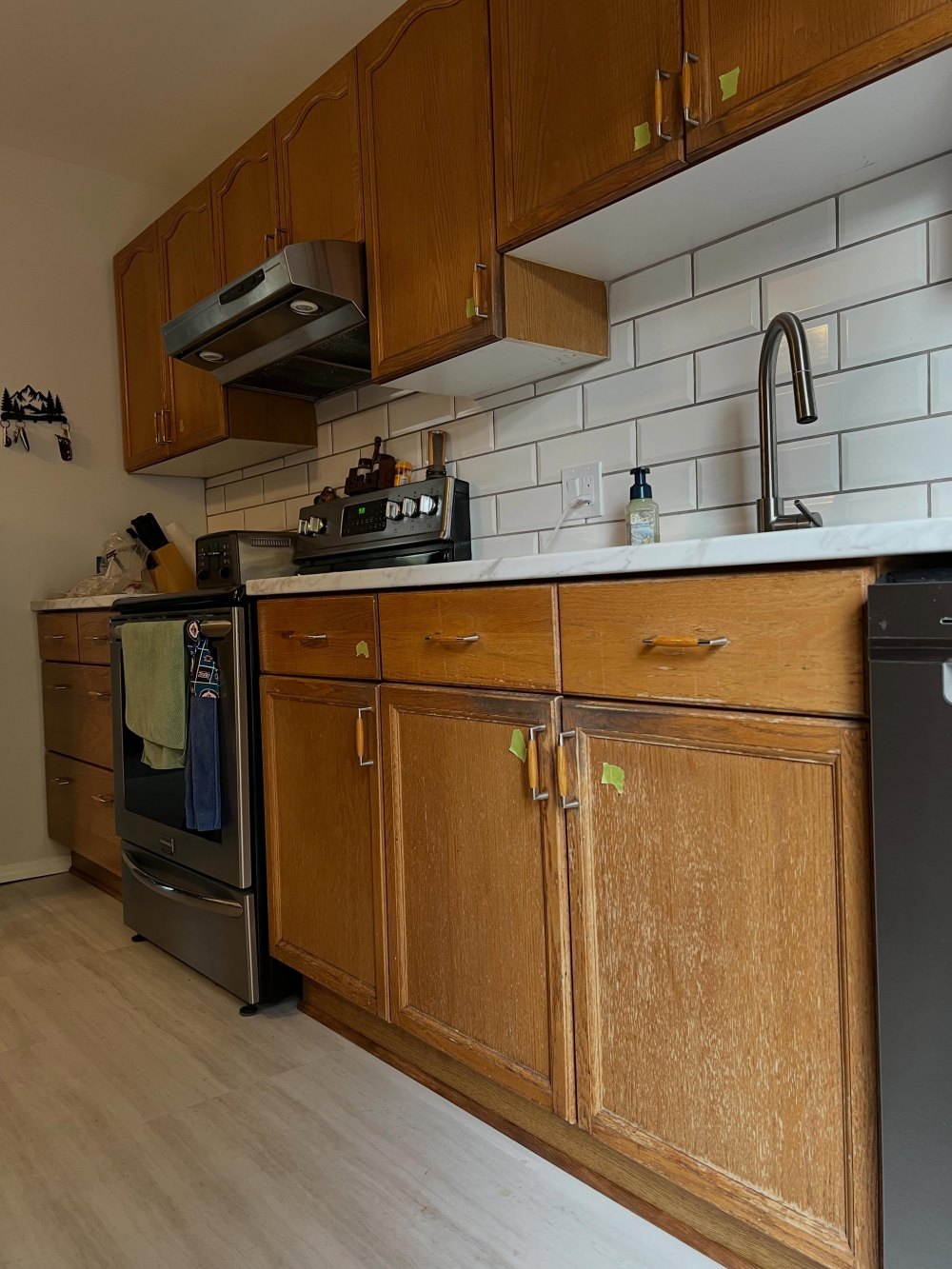
Sun exposure and years of use had taken a toll on the lower cabinets. Several doors had lost much of their finish, leaving pale, worn patches across the raised panels and along the edges. Some sections retained their original brown stain, making the faded areas stand out.
Cabinets around the sink showed the most visible damage. One door had extensive discoloration across its face, while the neighboring door retained a darker finish. Drawers above them had scratches and worn spots, but the cabinets remained part of the kitchen the owners wanted to keep.
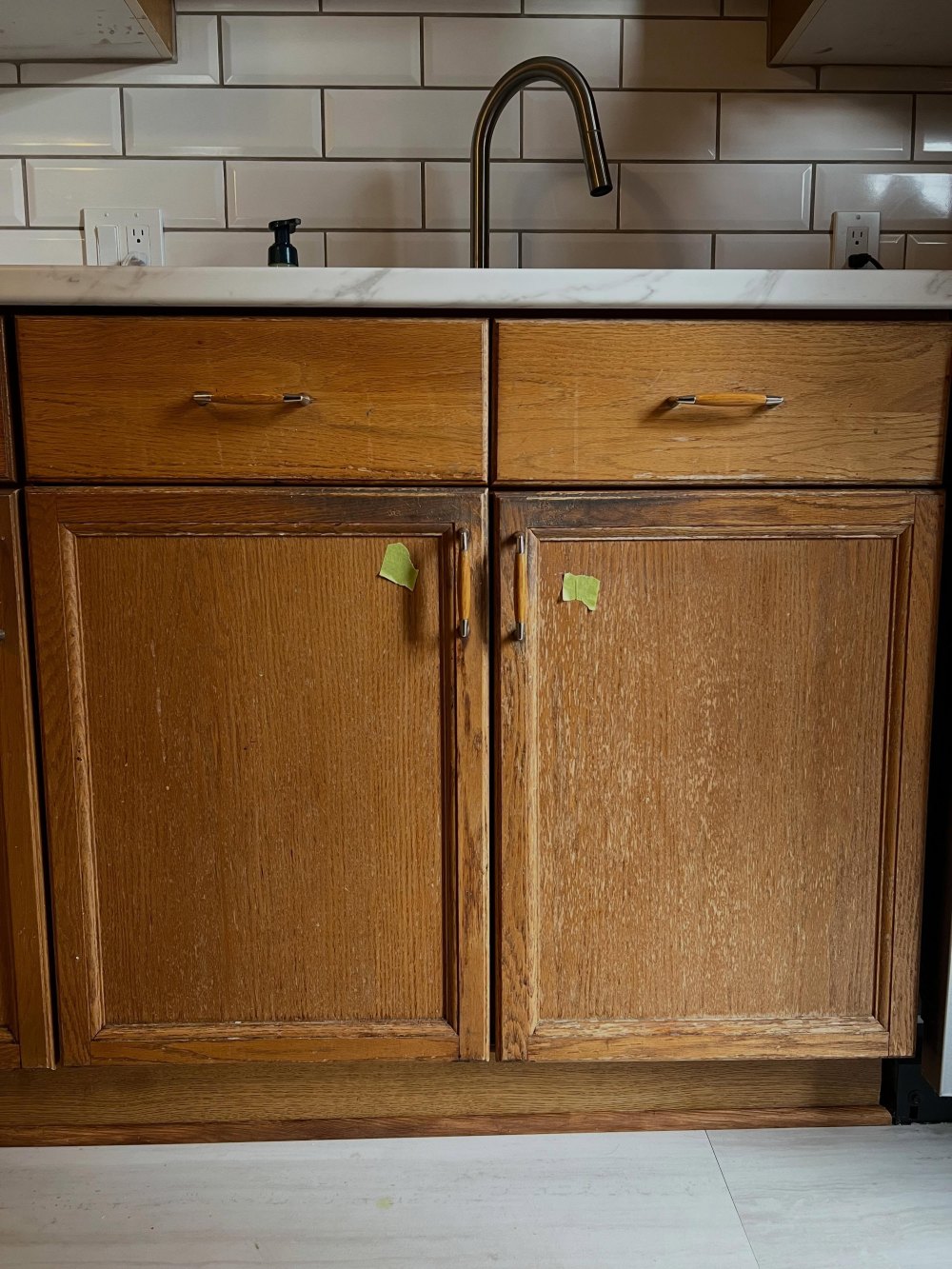
Green tape marked the cabinet fronts selected for work. Existing stainless steel appliances, white subway tile backsplash, marble-look countertops, and the double-basin sink remained in place.
Matching the Red Oak Stain Without Changing the Cabinet Style
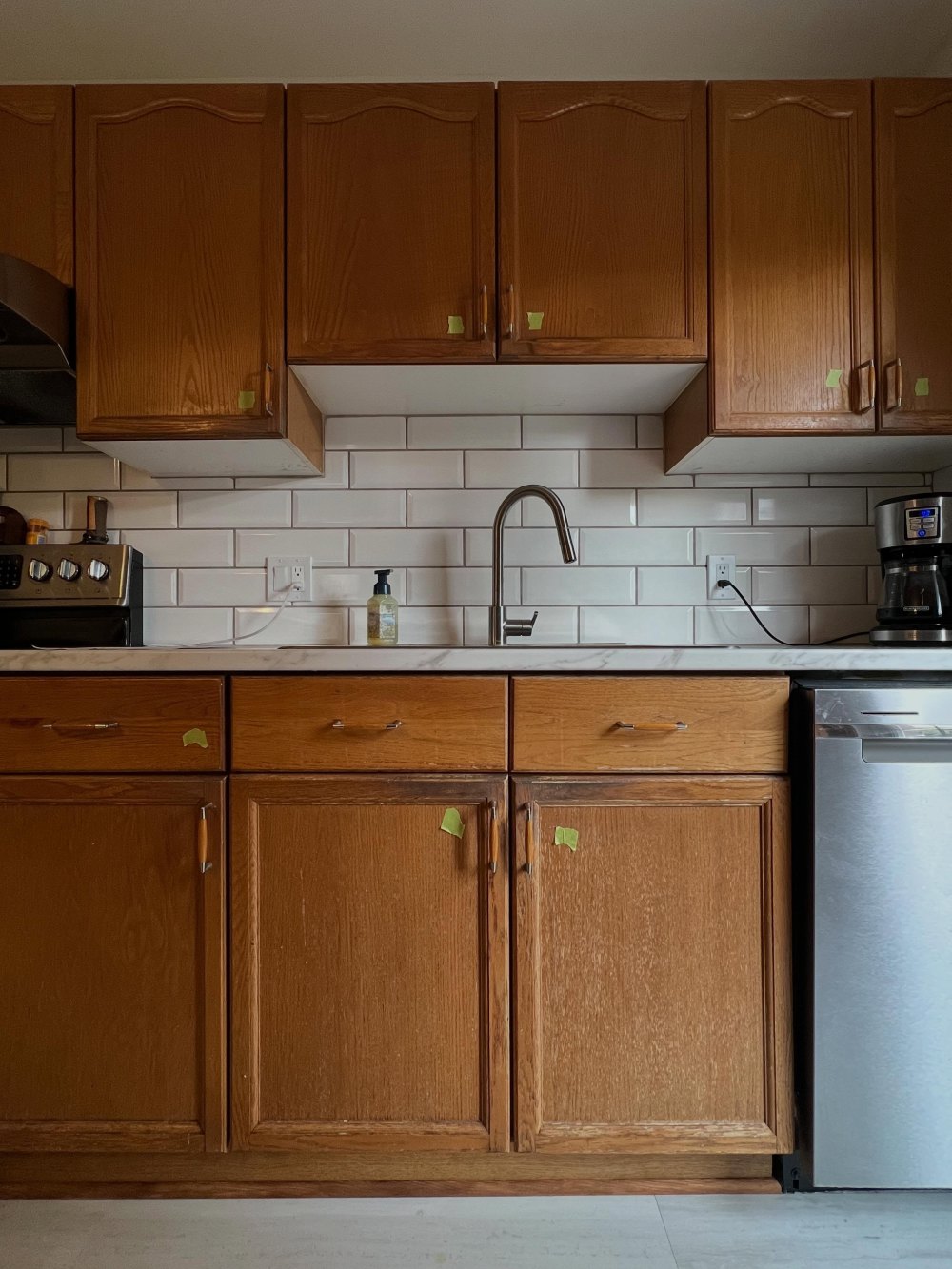
Replacing worn doors with new wood presented a challenge: the replacement fronts had to match the cabinets that remained.
Rather than choose a different door design, the refacing team replicated the original cathedral profile. Its curved upper rail and raised center panel were features the homeowners had enjoyed since their first kitchen renovation more than 15 years earlier.
The team also color-matched the stain to reproduce the existing red oak finish. Preserving the visible grain was part of the project, not something the homeowners wanted to conceal.
New Cabinet Doors Bring Back the Red Oak Finish
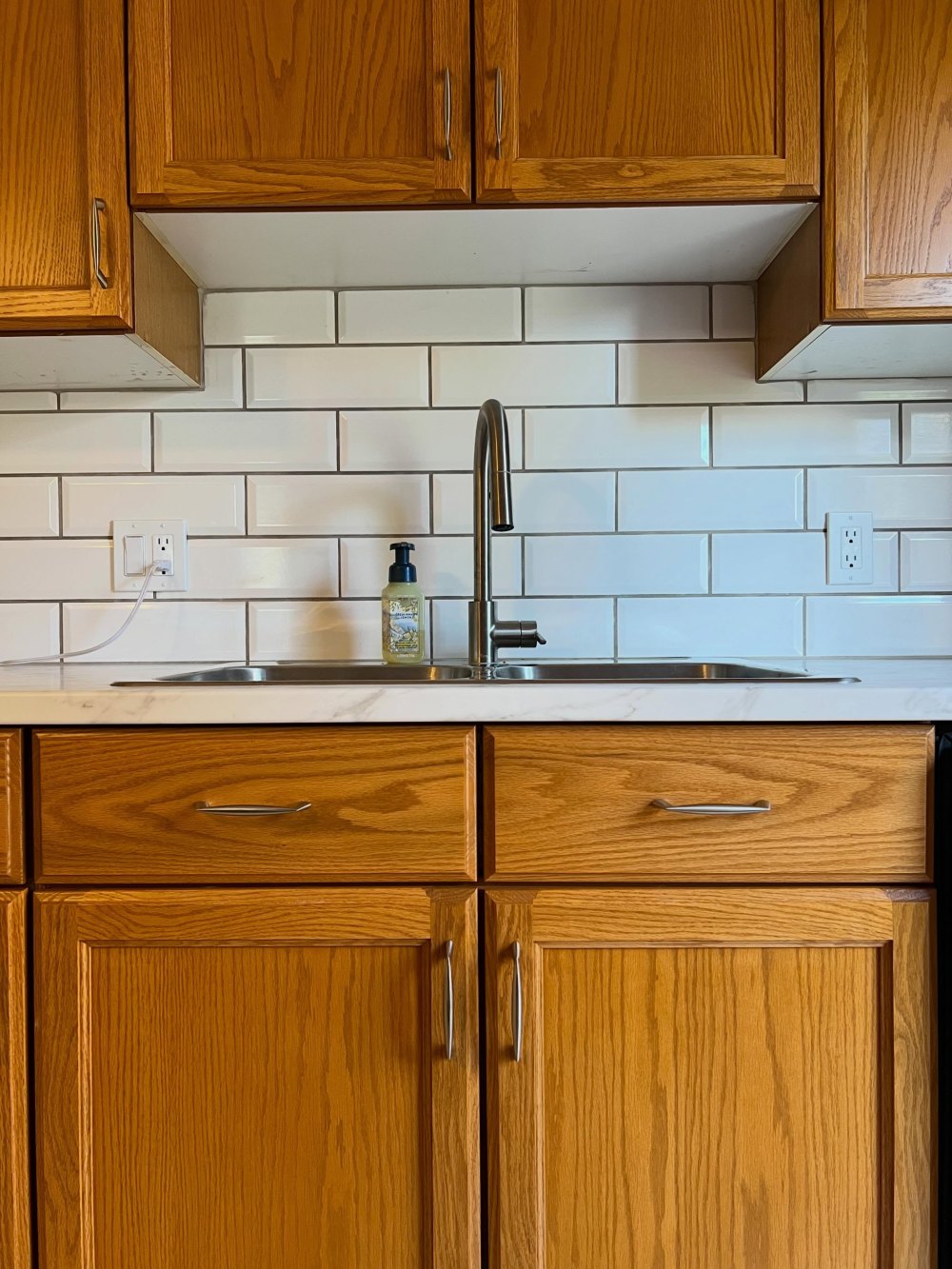
Finished doors beneath the sink show the result of the stain matching. Red oak grain runs across the raised panels and surrounding frames, while the replacement fronts have a consistent golden-brown color.
Chrome handles complete the work without introducing another cabinet style. The same hardware design appears on the drawers and doors, connecting the upper and lower sections.
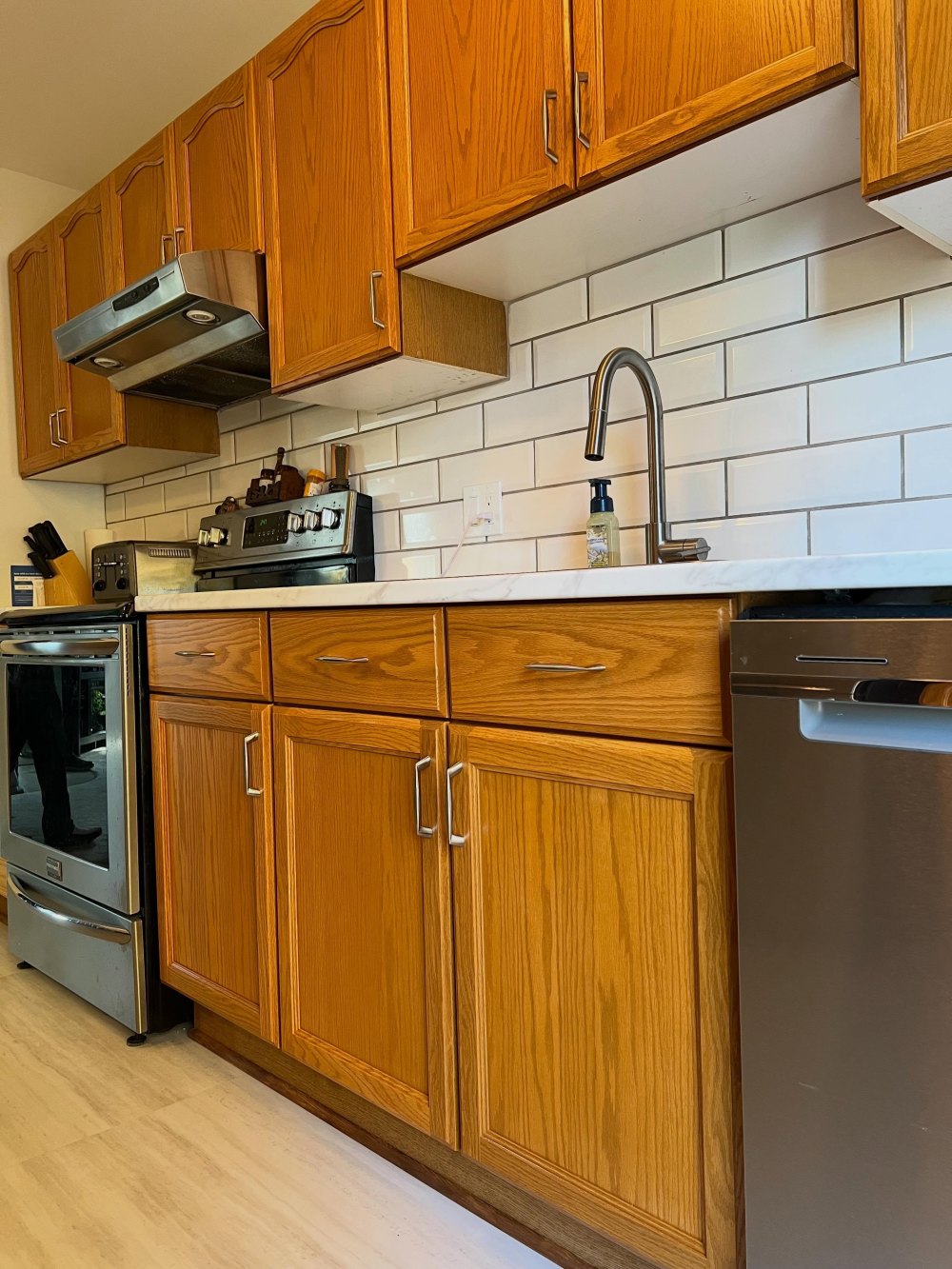
From an angle, the renewed lower cabinets sit beneath the existing countertop and beside the stainless steel range and dishwasher. The red oak finish remains the dominant material, with white tile providing contrast behind the sink and cooking area.
The Original Cathedral Cabinets Remain Part of the Kitchen
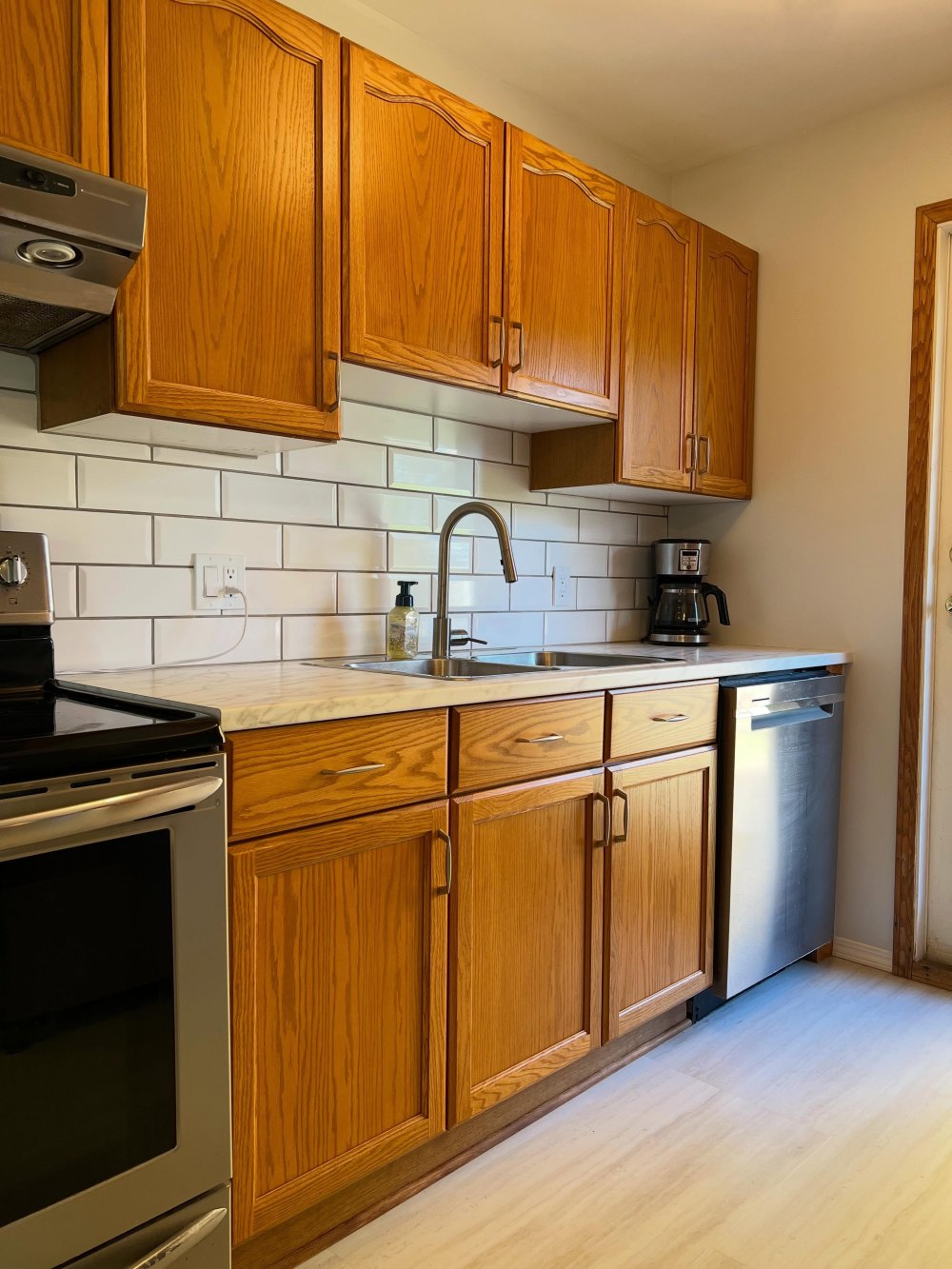
Upper cabinets still have their curved cathedral rails, while the lower doors use raised rectangular panels. Matching the stain allows both styles to remain part of the same cabinet arrangement.
No new cabinet color was introduced, and the renovation did not require a different layout. The backsplash and countertops, installed by Contractors Corner, provide a white backdrop for the restored wood appearance.
Before and After: Same Red Oak Look, Without the Worn Finish
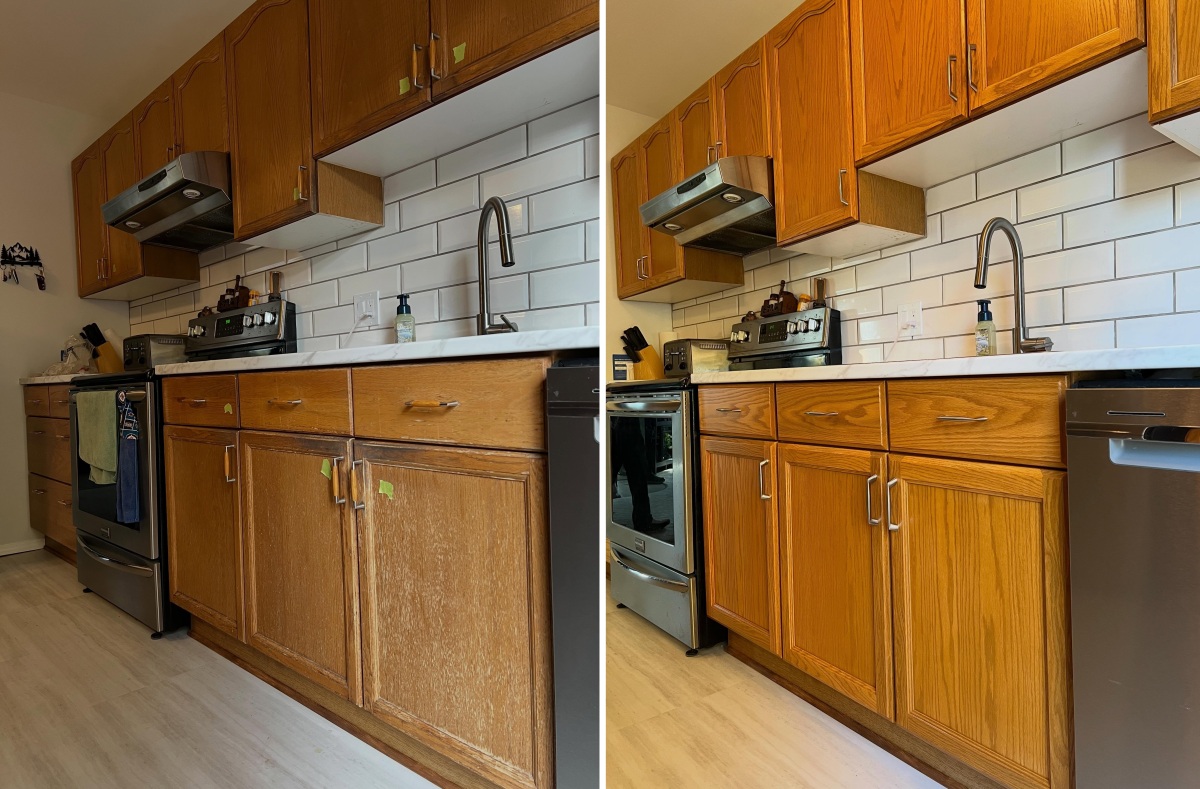
Side-by-side photos show the difference around the sink. Before the work, the lower doors had faded surfaces, worn edges, and uneven stain. Afterward, the renewed fronts display a consistent red oak finish, visible grain, and chrome handles.
Instead of covering the wood with paint, the homeowners chose to preserve the cabinet design from their earlier renovation.
Would you keep the original red oak appearance or use the opportunity to paint the cabinets a different color?
Image credits go to @refreshedandrefurbishedmb